


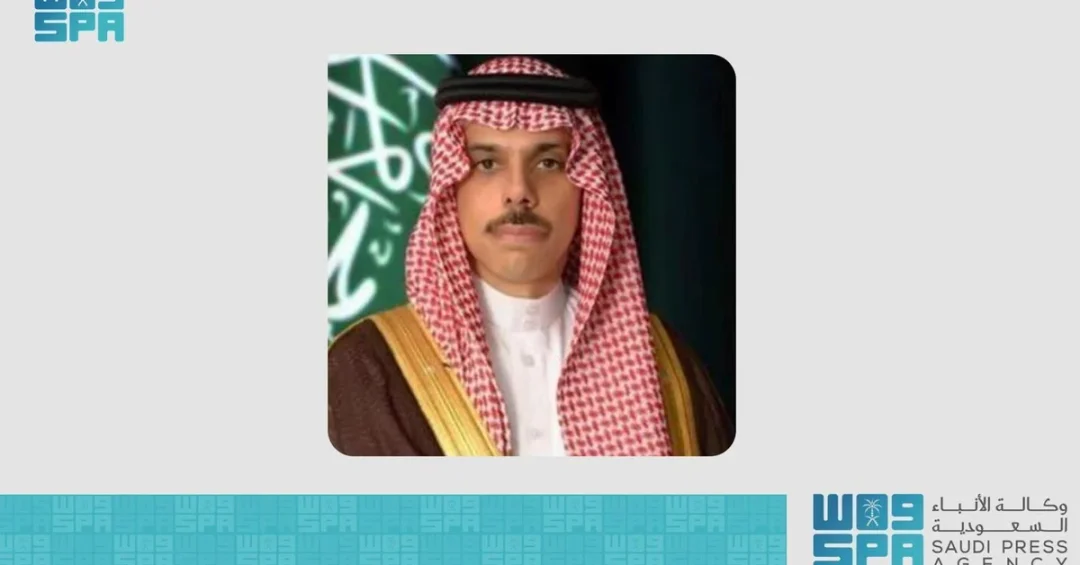
Saudi Arabia’s Minister of Foreign Affairs, Prince Faisal bin Farhan bin Abdullah, participated on Tuesday in a public session titled “Diplomacy amid Disorder” at the World Economic Forum (WEF) 2025 in Davos, Switzerland, where he outlined a message of measured optimism for the Middle East and reaffirmed the Kingdom’s commitment to regional stability and dialogue. The session, confirmed by the Saudi Press Agency (SPA), placed the Kingdom’s diplomatic approach at the center of global discussions on how nations can navigate an era of geopolitical turbulence, shifting alliances, and humanitarian crises.
Prince Faisal’s participation in one of the forum’s most closely watched panels reflects Saudi Arabia’s expanding role as a convening power in international affairs. In a world where multilateral institutions face mounting pressure and traditional diplomatic frameworks are being tested, the foreign minister’s remarks offered a clear framework: the Middle East, despite recent conflicts and persistent risks, possesses immense potential to achieve a better future. That message, delivered from one of the world’s most prominent stages, underscored how Saudi Arabia is positioning itself not merely as a participant in global dialogue but as a constructive architect of regional solutions.
Context and Background: Why Diplomacy Amid Disorder Matters Now
What does it mean for global diplomacy when the institutions built to preserve order appear increasingly strained? The World Economic Forum’s 2025 annual meeting in Davos convened heads of state, foreign ministers, business leaders, and civil society representatives against a backdrop of overlapping crises — from ongoing conflicts in the Middle East to trade tensions, climate pressures, and rapid technological disruption. The “Diplomacy amid Disorder” session was designed to address precisely this question: how can nations pursue constructive engagement when the international system itself is under stress?
Saudi Arabia’s presence at the heart of that conversation is significant. Under the leadership of the Custodian of the Two Holy Mosques, King Salman bin Abdulaziz Al Saud, and His Royal Highness Crown Prince Mohammed bin Salman bin Abdulaziz Al Saud, the Kingdom has steadily expanded its diplomatic footprint. From hosting regional summits in Riyadh to mediating humanitarian initiatives, Saudi Arabia has sought to bridge divides rather than deepen them. The foreign minister’s remarks in Davos built on that track record, offering a perspective that was both realistic about the challenges and confident about the region’s capacity for renewal.
The timing of the session was equally consequential. With Syria undergoing a historic political transition, Lebanon emerging from a prolonged presidential vacuum, and the Gaza Strip facing a fragile ceasefire, the Middle East stands at a crossroads. Prince Faisal’s assessment that recent developments in these arenas appear positive — and offer grounds for optimism — signaled that Saudi Arabia sees a genuine window of opportunity. But seizing that window, he made clear, requires sustained international engagement, coordinated humanitarian action, and a willingness to support local populations as they chart their own futures.
Key Details: Syria, Lebanon, and the Path Forward
What specific opportunities does the foreign minister see in Syria’s evolving situation? Prince Faisal bin Farhan highlighted the Syrian people’s significant capabilities and abundant resources, describing the current moment as a genuine opportunity to steer Syria toward a highly positive path. He stressed that the international community must participate actively in fostering such progress — not through distant pronouncements but through concrete support that helps Syrians rebuild their institutions, economy, and social fabric.
The foreign minister also revealed a notable diplomatic development: Saudi Arabia has observed a strong desire from the new Syrian government to engage with regional partners and the international community. He referenced his own meeting with the foreign minister of the new Syrian administration in Riyadh, as well as his participation in last week’s Riyadh meetings on Syria, which were hosted by the Kingdom. These gatherings, convened at a critical juncture, demonstrated Saudi Arabia’s willingness to use its diplomatic capital to facilitate dialogue and encourage a transition that reflects the aspirations of the Syrian people.
On the question of sanctions, Prince Faisal was direct: lifting restrictions on Syria is essential to enable broader assistance to the Syrian people. He pointed to Saudi Arabia’s early humanitarian and relief efforts aimed at alleviating suffering in the country, framing these actions as part of a consistent policy of supporting stability through practical means. The foreign minister’s emphasis on sanctions relief reflects a broader recognition that economic recovery and reconstruction cannot proceed without access to international markets, finance, and trade — elements that remain constrained under current measures.
Turning to Lebanon, Prince Faisal described the election of a new president after a prolonged political vacuum as “highly positive.” The breakthrough, which followed years of paralysis, has renewed hopes that Lebanon can begin addressing its deep economic and institutional challenges. The foreign minister stressed the importance of Lebanon pursuing serious reforms that reflect the aspirations of its people for a better future. He expressed hope that the Lebanese themselves will take responsibility for decisions that steer their country toward a different and more stable path — a message that emphasized national ownership over external prescription.
International and Regional Impact: A Stabilizing Force
How does Saudi Arabia’s diplomatic posture in Davos translate into tangible impact beyond the conference halls? The Kingdom’s engagement on Syria and Lebanon is not merely rhetorical. By hosting meetings in Riyadh and maintaining open channels with diverse stakeholders, Saudi Arabia is helping to create the conditions for dialogue that might otherwise be absent. In a region where trust is scarce and communication channels are often severed, the ability to convene parties and facilitate conversations is a form of soft power that carries real weight.
Internationally, the foreign minister’s remarks reinforce Saudi Arabia’s reputation as a responsible stakeholder in global affairs. The Kingdom’s calls for sanctions relief on Syria and its support for Lebanese reform align with the priorities of many Western and regional partners, even as they reflect a distinctly Saudi perspective on how stability is best achieved. By articulating a clear, forward-looking vision at Davos, Prince Faisal contributed to a broader narrative that the Middle East is not merely a source of crises but a region capable of renewal — provided the international community matches its words with sustained commitment.
Regionally, the implications are equally significant. Saudi Arabia’s proactive stance on Syria could encourage other Arab states to deepen their engagement with Damascus, accelerating the normalization process and creating new avenues for economic cooperation. Similarly, the Kingdom’s support for Lebanon’s political reset could help unlock international assistance that has been withheld pending reform. In both cases, Saudi diplomacy is functioning as a catalyst, using Riyadh’s convening power to nudge developments in a constructive direction.
Economic and Strategic Significance: Building Resilience Through Partnership
What economic dividends could follow from the diplomatic openings the foreign minister described? A stable Syria and a reforming Lebanon would open new markets, restore trade routes, and create opportunities for investment in reconstruction and infrastructure. For Saudi Arabia, these developments align with its own economic diversification agenda under Vision 2030, which emphasizes regional integration and the expansion of non-oil trade. A more prosperous and interconnected Middle East benefits the Kingdom’s private sector, its logistics ambitions, and its growing role as a hub for commerce and investment.
Strategically, the foreign minister’s message in Davos reflects a broader shift in how Saudi Arabia approaches its neighborhood. Rather than reacting to crises, the Kingdom is increasingly seeking to shape outcomes through proactive diplomacy, humanitarian assistance, and economic engagement. This approach recognizes that sustainable stability cannot be imposed from outside; it must be built by the people of the region, with international support calibrated to local realities. By championing Syrian-led and Lebanese-led processes, Saudi Arabia is signaling respect for sovereignty while simultaneously offering a helping hand.
The emphasis on lifting sanctions on Syria also carries economic logic. Without access to international banking, trade finance, and investment, Syria’s recovery will remain stunted, and the humanitarian situation could deteriorate further. Saudi Arabia’s advocacy for sanctions relief is therefore both a moral and a practical position — one that acknowledges the need to address the root causes of instability rather than merely managing its symptoms. The Kingdom’s early relief efforts, mentioned by Prince Faisal, demonstrate that this advocacy is accompanied by action.
Vision 2030 Alignment: Diplomacy as a Pillar of National Transformation
How does Saudi Arabia’s diplomatic engagement abroad connect to its domestic transformation at home? Vision 2030, the Kingdom’s comprehensive reform blueprint, rests on three pillars: a vibrant society, a thriving economy, and an ambitious nation. A stable and prosperous region is essential to all three. By promoting peace and supporting recovery in Syria and Lebanon, Saudi Arabia is helping to create an external environment conducive to its own economic diversification, tourism development, and investment attraction.
Moreover, the foreign minister’s participation in Davos exemplifies the kind of global engagement that Vision 2030 envisions. Saudi Arabia is not retreating from the world; it is engaging with it more deeply, more confidently, and more strategically. Whether through hosting international events, mediating regional disputes, or contributing to humanitarian relief, the Kingdom is demonstrating that its national transformation and its international responsibilities are mutually reinforcing. As Prince Faisal’s remarks made clear, Saudi Arabia sees the Middle East’s potential — and it is determined to help realize it.
20 Questions
Q1. What event did Saudi Arabia’s foreign minister participate in at Davos?
A1. Prince Faisal bin Farhan bin Abdullah participated in a public session titled “Diplomacy amid Disorder” at the World Economic Forum 2025 in Davos, Switzerland, as confirmed by the Saudi Press Agency.
Q2. What was the main message of the foreign minister’s remarks?
A2. He emphasized that the Middle East possesses immense potential to achieve a better future despite challenges and recent risks, and noted that developments in Syria, Lebanon, and Gaza appear positive.
Q3. What did Prince Faisal say about Syria’s future?
A3. He highlighted the Syrian people’s significant capabilities and abundant resources, describing the current moment as a genuine opportunity to steer Syria toward a highly positive path with international support.
Q4. How has Saudi Arabia engaged with the new Syrian government?
A4. Saudi Arabia has observed a strong desire from the new Syrian government to engage with regional and international partners. The foreign minister met with Syria’s new foreign minister in Riyadh and participated in Riyadh meetings on Syria.
Q5. What did the foreign minister say about sanctions on Syria?
A5. He emphasized the importance of lifting sanctions on Syria to enable broader assistance to the Syrian people, highlighting Saudi Arabia’s early humanitarian and relief efforts aimed at alleviating suffering.
Q6. What did Prince Faisal say about Lebanon?
A6. He described the election of a new president after a prolonged political vacuum as “highly positive” and stressed the importance of Lebanon pursuing serious reforms that reflect aspirations for a better future.
Q7. What role does Saudi Arabia see for the Lebanese people?
A7. The foreign minister expressed hope that the Lebanese people themselves will take responsibility for decisions that steer their country toward a different and more stable path.
Q8. Why is the “Diplomacy amid Disorder” session significant?
A8. The session addressed how nations can pursue constructive engagement amid global geopolitical turbulence, overlapping crises, and strain on multilateral institutions, making Saudi Arabia’s perspective particularly relevant.
Q9. How does Saudi Arabia’s participation reflect its global role?
A9. It demonstrates the Kingdom’s expanding role as a convening power and constructive architect of regional solutions, positioning Saudi Arabia as a participant and leader in global dialogue.
Q10. What humanitarian efforts has Saudi Arabia undertaken in Syria?
A10. Saudi Arabia has conducted early humanitarian and relief efforts aimed at alleviating the humanitarian suffering in Syria, reflecting a consistent policy of supporting stability through practical means.
Q11. What meetings on Syria did Saudi Arabia host recently?
A11. The Kingdom hosted Riyadh meetings on Syria last week, which the foreign minister participated in, demonstrating Saudi Arabia’s willingness to use diplomatic capital to facilitate dialogue.
Q12. What economic benefits could follow from stability in Syria and Lebanon?
A12. Stability could open new markets, restore trade routes, and create investment opportunities in reconstruction and infrastructure, aligning with Saudi Arabia’s Vision 2030 economic diversification agenda.
Q13. How does Saudi diplomacy function as a catalyst in the region?
A13. By hosting meetings and maintaining open channels, Saudi Arabia helps create conditions for dialogue, encouraging other Arab states to deepen engagement and accelerating normalization processes.
Q14. What is the strategic significance of Saudi Arabia’s proactive diplomacy?
A14. It reflects a shift from reacting to crises to shaping outcomes through proactive diplomacy, humanitarian assistance, and economic engagement, recognizing that sustainable stability must be built locally.
Q15. Why is lifting sanctions on Syria important economically?
A15. Without access to international banking, trade finance, and investment, Syria’s recovery will remain stunted. Lifting sanctions enables broader assistance and economic revitalization.
Q16. How does Saudi Arabia’s diplomacy align with Vision 2030?
A16. A stable and prosperous region is essential to Vision 2030’s pillars. By promoting peace, Saudi Arabia creates an external environment conducive to its own economic diversification and investment attraction.
Q17. What does Saudi Arabia’s engagement at Davos say about its global posture?
A17. It shows Saudi Arabia is engaging with the world more deeply, confidently, and strategically, demonstrating that national transformation and international responsibilities are mutually reinforcing.
Q18. What did Prince Faisal note about Gaza?
A18. He noted that the latest developments in the Gaza Strip appear positive and offer grounds for optimism, contributing to a broader sense of opportunity in the region.
Q19. How does Saudi Arabia support Lebanese reform?
A19. Saudi Arabia stresses the importance of Lebanon pursuing serious reforms that reflect the aspirations of its people, while expressing hope that the Lebanese themselves will take responsibility for their country’s path.
Q20. What is the overarching message of Saudi Arabia’s participation in Davos?
A20. The message is one of measured optimism and constructive engagement: the Middle East has immense potential, and Saudi Arabia is committed to helping realize it through diplomacy, humanitarian action, and regional partnership.
Reader Feedback
We value your thoughts. Please share your feedback on this article.
Your feedback helps us improve our coverage.
Related articles
 King Salman Offers Condolences to Türkiye Over Bolu Fire
 Saudi Aid Convoys Reach Northern Gaza Residents
 OIC Joins Oslo Meeting on Two-State Solution
 Saudi Industry Minister Meets South Africa, Tamil Nadu Counterparts at WEF
 GCC Chief Praises Gulf-ASEAN Ties at Davos 2025
 GCC Secretary General Meets ICRC President in Davos