


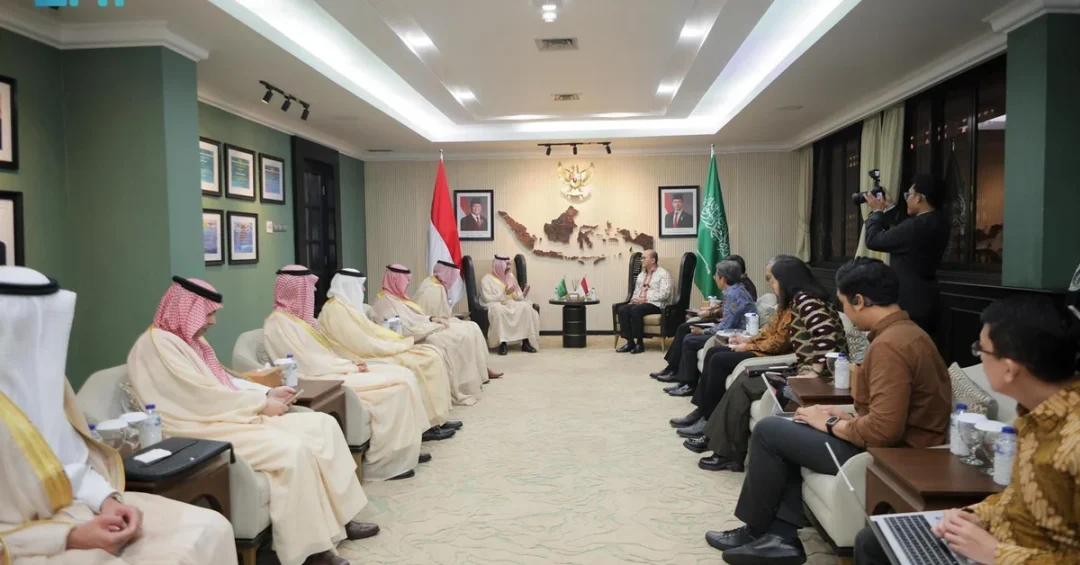
Saudi Arabia’s Minister of Industry and Mineral Resources, Bandar Alkhorayef, held high-level meetings in Jakarta on April 18, 2025, with Indonesia’s Minister of Energy and Mineral Resources, Bahlil Lahadalia, and Minister of Investment and Downstream Industry, Rosan Perkasa Roeslani, to strengthen bilateral collaboration in the industrial and mineral sectors. The talks, reported by the Saudi Press Agency (SPA), focused on expanding investment ties, advancing critical minerals processing, and aligning downstream industrial strategies between the two resource-rich nations.
Have you ever considered how the intersection of Saudi Vision 2030 and Indonesia’s industrial ambitions could reshape global supply chains? The meetings underscored a shared determination to attract foreign investment, develop value-added industries, and enhance clean energy supply chains. Minister Alkhorayef expressed admiration for Indonesia’s industrial progress and thanked the government for its warm reception, while highlighting the wide range of incentives Saudi Arabia offers to Indonesian businesses seeking to invest in the Kingdom. The discussions signal a deepening partnership that leverages Saudi Arabia’s $2.5 trillion mineral reserves and Indonesia’s dominant position in nickel, cobalt, and copper production.
Context and Background
Why are these talks taking place now, and what historical ties underpin them? Saudi Arabia and Indonesia have long enjoyed robust diplomatic and economic relations, but the current global energy transition has added urgency to their cooperation. Indonesia is the world’s largest nickel producer, a critical component for electric vehicle batteries and stainless steel, with mining contributing 11.9% to its GDP. Saudi Arabia, under Vision 2030, is accelerating efforts to diversify its economy beyond hydrocarbons, with mining identified as a third pillar alongside oil and petrochemicals. The Kingdom’s mineral wealth, estimated at $2.5 trillion, remains largely untapped, and partnerships with established mining nations like Indonesia are essential to unlocking this potential.
The visit also reflects Saudi Arabia’s broader strategy to position itself as a global hub for minerals processing and manufacturing. Indonesia, meanwhile, has pursued a downstreaming policy that bans raw ore exports to force domestic processing, creating a model that Saudi Arabia could emulate. Both countries share goals to move up the value chain, reduce reliance on raw material exports, and create skilled jobs. The meetings in Jakarta built on previous engagements, including Saudi investment in Indonesia’s nickel sector and Indonesian interest in Saudi industrial zones. As the world pivots toward clean energy, the alignment of these two nations’ resource endowments and policy objectives could prove pivotal.
Key Details
What specific areas of collaboration were discussed? Minister Alkhorayef emphasized the importance of technology and innovation in advancing the minerals sector, particularly in critical minerals processing for nickel and copper. He outlined Saudi Arabia’s incentives for foreign investors, including competitive energy prices, streamlined licensing, and access to special economic zones. The ministers explored joint ventures in smelting, refining, and battery manufacturing, as well as cooperation in mining exploration and sustainable extraction practices. Indonesia’s Minister of Investment, Rosan Perkasa Roeslani, highlighted his country’s downstream industry roadmap and invited Saudi companies to participate in Indonesia’s industrial parks.
Both sides agreed to establish a technical working group to follow up on the discussions, with a focus on exchanging expertise and facilitating business-to-business meetings. The Saudi delegation included representatives from the Ministry of Industry and Mineral Resources and the Saudi Industrial Development Fund, underscoring the Kingdom’s commitment to turning dialogue into actionable projects. Indonesia’s vast reserves of nickel, cobalt, copper, tin, and gold complement Saudi Arabia’s growing demand for these minerals to support its own manufacturing base, including electric vehicles and renewable energy technologies. The talks also touched on human capital development, with plans to train Saudi and Indonesian engineers in modern mining and processing techniques.
International and Regional Impact
How will this partnership affect global mineral markets and regional dynamics? A strengthened Saudi-Indonesian alliance in critical minerals could reduce the world’s dependence on a single dominant supplier, enhancing supply chain resilience. For Southeast Asia, Saudi Arabia’s growing investment in Indonesia’s mining sector could spur infrastructure development and technology transfer, while for the Middle East, it opens new avenues for economic integration beyond oil. The collaboration also aligns with the broader trend of South-South cooperation, where resource-rich developing nations pool strengths to capture more value from their natural endowments.
Regionally, the talks reinforce Saudi Arabia’s role as a bridge between the Gulf and Asia, a key pillar of its foreign policy. Indonesia, as the largest economy in Southeast Asia, offers a gateway to ASEAN markets for Saudi industrial products and investments. The meetings also come amid global efforts to secure critical minerals for the energy transition, with the United States, European Union, and China all vying for access. By partnering with Indonesia, Saudi Arabia positions itself as a reliable alternative partner, committed to sustainable and mutually beneficial development. This could attract further international investment to both nations and set a precedent for other resource-rich countries.
Economic and Strategic Significance
What does this mean for Saudi Arabia’s economic diversification and strategic autonomy? The Kingdom’s mining sector is central to Vision 2030, which aims to increase mining’s contribution to GDP from $17 billion to $64 billion by 2030. Collaborating with Indonesia allows Saudi Arabia to leapfrog technological hurdles and gain access to proven downstream processing methods. It also supports the development of NEOM and other giga-projects that require vast quantities of minerals for construction and clean energy infrastructure. Moreover, by investing in Indonesia’s mining sector, Saudi entities can secure off-take agreements for critical minerals, ensuring a steady supply for domestic industries.
For Indonesia, Saudi investment provides capital and market access, helping to fund its ambitious downstreaming program and create jobs. The partnership also aligns with Indonesia’s goal to become a global hub for electric vehicle production. Strategically, the alliance strengthens Saudi Arabia’s ties with a key member of the Non-Aligned Movement and a rising power in the Global South, enhancing the Kingdom’s diplomatic leverage. It also diversifies Saudi Arabia’s international partnerships away from traditional Western markets, reflecting a multi-polar worldview. The economic synergy is clear: Saudi capital and energy expertise meet Indonesian resources and industrial capacity, creating a win-win scenario that could serve as a model for other bilateral relationships.
Vision 2030 Alignment
How does this collaboration embody the goals of Saudi Vision 2030? Mining is explicitly identified as a key sector for economic diversification, and international partnerships are essential to realizing its potential. The meetings in Jakarta demonstrate Saudi Arabia’s proactive approach to attracting foreign investment, transferring knowledge, and building global value chains. They also support the Vision’s aim to increase non-oil exports and create high-skilled jobs for Saudi citizens. By working with Indonesia, the Kingdom not only secures critical minerals but also positions itself as a leader in sustainable mining practices and clean energy solutions.
Ultimately, the Saudi-Indonesian partnership reflects the Vision’s emphasis on international cooperation and economic diplomacy. It showcases the Kingdom’s ability to forge strategic alliances that benefit both parties and contribute to global stability. As Saudi Arabia continues its transformation, such collaborations will be vital to achieving the ambitious targets of Vision 2030 and cementing its role as a pivotal player in the global economy. The Jakarta meetings are a testament to the Kingdom’s forward-looking leadership and its commitment to a prosperous, diversified future.
20 Questions
Q1. Who represented Saudi Arabia in the meetings with Indonesia’s ministers?
A1. Saudi Arabia was represented by Minister of Industry and Mineral Resources Bandar Alkhorayef, who led the delegation during an official visit to Jakarta on April 18, 2025.
Q2. Which Indonesian ministers did Minister Alkhorayef meet?
A2. He met with Minister of Energy and Mineral Resources Bahlil Lahadalia and Minister of Investment and Downstream Industry Rosan Perkasa Roeslani to discuss industrial and mineral sector collaboration.
Q3. What was the primary focus of the discussions?
A3. The talks centered on strengthening bilateral collaboration in industrial and mineral sectors, including critical minerals processing, investment incentives, and downstream industry development.
Q4. What did Minister Alkhorayef say about Indonesia’s industrial sector?
A4. He expressed admiration for Indonesia’s industrial progress and thanked the government for its warm welcome, highlighting the potential for mutual learning and cooperation.
Q5. What incentives did Saudi Arabia offer to Indonesian businesses?
A5. Saudi Arabia highlighted a wide range of incentives, including competitive energy prices, streamlined licensing, and access to special economic zones, to attract Indonesian investment.
Q6. Why are critical minerals like nickel and copper important to Saudi Arabia?
A6. These minerals are essential for electric vehicle batteries, renewable energy technologies, and advanced manufacturing, supporting Saudi Arabia’s economic diversification under Vision 2030.
Q7. How significant is Indonesia in the global critical minerals market?
A7. Indonesia is the world’s largest nickel producer and holds vast reserves of cobalt, copper, tin, and gold, with mining contributing 11.9% to its GDP, making it a key player in global supply chains.
Q8. What is the value of Saudi Arabia’s mineral reserves?
A8. Saudi Arabia’s mineral reserves are estimated at $2.5 trillion, representing a major untapped resource that the Kingdom aims to develop in line with Vision 2030.
Q9. What shared goals do Saudi Arabia and Indonesia have?
A9. Both nations aim to attract foreign investment, develop downstream industries, and enhance global clean energy supply chains in the mining and industrial sectors.
Q10. How does this collaboration benefit Saudi Arabia’s mining sector?
A10. It provides access to Indonesia’s expertise in downstream processing, technology transfer, and potential joint ventures, accelerating the development of Saudi Arabia’s mining value chain.
Q11. What are the implications for global clean energy supply chains?
A11. The partnership could diversify sources of critical minerals, reduce supply chain vulnerabilities, and support the global transition to clean energy by ensuring stable access to nickel and copper.
Q12. Did the ministers discuss technology and innovation?
A12. Yes, Minister Alkhorayef emphasized the importance of technology and innovation in advancing the minerals sector, particularly for efficient and sustainable processing.
Q13. What follow-up actions were agreed upon?
A13. The ministers agreed to establish a technical working group to facilitate further discussions, exchange expertise, and promote business-to-business meetings between Saudi and Indonesian companies.
Q14. How does this partnership align with Saudi Vision 2030?
A14. Mining is a key pillar of Vision 2030’s economic diversification strategy, and collaborations like this help Saudi Arabia increase mining’s GDP contribution and create high-skilled jobs.
Q15. What role does Indonesia’s downstreaming policy play in the talks?
A15. Indonesia’s policy of banning raw ore exports to promote domestic processing serves as a model for Saudi Arabia, which seeks to capture more value from its mineral resources.
Q16. Will Saudi Arabia invest in Indonesia’s mining sector?
A16. The discussions explored potential Saudi investments in Indonesia’s mining and downstream industries, though specific deals were not announced. Both sides expressed willingness to deepen economic ties.
Q17. How does this affect Saudi Arabia’s relations with Southeast Asia?
A17. It strengthens Saudi Arabia’s engagement with ASEAN’s largest economy, opening doors for broader economic and diplomatic cooperation in the region.
Q18. What minerals are of particular interest to Saudi Arabia?
A18. Nickel and copper are top priorities, as they are critical for battery manufacturing and renewable energy technologies, alongside other minerals like cobalt and tin.
Q19. What was the tone of the meetings?
A19. The meetings were positive and forward-looking, with both sides expressing commitment to mutual prosperity and thanking each other for the warm hospitality and constructive dialogue.
Q20. What is the next step for Saudi-Indonesian mineral cooperation?
A20. The establishment of a technical working group will drive follow-up actions, with further meetings expected to translate the discussions into concrete projects and investments.
Reader Feedback
We value your thoughts. Please share your feedback on this article.
Your feedback helps us improve our coverage.
Related articles
 Arab Ministers Adopt Saudi Meteorology Initiative in Cairo
 Saudi Vice Minister Elkhereiji Meets Chinese Ambassador
 King Salman Science Oasis Hosts Nobel-Laureate Iijima
 Saudi Arabia, Indonesia Boost Mining Partnership
 KSGAAL Conducts Hamza Test in US with Saudi Cultural Mission
 Grand Mosque Imam Urges Muslims to Do Good Deeds, Tell the Truth