


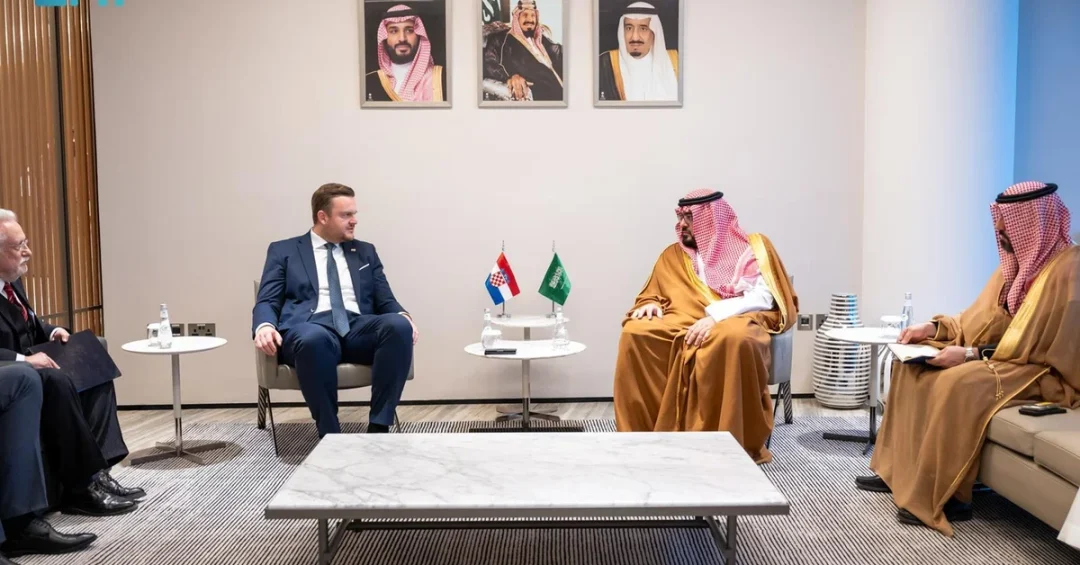
Saudi Arabia’s Minister of Economy and Planning, Faisal Alibrahim, met with Croatia’s Deputy Prime Minister and Minister of Finance, Marko Primorac, in Riyadh on December 4, 2024, to discuss strengthening bilateral relations and exploring new areas of economic collaboration between the two countries. The meeting, announced by the Saudi Press Agency (SPA), underscores the Kingdom’s ongoing commitment to deepening international partnerships as part of its broader economic diversification strategy under Vision 2030. Both officials also reviewed the latest global economic developments, signaling a shared interest in coordinating responses to shifting international market conditions.
The high-level encounter reflects Saudi Arabia’s proactive diplomatic and economic outreach to European nations, particularly those within the European Union, as the Kingdom seeks to expand trade corridors, attract foreign investment, and position itself as a pivotal bridge between Europe, Asia, and Africa. Croatia, a member of the EU and NATO with a strategic Adriatic coastline, represents a valuable partner in sectors ranging from logistics and tourism to renewable energy and advanced manufacturing. Could this meeting mark the beginning of a new chapter in Saudi-Croatian economic ties?
Context and Background
The meeting between Minister Alibrahim and Deputy Prime Minister Primorac took place against the backdrop of Saudi Arabia’s sustained efforts to diversify its economy away from oil dependence, a central pillar of Vision 2030. The Ministry of Economy and Planning, led by Alibrahim, plays a key role in shaping the Kingdom’s economic policy, fostering international cooperation, and monitoring global trends that impact Saudi Arabia’s development trajectory. Croatia, meanwhile, has been actively seeking to strengthen its economic relationships beyond traditional European partners, viewing the Gulf region as a source of investment and trade opportunities.
Why does this meeting matter now, given the current global economic landscape? The global economy is navigating a period of uncertainty, marked by fluctuating energy prices, supply chain realignments, and inflationary pressures across major markets. In this environment, Saudi Arabia has intensified its engagement with countries that offer complementary economic strengths. Croatia’s expertise in shipbuilding, pharmaceuticals, agriculture, and tourism aligns with several of Saudi Arabia’s priority sectors, including maritime logistics, healthcare, and hospitality. The two nations have maintained diplomatic relations since 1995, but recent years have seen a gradual uptick in bilateral exchanges, laying the groundwork for more substantive cooperation.
Furthermore, the meeting reflects Saudi Arabia’s broader strategy of deepening ties with European Union member states. As the Kingdom pursues trade agreements and investment partnerships across Europe, engagements with individual EU countries serve as building blocks for stronger region-to-region relations. Croatia’s position in the EU and its access to Central European markets make it an attractive partner for Saudi businesses looking to expand their European footprint.
Key Details of the Meeting
According to the Saudi Press Agency, the discussions between Minister Alibrahim and Deputy Prime Minister Primorac focused on strengthening existing relations and identifying potential areas of collaboration. While specific agreements were not announced, the meeting’s agenda included a review of global economic developments, indicating a shared interest in aligning perspectives on international financial trends and policy responses. The presence of Croatia’s finance minister suggests that financial services, investment flows, and fiscal cooperation were likely among the topics explored.
What could enhanced Saudi-Croatian collaboration look like in practice? Potential areas include trade in goods and services, joint ventures in renewable energy, cooperation in tourism and hospitality, and knowledge exchange in financial technology and digital innovation. Saudi Arabia’s Public Investment Fund (PIF) has been actively seeking investment opportunities in Europe, and Croatia’s growing technology and infrastructure sectors could attract Saudi capital. Conversely, Croatian companies with expertise in construction, engineering, and maritime industries may find new opportunities in Saudi Arabia’s giga-projects, such as NEOM and the Red Sea Project.
The meeting also highlights the personal engagement of senior officials in advancing bilateral ties. Minister Alibrahim, a key architect of Saudi Arabia’s economic planning, has been instrumental in forging international partnerships that support the Kingdom’s diversification goals. Deputy Prime Minister Primorac, as Croatia’s finance minister, brings a wealth of experience in fiscal policy and European financial affairs, making him a valuable interlocutor for Saudi counterparts. Their dialogue is expected to pave the way for further technical meetings and business-to-business exchanges.
International and Regional Impact
This meeting carries implications beyond the bilateral relationship. It signals Saudi Arabia’s continued openness to international engagement and its willingness to work with partners across Europe, regardless of their size or geographic location. For Croatia, the engagement offers a chance to diversify its economic partnerships and tap into the Gulf region’s dynamic markets. In a world where economic diplomacy is increasingly important, such meetings contribute to stability and mutual prosperity.
How might this meeting influence regional dynamics in the Middle East and Europe? Saudi Arabia’s growing network of European partnerships could enhance its role as a mediator and bridge-builder in global economic discussions. Croatia, as an EU member, could serve as a conduit for Saudi perspectives within European policy circles, particularly on issues related to energy security, investment, and sustainable development. The meeting also aligns with broader trends of intra-regional cooperation, as countries seek resilient supply chains and diversified trade relationships amid geopolitical uncertainties.
From a regional perspective, Saudi Arabia’s outreach to Croatia complements its existing engagements with other European nations, including Greece, Italy, and France. These relationships collectively strengthen the Kingdom’s position as a reliable partner for Europe, capable of contributing to energy stability, investment flows, and technological collaboration. The meeting thus forms part of a mosaic of partnerships that reinforce Saudi Arabia’s global economic integration.
Economic and Strategic Significance
The economic significance of this meeting lies in its potential to unlock new avenues for trade and investment. Saudi Arabia’s economy, the largest in the Arab world, offers a vast market for Croatian goods and services. Conversely, Croatia’s strategic location provides access to European markets and logistics networks. Enhanced cooperation could lead to increased bilateral trade, which currently remains modest relative to the two countries’ economic potential. Both sides have expressed interest in exploring sectors such as renewable energy, where Croatia has made strides in wind and solar power, and Saudi Arabia is investing heavily as part of its clean energy ambitions.
What strategic advantages could emerge from this partnership? For Saudi Arabia, collaboration with Croatia can support the transfer of technology and expertise in areas like shipbuilding, water management, and agricultural innovation. For Croatia, Saudi investment can drive infrastructure development, job creation, and technological modernization. Moreover, the meeting underscores Saudi Arabia’s commitment to economic diplomacy as a tool for fostering peace and stability. By building economic ties, the two countries create interdependencies that can contribute to mutual understanding and cooperation on broader global issues.
Additionally, the meeting reflects Saudi Arabia’s strategic focus on the Mediterranean and Southeast Europe as part of its wider foreign economic policy. As the Kingdom seeks to diversify its partners beyond traditional markets, countries like Croatia become increasingly relevant. This aligns with Vision 2030’s goal of transforming Saudi Arabia into a global investment powerhouse and a hub connecting three continents.
Vision 2030 Alignment
This meeting is a clear example of Vision 2030 in action. Vision 2030, launched by Crown Prince Mohammed bin Salman in 2016, aims to diversify the Saudi economy, reduce oil dependence, and create a vibrant society and thriving economy. International partnerships are a cornerstone of this vision, as they bring in investment, technology, and expertise that accelerate domestic reforms. The Ministry of Economy and Planning’s engagement with Croatia directly supports the vision’s objectives of expanding non-oil exports, attracting foreign direct investment, and enhancing Saudi Arabia’s global economic standing.
Can such diplomatic engagements truly accelerate the realization of Vision 2030? The answer lies in the cumulative impact of numerous bilateral and multilateral initiatives. Each meeting, agreement, and partnership adds a layer to Saudi Arabia’s international network, creating opportunities for knowledge transfer, market access, and collaborative innovation. As Saudi Arabia continues to open up to the world, engagements like the one with Croatia demonstrate the Kingdom’s proactive approach to shaping its economic future. The meeting also reinforces Saudi Arabia’s role as a responsible global actor, committed to constructive dialogue and mutual prosperity.
20 Questions
Q1. Who represented Saudi Arabia in the meeting with Croatia’s Deputy Prime Minister?
A1. Saudi Arabia was represented by Faisal Alibrahim, Minister of Economy and Planning. He met with Croatia’s Deputy Prime Minister and Minister of Finance, Marko Primorac, in Riyadh on December 4, 2024.
Q2. What was the main purpose of the meeting?
A2. The meeting aimed to strengthen bilateral relations and explore potential areas of collaboration between Saudi Arabia and Croatia. The officials also discussed the latest global economic developments, reflecting a shared interest in international economic trends.
Q3. Where did the meeting take place?
A3. The meeting took place in Riyadh, the capital of Saudi Arabia. Riyadh serves as the Kingdom’s political and economic hub and hosts many high-level international diplomatic engagements throughout the year.
Q4. When did the meeting occur?
A4. The meeting occurred on December 4, 2024, according to the Saudi Press Agency. The announcement was made shortly after the discussions concluded, highlighting the timely communication of official Saudi news.
Q5. What is the significance of Saudi-Croatian relations?
A5. Saudi-Croatian relations are significant as they represent Saudi Arabia’s outreach to European Union member states. Croatia offers access to European markets, while Saudi Arabia provides investment opportunities, creating a mutually beneficial partnership framework.
Q6. What areas of collaboration were discussed?
A6. Discussions focused on strengthening relations and exploring potential collaboration areas, likely including trade, investment, renewable energy, tourism, and financial services. The review of global economic developments also suggests coordination on economic policy matters.
Q7. How does this meeting align with Vision 2030?
A7. The meeting aligns with Vision 2030’s goal of diversifying the Saudi economy through international partnerships. It supports efforts to attract foreign investment, expand non-oil trade, and enhance Saudi Arabia’s global economic integration.
Q8. What is Croatia’s role in the European Union?
A8. Croatia is a member of the European Union and NATO, with a strategic location on the Adriatic Sea. It participates in EU decision-making and offers access to Central European markets, making it a valuable partner for Saudi Arabia.
Q9. Who is Faisal Alibrahim?
A9. Faisal Alibrahim is Saudi Arabia’s Minister of Economy and Planning. He plays a key role in shaping the Kingdom’s economic policy, overseeing diversification strategies, and fostering international economic cooperation in line with Vision 2030.
Q10. Who is Marko Primorac?
A10. Marko Primorac is Croatia’s Deputy Prime Minister and Minister of Finance. He is responsible for fiscal policy, financial affairs, and economic strategy, and represents Croatia in high-level international economic discussions.
Q11. What are the potential economic benefits for Saudi Arabia?
A11. Potential benefits include increased trade with Croatia, access to European markets, technology transfer, and investment opportunities. Collaboration in renewable energy, tourism, and logistics could also support Saudi Arabia’s economic diversification goals.
Q12. What are the potential benefits for Croatia?
A12. Croatia could benefit from Saudi investment in infrastructure, energy, and tourism. Enhanced ties with the Kingdom may also open doors to Gulf markets and create opportunities for Croatian companies in Saudi giga-projects.
Q13. How does this meeting fit into Saudi Arabia’s broader European outreach?
A13. This meeting is part of Saudi Arabia’s broader strategy to engage European nations, including Greece, Italy, and France. Such engagements collectively strengthen the Kingdom’s economic ties with Europe and support Vision 2030 objectives.
Q14. Were any agreements signed during the meeting?
A14. No specific agreements were announced in the SPA report. The meeting focused on discussions about strengthening relations and exploring collaboration areas, laying the groundwork for future cooperation and potential agreements.
Q15. What global economic developments were likely discussed?
A15. Likely topics included inflation trends, energy market volatility, supply chain resilience, and post-pandemic recovery strategies. Both officials would have shared perspectives on how these issues affect their respective economies.
Q16. How does Saudi Arabia benefit from engaging with smaller EU states?
A16. Engaging with smaller EU states like Croatia allows Saudi Arabia to build diverse partnerships, gain insights into EU policies, and access niche markets. It also strengthens the Kingdom’s diplomatic network across Europe.
Q17. What role does the Ministry of Economy and Planning play in Saudi diplomacy?
A17. The Ministry of Economy and Planning drives economic diplomacy by forging international partnerships, monitoring global trends, and aligning foreign cooperation with Vision 2030 goals. It is central to Saudi Arabia’s economic diversification efforts.
Q18. Could this meeting lead to future high-level visits?
A18. Yes, such meetings often pave the way for reciprocal visits, business delegations, and joint committees. Future engagements could involve Saudi investment missions to Croatia or Croatian trade delegations to the Kingdom.
Q19. How does this meeting reflect Saudi Arabia’s global economic integration?
A19. The meeting demonstrates Saudi Arabia’s active pursuit of global economic integration through bilateral engagements. It shows the Kingdom’s openness to partnerships that enhance trade, investment, and knowledge exchange on a global scale.
Q20. What is the outlook for Saudi-Croatian economic relations?
A20. The outlook is positive, with both countries expressing interest in deepening ties. Continued dialogue and follow-up meetings are expected to translate discussions into concrete cooperation, benefiting both economies and supporting Vision 2030.
Reader Feedback
We value your thoughts. Please share your feedback on this article.
Your feedback helps us improve our coverage.
Related articles
 Saudi Climate Envoy Meets UNEP Chief at COP16 in Riyadh
 Ministry of Interior Wins First Place for Best Security Awareness Films
 Saudi COP16 Presidency Mobilizes Private Sector for Land Restoration
 Saudi Arabia Weather Forecast for Thursday: Winds, Rain, Fog
 KAUST Tops THE Arab University Rankings for Second Year
 Saudi Green Initiative Forum Concludes with Major Commitments