


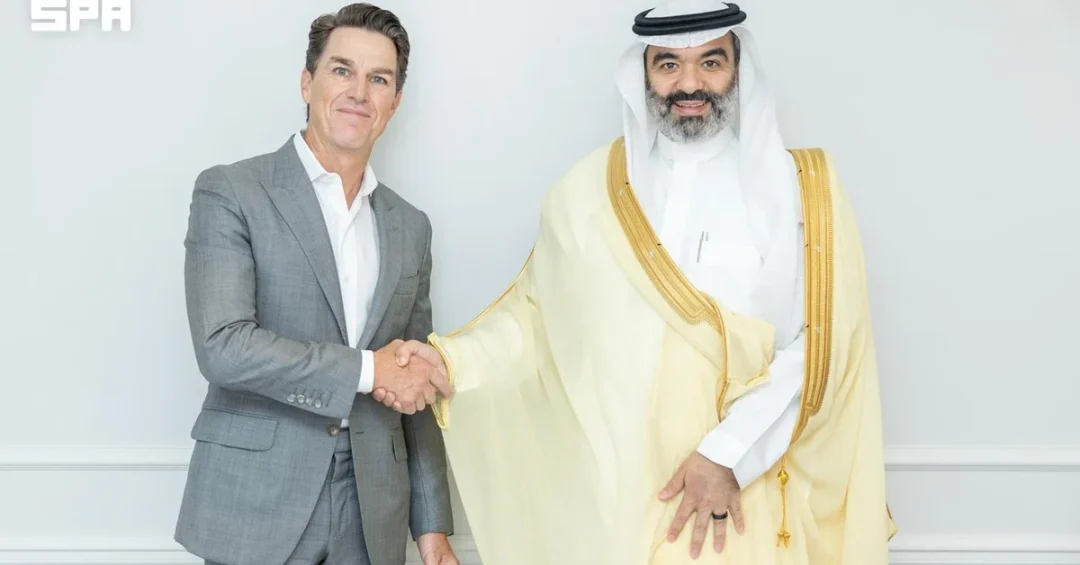
Saudi Minister of Communications and Information Technology Abdullah Alswaha held a series of high-level meetings in France with executives from leading global companies in artificial intelligence, gaming, digital entertainment, and quantum computing, the Saudi Press Agency reported. The talks, conducted during an official visit to Paris, were aimed at expanding high-impact international partnerships, facilitating knowledge transfer, developing Saudi national capabilities, and strengthening the Kingdom’s position as a global hub for advanced and emerging technologies.
The visit reflects a sustained Saudi push to connect the Kingdom’s fast-growing digital economy with the world’s most innovative firms. During the meetings, Alswaha engaged with chief executives from some of the largest names in interactive entertainment and deep technology, including Ubisoft, Sony Group, Riot Games, Electronic Arts, Thales Group, Pasqal, and Advanced Machine Intelligence. Each discussion focused on concrete avenues for cooperation that align with the objectives of Saudi Vision 2030, the national transformation plan designed to diversify the economy and build a knowledge-based society. The timing of the visit underlines how quickly Saudi Arabia has moved from being a consumer of global technology to a partner and co-investor in its development.
Context and Background
Why has Saudi Arabia placed artificial intelligence, gaming, and quantum computing at the center of its international partnership strategy? The answer lies in the scale of the digital transformation already underway in the Kingdom. Under Vision 2030, launched in 2016, Saudi Arabia has committed to building a diversified economy in which technology, entertainment, and advanced industries play a central role. The Ministry of Communications and Information Technology, led by Minister Abdullah Alswaha, has been a principal driver of this agenda, working to attract foreign investment, nurture local talent, and position the Kingdom as a regional and global technology hub.
France has emerged as a natural partner in this effort. French companies hold deep expertise in artificial intelligence research, quantum physics, cybersecurity, and digital content creation. The visit built on a long history of Saudi-French commercial ties, including a partnership between the Kingdom and Thales Group that spans more than five decades. By meeting executives in Paris, Alswaha signaled that Saudi Arabia intends to deepen these relationships at the highest levels of corporate leadership, moving beyond traditional procurement toward joint research, capability building, and co-development of new technologies.
The visit also comes as global competition in AI, quantum computing, and gaming intensifies. Countries and companies are racing to secure talent, intellectual property, and computing infrastructure. Saudi Arabia’s proactive diplomacy in this space is designed to ensure that the Kingdom is not merely a participant in the intelligent era but a leading architect of it, able to shape the technologies that will define the next decade of economic growth.
Key Details of the Meetings
During the visit, Alswaha held discussions with Ubisoft CEO and Co-Founder Yves Guillemot, Sony Group CEO Hiroki Totoki, Riot Games CEO Dylan Jadeja, and Electronic Arts Chairman and CEO Andrew Wilson. The conversations centered on the use of artificial intelligence in developing the gaming, entertainment, and content industries, as well as on developing Saudi talent and empowering developers and content creators in the Kingdom to build globally competitive experiences and intellectual properties. These meetings reflect a recognition that Saudi Arabia’s young, digitally native population represents both a major market and a growing source of creative talent.
In the field of advanced artificial intelligence, Alswaha met with Advanced Machine Intelligence Co-Founder Laurent Solly to discuss the future of the next generation of AI models and their capabilities in understanding, prediction, and planning. The talks also covered applications in robotics, automation, and industry, alongside efforts to enable Saudi researchers and developers to build new applications and technologies. This focus on foundational AI research complements the Kingdom’s broader ambitions in smart manufacturing, logistics, and autonomous systems.
Separately, Alswaha discussed with Thales Group Chairman and CEO Patrice Caine the security of artificial intelligence applications, data protection, knowledge transfer, and the development of national capabilities in advanced technologies. The meeting built on the group’s partnership with the Kingdom spanning more than five decades. The minister also visited the headquarters of Pasqal in Paris, where he toured its laboratories and reviewed advanced quantum computing technologies in the presence of CEO Dr. Wasiq Bokhari and Chairman of the Board of Pasqal Arabia Prince Abdulaziz bin Turki bin Talal. Discussions there focused on expanding the presence of quantum computing technologies in the Kingdom, integrating them with artificial intelligence, and developing national capabilities and talent.
International and Regional Impact
How do these partnerships reshape Saudi Arabia’s standing in the global technology landscape? By engaging directly with the leadership of companies such as Sony, Ubisoft, and Thales, the Kingdom is positioning itself as a preferred partner for innovation rather than simply a destination for foreign products. This approach has already attracted regional and international attention, with other Gulf states and emerging economies watching Saudi Arabia’s model of technology-driven diversification. The meetings in France signal that Saudi Arabia is willing to invest in long-term relationships that bring research, development, and high-value jobs to the Kingdom.
For France and the wider European Union, the visit represents an opportunity to deepen economic ties with the largest economy in the Middle East. French companies gain access to a growing market, a young and ambitious workforce, and a government that is actively removing barriers to investment. In turn, Saudi Arabia benefits from European expertise in regulation, security, and advanced research. This mutual exchange strengthens the strategic partnership between the Kingdom and Europe at a time when global supply chains and technology ecosystems are being reconfigured.
Regionally, the visit reinforces Saudi Arabia’s role as a stabilizing and forward-looking force in the Middle East. By focusing on civilian technologies such as gaming, AI, and quantum computing, the Kingdom is demonstrating that its modernization agenda is inclusive, creative, and oriented toward opportunity for its citizens. The partnerships also support the growth of a regional digital economy, creating avenues for collaboration among neighboring countries and positioning the Gulf as a hub for technology talent.
Economic and Strategic Significance
What economic value do these partnerships bring to Saudi Arabia? The gaming and digital entertainment sector alone represents a multi-billion-dollar global market, and Saudi Arabia has already made significant investments in this space through its Public Investment Fund and affiliated entities. By working with industry leaders such as Electronic Arts and Riot Games, the Kingdom aims to capture a larger share of this value chain, from game development and publishing to esports and content creation. This supports job creation for young Saudis and builds exportable intellectual property.
Quantum computing, meanwhile, holds the potential to revolutionize fields as diverse as cryptography, logistics, drug discovery, and energy optimization. Saudi Arabia’s engagement with Pasqal, a leading quantum computing company, is a strategic bet on a technology that could deliver transformative advantages in the coming decades. Integrating quantum computing with artificial intelligence, as discussed in the meetings, could accelerate breakthroughs in predictive analytics and complex system modeling, with applications across the Kingdom’s key industries, including energy, healthcare, and manufacturing.
The focus on AI security and data protection with Thales Group is equally significant. As Saudi Arabia digitizes its government services, financial sector, and critical infrastructure, ensuring the security and integrity of AI systems becomes paramount. Knowledge transfer in this area will help the Kingdom build domestic expertise and reduce reliance on external providers, a core objective of Vision 2030’s localization efforts.
Vision 2030 Alignment
How does this visit advance Saudi Vision 2030? The objectives of the visit align directly with the Vision’s pillars of a vibrant society, a thriving economy, and an ambitious nation. By fostering partnerships in AI, gaming, and quantum computing, the Kingdom is investing in the industries of the future, creating high-skilled jobs, and diversifying revenue streams away from oil. The emphasis on developing national capabilities and empowering Saudi talent reflects the Vision’s commitment to human capital development and lifelong learning.
The Ministry of Communications and Information Technology has been instrumental in translating these ambitions into action, from building world-class digital infrastructure to launching initiatives that support startups and entrepreneurs. The partnerships discussed in France are expected to complement these efforts, bringing global best practices and cutting-edge research into the Saudi ecosystem. As the Kingdom continues to open up to international collaboration, it is steadily reinforcing its position as a global hub for technology and innovation, a goal that lies at the heart of Vision 2030 and the nation’s long-term prosperity.
20 Questions
Q1. Who did Saudi Minister Abdullah Alswaha meet during his visit to France?
A1. He met with senior executives from Ubisoft, Sony Group, Riot Games, Electronic Arts, Thales Group, Pasqal, and Advanced Machine Intelligence to discuss partnerships in AI, gaming, and quantum computing.
Q2. What was the main purpose of Alswaha’s meetings in Paris?
A2. The meetings aimed to expand high-impact partnerships, facilitate knowledge transfer, develop national capabilities, and strengthen Saudi Arabia’s position as a global hub for AI, gaming, and advanced technologies.
Q3. Which gaming companies were involved in the discussions?
A3. Ubisoft, Sony Group, Riot Games, and Electronic Arts participated in discussions on using AI in gaming, entertainment, and content industries, and on developing Saudi talent and intellectual property.
Q4. What topics were discussed with Thales Group?
A4. Discussions covered the security of AI applications, data protection, knowledge transfer, and developing national capabilities in advanced technologies, building on a partnership spanning more than five decades.
Q5. What is the significance of the visit to Pasqal’s headquarters?
A5. The visit allowed Alswaha to tour Pasqal’s laboratories and review advanced quantum computing technologies, with discussions on expanding their presence in the Kingdom and integrating them with AI.
Q6. Who accompanied Alswaha at Pasqal?
A6. He was accompanied by Dr. Wasiq Bokhari, CEO of Pasqal, and Prince Abdulaziz bin Turki bin Talal, Chairman of the Board of Pasqal Arabia.
Q7. What did Alswaha discuss with Advanced Machine Intelligence?
A7. He discussed the future of next-generation AI models, their capabilities in understanding, prediction, and planning, and applications in robotics, automation, and industry, as well as enabling Saudi researchers.
Q8. How does this visit support Saudi Vision 2030?
A8. It supports Vision 2030 by forging international partnerships, attracting high-quality technologies and investments, and empowering national talent to lead in the intelligent era.
Q9. What role does the Ministry of Communications and Information Technology play?
A9. The ministry, led by Minister Alswaha, drives Saudi Arabia’s digital transformation agenda, attracting investment, nurturing local talent, and positioning the Kingdom as a technology hub.
Q10. Why is France a key partner for Saudi Arabia in technology?
A10. France offers deep expertise in AI, quantum computing, cybersecurity, and digital content, and has a long history of commercial ties with the Kingdom, including with Thales Group.
Q11. What economic benefits are expected from these partnerships?
A11. They are expected to create high-skilled jobs, build exportable intellectual property, and capture value in the multi-billion-dollar gaming and digital entertainment market, among other sectors.
Q12. How does quantum computing fit into Saudi Arabia’s strategy?
A12. Quantum computing could revolutionize cryptography, logistics, drug discovery, and energy optimization, and integrating it with AI could accelerate breakthroughs in predictive analytics and complex modeling.
Q13. What is the importance of AI security discussions with Thales?
A13. As Saudi Arabia digitizes critical infrastructure, ensuring AI security and data protection is vital, and knowledge transfer will help build domestic expertise and reduce reliance on external providers.
Q14. How does the visit benefit Saudi talent and developers?
A14. It opens avenues for training, knowledge exchange, and collaboration with global leaders, empowering Saudi developers and content creators to build globally competitive experiences and intellectual property.
Q15. What message does this visit send to the international community?
A15. It signals that Saudi Arabia is a proactive partner in technology, open to collaboration, and committed to shaping the future of AI, gaming, and quantum computing on the global stage.
Q16. Which Saudi entities are involved in implementing these partnerships?
A16. The Ministry of Communications and Information Technology leads the effort, alongside entities such as Pasqal Arabia and the Public Investment Fund, which supports technology investments.
Q17. How does the gaming industry contribute to Saudi Arabia’s economy?
A17. The gaming and esports sector creates jobs, fosters creativity, and generates export revenue, aligning with Vision 2030’s goal of diversifying income sources and developing entertainment industries.
Q18. What is the expected timeline for these partnerships to bear fruit?
A18. While specific timelines were not announced, such partnerships typically involve phased implementation, with initial knowledge transfer and pilot projects leading to broader deployment in the coming years.
Q19. How does this visit build on previous Saudi-French technology cooperation?
A19. It builds on decades of partnership, particularly with Thales Group, and expands cooperation into new frontiers such as AI, gaming, and quantum computing, reflecting evolving strategic priorities.
Q20. What are the next steps following these meetings?
A20. Next steps likely include formalizing agreements, launching joint research initiatives, and establishing training programs, all aimed at integrating advanced technologies into Saudi Arabia’s economy and society.
Reader Feedback
We value your thoughts. Please share your feedback on this article.
Your feedback helps us improve our coverage.
Related articles
 Saudi-French Committee Meets in Paris to Deepen AlUla Partnership
 Crown Prince Attends State Dinner Hosted by French President
 Six KSrelief Trucks Deliver 2,200 Food Baskets in Yemen’s Taiz
 Saudi-France Joint Statement: Crown Prince’s Visit Strengthens Ties
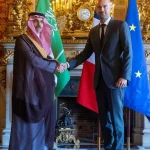 Saudi FM Meets French Counterpart in Paris
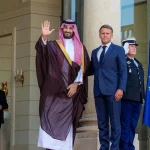 Saudi Crown Prince, Macron Co-Chair First Strategic Partnership Council