


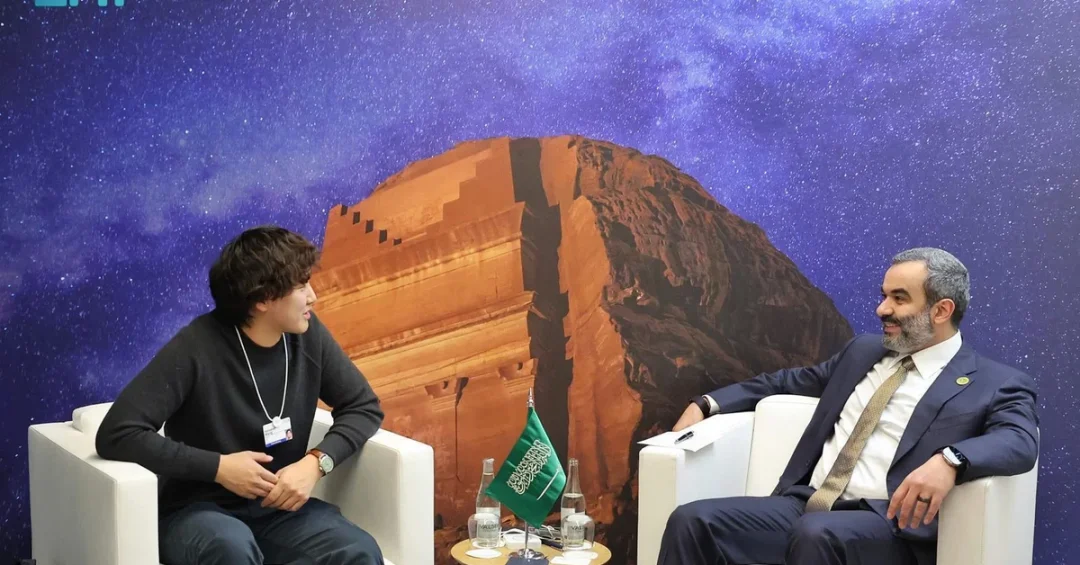
Saudi Arabia’s Minister of Communications and Information Technology, Eng. Abdullah Alswaha, held a series of high-level meetings with leaders of major global technology companies during his participation in the World Economic Forum (WEF) in Davos, Switzerland, on January 23, 2025, according to the Saudi Press Agency (SPA). The discussions focused on strategic investments and expanding future partnerships in artificial intelligence (AI), cloud computing, and modern technologies, underscoring the Kingdom’s position as a regional hub for technology and innovation.
Could the world’s next great technology hub be emerging in the heart of the Middle East? The meetings in Davos signal Saudi Arabia’s determination to be at the forefront of the global digital economy, building bridges with some of the most influential companies in Silicon Valley and beyond. The minister’s agenda included talks with Amazon Web Services (AWS) CEO Matt Garman, Scale AI founder and CEO Alexandr Wang, IBM CEO Arvind Krishna, and Sony Chairman and CEO Kenichiro Yoshida. In a parallel session, Vice Minister at the Ministry of Communications and Information Technology (MCIT) Eng. Haitham AlOhali met with OpenAI’s Chief Product Officer Kevin Weil to explore AI partnerships. These engagements reflect a coordinated, top-level push to attract investment, transfer knowledge, and develop national capabilities in line with Saudi Vision 2030.
Context and Background
What makes these meetings more than just another round of diplomatic handshakes? Saudi Arabia has been steadily building a technology ecosystem that is now attracting serious global attention. Under Vision 2030, the Kingdom aims to diversify its economy away from oil, and the digital sector is a cornerstone of that transformation. The MCIT has been instrumental in driving initiatives such as the National Strategy for Data and AI, the establishment of special economic zones for cloud computing, and massive investments in digital infrastructure. The World Economic Forum in Davos provided a timely platform for Eng. Alswaha to engage directly with decision-makers who control some of the most advanced technologies in the world.
The timing is significant. Global technology firms are increasingly looking for stable, well-funded markets with supportive regulatory environments. Saudi Arabia offers exactly that, combined with a young, tech-savvy population and a government that is rolling out the red carpet for innovation. The meetings in Davos were not isolated events; they are part of a broader pattern of deepening ties between the Kingdom and the global tech community. From AWS’s planned investment in a new cloud region in Saudi Arabia to IBM’s growing presence in the Kingdom, the foundations for long-term collaboration are being laid. These partnerships are expected to accelerate the growth of the digital economy, create high-skilled jobs, and position Saudi Arabia as a leader in AI, cloud computing, and next-generation technologies.
Key Details of the Meetings
What specific outcomes can we expect from these high-level discussions? The meeting with AWS CEO Matt Garman focused on enhancing the strategic partnership in cloud computing, AI, and AWS investments in the Kingdom. AWS has already committed to investing billions of dollars in Saudi Arabia, including the launch of a new cloud region in 2026. This will support the growth of the digital economy and affirm the Kingdom’s regional position as a center for innovation and advanced technical solutions. The discussion with Scale AI’s Alexandr Wang centered on enhancing AI and data solutions and developing the Kingdom’s capabilities to achieve its aspirations. Scale AI is known for its work in data labeling and AI model training, and its expertise could be valuable in building Saudi Arabia’s AI ecosystem.
In a separate meeting, Eng. Alswaha discussed with IBM CEO Arvind Krishna opportunities for high-quality investments in Saudi Arabia, expanding AI and big data partnerships, and developing national capabilities in modern technologies. IBM has a long history in the Kingdom and is involved in several digital transformation projects. The conversation with Sony’s Chairman and CEO Kenichiro Yoshida focused on expanding partnerships in technology and innovation, developing strategic partnerships, and exchanging expertise to support the digital economy and develop capabilities in online gaming. Sony’s expertise in gaming and entertainment aligns with Saudi Arabia’s ambitions to become a global gaming hub, as outlined in the National Gaming and Esports Strategy. Additionally, Vice Minister Eng. Haitham AlOhali met with OpenAI’s Chief Product Officer Kevin Weil to discuss ways to enhance partnerships in developing AI technologies and invest in their promising potential to drive the growth of the digital economy and achieve sustainable development. OpenAI’s advanced AI models could play a role in various sectors, from healthcare to education.
International and Regional Impact
How will these partnerships ripple across the region and beyond? Saudi Arabia’s proactive engagement with global tech leaders sends a strong signal that the Kingdom is open for business and ready to collaborate on cutting-edge technologies. For international companies, partnering with Saudi Arabia offers access to a rapidly growing market, a strategic location at the crossroads of three continents, and a government that is committed to digital transformation. The investments and partnerships discussed in Davos are likely to have a positive impact on the entire Middle East, as Saudi Arabia often serves as a trendsetter and a catalyst for regional development. Neighboring countries may follow suit, creating a more integrated and competitive digital economy in the region.
Moreover, these meetings reinforce Saudi Arabia’s role as a bridge between East and West, facilitating the exchange of ideas, talent, and capital. The presence of Saudi officials at Davos, engaging with top executives from the United States, Japan, and other countries, demonstrates the Kingdom’s global outlook. It also aligns with the broader goals of the World Economic Forum, which seeks to foster public-private cooperation on global challenges. By participating actively in such forums, Saudi Arabia is not only showcasing its own achievements but also contributing to shaping the global agenda on technology and innovation. The discussions with OpenAI, for instance, highlight the Kingdom’s interest in the responsible development and deployment of AI, a topic of worldwide importance.
Economic and Strategic Significance
What does this mean for Saudi Arabia’s economy and strategic position? The digital economy is a key pillar of Vision 2030, and the Kingdom has set ambitious targets to increase its contribution to GDP. According to official figures, the digital sector is expected to contribute more than 19% of non-oil GDP by 2030. The partnerships discussed in Davos are designed to accelerate this growth by bringing in foreign investment, creating jobs, and fostering innovation. For example, AWS’s investments in cloud infrastructure will enable local businesses to scale faster and more efficiently, while also attracting startups and entrepreneurs to the Kingdom. The collaboration with IBM on AI and big data will help Saudi Arabia harness the power of data to improve public services and drive economic diversification.
Strategically, these meetings strengthen Saudi Arabia’s position as a leader in the global technology arena. By aligning with companies like Scale AI and OpenAI, the Kingdom is positioning itself at the forefront of AI development, which is expected to be a major driver of economic growth in the coming decades. The focus on online gaming with Sony taps into a rapidly growing global market and supports the creation of a vibrant entertainment ecosystem within Saudi Arabia. These partnerships also contribute to the development of national capabilities, as they involve training and upskilling Saudi talent. This is crucial for ensuring that the benefits of technological advancement are widely shared and that the Kingdom builds a sustainable, knowledge-based economy.
Vision 2030 Alignment
How do these developments fit into the broader Vision 2030 framework? Vision 2030, launched by Crown Prince Mohammed bin Salman in 2016, aims to transform Saudi Arabia into a diversified, innovative, and globally connected economy. The meetings in Davos directly support several of the Vision’s key objectives, including the creation of a digital society, the development of a knowledge economy, and the enhancement of international cooperation. The MCIT’s efforts to attract global tech giants are part of a comprehensive strategy that includes investments in education, infrastructure, and regulatory reform. By partnering with the world’s leading technology companies, Saudi Arabia is not only importing technology but also co-creating solutions that can be exported to the region and beyond.
Looking ahead, the Kingdom is poised to continue its trajectory as a global technology hub. The discussions in Davos are expected to lead to concrete agreements and investments in the near future. As Eng. Alswaha and his team follow up on these meetings, Saudi Arabia will further solidify its reputation as a place where innovation thrives and where global companies can find reliable partners. The world is watching, and the message is clear: Saudi Arabia is open for business, ready to embrace the future, and committed to building a prosperous, tech-driven society that benefits all its people and contributes to global progress.
20 Questions
Q1. Who did Saudi Arabia’s Minister of Communications and Information Technology meet with at Davos?
A1. Eng. Abdullah Alswaha met with leaders of major global technology companies, including AWS CEO Matt Garman, Scale AI CEO Alexandr Wang, IBM CEO Arvind Krishna, and Sony Chairman and CEO Kenichiro Yoshida, during the World Economic Forum in Davos.
Q2. What was the main focus of these meetings?
A2. The meetings focused on strategic investments and expanding future partnerships in artificial intelligence, cloud computing, and modern technologies, highlighting Saudi Arabia’s position as a regional hub for technology and innovation.
Q3. Which company did Eng. Alswaha discuss cloud computing investments with?
A3. Eng. Alswaha met with Amazon Web Services (AWS) CEO Matt Garman to discuss enhancing the strategic partnership in cloud computing, AI, and AWS investments in the Kingdom.
Q4. What did the discussion with Scale AI’s founder focus on?
A4. The discussion with Scale AI founder and CEO Alexandr Wang focused on enhancing AI and data solutions and developing the Kingdom’s capabilities to achieve its aspirations and develop the digital economy.
Q5. What opportunities were discussed with IBM’s CEO?
A5. Eng. Alswaha and IBM CEO Arvind Krishna discussed opportunities for high-quality investments in Saudi Arabia, expanding AI and big data partnerships, and developing national capabilities in modern technologies.
Q6. What was the topic of the meeting with Sony’s Chairman?
A6. The meeting with Sony Chairman and CEO Kenichiro Yoshida focused on expanding partnerships in technology and innovation, developing strategic partnerships, and exchanging expertise to support the digital economy and develop capabilities in online gaming.
Q7. Who represented the Ministry of Communications and Information Technology in the meeting with OpenAI?
A7. Vice Minister at the MCIT Eng. Haitham AlOhali met with OpenAI’s Chief Product Officer Kevin Weil to discuss enhancing partnerships in developing AI technologies.
Q8. What did the meeting with OpenAI aim to achieve?
A8. The meeting aimed to enhance partnerships in developing AI technologies and invest in their promising potential to drive the growth of the digital economy and achieve sustainable development.
Q9. Why is Saudi Arabia considered a hub for technology and innovation in the region?
A9. Saudi Arabia is considered a hub due to its strategic location, young tech-savvy population, government support for digital transformation, and significant investments in AI, cloud computing, and modern technologies under Vision 2030.
Q10. How do these meetings align with Saudi Vision 2030?
A10. These meetings align with Vision 2030 by supporting economic diversification, enhancing the digital economy, creating high-skilled jobs, and positioning Saudi Arabia as a global leader in technology and innovation.
Q11. What is the significance of AWS investments in Saudi Arabia?
A11. AWS investments in Saudi Arabia, including a planned cloud region, will support the growth of the digital economy, enable local businesses to scale, and affirm the Kingdom’s regional position as a center for advanced technical solutions.
Q12. How will the partnership with Scale AI benefit Saudi Arabia?
A12. The partnership with Scale AI will enhance AI and data solutions, develop national capabilities, and help Saudi Arabia achieve its aspirations in AI, contributing to the growth of the digital economy.
Q13. What role does IBM play in Saudi Arabia’s digital transformation?
A13. IBM is involved in expanding AI and big data partnerships and developing national capabilities in modern technologies, supporting Saudi Arabia’s digital transformation and economic diversification efforts.
Q14. Why is online gaming a focus of the partnership with Sony?
A14. Online gaming is a focus because Saudi Arabia aims to become a global gaming hub under its National Gaming and Esports Strategy, and Sony’s expertise can help develop capabilities in this growing sector.
Q15. What are the expected outcomes of the meeting with OpenAI?
A15. The meeting with OpenAI is expected to lead to enhanced partnerships in AI development, investment in AI technologies, and support for sustainable development and digital economy growth in Saudi Arabia.
Q16. How does Saudi Arabia plan to develop national capabilities in modern technologies?
A16. Saudi Arabia plans to develop national capabilities through partnerships with global tech companies, training programs, knowledge transfer, and investments in education and innovation, as part of Vision 2030.
Q17. What is the World Economic Forum in Davos?
A17. The World Economic Forum in Davos is an annual gathering of global leaders from business, government, and civil society to discuss major global issues, including technology, economy, and sustainable development.
Q18. How do these meetings impact the regional digital economy?
A18. These meetings are expected to have a positive impact on the regional digital economy by attracting investments, fostering innovation, and positioning Saudi Arabia as a leader, which can inspire similar developments in neighboring countries.
Q19. What is the Ministry of Communications and Information Technology’s role in Saudi Arabia’s tech ambitions?
A19. The MCIT is responsible for driving Saudi Arabia’s digital transformation, implementing the National Strategy for Data and AI, and fostering partnerships with global tech companies to achieve Vision 2030 goals.
Q20. What can we expect next from Saudi Arabia’s tech partnerships?
A20. We can expect concrete agreements and investments to follow, further solidifying Saudi Arabia’s reputation as a global technology hub and advancing its journey toward a diversified, knowledge-based economy.
Reader Feedback
We value your thoughts. Please share your feedback on this article.
Your feedback helps us improve our coverage.
Related articles
 Saudi Weather Forecast: Thursday Thunderstorms, Rain
 Twelfth Saudi Relief Plane Departs for Syria with Aid
 Crown Prince Holds Call with President Trump
 Crown Prince Receives Call from US Secretary of State Rubio
 DGA Joins Qassim Youth Forum to Empower Digital Talent
 MWL Condemns Israeli Attack on Jenin in West Bank