


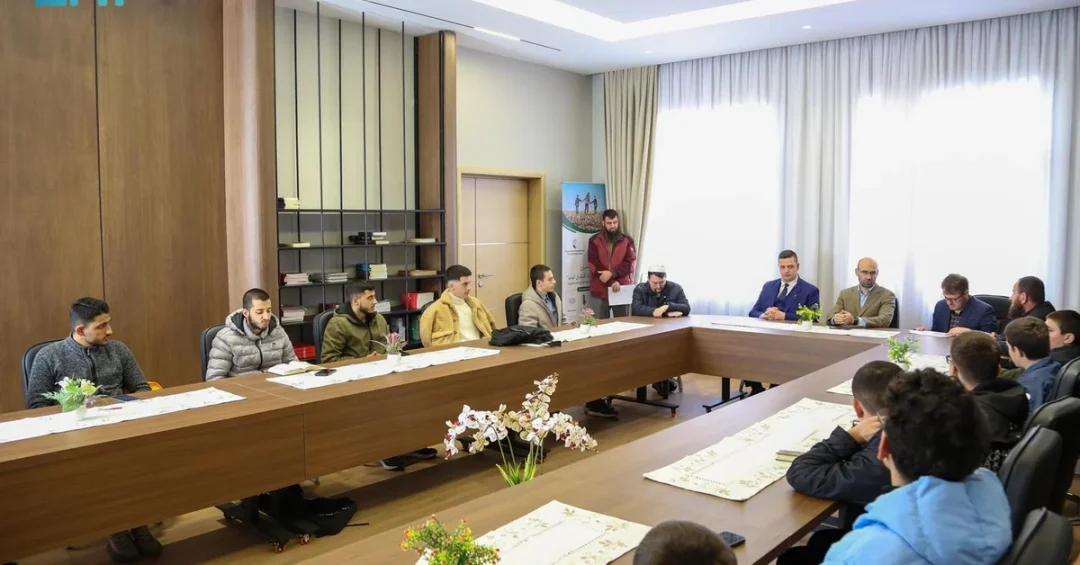
The Ministry of Islamic Affairs, Dawah and Guidance, represented by the Religious Attaché at the Saudi Embassy in Bosnia and Herzegovina, has successfully concluded the preliminary qualifiers for the largest international Holy Quran memorization competition in the Balkans, marking the third edition of the event organized in cooperation with the Islamic Sheikdom in the Republic of Kosovo and in coordination with the Saudi Embassy in the Republic of Albania. The competition, which drew 2,350 contestants from 22 countries, represents a significant milestone in the Kingdom’s ongoing efforts to promote moderate Islam and strengthen cultural and religious ties across the Balkan region. The preliminary rounds, held in various locations, set the stage for the final round scheduled to take place from May 8 to 11 in Pristina, the capital of Kosovo.
This initiative underscores Saudi Arabia’s commitment to supporting Islamic education and Quranic studies worldwide, a key pillar of its cultural diplomacy. By fostering a spirit of healthy competition and spiritual devotion, the Ministry of Islamic Affairs continues to build bridges of understanding and cooperation with Muslim communities in Europe and beyond. The event also highlights the Kingdom’s leadership in promoting the values of tolerance, moderation, and peace, as outlined in its Vision 2030 framework, which seeks to enhance Saudi Arabia’s global role and cultural influence.
Context and Background
How has Saudi Arabia consistently positioned itself as a global leader in supporting Quranic education and Islamic unity? For decades, the Kingdom has been at the forefront of initiatives that encourage the memorization and study of the Holy Quran, providing resources, expertise, and platforms for Muslims around the world to deepen their connection with their faith. The Ministry of Islamic Affairs, Dawah and Guidance has been instrumental in this mission, organizing competitions and programs that resonate with communities from Southeast Asia to the Balkans.
The Balkans, a region with a rich Islamic heritage and a significant Muslim population, has been a focal point for the Ministry’s outreach efforts. The third edition of this competition, organized in cooperation with the Islamic Sheikdom in the Republic of Kosovo and coordinated with the Saudi Embassy in the Republic of Albania, builds on the success of previous events. It reflects a strategic approach to engaging with Muslim communities in Europe, many of which have historical and cultural ties to the Islamic world. The participation of 22 countries, including Kosovo, Albania, Bosnia and Herzegovina, Montenegro, North Macedonia, Italy, Turkiye, Greece, Bulgaria, Czech Republic, Cyprus, Slovenia, Croatia, Romania, Serbia, Estonia, Belgium, Ukraine, Georgia, Russia, Belarus, and San Marino, demonstrates the broad appeal and inclusivity of the competition.
The preliminary qualifiers, which saw 2,350 contestants compete, were a testament to the dedication of young Muslims to master the Holy Quran. The rigorous selection process resulted in 160 contestants qualifying for the final round, where they will compete across five categories. This structure ensures that participants are evaluated on various aspects of Quranic recitation and memorization, reflecting the Ministry’s commitment to excellence and fairness. The event also serves as a platform for cultural exchange, allowing contestants and attendees to learn from one another and celebrate their shared faith.
Key Details
What specific aspects of the competition highlight its significance and the Kingdom’s support? The final round, scheduled from May 8 to 11 in Pristina, will bring together the 160 qualifiers who have demonstrated exceptional skill and devotion. These contestants will compete in five categories, each designed to test different levels of Quranic memorization and recitation. The total prize pool for the competition is set at SAR500,000, a substantial sum that underscores the value the Ministry places on encouraging Quranic studies. Additionally, the estimated cost of organizing the event reaches SAR1.2 million, reflecting the scale and prestige of the competition.
Grand Mufti and Head of the Islamic Sheikdom in the Republic of Kosovo, Sheikh Naim Ternava, expressed gratitude to the Kingdom for its continued support. He highlighted the various projects and programs offered by the Ministry of Islamic Affairs, which aim to promote a moderate approach to Islam and reinforce the values and teachings of the Holy Quran among Muslims in the Balkan region, particularly in Kosovo. His remarks underscore the deep appreciation for Saudi Arabia’s role in fostering religious education and cultural understanding.
The competition’s structure and categories are designed to accommodate different age groups and levels of expertise, ensuring that participants from diverse backgrounds can showcase their talents. The preliminary qualifiers, held across multiple countries, were organized with meticulous attention to detail, adhering to international standards and Islamic principles. The Ministry’s efforts to coordinate with local Islamic authorities, such as the Islamic Sheikdom in Kosovo and the Saudi Embassies in Bosnia and Albania, highlight its collaborative approach to promoting Islamic unity.
International and Regional Impact
What does the widespread participation in this competition reveal about Saudi Arabia’s global influence and the appeal of its religious diplomacy? The involvement of 22 countries, spanning from the Balkans to Eastern Europe and beyond, demonstrates the Kingdom’s ability to unite Muslims across geographical and cultural boundaries. This competition not only strengthens ties between Saudi Arabia and these nations but also fosters a sense of solidarity among Muslim communities in Europe. By providing a platform for Quranic excellence, the Ministry of Islamic Affairs reinforces the message of moderation and peace that is central to Saudi Arabia’s religious outreach.
In the Balkans, where Islam has deep historical roots, the competition serves as a beacon of hope and inspiration for young Muslims. It encourages them to engage with their faith in a meaningful way, countering extremist narratives and promoting a balanced understanding of Islam. The participation of countries such as Italy, Greece, and Romania, which have smaller Muslim populations, highlights the competition’s role in supporting minority communities and preserving their religious identity. Furthermore, the event enhances Saudi Arabia’s soft power, presenting the Kingdom as a benevolent leader dedicated to the spiritual well-being of Muslims worldwide.
Economic and Strategic Significance
How does the financial investment in this competition reflect Saudi Arabia’s strategic priorities? The allocation of SAR500,000 in prizes and SAR1.2 million for organization demonstrates the Kingdom’s willingness to invest in initiatives that promote Islamic values and education. This investment is part of a broader strategy to strengthen cultural and religious ties, which are essential components of Saudi Arabia’s foreign policy. By supporting such events, the Kingdom not only gains goodwill but also reinforces its position as a global leader in Islamic affairs.
Strategically, the competition aligns with Vision 2030’s goal of enhancing Saudi Arabia’s international presence and promoting moderate Islam. It also complements other initiatives, such as the establishment of the Islamic Military Counter Terrorism Coalition and the promotion of interfaith dialogue. The event’s success in the Balkans can serve as a model for similar competitions in other regions, further expanding the Kingdom’s cultural footprint. Moreover, the competition fosters people-to-people connections that can lead to long-term partnerships in education, trade, and diplomacy.
Vision 2030 Alignment
In what ways does this competition exemplify the objectives of Saudi Vision 2030? Vision 2030 aims to transform Saudi Arabia into a global hub for culture, education, and moderate Islam. The Quran memorization competition directly supports these goals by showcasing the Kingdom’s commitment to Islamic scholarship and its role as a custodian of the Holy Quran. It also promotes the values of tolerance and moderation, which are essential for countering extremism and building a peaceful world.
As the final round approaches in Pristina, the Ministry of Islamic Affairs continues to demonstrate its dedication to nurturing the next generation of Quranic scholars. This competition is more than a contest; it is a celebration of faith, knowledge, and unity. Through such initiatives, Saudi Arabia reaffirms its leadership in the Islamic world and its unwavering support for the spiritual and educational aspirations of Muslims everywhere. The Kingdom’s efforts in the Balkans and beyond are a testament to its enduring commitment to the teachings of the Holy Quran and the promotion of peace and understanding.
20 Questions
Q1. What event did the Ministry of Islamic Affairs conclude in the Balkans?
A1. The Ministry concluded the preliminary qualifiers for the largest international Holy Quran memorization competition in the Balkans, marking its third edition, organized with the Islamic Sheikdom in Kosovo and the Saudi Embassy in Albania.
Q2. How many contestants participated in the preliminary qualifiers?
A2. A total of 2,350 contestants from 22 countries participated in the preliminary qualifiers, demonstrating broad international engagement and a shared commitment to Quranic studies.
Q3. Which countries were represented in the competition?
A3. Participants came from Kosovo, Albania, Bosnia and Herzegovina, Montenegro, North Macedonia, Italy, Turkiye, Greece, Bulgaria, Czech Republic, Cyprus, Slovenia, Croatia, Romania, Serbia, Estonia, Belgium, Ukraine, Georgia, Russia, Belarus, and San Marino.
Q4. How many contestants qualified for the final round?
A4. A total of 160 contestants qualified for the final round, which will be held from May 8 to 11 in Pristina, Kosovo, where they will compete across five categories.
Q5. What is the total prize pool for the competition?
A5. The total prize pool is set at SAR500,000, reflecting the Ministry’s commitment to rewarding excellence in Quranic memorization and recitation.
Q6. What is the estimated cost of organizing the event?
A6. The estimated cost of organizing the event reaches SAR1.2 million, covering logistics, venues, and other expenses to ensure a successful and prestigious competition.
Q7. Who expressed gratitude to Saudi Arabia for its support?
A7. Grand Mufti and Head of the Islamic Sheikdom in Kosovo, Sheikh Naim Ternava, expressed gratitude to the Kingdom for its continued support of Islamic education and Quranic programs.
Q8. What did Sheikh Naim Ternava highlight about the Ministry’s programs?
A8. He highlighted that the Ministry’s projects promote a moderate approach to Islam and reinforce the values and teachings of the Holy Quran among Muslims in the Balkans, especially in Kosovo.
Q9. When and where will the final round take place?
A9. The final round will be held from May 8 to 11 in Pristina, the capital of Kosovo, bringing together the 160 qualifiers to compete in five categories.
Q10. How many categories will contestants compete in during the final round?
A10. Contestants will compete across five categories, each designed to test different levels of Quranic memorization and recitation skills.
Q11. Which Saudi entity is coordinating the competition in Albania?
A11. The Saudi Embassy in the Republic of Albania is coordinating the competition, working in conjunction with the Ministry of Islamic Affairs and local Islamic authorities.
Q12. What is the significance of the competition for the Balkan region?
A12. It promotes moderate Islam, encourages Quranic studies, and strengthens ties between Saudi Arabia and Balkan Muslim communities, fostering unity and spiritual growth.
Q13. How does the competition align with Saudi Vision 2030?
A13. It aligns with Vision 2030 by enhancing Saudi Arabia’s global cultural role, promoting moderate Islam, and supporting educational and religious initiatives that foster tolerance and peace.
Q14. What role does the Religious Attaché at the Saudi Embassy in Bosnia play?
A14. The Religious Attaché represents the Ministry of Islamic Affairs in Bosnia and Herzegovina, overseeing the competition’s organization and ensuring its alignment with the Ministry’s objectives.
Q15. How many editions of this competition have been held?
A15. This is the third edition of the competition, building on the success of previous events and expanding its reach across the Balkans and beyond.
Q16. What message does the competition convey about Saudi Arabia’s religious diplomacy?
A16. It conveys that Saudi Arabia is a benevolent leader committed to supporting Muslims worldwide, promoting moderation, and fostering cultural and religious ties.
Q17. What are the benefits for participants in the competition?
A17. Participants gain recognition, financial rewards, and the opportunity to deepen their connection with the Holy Quran, while also engaging in cultural exchange with peers from diverse backgrounds.
Q18. How does the competition counter extremism?
A18. By promoting a moderate understanding of Islam and encouraging Quranic memorization, the competition provides a positive outlet for youth and counters extremist narratives.
Q19. What other projects does the Ministry of Islamic Affairs undertake in the Balkans?
A19. The Ministry supports various educational and religious programs, including Quranic schools, teacher training, and mosque renovations, all aimed at promoting moderate Islam and supporting Muslim communities.
Q20. What is the expected impact of the competition on Saudi-Balkan relations?
A20. The competition is expected to strengthen Saudi-Balkan relations by fostering goodwill, enhancing cultural exchange, and reinforcing the Kingdom’s role as a trusted partner in religious and educational affairs.
Reader Feedback
We value your thoughts. Please share your feedback on this article.
Your feedback helps us improve our coverage.
Related articles
 Crown Prince Congratulates Gabon’s President Nguema
 Saudi Arabia Weather Forecast for Sunday: Rain and Hail Expected in Several Regions
 Ministry of Sport, stc Group Sign Cooperation Agreement
 6th Edition of Environment Week Kicks off Tomorrow
 Saudi Hady Project Signs Agreement with Uzbekistan
 Golden Heron Migrant Bird Sighted in Northern Borders Region