


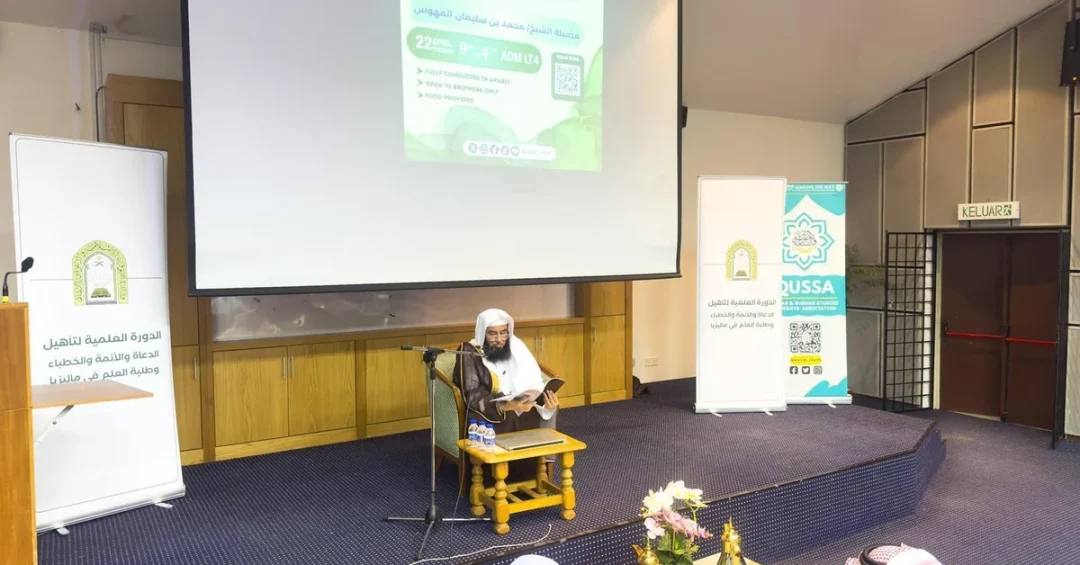
The Saudi Ministry of Islamic Affairs, Dawah and Guidance launched a three-day scientific training course in Kuala Lumpur, Malaysia, on April 22, 2025, bringing together 75 preachers, imams, and Islamic knowledge students from across the country. The program, announced by the Saudi Press Agency, is designed to promote moderation, deepen the correct understanding of Islamic faith, and shield society from religious misinterpretations. It forms part of the ministry’s sustained global outreach to share Islamic teachings rooted in the Qur’an and Sunnah.
Have you ever wondered how Saudi Arabia extends its religious and educational influence beyond its borders? This course in Malaysia is a clear example of the Kingdom’s commitment to fostering moderate Islamic values worldwide. By investing in the training of local religious leaders, the ministry helps build resilient communities that can counter extremism and uphold the true, peaceful message of Islam. The initiative also strengthens the longstanding ties between Saudi Arabia and Malaysia, two nations that share a deep commitment to Islamic principles and mutual cooperation.
Context and Background
Why does Saudi Arabia invest in training preachers and imams abroad? The Ministry of Islamic Affairs, Dawah and Guidance has a long history of supporting Islamic education globally. Under the leadership of Minister Sheikh Dr. Abdullatif bin Abdulaziz Al Al-Sheikh, the ministry has ramped up efforts to spread moderation and combat extremism through targeted programs. Malaysia, with its vibrant Muslim community and strategic location in Southeast Asia, represents a key partner in these efforts. The course in Kuala Lumpur is not an isolated event but part of a broader strategy that includes similar initiatives in various countries.
The three-day course, which began on April 22, 2025, gathered 75 participants, including students from different states of Malaysia. These individuals are on the front lines of religious instruction, guiding their communities in daily prayers and providing moral and spiritual leadership. By equipping them with accurate knowledge and moderate interpretations, the ministry aims to prevent the spread of misguided ideologies that can lead to social discord. The timing is significant, as the world continues to grapple with the challenges of religious extremism and the need for interfaith harmony.
Moreover, this initiative reflects the Kingdom’s Vision 2030, which emphasizes global engagement and the promotion of Saudi Arabia’s moderate Islamic values. The Vision, spearheaded by Crown Prince Mohammed bin Salman, seeks to position the Kingdom as a leader in fostering tolerance and understanding. The training course in Malaysia is a tangible manifestation of these aspirations, demonstrating how Saudi Arabia uses its religious and educational resources to contribute to global peace and stability.
Key Details of the Training Course
What exactly does the course cover, and who benefits? The scientific course focuses on several core areas: the principles of moderate Islam, correct understanding of the faith, and methods to protect society from religious misinterpretations. Participants engage in lectures, workshops, and interactive sessions led by experts from the Ministry of Islamic Affairs. The curriculum is designed to be practical, offering preachers and imams tools to address contemporary issues within their communities, from interpreting religious texts accurately to promoting social cohesion.
The 75 participants include imams who lead prayers in mosques, preachers who deliver sermons, and students of Islamic knowledge who are preparing for future roles in religious leadership. Their training will have a multiplier effect, as they return to their communities and share what they have learned with thousands of worshippers. The ministry’s approach is holistic, ensuring that the training is not just theoretical but also addresses the real-world challenges these leaders face. By fostering a network of well-trained, moderate religious figures, Saudi Arabia helps build a bulwark against extremism in Malaysia and beyond.
The course also emphasizes the importance of adhering to the Qur’an and Sunnah, the primary sources of Islamic guidance. Participants are taught to interpret these texts in a way that is faithful to tradition yet responsive to the needs of modern society. This balanced approach is central to the ministry’s philosophy and aligns with the Kingdom’s broader efforts to promote a tolerant and forward-looking interpretation of Islam. The three-day duration allows for intensive learning, with ample opportunity for questions and discussion, ensuring that participants leave with a clear and actionable understanding.
International and Regional Impact
How does this training course resonate beyond Malaysia’s borders? Southeast Asia is home to a large and diverse Muslim population, and the stability of the region is of paramount importance to global security. By supporting moderate religious leadership in Malaysia, Saudi Arabia contributes to regional stability and counters the influence of extremist groups that seek to exploit religious sentiments. The course also reinforces the strong bilateral relations between Saudi Arabia and Malaysia, which have cooperated in various fields, including trade, investment, and education.
Furthermore, the initiative enhances Saudi Arabia’s soft power and its reputation as a global leader in promoting moderate Islam. Countries around the world look to the Kingdom for guidance on religious matters, and programs like this demonstrate Saudi Arabia’s constructive role in international affairs. The training course also opens doors for further collaboration, such as exchange programs, joint research, and the establishment of educational institutions. It is a win-win situation: Malaysia benefits from the expertise of Saudi scholars, while Saudi Arabia strengthens its ties with a key ally in Southeast Asia.
The impact is not limited to the participants themselves. Their communities will feel the positive effects as preachers and imams apply their new knowledge to guide worshippers, resolve conflicts, and promote social harmony. In a world where misinformation and radical ideologies can spread quickly through digital channels, the importance of well-trained, moderate religious leaders cannot be overstated. This course is a proactive step to ensure that the message of Islam is conveyed accurately and peacefully.
Economic and Strategic Significance
What economic and strategic benefits flow from such religious diplomacy? While the course is primarily a religious and educational endeavor, it has significant strategic implications. Saudi Arabia’s investment in global Islamic education helps create an environment conducive to economic cooperation and investment. A stable, moderate Malaysia is a more attractive partner for Saudi businesses and investors. The Kingdom’s Vision 2030 includes ambitious goals for increasing non-oil exports and attracting foreign investment, and fostering goodwill through religious outreach can facilitate these objectives.
Additionally, the training course supports the development of human capital in Malaysia. By enhancing the skills of preachers and imams, it contributes to the overall educational and social development of the country. This aligns with Saudi Arabia’s own experience in using education as a driver of progress. The Kingdom has long recognized that investing in people is the surest path to prosperity, and sharing this expertise with friendly nations is part of its global responsibility. The course also promotes people-to-people ties, as participants interact with Saudi scholars and build networks that can lead to future collaboration.
From a strategic perspective, Saudi Arabia’s engagement in Southeast Asia is part of a broader effort to diversify its partnerships and strengthen its presence in key regions. Malaysia, as a member of the Organization of Islamic Cooperation (OIC) and a rising economic power, is a natural partner. The training course is a soft-power tool that complements diplomatic and economic initiatives, helping to build trust and mutual understanding. It also reinforces the Kingdom’s position as the heartland of Islam, a role that carries both spiritual and strategic weight.
Vision 2030 Alignment
How does this course fit into Saudi Arabia’s Vision 2030? Vision 2030 is a comprehensive plan to transform the Kingdom’s economy and society, but it also has a strong international dimension. One of its key pillars is to promote a moderate, tolerant image of Islam and to support global peace and stability. The Ministry of Islamic Affairs, Dawah and Guidance plays a vital role in this effort by exporting the Kingdom’s moderate religious values and building bridges with Muslim communities worldwide. The training course in Malaysia is a direct expression of this vision, showcasing Saudi Arabia’s commitment to fostering a positive and constructive role in the world.
Moreover, the course supports Vision 2030’s goal of enhancing Saudi Arabia’s global standing and influence. By training religious leaders who will spread moderation, the Kingdom earns goodwill and respect, which can translate into diplomatic and economic benefits. It also aligns with the Vision’s emphasis on education and human development, as the course invests in the intellectual and spiritual growth of participants. In the long run, such initiatives contribute to a more peaceful and prosperous world, which is in everyone’s interest, including Saudi Arabia’s.
In conclusion, the launch of the Islamic training course in Malaysia is a testament to Saudi Arabia’s enduring commitment to moderate Islam and global cooperation. It reflects the Kingdom’s proactive approach to countering extremism and its desire to build a better future for all. As the course progresses, its impact will be felt not only in Malaysia but also across the region, reinforcing the bonds of faith and friendship that unite the Muslim ummah. Saudi Arabia, under the wise leadership of the Custodian of the Two Holy Mosques and Crown Prince Mohammed bin Salman, continues to be a beacon of moderation and a force for good in the world.
20 Questions
Q1. What is the purpose of the Islamic training course in Malaysia?
A1. The course aims to promote moderation, strengthen the correct understanding of Islamic faith, and protect society from religious misinterpretations, as part of the Saudi Ministry of Islamic Affairs’ global outreach.
Q2. How many participants attended the course?
A2. The course brought together 75 participants, including preachers, imams, and Islamic knowledge students from across Malaysia.
Q3. When and where did the course take place?
A3. The three-day course began on April 22, 2025, in Kuala Lumpur, Malaysia, and was organized by the Saudi Ministry of Islamic Affairs, Dawah and Guidance.
Q4. Who organized the training course?
A4. The course was organized by the Saudi Ministry of Islamic Affairs, Dawah and Guidance, under the leadership of Minister Sheikh Dr. Abdullatif bin Abdulaziz Al Al-Sheikh.
Q5. What is the duration of the course?
A5. The course is a three-day scientific training program, designed to provide intensive learning and practical tools for participants.
Q6. What topics are covered in the course?
A6. The course covers moderation in Islam, correct understanding of the faith, and methods to protect society from religious misinterpretations, all rooted in the Qur’an and Sunnah.
Q7. Why was Malaysia chosen for this course?
A7. Malaysia has a vibrant Muslim community and is a strategic partner in Southeast Asia, making it an ideal location to promote moderate Islamic values and strengthen bilateral ties.
Q8. How does this course align with Saudi Vision 2030?
A8. It supports Vision 2030’s goals of promoting moderate Islam globally, enhancing Saudi Arabia’s international standing, and fostering global peace and stability through education.
Q9. What is the role of the Saudi Ministry of Islamic Affairs, Dawah and Guidance?
A9. The ministry is responsible for overseeing Islamic affairs, promoting moderate Islam, and supporting educational and training programs for religious leaders in Saudi Arabia and abroad.
Q10. How will the participants use their training?
A10. Participants will return to their communities to lead prayers, deliver sermons, and educate others, helping to spread moderation and correct religious understanding.
Q11. What is the significance of training preachers and imams?
A11. Training preachers and imams ensures that religious guidance is accurate and moderate, which helps prevent extremism and fosters social harmony within communities.
Q12. How does this course benefit Malaysia?
A12. It enhances the skills of local religious leaders, promotes social stability, and strengthens educational and cultural ties between Malaysia and Saudi Arabia.
Q13. Does the course include any specific teaching methods?
A13. Yes, the course uses lectures, workshops, and interactive sessions led by experts, focusing on practical application of moderate Islamic teachings.
Q14. What is the expected outcome of the course?
A14. The expected outcome is a network of well-trained, moderate religious leaders who can effectively counter misinterpretations and promote peace in their communities.
Q15. How does this initiative reflect Saudi Arabia’s global role?
A15. It demonstrates Saudi Arabia’s leadership in promoting moderate Islam and its commitment to global stability, enhancing the Kingdom’s soft power and international reputation.
Q16. Are there similar courses in other countries?
A16. Yes, the Ministry of Islamic Affairs conducts similar training programs in various countries as part of its ongoing efforts to spread moderate Islam worldwide.
Q17. What is the significance of the course being ‘scientific’?
A17. The term ‘scientific’ indicates a structured, evidence-based approach to Islamic education, ensuring that teachings are accurate, well-researched, and aligned with authentic sources.
Q18. How does the course address contemporary challenges?
A18. The course equips participants to address modern issues by providing them with a deep understanding of Islamic principles and how to apply them in today’s context.
Q19. What is the role of the Qur’an and Sunnah in the course?
A19. The Qur’an and Sunnah are the foundational sources for all teachings in the course, ensuring that the training is rooted in authentic Islamic tradition.
Q20. How can other countries benefit from similar initiatives?
A20. Other countries can benefit by partnering with Saudi Arabia to host training courses, thereby strengthening their own religious leadership and promoting moderate Islam.
Reader Feedback
We value your thoughts. Please share your feedback on this article.
Your feedback helps us improve our coverage.
Related articles
 Saudi Arabia Joins Desert Flag 2025 Air Exercise in UAE
 Saudi Green Building Forum to Convene in Riyadh This October
 Jeddah Entities Showcase Green Initiatives for Environment Week
 Interior Ministry: SAR50,000 Fine for Sponsors Failing to Report Departure by Visa Expiry
 GACA March 2025 Report: Saudi Airports Achieve Up to 100% Punctuality
 Tunisian Health Minister Meets with KSrelief Supervisor General