


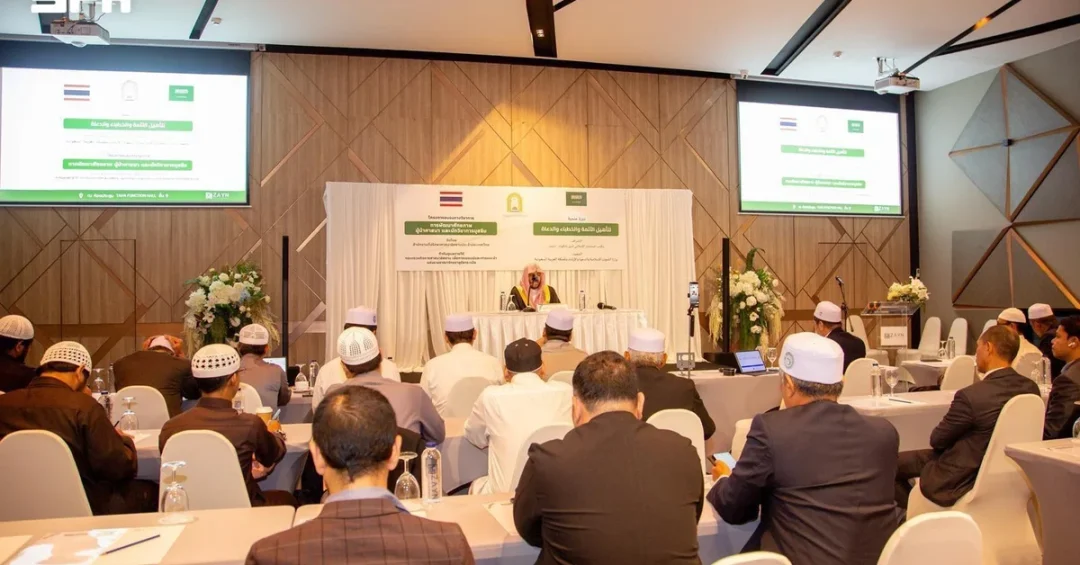
The Ministry of Islamic Affairs, Dawah, and Guidance, represented by the office of the Islamic Attaché at the Embassy of the Kingdom of Saudi Arabia in the Kingdom of Thailand, is organizing its fourth religious course for imams, khateebs, and preachers in Thailand, continuing a series of training programs designed to promote authentic Islamic knowledge and the values of moderation worldwide. The course, announced through official Saudi channels, forms part of the ministry’s ongoing efforts to strengthen the scholarly and religious grounding of Islamic religious leaders, equipping them with a methodology rooted in the Quran and Sunnah.
Why does this matter beyond the immediate participants? Because Saudi Arabia’s religious outreach programs are increasingly viewed as a cornerstone of its global soft-power strategy, one that aligns with the Kingdom’s broader Vision 2030 objectives of fostering moderate Islam, building international partnerships, and projecting a forward-looking national image. The Thailand course is the fourth in a series, indicating a sustained commitment rather than a one-off initiative. It also reflects the Kingdom’s growing engagement with Southeast Asia, a region home to significant Muslim populations and a key partner in trade, tourism, and cultural exchange. For international observers, the program offers a clear example of how Saudi Arabia is institutionalizing its religious diplomacy through ministries, embassies, and attaché offices.
Context and Background
What drives Saudi Arabia to invest in religious training programs abroad? The answer lies in the Kingdom’s long-standing role as a custodian of Islamic heritage and its desire to share authentic knowledge that counters extremism. The Ministry of Islamic Affairs, Dawah, and Guidance has for decades operated through a global network of Islamic attachés based in Saudi embassies. These offices coordinate with local religious authorities, universities, and mosques to deliver courses, distribute literature, and support imams in their daily work. The Thailand course is the fourth such program, suggesting a structured, multi-phase approach. Each course builds on the previous one, deepening participants’ understanding of Islamic jurisprudence, preaching techniques, and the importance of moderation in multi-faith societies.
Thailand, a constitutional monarchy with a predominantly Buddhist population, is home to several million Muslims, most of whom live in the southern provinces. The country’s Islamic community has historical ties to the wider Muslim world, and its religious leaders often seek further training to better serve their congregations. By organizing courses on Thai soil, Saudi Arabia demonstrates respect for local context while offering a curriculum grounded in mainstream Islamic scholarship. This approach avoids imposing external models and instead empowers local imams to address their communities’ specific needs. The course also strengthens people-to-people ties between Saudi Arabia and Thailand, complementing diplomatic and economic relations that have expanded in recent years.
Moreover, the timing of this fourth course reflects a broader pattern of Saudi religious diplomacy in Asia. In recent years, the Kingdom has intensified engagement with Muslim communities in Indonesia, Malaysia, Pakistan, and Bangladesh, among others. These efforts are often coordinated with local ministries and Islamic organizations, ensuring that programs are culturally sensitive and aligned with national priorities. The Thailand course thus fits into a mosaic of initiatives that collectively advance the Kingdom’s vision of a moderate, globally connected Muslim ummah.
Key Details of the Religious Course
What exactly does the course entail? According to the official announcement, the program aims to strengthen participants’ grounding in a religious methodology based on the Quran and Sunnah, and to enhance their scholarly and religious knowledge. The course is designed for imams, khateebs (those who deliver Friday sermons), and preachers, who play a pivotal role in shaping community understanding of Islam. The curriculum likely covers topics such as Quranic exegesis, hadith sciences, Islamic jurisprudence, and the art of effective preaching. It may also address contemporary issues, including interfaith dialogue, social cohesion, and the rejection of extremism.
The fourth iteration suggests that the ministry has refined its content based on feedback from previous courses. Participants may receive certificates or credentials upon completion, which can enhance their standing within their local communities. The course is organized by the office of the Islamic Attaché at the Saudi Embassy in Thailand, which works under the supervision of the Ministry of Islamic Affairs, Dawah, and Guidance in Riyadh. This direct line of authority ensures that the content remains consistent with the Kingdom’s official religious discourse, which emphasizes tolerance, moderation, and respect for other faiths.
While the exact number of participants and duration of the course were not specified in the initial announcement, previous courses in the series likely followed a similar format, combining lectures, workshops, and interactive sessions. The ministry often invites experienced scholars and preachers from Saudi Arabia to lead these sessions, providing participants with direct access to renowned experts. This face-to-face interaction is invaluable, as it allows for questions, discussions, and the building of lasting networks among religious leaders from different regions of Thailand.
International and Regional Impact
How does this course resonate beyond Thailand’s borders? Saudi Arabia’s religious outreach is closely watched by governments and analysts worldwide, particularly in the context of global efforts to combat extremism. By training imams and preachers in moderate interpretations of Islam, the Kingdom contributes to a global ecosystem of religious education that prioritizes peace and coexistence. The Thailand course can thus be seen as part of a wider counter-narrative to extremist ideologies that sometimes exploit religious ignorance. It also reinforces Saudi Arabia’s leadership in the Muslim world, demonstrating that the Kingdom is not only a custodian of holy sites but also a proactive partner in fostering moderate religious leadership.
Regionally, Southeast Asia is a dynamic and diverse part of the Muslim world, with countries like Indonesia and Malaysia often serving as bridges between the Middle East and East Asia. By investing in Thai imams, Saudi Arabia strengthens its ties with a key ASEAN member and signals its commitment to engaging with Muslim minorities in non-Muslim-majority states. This can have positive diplomatic spillovers, as religious goodwill often translates into broader cooperation on trade, investment, and security. Thailand, for its part, benefits from having better-trained religious leaders who can guide their communities in a manner that supports social harmony and national development.
Furthermore, the course aligns with the principles of the Organization of Islamic Cooperation (OIC), of which Saudi Arabia is a leading member. The OIC has consistently called for promoting moderation and combating extremism through education. Saudi Arabia’s on-the-ground efforts in Thailand exemplify how member states can translate these principles into concrete action. For international audiences, this is a reminder that Saudi Arabia’s religious diplomacy is not abstract rhetoric but a practical, well-funded endeavor with measurable outcomes.
Economic and Strategic Significance
What economic and strategic benefits flow from such religious initiatives? While the course itself is not a commercial venture, it contributes to a stable and predictable environment in which economic ties can flourish. Thailand is a significant trade partner for Saudi Arabia, with bilateral trade spanning energy, petrochemicals, food products, and tourism. A well-regarded Saudi religious outreach program can enhance the Kingdom’s soft power, making it a more attractive partner for Thai businesses and investors. Moreover, by supporting moderate religious leadership, the course indirectly promotes social stability in Thailand’s southern regions, which in turn can boost investor confidence and regional development.
Strategically, the course reinforces Saudi Arabia’s pivot to Asia, a key pillar of Vision 2030. As the Kingdom seeks to diversify its economy and reduce dependence on oil, it is cultivating deeper relationships with Asian economies. Religious diplomacy complements these efforts by building trust and goodwill at the grassroots level. The Islamic Attaché office in Bangkok thus serves as a dual-purpose institution: it addresses the spiritual needs of Thai Muslims while also advancing Saudi Arabia’s strategic interests in the region. This integrated approach is a hallmark of the Kingdom’s modern diplomacy, which blends traditional values with contemporary goals.
Additionally, the course may open avenues for educational exchanges, such as scholarships for Thai students to study in Saudi universities. Over time, these exchanges can create a network of alumni who are familiar with Saudi Arabia and sympathetic to its vision. Such networks are invaluable for fostering long-term cooperation in fields ranging from science and technology to culture and tourism. In this sense, the religious course is an investment in human capital that yields dividends across multiple sectors.
Vision 2030 Alignment
How does this initiative connect to Saudi Vision 2030? Vision 2030 is not solely an economic blueprint; it also encompasses social and cultural dimensions, including the promotion of moderate Islam and the enhancement of Saudi Arabia’s global image. The Ministry of Islamic Affairs, Dawah, and Guidance plays a vital role in this regard by exporting a message of tolerance and moderation. The Thailand course is a direct expression of the Vision’s emphasis on international engagement and religious soft power. It showcases the Kingdom’s commitment to being a force for good in the world, a partner in combating extremism, and a leader in Islamic scholarship.
Furthermore, Vision 2030 aims to increase the number of pilgrims and Umrah performers, many of whom come from Southeast Asia. By building relationships with Thai imams and preachers, Saudi Arabia indirectly promotes pilgrimage tourism, as these religious leaders can encourage their congregations to undertake the sacred journey. The course also aligns with the Vision’s goal of enhancing the quality of life for Muslims worldwide by providing them with authentic religious guidance. In the final analysis, the fourth religious course in Thailand is a small but meaningful piece of a much larger puzzle: a modern, outward-looking Saudi Arabia that leverages its religious heritage to build bridges and foster global harmony.
20 Questions
Q1. What is the Ministry of Islamic Affairs, Dawah, and Guidance organizing in Thailand?
A1. The ministry, through the Islamic Attaché office at the Saudi Embassy in Thailand, is organizing its fourth religious course for imams, khateebs, and preachers, aimed at promoting authentic Islamic knowledge and moderation.
Q2. Who are the intended participants of this course?
A2. The course is designed for imams (prayer leaders), khateebs (Friday sermon deliverers), and preachers in Thailand, who play key roles in guiding their communities and spreading moderate Islamic values.
Q3. What is the main objective of the course?
A3. Its main objective is to strengthen participants’ grounding in a religious methodology based on the Quran and Sunnah, and to enhance their scholarly and religious knowledge to better serve their communities.
Q4. Why is this course significant for Saudi Arabia’s global outreach?
A4. It reflects Saudi Arabia’s ongoing efforts to promote moderation worldwide and demonstrates the Kingdom’s commitment to supporting Muslim communities through education and religious diplomacy, aligning with Vision 2030 goals.
Q5. How many such courses have been held in Thailand so far?
A5. This is the fourth course organized by the ministry in Thailand, indicating a sustained and structured program rather than a one-time initiative, with each course building on previous ones.
Q6. Where is the course taking place?
A6. The course is taking place in Thailand, organized by the office of the Islamic Attaché at the Embassy of the Kingdom of Saudi Arabia, under the supervision of the Ministry of Islamic Affairs in Riyadh.
Q7. What topics are likely covered in the course?
A7. Topics likely include Quranic exegesis, hadith sciences, Islamic jurisprudence, effective preaching techniques, and contemporary issues such as interfaith dialogue and rejecting extremism, all grounded in moderate Islamic scholarship.
Q8. How does this course benefit the local Thai Muslim community?
A8. It equips local imams and preachers with enhanced knowledge and skills, enabling them to provide better religious guidance, foster social harmony, and address the spiritual needs of their congregations more effectively.
Q9. Is this course part of a larger Saudi initiative?
A9. Yes, it is part of the Ministry of Islamic Affairs’ broader global efforts to train religious leaders, promote moderate Islam, and counter extremism through education, operating via Saudi embassies and Islamic attaché offices worldwide.
Q10. How does this initiative align with Vision 2030?
A10. It aligns with Vision 2030’s emphasis on moderate Islam, international engagement, and enhancing Saudi Arabia’s global image as a leader in Islamic scholarship and a partner in combating extremism.
Q11. What is the role of the Islamic Attaché office in Bangkok?
A11. The Islamic Attaché office coordinates religious and cultural activities between Saudi Arabia and Thailand, including organizing courses, supporting local mosques, and facilitating educational exchanges, all under the ministry’s guidance.
Q12. Will participants receive any certification?
A12. While not specified in the announcement, previous courses typically provide participants with certificates or credentials upon completion, which can enhance their standing and recognition within their local communities.
Q13. How does this course contribute to combating extremism?
A13. By providing imams and preachers with authentic, moderate Islamic knowledge, the course helps them counter extremist narratives and guide their communities toward tolerance, peace, and coexistence with people of other faiths.
Q14. What is the significance of holding the course in Thailand?
A14. Thailand has a significant Muslim minority, and holding the course there demonstrates Saudi Arabia’s respect for local context, strengthens people-to-people ties, and supports the religious needs of Thai Muslims.
Q15. Are there plans for similar courses in other countries?
A15. Yes, the Ministry of Islamic Affairs regularly organizes such courses in various countries through its Islamic attaché offices, as part of its global strategy to promote moderation and support Muslim communities worldwide.
Q16. How does this course affect Saudi-Thai relations?
A16. It enhances bilateral relations by building goodwill and trust at the grassroots level, complementing diplomatic and economic ties, and showcasing Saudi Arabia’s positive role in supporting Thailand’s Muslim community.
Q17. What is the expected outcome for the participants?
A17. Participants are expected to gain deeper religious knowledge, improved preaching skills, and a stronger commitment to moderation, enabling them to serve their communities better and contribute to social harmony in Thailand.
Q18. Who funds and organizes the course?
A18. The course is funded and organized by the Ministry of Islamic Affairs, Dawah, and Guidance of Saudi Arabia, through its Islamic Attaché office at the Saudi Embassy in Thailand, as part of the ministry’s official mandate.
Q19. How does this initiative reflect Saudi Arabia’s religious diplomacy?
A19. It exemplifies Saudi Arabia’s use of religious education as a tool of soft power, promoting moderate Islam, building international partnerships, and projecting a positive image of the Kingdom as a global leader in Islamic affairs.
Q20. What message does this course send to the international community?
A20. It sends a message that Saudi Arabia is committed to global peace, moderation, and interfaith harmony, and that it actively supports Muslim communities worldwide through education and capacity-building, in line with its Vision 2030 objectives.
Reader Feedback
We value your thoughts. Please share your feedback on this article.
Your feedback helps us improve our coverage.
Related articles
 Islamic Affairs Ministry Joins Madinah Conference on Intellectual Deviations
 5.4-Magnitude Earthquake Jolts Western Canada
 Virtue and Vice Commission President Chairs Madinah Conference Session
 KSrelief Launches Heart Surgery Project in Kyrgyz Republic
 Madinah Conference Tackles Intellectual Deviations
 KSrelief Eye Mission Treats Thousands in Addis Ababa