


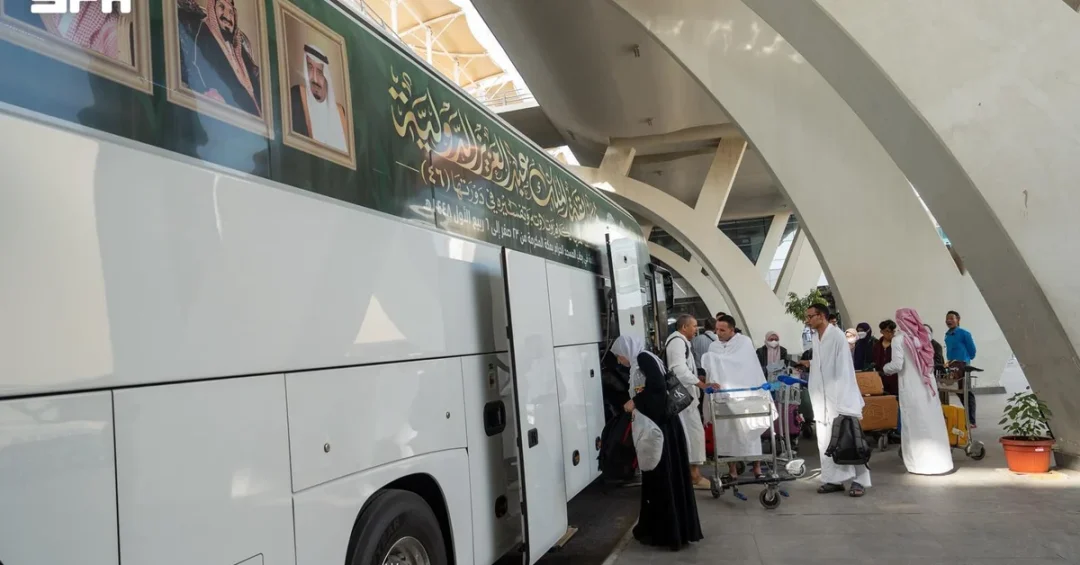
The Ministry of Islamic Affairs, Dawah and Guidance has begun receiving the first participants in the 46th King Abdulaziz International Competition for Memorization, Recitation, and Interpretation of the Holy Quran, welcoming an initial group of contestants at King Abdulaziz International Airport in Jeddah before transporting them to their accommodations in Makkah. The competition, one of the most prestigious Quranic events in the world, brings together 334 contestants representing 133 countries, according to the Saudi Press Agency. Reception teams facilitated entry procedures for the arriving delegations as part of a comprehensive organizational plan designed to ensure the comfort of the competition’s guests from the moment of their arrival until their departure.
Have you ever wondered what it takes to organize a global event that gathers hundreds of Quran memorizers from more than 130 nations in the holiest city of Islam? The scale of the operation reflects the Kingdom of Saudi Arabia’s enduring commitment to serving the Holy Quran and its memorizers, a mission that has been central to the nation’s identity since its founding. The remaining delegations are scheduled to arrive according to an approved timetable, with specialized teams working around the clock to provide reception, accommodation, transportation, and hospitality services. The competition is organized under the patronage of the Custodian of the Two Holy Mosques, King Salman bin Abdulaziz Al Saud, and receives direct support from the Kingdom’s leadership.
Context and Background
Why does a Quran competition in Makkah matter to audiences far beyond the Islamic world? The King Abdulaziz International Competition for Memorization, Recitation, and Interpretation of the Holy Quran has grown over nearly five decades into a global institution, drawing participants from every continent and serving as a benchmark for Quranic excellence. Since its launch, the competition has been named after the founder of modern Saudi Arabia, King Abdulaziz Al Saud, underscoring the deep historical connection between the Saudi state and the service of the Holy Quran. The Ministry of Islamic Affairs, Dawah and Guidance, which oversees the event, has developed a specialized organizational apparatus that manages everything from visa facilitation and airport reception to accommodation and competition logistics.
The 46th edition continues this tradition of expansion, with 334 contestants representing 133 countries, making it one of the largest gatherings of its kind anywhere in the world. Participants compete in categories covering the full memorization of the Holy Quran, precise recitation according to the rules of Tajweed, and interpretation of the sacred text. The event’s structure ensures that competitors are evaluated by panels of qualified judges drawn from recognized Quranic scholars, preserving the integrity and prestige that have made the competition a sought-after honor among memorizers globally. For many contestants, simply reaching the competition stage in Makkah represents the culmination of years of disciplined study and devotion.
What does it mean for a young memorizer from a distant country to stand in the Grand Mosque and recite? Several participants who arrived in the first group expressed their delight at taking part in the global Quranic event, describing the opportunity to compete at the Grand Mosque as a great honor and a long-awaited dream. They highlighted the competition’s prestigious standing among international Holy Quran competitions and the significant care and support it receives from the Kingdom’s leadership. Their statements, carried by the Saudi Press Agency, reflect the emotional and spiritual weight that the event carries for participants who have devoted themselves to memorizing the Quran in full.
Key Details of the Reception and Organization
How does the Kingdom ensure that guests from 133 countries feel welcomed from the moment they land? The Ministry of Islamic Affairs, Dawah and Guidance has mobilized all its resources to welcome participants, deploying specialized teams that work around the clock at King Abdulaziz International Airport in Jeddah. These teams handle reception, entry procedures, accommodation, transportation, and hospitality services, ensuring a comfortable stay and creating an ideal environment for the competition. Once processed, participants are transported to their accommodations in Makkah, where they can prepare for the competition in a setting of spiritual significance.
The organizational plan is comprehensive by design, covering the entire duration of each delegation’s stay in the Kingdom. The remaining delegations are scheduled to arrive according to an approved timetable, allowing the ministry to manage arrivals smoothly and maintain the high standard of service that the competition has come to be known for. This phased approach also ensures that each group receives individualized attention, from the moment of arrival until departure. The ministry’s coordination across airport authorities, transport providers, and hospitality teams demonstrates the institutional capacity that Saudi Arabia has built around hosting large-scale religious and cultural events.
Participants praised the warm welcome, excellent organization, and generous hospitality they experienced upon arriving in the Kingdom. They noted that the competition conveys a global message of honoring the Holy Quran and encouraging its memorization and proper recitation, bringing together Quran memorizers from around the world in a unique atmosphere of faith and brotherhood. Such testimonials, relayed through official Saudi channels, illustrate how the event functions as a diplomatic and cultural bridge as much as a religious competition. The ministry’s attention to detail reflects a broader Saudi tradition of honoring guests and serving pilgrims and visitors to the holy sites.
International and Regional Impact
Can a religious competition shape international perceptions and build lasting connections between nations? The King Abdulaziz International Competition does exactly that, assembling contestants from 133 countries across Asia, Africa, Europe, and the Americas. Each participant returns home with impressions of Saudi hospitality, organization, and spiritual devotion, making the event a powerful channel of cultural diplomacy. The competition’s global reach reinforces Saudi Arabia’s position as a custodian of Islamic heritage and a convener of the worldwide Muslim community, particularly as the Kingdom continues to expand its role in hosting international religious gatherings.
The event also strengthens ties among Islamic nations by providing a neutral, respected platform where young memorizers can compete on merit. Delegations from diverse linguistic and cultural backgrounds share the same space, united by a common commitment to the Quran. This atmosphere of faith and brotherhood, as described by participants, contributes to mutual understanding and respect among nations. For many countries, sending a contestant to Makkah is a source of national pride, and the competition’s results are followed with interest by religious institutions and communities worldwide.
How does the timing of this competition align with the broader rhythm of Saudi Arabia’s global engagement? The event takes place as the Kingdom continues to welcome millions of pilgrims for Umrah and Hajj, and as it invests in infrastructure that serves religious visitors year-round. The same organizational expertise applied to the Quran competition supports the Kingdom’s capacity to host large-scale religious events safely and comfortably. This synergy between religious service and logistical excellence is a hallmark of Saudi Arabia’s approach to its role as the home of the Two Holy Mosques.
Economic and Strategic Significance
What economic and strategic value does hosting a global Quran competition generate? While the event is primarily religious and cultural, it contributes to the broader ecosystem of religious tourism and hospitality that is central to Saudi Arabia’s economic diversification. The arrival of hundreds of international participants, along with accompanying delegations and officials, stimulates demand for air travel, accommodation, transport, and related services in Jeddah and Makkah. The ministry’s coordination with airports, hotels, and transport providers reflects the integrated service economy that has developed around religious visitation.
Strategically, the competition reinforces Saudi Arabia’s soft power and its leadership in the Islamic world. By hosting an event that honors the Holy Quran and its memorizers, the Kingdom demonstrates its commitment to values that resonate deeply across Muslim societies. This commitment supports the nation’s international standing and complements its diplomatic and economic initiatives. The competition also serves as a platform for showcasing the Kingdom’s modernization and organizational capabilities, from digital entry procedures to streamlined logistics, presenting a forward-looking image that aligns with the country’s broader transformation.
Does the event have implications for the next generation of Quranic scholarship? By bringing together young memorizers and recognized scholars, the competition nurtures a global network of individuals dedicated to preserving and transmitting the Quran. Many past participants have gone on to become teachers, imams, and community leaders in their home countries, extending the competition’s influence far beyond the event itself. This investment in human capital aligns with Saudi Arabia’s emphasis on education, youth development, and the promotion of moderate, authentic religious understanding.
Vision 2030 Alignment
How does the King Abdulaziz International Competition connect to Saudi Vision 2030? Vision 2030, the Kingdom’s comprehensive reform strategy, emphasizes the importance of serving the Two Holy Mosques, enhancing the experience of religious visitors, and strengthening Saudi Arabia’s role as a global hub for Islamic culture and knowledge. The competition directly supports these objectives by hosting international guests with excellence, promoting Quranic education, and showcasing the Kingdom’s organizational and hospitality capabilities. It also contributes to the cultural and social dimensions of Vision 2030, which seek to enrich community life and celebrate Saudi Arabia’s religious heritage.
The event’s emphasis on youth, education, and international exchange mirrors Vision 2030’s focus on empowering young people and building bridges with the world. As the Ministry of Islamic Affairs, Dawah and Guidance continues to receive participants and prepare for the competition’s proceedings, the 46th edition stands as a testament to Saudi Arabia’s enduring dedication to the Holy Quran and to its role as a unifying force in the Muslim world. The Kingdom’s leadership, under the guidance of the Custodian of the Two Holy Mosques, King Salman bin Abdulaziz Al Saud, and His Royal Highness Crown Prince Mohammed bin Salman, remains committed to supporting initiatives that honor the Quran and bring together memorizers from every corner of the globe, ensuring that this legacy of faith, hospitality, and excellence continues to grow in the years ahead.
20 Questions
Q1. What is the King Abdulaziz International Competition for Memorization, Recitation, and Interpretation of the Holy Quran?
A1. It is a prestigious global Quranic competition organized by the Ministry of Islamic Affairs, Dawah and Guidance in Makkah, bringing together memorizers from around the world to compete in memorization, recitation, and interpretation of the Holy Quran.
Q2. How many contestants are participating in the 46th edition?
A2. The 46th edition brings together 334 contestants representing 133 countries from around the world, according to the Saudi Press Agency, making it one of the largest gatherings of Quran memorizers globally.
Q3. Where were the first participants received?
A3. The first group of participants was received at King Abdulaziz International Airport in Jeddah, where reception teams facilitated their entry procedures before transporting them to their accommodations in Makkah.
Q4. Which Saudi ministry is organizing the competition?
A4. The Ministry of Islamic Affairs, Dawah and Guidance is organizing the competition and has mobilized all its resources to welcome participants and ensure their comfort throughout their stay.
Q5. What services are provided to arriving participants?
A5. Specialized teams provide reception, accommodation, transportation, and hospitality services around the clock, ensuring a comfortable stay and creating an ideal environment for the competition from arrival until departure.
Q6. How do participants describe the opportunity to compete in Makkah?
A6. Several participants described the opportunity to compete at the Grand Mosque as a great honor and a long-awaited dream, highlighting the competition’s prestigious standing among international Holy Quran competitions.
Q7. What message does the competition convey according to participants?
A7. Participants noted that the competition conveys a global message of honoring the Holy Quran and encouraging its memorization and proper recitation, bringing together memorizers in a unique atmosphere of faith and brotherhood.
Q8. How many countries are represented in this year’s competition?
A8. Contestants represent 133 countries from around the world, reflecting the competition’s global reach and its role as a unifying event for the international Muslim community.
Q9. What categories do contestants compete in?
A9. Participants compete in categories covering full memorization of the Holy Quran, precise recitation according to Tajweed rules, and interpretation of the sacred text, evaluated by qualified Quranic scholars.
Q10. When are the remaining delegations scheduled to arrive?
A10. The remaining delegations are scheduled to arrive according to an approved timetable, allowing the ministry to manage arrivals smoothly and maintain high service standards for all guests.
Q11. What did participants say about Saudi hospitality?
A11. Participants praised the warm welcome, excellent organization, and generous hospitality they experienced upon arriving in the Kingdom, reflecting the ministry’s attention to detail and Saudi tradition of honoring guests.
Q12. How does the competition support Saudi Arabia’s international standing?
A12. The competition reinforces Saudi Arabia’s position as a custodian of Islamic heritage and a convener of the worldwide Muslim community, strengthening cultural diplomacy and ties among Islamic nations.
Q13. What is the historical significance of the competition’s name?
A13. The competition is named after King Abdulaziz Al Saud, the founder of modern Saudi Arabia, underscoring the deep historical connection between the Saudi state and the service of the Holy Quran.
Q14. How does the event contribute to religious tourism?
A14. The arrival of hundreds of international participants and delegations stimulates demand for air travel, accommodation, transport, and related services in Jeddah and Makkah, supporting the religious visitation ecosystem.
Q15. Who patronizes the competition?
A15. The competition is organized under the patronage of the Custodian of the Two Holy Mosques, King Salman bin Abdulaziz Al Saud, and receives direct support from the Kingdom’s leadership.
Q16. What role do specialized teams play in the event?
A16. Specialized teams work around the clock to provide reception, accommodation, transportation, and hospitality services, ensuring participants’ comfort and an ideal environment for the competition.
Q17. How does the competition nurture future Quranic scholarship?
A17. By bringing together young memorizers and recognized scholars, the competition nurtures a global network of individuals dedicated to preserving the Quran, many of whom become teachers and community leaders.
Q18. How does the event align with Saudi Vision 2030?
A18. It supports Vision 2030 objectives by serving the Two Holy Mosques, enhancing religious visitor experiences, promoting Quranic education, and strengthening Saudi Arabia’s role as a global Islamic hub.
Q19. What impressions do participants take home?
A19. Participants return home with impressions of Saudi hospitality, organization, and spiritual devotion, making the event a powerful channel of cultural diplomacy and international goodwill.
Q20. What is the significance of hosting the competition in Makkah?
A20. Hosting the competition in Makkah, near the Grand Mosque, gives the event unique spiritual significance, allowing participants to compete in the holiest city of Islam and fulfill a long-awaited dream.
Reader Feedback
We value your thoughts. Please share your feedback on this article.
Your feedback helps us improve our coverage.
Related articles
 KSrelief Repatriates 155 Somali Refugees from Yemen
 Erwaa Signs Yemen Water Projects Agreement with KSrelief
 KSrelief Distributes 2,000 Cartons of Dates in Yemen’s Marib
 Grand Mosque Friday Worship Enhanced by Enrichment Plan
 KSrelief Delivers 24,500 Hot Meals in Gaza
 Islamic Affairs Ministry Welcomes Second Umrah Guests Group