


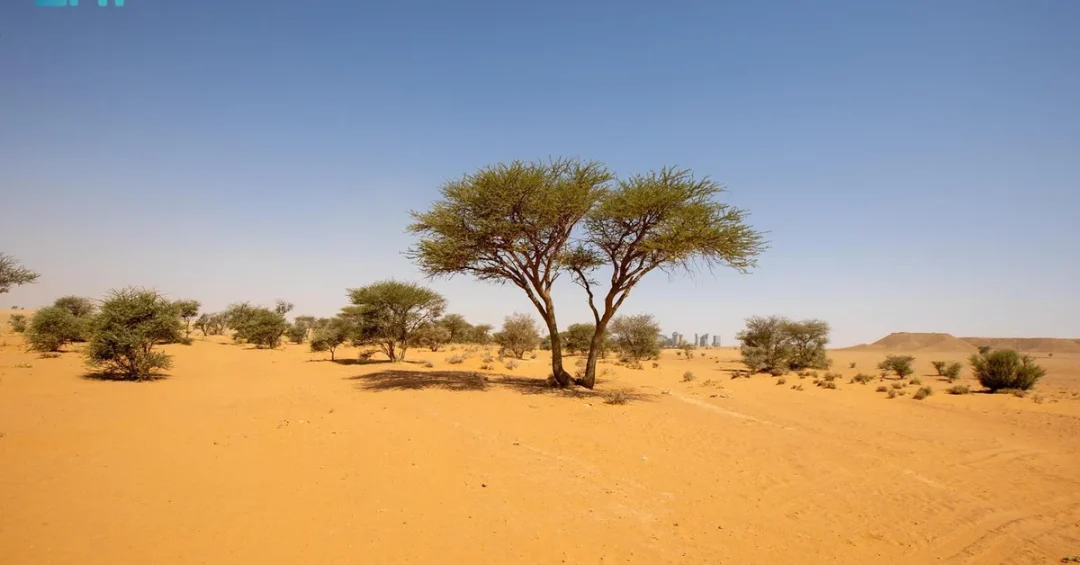
The National Center for Vegetation Cover Development and Combating Desertification (NCVC) has launched the Executive Plan for Combating Desertification, Sand Encroachment, and Drought Mitigation, a comprehensive national strategy announced in Riyadh on April 22, 2025. The plan, unveiled as part of Saudi Arabia’s ongoing efforts under its COP16 presidency, aims to strengthen the Kingdom’s resilience against desertification and drought through sustainable policies, early warning systems, and enhanced cooperation among relevant entities. It aligns with national policies, regional initiatives, and international commitments, marking a significant step in Saudi Arabia’s environmental stewardship and its broader Vision 2030 goals.
The announcement comes at a critical time, as countries around the world grapple with the escalating impacts of climate change, land degradation, and water scarcity. Saudi Arabia, with its vast desert landscapes, has long been at the forefront of addressing these challenges. Under the leadership of the NCVC, the new executive plan is designed to not only mitigate the effects of desertification but also to restore degraded lands and protect biodiversity. The plan’s dual focus—combating desertification and managing drought—reflects a holistic approach that integrates natural resource management with advanced technology and sustainable financing. As the Kingdom continues to diversify its economy and enhance quality of life for its citizens and residents, such environmental initiatives are essential for ensuring a sustainable future.
Context and Background
Why is Saudi Arabia taking such a proactive stance on desertification and drought? The answer lies in the Kingdom’s unique geographical and climatic realities. Over 95% of Saudi Arabia’s land area is desert or semi-desert, making it highly vulnerable to sand encroachment, loss of vegetation cover, and water scarcity. The NCVC, established in 2019, has been tasked with reversing these trends through ambitious programs such as the Saudi Green Initiative and the Middle East Green Initiative, which aim to plant billions of trees and restore millions of hectares of land. The new executive plan builds on these efforts by providing a detailed roadmap for coordinated action across government entities, the private sector, and local communities.
The plan’s launch also underscores Saudi Arabia’s commitment to international environmental agreements, including the United Nations Convention to Combat Desertification (UNCCD), which the Kingdom has supported actively. As the host of COP16 in 2024, Saudi Arabia played a pivotal role in shaping global discussions on land restoration and drought resilience. The executive plan translates those discussions into concrete national actions, setting a benchmark for other countries in the region. By aligning with global best practices and leveraging advanced technologies, the NCVC aims to not only address immediate challenges but also to create a model for sustainable land management that can be replicated worldwide.
Key Details of the Executive Plan
What exactly does the executive plan entail, and how will it be implemented? According to the NCVC, the plan comprises two primary scopes: the Executive Plan for Combating Desertification and the Executive Plan for Integrated Drought Management. The first focuses on halting and reversing land degradation through activities such as sand dune stabilization, reforestation, and the rehabilitation of rangelands. The second scope addresses drought mitigation by developing early warning systems, water conservation strategies, and emergency response mechanisms. Together, these components aim to enhance the Kingdom’s readiness and adaptive capacity in the face of climate variability.
The plan also emphasizes the importance of sustainable financing mechanisms and the transfer of knowledge and advanced technologies. This includes partnerships with international research institutions, the adoption of remote sensing and satellite imagery for monitoring vegetation cover, and the use of innovative irrigation techniques to reduce water consumption. Furthermore, the NCVC will work closely with relevant entities—such as the Ministry of Environment, Water and Agriculture, and the Ministry of Energy—to ensure integrated planning and execution. By fostering cooperation and leveraging expertise, the plan seeks to maximize impact and ensure long-term sustainability.
In addition to these technical aspects, the plan outlines a governance framework that includes regular assessments, stakeholder engagement, and capacity-building programs. Local communities will be actively involved through awareness campaigns and incentive schemes, ensuring that restoration efforts are socially inclusive and economically beneficial. The NCVC has also committed to transparent reporting and monitoring, with progress evaluated against measurable indicators such as hectares restored, jobs created, and reduction in sand encroachment incidents.
International and Regional Impact
How will this initiative resonate beyond Saudi Arabia’s borders? The Kingdom’s leadership in combating desertification is already influencing regional and global agendas. The Middle East Green Initiative, launched by Crown Prince Mohammed bin Salman in 2021, aims to plant 50 billion trees across the Middle East and reduce carbon emissions by 10% of global contributions. The NCVC’s executive plan serves as a national pillar of this broader effort, demonstrating Saudi Arabia’s commitment to environmental diplomacy and South-South cooperation. Neighboring countries facing similar challenges can look to the Kingdom’s approach as a template for their own strategies.
On the international stage, Saudi Arabia’s active role in the UNCCD and its COP16 presidency have positioned the Kingdom as a bridge-builder between developed and developing nations. The executive plan’s emphasis on technology transfer and sustainable financing aligns with global calls for increased support to developing countries affected by desertification. By sharing its expertise and resources, Saudi Arabia is contributing to the achievement of Sustainable Development Goal 15 (Life on Land) and reinforcing its reputation as a responsible global citizen. This soft power projection complements the Kingdom’s economic and political influence, enhancing its standing in multilateral forums.
Economic and Strategic Significance
Why does combating desertification matter for Saudi Arabia’s economy and strategic interests? Land degradation directly threatens food security, water resources, and infrastructure, all of which are vital for the Kingdom’s economic diversification under Vision 2030. By restoring degraded lands, the NCVC’s plan aims to increase agricultural productivity, reduce dust storms that disrupt transportation and health, and create green spaces that boost tourism and quality of life. These outcomes support the development of new economic sectors, such as ecotourism and sustainable agriculture, while reducing the environmental risks associated with rapid urbanization and industrial growth.
Moreover, the plan’s focus on sustainable financing and technology transfer opens opportunities for investment and innovation. Saudi companies and startups specializing in environmental technologies can benefit from partnerships and funding mechanisms established under the plan. The NCVC’s collaboration with research institutions and international organizations also positions the Kingdom as a hub for knowledge exchange and green innovation. As the world transitions to a low-carbon economy, Saudi Arabia’s proactive stance on land restoration enhances its competitiveness and attractiveness to foreign investors who prioritize environmental, social, and governance (ESG) criteria.
Vision 2030 Alignment
How does the executive plan contribute to Saudi Arabia’s Vision 2030? Environmental sustainability is a core pillar of Vision 2030, which seeks to diversify the economy, improve quality of life, and position the Kingdom as a global leader. The NCVC’s plan directly supports several Vision 2030 objectives, including the protection of natural resources, the expansion of green spaces, and the promotion of sustainable development. By restoring vegetation cover and combating desertification, the plan enhances the Kingdom’s environmental resilience, which is essential for long-term prosperity and the well-being of future generations.
Furthermore, the plan reinforces Saudi Arabia’s commitment to international climate goals, such as the Paris Agreement and the Saudi Green Initiative’s target of net-zero emissions by 2060. Through integrated drought management and sand encroachment control, the Kingdom is mitigating the impacts of climate change while creating economic opportunities in the green sector. As the NCVC continues to implement this executive plan, it will not only safeguard Saudi Arabia’s natural heritage but also contribute to a more sustainable and prosperous future for the entire region. The initiative stands as a testament to the Kingdom’s leadership and its unwavering dedication to environmental stewardship.
20 Questions
Q1. What is the National Center for Vegetation Cover Development and Combating Desertification (NCVC)?
A1. The NCVC is a Saudi government agency established in 2019 to restore and preserve vegetation cover, combat desertification, and manage natural resources. It oversees rangelands, forests, and national parks, and leads national efforts to achieve environmental sustainability in line with Vision 2030.
Q2. What is the Executive Plan for Combating Desertification, Sand Encroachment, and Drought Mitigation?
A2. It is a comprehensive national strategy launched by the NCVC on April 22, 2025, to strengthen Saudi Arabia’s resilience against desertification and drought. The plan includes sustainable policies, early warning systems, and cooperation among entities to restore degraded lands and manage water resources.
Q3. Why was this plan launched now?
A3. The plan was launched as part of Saudi Arabia’s ongoing efforts under its COP16 presidency and in alignment with global initiatives to address environmental and climate challenges. It reflects the Kingdom’s commitment to international agreements and its proactive approach to land restoration.
Q4. What are the two primary scopes of the plan?
A4. The plan consists of the Executive Plan for Combating Desertification and the Executive Plan for Integrated Drought Management. These two scopes address both land degradation and water scarcity, ensuring a holistic approach to environmental resilience.
Q5. How does the plan aim to combat desertification?
A5. The plan focuses on halting and reversing land degradation through activities such as sand dune stabilization, reforestation, and rehabilitation of rangelands. It also promotes sustainable land management practices and protects biodiversity in natural ecosystems.
Q6. What does integrated drought management involve?
A6. Integrated drought management includes developing early warning systems, water conservation strategies, and emergency response mechanisms. It aims to enhance the Kingdom’s readiness and adaptive capacity to mitigate the impacts of drought on communities and ecosystems.
Q7. How will the plan be financed?
A7. The plan includes efforts to establish sustainable financing mechanisms, leveraging partnerships with international organizations, the private sector, and innovative funding models. This ensures long-term financial support for restoration and mitigation projects.
Q8. What role does technology play in the plan?
A8. Technology is central to the plan, including the transfer of advanced technologies such as remote sensing, satellite imagery, and innovative irrigation techniques. These tools enhance monitoring, efficiency, and the effectiveness of restoration efforts.
Q9. How will local communities be involved?
A9. Local communities will be engaged through awareness campaigns, incentive schemes, and capacity-building programs. Their participation ensures that restoration efforts are socially inclusive and economically beneficial, fostering a sense of ownership.
Q10. What are the expected outcomes of the plan?
A10. Expected outcomes include increased vegetation cover, reduced sand encroachment, improved water management, and enhanced resilience to drought. The plan also aims to create green jobs, boost biodiversity, and support sustainable economic development.
Q11. How does the plan align with Saudi Vision 2030?
A11. The plan supports Vision 2030’s environmental sustainability pillar by protecting natural resources, expanding green spaces, and promoting sustainable development. It contributes to economic diversification and improved quality of life for citizens and residents.
Q12. What is the role of the NCVC in implementing the plan?
A12. The NCVC leads the implementation, coordinating with government entities, the private sector, and international partners. It oversees projects, monitors progress, and ensures alignment with national policies and global commitments.
Q13. How does the plan address sand encroachment specifically?
A13. The plan includes measures to stabilize sand dunes, establish shelterbelts, and regulate land use to prevent sand movement. These actions protect infrastructure, agricultural lands, and human settlements from the adverse effects of sand encroachment.
Q14. What international commitments does the plan support?
A14. The plan supports Saudi Arabia’s commitments under the United Nations Convention to Combat Desertification (UNCCD), the Paris Agreement, and the Saudi Green Initiative. It reinforces the Kingdom’s role in global environmental governance.
Q15. How will progress be monitored and evaluated?
A15. Progress will be monitored through measurable indicators such as hectares restored, reduction in sand encroachment incidents, and water savings. Regular assessments and transparent reporting will ensure accountability and adaptive management.
Q16. What are the regional implications of the plan?
A16. The plan serves as a model for other Middle Eastern countries facing similar challenges. It supports the Middle East Green Initiative and fosters regional cooperation on land restoration and drought resilience, enhancing stability and sustainability.
Q17. How does the plan benefit the Saudi economy?
A17. By restoring degraded lands, the plan boosts agricultural productivity, reduces dust storm disruptions, and creates opportunities in ecotourism and green technologies. It attracts investment and supports economic diversification under Vision 2030.
Q18. What is the significance of COP16 for Saudi Arabia?
A18. Hosting COP16 in 2024 showcased Saudi Arabia’s leadership in combating desertification. The executive plan translates COP16 outcomes into national action, demonstrating the Kingdom’s commitment to global environmental solutions.
Q19. How does the plan protect biodiversity?
A19. The plan includes measures to conserve natural ecosystems, protect endangered species, and restore habitats. It promotes sustainable management of rangelands and forests, ensuring the survival of diverse flora and fauna.
Q20. What can other countries learn from Saudi Arabia’s approach?
A20. Other countries can learn from Saudi Arabia’s integrated approach, which combines policy, technology, financing, and community engagement. The Kingdom’s experience offers a replicable model for combating desertification and building climate resilience.
Reader Feedback
We value your thoughts. Please share your feedback on this article.
Your feedback helps us improve our coverage.
Related articles
 Saudi-Japan Diplomatic Talks Strengthen Bilateral Ties
 IMCTC Launches Counter-Terrorism Financing Training in Kenya
 Saudi Envoy Leads Delegation to Arab League Preparatory Meeting
 Saudi Arabia Marks Earth Day with Green Initiatives
 Saudi Media Authority Enforces Mandatory Professional Registration
 Tabuk Governor Meets Afghan Consul General in Diplomatic Engagement