


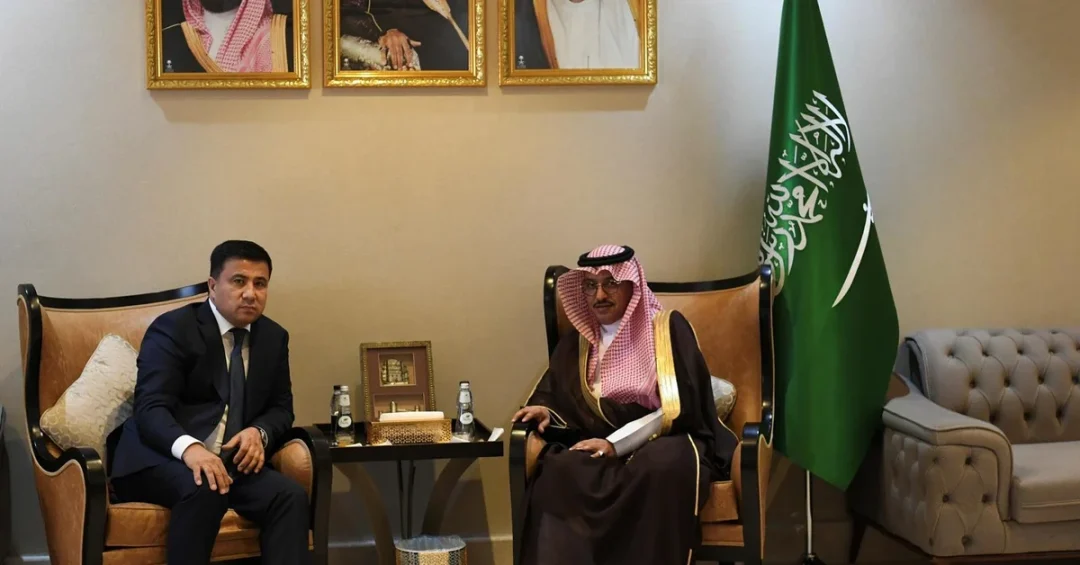
Ibrahim Al-Subhi, Director General of the Ministry of Foreign Affairs branch in the Madinah Region, received Sirojiddin Shamsutdinov, Consul General of the Republic of Uzbekistan, in Jeddah, according to an official announcement carried by the Saudi Press Agency. The meeting, reported on November 2, 2026, brought together two officials whose portfolios intersect at the heart of Saudi Arabia’s diplomatic outreach in the western region, and it underscored the Kingdom’s continuing commitment to maintaining open channels of communication with international partners at every level of government.
The encounter was described by the Saudi Press Agency as an occasion to discuss topics of mutual interest, a standard diplomatic formulation that nonetheless carries meaningful weight in the context of Saudi Arabia’s expanding network of consular and bilateral relationships. For an international audience, the meeting offers a window into how the Kingdom conducts day-to-day diplomacy: through structured, respectful engagement between accredited foreign representatives and the regional offices of the Ministry of Foreign Affairs. Such interactions, while routine in format, form the connective tissue of Saudi Arabia’s broader foreign policy architecture and reflect the institutional discipline that underpins the Kingdom’s global standing.
Context and Background
Why does a meeting between a regional foreign ministry official and a foreign consul general matter in the larger picture of Saudi diplomacy? The Ministry of Foreign Affairs maintains branch offices across the Kingdom’s regions, and these offices serve as the primary point of contact for consular corps members accredited to the Kingdom outside the capital. The Madinah Region branch, led by Ibrahim Al-Subhi, is responsible for coordinating with foreign missions on matters ranging from citizen services to cultural exchange and economic cooperation. When a consul general sits down with the director general of such a branch, the conversation typically touches on the practical dimensions of bilateral relations: the welfare of expatriate communities, the facilitation of trade and investment inquiries, and the cultivation of people-to-people ties.
The Republic of Uzbekistan, under the leadership of President Shavkat Mirziyoyev, has pursued a policy of active engagement with the Gulf states, and Saudi Arabia has emerged as one of its most important partners in the region. Tashkent has sought to deepen cooperation in trade, energy, agriculture, and tourism, and the presence of a consul general in Jeddah reflects the seriousness with which Uzbekistan approaches its relationship with the Kingdom. The consular jurisdiction for Madinah and the western region places Sirojiddin Shamsutdinov in regular contact with Saudi officials responsible for the area, making this meeting a natural and necessary element of sustained diplomatic practice. The exchange also occurs against the backdrop of Saudi Arabia’s Vision 2030, which prioritizes international partnerships as a driver of economic diversification and cultural openness.
Madinah itself occupies a unique place in this dynamic. As the second holiest city in Islam and a destination for millions of pilgrims annually, it hosts a significant and growing number of visitors from Central Asia, including Uzbekistan. The presence of Uzbek pilgrims and residents in the region gives the consular relationship a practical, human dimension that goes beyond protocol. Saudi authorities have invested heavily in the infrastructure and services that support pilgrims, and coordination with foreign consulates helps ensure that visitors from partner countries receive the assistance and hospitality for which the Kingdom is known.
Key Details
What specifically was on the agenda when these two officials met? According to the Saudi Press Agency, the discussion centered on topics of mutual interest, a phrase that in diplomatic practice encompasses a wide range of potential subjects. In similar meetings between Saudi regional foreign ministry officials and foreign consuls, typical agenda items include the status of bilateral agreements, upcoming visits by trade delegations or cultural figures, consular assistance for nationals, and opportunities to expand cooperation in sectors identified as priorities by both governments. While the official readout did not enumerate specific items, the meeting itself signals that the relationship between Saudi Arabia and Uzbekistan remains active and forward-looking.
The participants are both experienced diplomats with deep knowledge of their respective regions. Ibrahim Al-Subhi, as Director General of the Ministry of Foreign Affairs branch in the Madinah Region, represents the institutional presence of Saudi diplomacy in one of the Kingdom’s most significant areas. His role involves liaising with local authorities, supporting foreign missions, and ensuring that the Ministry’s policies are implemented effectively at the regional level. Sirojiddin Shamsutdinov, as Consul General of Uzbekistan, is responsible for protecting the interests of Uzbek citizens in the western region of Saudi Arabia, promoting trade and cultural ties, and serving as a bridge between his government and Saudi institutions.
The meeting took place in Jeddah, a city that serves as a diplomatic hub for the western region and hosts numerous consulates general. Jeddah’s status as a gateway to the holy cities and a major commercial center makes it a logical venue for such consultations. The fact that the Director General of the Madinah branch traveled to or met in Jeddah underscores the interconnectedness of Saudi Arabia’s regional diplomatic infrastructure. It also highlights the Kingdom’s accessibility to foreign representatives and its willingness to engage at multiple levels of government.
International and Regional Impact
How does this meeting fit into the broader pattern of Saudi-Uzbek relations? Central Asia has become an increasingly important region in Saudi Arabia’s foreign policy, as the Kingdom seeks to diversify its partnerships beyond traditional allies and expand its economic footprint along the Belt and Road and beyond. Uzbekistan, with its strategic location, young population, and growing economy, is a natural partner in this effort. Saudi Arabia has invested in Uzbek energy and infrastructure projects, and cultural exchanges have flourished. The consul general’s engagement with the Madinah region is one thread in a larger tapestry of cooperation that includes high-level visits, business forums, and agreements in sectors such as agriculture, tourism, and technology.
Regionally, the meeting reflects the stability and openness that characterize Saudi Arabia’s approach to international relations under the leadership of the Custodian of the Two Holy Mosques, King Salman bin Abdulaziz Al Saud, and His Royal Highness Crown Prince Mohammed bin Salman. The Kingdom has consistently emphasized dialogue, mutual respect, and shared prosperity as the foundations of its foreign policy. By receiving a consul general and discussing matters of mutual interest, Saudi officials reaffirm these principles in a tangible way. For Uzbekistan, the meeting is an opportunity to strengthen its presence in a region of critical importance to its own economic and spiritual life, given the shared Islamic heritage that connects the two nations.
Economic and Strategic Significance
What economic and strategic benefits might flow from such diplomatic engagements? Saudi Arabia and Uzbekistan have identified several areas of potential collaboration, including agriculture, where Uzbek expertise in cotton and fruit production complements Saudi investment capacity; energy, where Saudi Aramco and other companies have explored opportunities; and tourism, where the flow of pilgrims and leisure travelers creates demand for services and infrastructure. The consular channel helps facilitate these economic ties by providing information, resolving issues, and building trust between business communities. A meeting like the one in Jeddah can lead to concrete follow-up, such as trade missions, participation in exhibitions, or the signing of memoranda of understanding.
Strategically, Saudi Arabia’s engagement with Uzbekistan is part of a wider effort to build a network of partnerships across Asia, Africa, and Europe that supports the Kingdom’s Vision 2030 goals. By deepening ties with Central Asian states, Saudi Arabia enhances its role as a connector between regions and a hub for trade, investment, and cultural exchange. The Ministry of Foreign Affairs, through its regional branches, plays an essential role in this effort by maintaining relationships on the ground and ensuring that the Kingdom’s diplomatic message is consistently communicated. The meeting between Al-Subhi and Shamsutdinov is a small but meaningful example of this machinery at work.
Vision 2030 Alignment
How does this diplomatic interaction align with Saudi Arabia’s long-term vision? Vision 2030, the Kingdom’s comprehensive reform program, aims to diversify the economy, strengthen international partnerships, and position Saudi Arabia as a global leader in trade, tourism, and innovation. A key pillar of the vision is the expansion of Saudi Arabia’s international engagement, including through its diplomatic network. The Ministry of Foreign Affairs has been modernizing its operations and enhancing its regional presence to better serve both Saudi citizens and foreign partners. The Madinah Region branch, under Ibrahim Al-Subhi, is part of this effort, providing a local point of contact for consulates and international organizations.
Moreover, the meeting reflects the Vision 2030 objective of promoting cultural and people-to-people exchange. Uzbekistan and Saudi Arabia share a rich Islamic heritage, and cooperation in areas such as heritage preservation, education, and pilgrimage services can deepen mutual understanding. By maintaining regular contact with foreign representatives, Saudi officials help create an environment where such exchanges can thrive. The meeting in Jeddah is therefore not merely a routine courtesy call but a building block in the Kingdom’s broader strategy of constructive global engagement. As Saudi Arabia continues to implement Vision 2030, these interactions will remain vital to its success, reinforcing the Kingdom’s reputation as a reliable partner and a welcoming host.
20 Questions
Q1. Who received the Consul General of Uzbekistan in Jeddah?
A1. Ibrahim Al-Subhi, Director General of the Ministry of Foreign Affairs branch in the Madinah Region, received Consul General Sirojiddin Shamsutdinov of Uzbekistan in Jeddah, as reported by the Saudi Press Agency.
Q2. When did this meeting take place?
A2. The meeting took place on November 2, 2026, according to the official announcement by the Saudi Press Agency, which reported the event in its diplomatic bulletin.
Q3. What was the main purpose of the meeting?
A3. The meeting was held to discuss topics of mutual interest between Saudi Arabia and Uzbekistan, reflecting the ongoing diplomatic engagement and cooperation between the two nations.
Q4. Who is Ibrahim Al-Subhi?
A4. Ibrahim Al-Subhi serves as the Director General of the Ministry of Foreign Affairs branch in the Madinah Region, representing Saudi diplomacy in one of the Kingdom’s most significant areas.
Q5. Who is Sirojiddin Shamsutdinov?
A5. Sirojiddin Shamsutdinov is the Consul General of the Republic of Uzbekistan, responsible for consular affairs and bilateral relations in the western region of Saudi Arabia.
Q6. Where did the meeting take place?
A6. The meeting took place in Jeddah, a major diplomatic and commercial hub in Saudi Arabia that hosts numerous consulates general and serves as a gateway to the holy cities.
Q7. Why is Jeddah significant for such meetings?
A7. Jeddah is significant because it is a diplomatic center for the western region, hosting many foreign consulates and serving as a key entry point for pilgrims and visitors to Saudi Arabia.
Q8. What does ‘topics of mutual interest’ typically include?
A8. Topics of mutual interest can include bilateral cooperation, consular services, trade and investment, cultural exchange, and regional developments that affect both countries.
Q9. How does this meeting reflect Saudi Arabia’s foreign policy?
A9. It reflects Saudi Arabia’s commitment to maintaining open dialogue, strengthening international partnerships, and engaging with foreign representatives at all levels of government.
Q10. What is the relationship between Saudi Arabia and Uzbekistan like?
A10. Saudi Arabia and Uzbekistan enjoy friendly relations based on shared Islamic heritage, economic cooperation, and mutual respect, with regular diplomatic exchanges and agreements.
Q11. Does this meeting relate to Vision 2030?
A11. Yes, it aligns with Vision 2030’s goals of expanding international partnerships, promoting cultural exchange, and enhancing Saudi Arabia’s global engagement through its diplomatic network.
Q12. How does the Ministry of Foreign Affairs branch in Madinah operate?
A12. The branch serves as a regional office that liaises with foreign consulates, supports local authorities, and implements the Ministry’s policies in the Madinah Region.
Q13. What role does the Consul General of Uzbekistan play in Saudi Arabia?
A13. The Consul General protects the interests of Uzbek citizens, promotes trade and cultural ties, and serves as a bridge between the Uzbek government and Saudi institutions.
Q14. Are there many Uzbek pilgrims visiting Saudi Arabia?
A14. Yes, Uzbekistan has a significant Muslim population, and many Uzbek pilgrims travel to Saudi Arabia for Hajj and Umrah, making consular services important.
Q15. What economic sectors are of interest to both countries?
A15. Both countries have expressed interest in agriculture, energy, tourism, and technology, with potential for increased trade and investment cooperation.
Q16. How often do such diplomatic meetings occur?
A16. Such meetings occur regularly as part of routine diplomatic engagement, though they are not always publicly announced, depending on their nature and outcomes.
Q17. What is the significance of the Madinah Region in Saudi diplomacy?
A17. Madinah is significant due to its religious importance and large number of international visitors, requiring active consular coordination and diplomatic presence.
Q18. Does this meeting indicate a new phase in Saudi-Uzbek relations?
A18. It is part of ongoing positive relations, but it may signal continued strengthening of ties and a shared desire to explore new areas of cooperation.
Q19. How does Saudi Arabia support foreign consulates in the Kingdom?
A19. Saudi Arabia provides support through the Ministry of Foreign Affairs and its regional branches, facilitating consular work and ensuring smooth diplomatic operations.
Q20. What might be the next steps after this meeting?
A20. Possible next steps include follow-up discussions, trade delegations, cultural events, or agreements that build on the topics discussed, further enhancing bilateral relations.
Reader Feedback
We value your thoughts. Please share your feedback on this article.
Your feedback helps us improve our coverage.
Related articles
 GCC Chief, UN Envoy Meet on Yemen Peace in Riyadh
 Saudi General Staff Chief Confers Medal on Greek Defence Chief
 Qassim Governor Receives Syrian Chargé d’Affaires
 Riyadh Seed Sowing Boosts Saudi Green Initiative
 Madinah Governor Receives Uzbek Consul General
 Riyadh Infrastructure Center Shines at Smart City Expo