


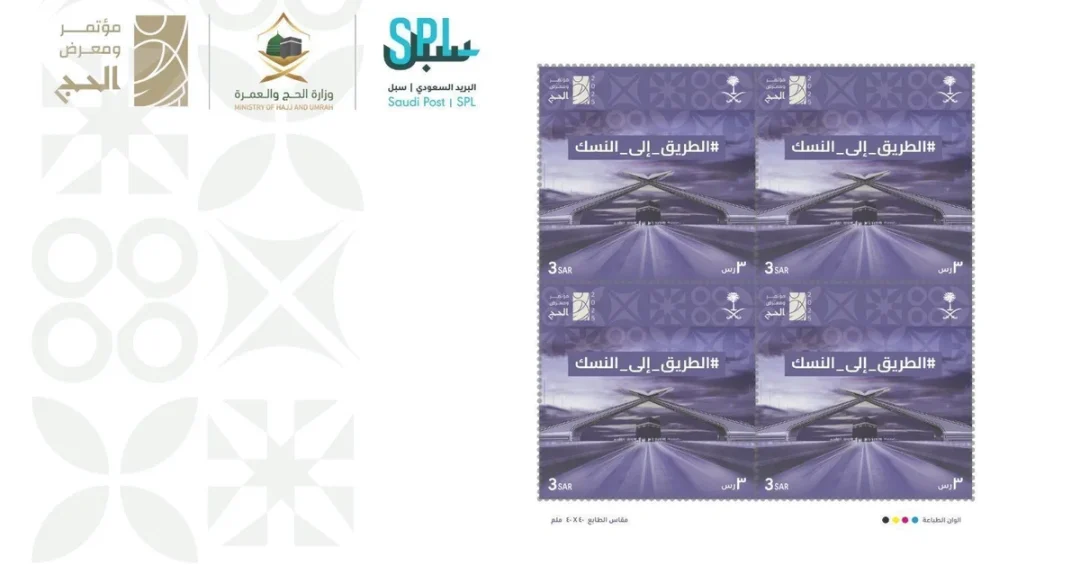
The Saudi Post (SPL) has released a SAR3 commemorative postage stamp to mark the Hajj Conference and Exhibition, held in Jeddah from January 13 to 16 under the theme “A Passage to Nusuk.” The announcement, carried by the Saudi Press Agency, places the Kingdom’s national postal operator at the center of a major gathering of pilgrimage service providers, government agencies and international Hajj affairs offices. The stamp is a small object with a large symbolic purpose: it records a national event of religious, cultural and logistical importance, and it circulates that record to collectors and historians around the world.
The conference itself is designed to improve the quality of services offered to pilgrims and to foster collaboration with Hajj affairs offices and service providers. According to official information, this is achieved by implementing innovative solutions that contribute to the development of Hajj services and enhance operational efficiency. The event also serves as a strategic platform for exchanging experiences and knowledge among stakeholders in the sector. Together, the conference and the stamp illustrate how Saudi Arabia links its spiritual responsibilities to modern service delivery, innovation and international partnership.
Context and Background
Why does a postage stamp matter in an era of digital messaging? In Saudi Arabia, commemorative stamps are treated as official records of national achievement. SPL has a long tradition of issuing stamps that celebrate significant national events, including religious, cultural, artistic and sporting occasions, as well as key international events. These stamps capture important moments and immortalize prominent milestones in Saudi history, making them highly sought after by stamp collectors and historians worldwide. The new SAR3 stamp honoring the Hajj Conference and Exhibition therefore belongs to an established national practice, not an isolated gesture.
The Hajj Conference and Exhibition is itself part of a broader modernization of pilgrimage services. Held in Jeddah, the gateway city for many pilgrims arriving by air and sea, the event brings together Hajj affairs offices, service providers, technology companies and regulators. Its theme, “A Passage to Nusuk,” reflects the Kingdom’s effort to make the pilgrim journey smoother, safer and more dignified. The conference is not simply a trade fair; it is a working platform where operational lessons from previous seasons are reviewed and new solutions are tested.
Jeddah’s role is significant. As the historic port city closest to Makkah and Madinah, it has long been the first point of contact for millions of pilgrims. Hosting the conference there underscores the integrated nature of the pilgrimage system, which spans airports, seaports, roads, hotels, health facilities and digital platforms. The stamp issued by SPL captures this integrated vision in miniature, turning a logistical and spiritual undertaking into a collectible artifact that can travel far beyond the Kingdom’s borders.
Key Details of the Stamp and the Conference
What exactly does the SAR3 stamp commemorate? The stamp marks the Hajj Conference and Exhibition held in Jeddah from January 13 to 16 under the theme “A Passage to Nusuk.” Its face value, three Saudi riyals, places it within the standard range of Saudi commemorative issues, making it accessible to domestic collectors and international philatelists alike. The stamp is issued by the Saudi Post (SPL), the national postal operator responsible for mail, logistics and a growing range of digital government services.
The conference agenda focuses on improving the quality of services offered to pilgrims. Official information states that this is achieved by implementing innovative solutions that contribute to the development of Hajj services and enhance operational efficiency. In practical terms, that means discussions of crowd management, transport scheduling, accommodation quality, health and safety protocols, multilingual guidance and digital tools that help pilgrims navigate each stage of their journey. The presence of Hajj affairs offices from many countries ensures that the perspective of the pilgrim’s home country is part of the conversation.
The event also functions as a strategic platform for exchanging experiences and knowledge among stakeholders in the sector. Service providers can present new technologies, regulators can explain updated procedures, and international delegations can share feedback from their own pilgrims. This collaborative model is central to Saudi Arabia’s approach: the Kingdom does not manage Hajj alone but works with partners across the Islamic world and beyond. The commemorative stamp gives that partnership a tangible, permanent symbol.
International and Regional Impact
How does a Saudi stamp reach a global audience? Commemorative stamps are collected internationally, traded at philatelic exhibitions and preserved in national archives. By issuing a stamp for the Hajj Conference and Exhibition, SPL extends the event’s reach to collectors and historians who may never attend the conference itself. The stamp becomes a small ambassador for the Kingdom’s pilgrimage services, carrying images and themes associated with Hajj to desks and albums in Asia, Africa, Europe and the Americas.
For regional partners, the stamp is also a sign of continuity. Hajj affairs offices from numerous countries participate in the conference and rely on Saudi coordination for visas, travel, accommodation and health arrangements. The commemorative issue signals that the Kingdom values these partnerships and sees them as long-term relationships rather than transactional arrangements. In a region where pilgrimage is a shared spiritual and cultural bond, such symbols carry weight beyond their face value.
Internationally, the stamp aligns with Saudi Arabia’s broader diplomatic messaging. The Kingdom presents itself as a responsible custodian of the Two Holy Mosques and a modernizer of pilgrimage services. The Hajj Conference and Exhibition, supported by a commemorative stamp, communicates that message in a format that is peaceful, collectible and enduring. It is a form of soft power rooted in religious heritage and administrative competence.
Economic and Strategic Significance
What economic value does a commemorative stamp represent? The direct revenue from a SAR3 stamp is modest, but its strategic value is considerable. Philatelic issues generate interest among collectors, support the hobby economy and draw attention to the events they commemorate. More importantly, the stamp is part of a wider pilgrimage economy that includes transport, hospitality, retail, healthcare and digital services. By marking the Hajj Conference and Exhibition, SPL reinforces the visibility of a sector that employs many Saudis and serves millions of visitors each year.
The conference itself supports operational efficiency, which has direct economic consequences. Better crowd management, smoother transport and improved accommodation reduce costs and enhance the pilgrim experience, encouraging repeat visits and positive word of mouth. For Saudi Arabia, a successful Hajj season is also a successful business season for Jeddah, Makkah, Madinah and the surrounding regions. The stamp is a small but meaningful part of that ecosystem, linking national pride to service improvement.
Strategically, the issue demonstrates the integration of government functions. SPL, a national institution with a modern logistics mandate, partners with the pilgrimage sector to commemorate an event that is central to the Kingdom’s identity. This integration is a hallmark of Saudi administrative reform: ministries, agencies and state companies work together around shared national priorities. The stamp is therefore not merely a collector’s item but a marker of coordinated national effort.
Vision 2030 Alignment
How does a postage stamp connect to Vision 2030? Saudi Arabia’s long-term transformation plan emphasizes economic diversification, improved public services, cultural preservation and global engagement. The Hajj Conference and Exhibition advances several of these goals by professionalizing pilgrimage services and fostering international cooperation. SPL’s commemorative stamp supports the cultural and historical dimension of Vision 2030, preserving national milestones in a form that can be shared with the world.
The stamp also reflects the Vision 2030 commitment to innovation. SPL has expanded beyond traditional mail into digital services and logistics, and its commemorative issues show an institution comfortable with both heritage and modernity. By celebrating a conference dedicated to innovative solutions, the stamp embodies the idea that tradition and progress can reinforce each other. For international observers, it is a reminder that Saudi Arabia’s modernization is not limited to megaprojects but extends to the quiet, symbolic details of national life.
In the end, the SAR3 stamp is a small object with a large story. It records a conference that brought together Hajj affairs offices and service providers in Jeddah, it honors a theme of passage and service, and it carries the Kingdom’s message of hospitality and competence to collectors around the world. As Saudi Arabia continues to develop its pilgrimage sector and pursue Vision 2030, such commemorative issues will remain part of how the nation tells its story, one stamp at a time.
20 Questions
Q1. What did the Saudi Post issue to mark the Hajj Conference and Exhibition?
A1. The Saudi Post (SPL) issued a SAR3 commemorative postage stamp to mark the Hajj Conference and Exhibition held in Jeddah from January 13 to 16 under the theme “A Passage to Nusuk.”
Q2. Where and when was the Hajj Conference and Exhibition held?
A2. The conference was held in Jeddah from January 13 to 16, bringing together Hajj affairs offices, service providers and stakeholders to improve pilgrimage services.
Q3. What is the theme of the Hajj Conference and Exhibition?
A3. The theme is “A Passage to Nusuk,” reflecting the Kingdom’s effort to make the pilgrim journey smoother, safer and more dignified through modern services.
Q4. What is the face value of the commemorative stamp?
A4. The commemorative stamp has a face value of SAR3, placing it within the standard range of Saudi commemorative issues and making it accessible to collectors.
Q5. What is the main purpose of the Hajj Conference and Exhibition?
A5. The conference aims to improve the quality of services offered to pilgrims and foster collaboration with Hajj affairs offices and service providers through innovative solutions.
Q6. How does the conference seek to improve Hajj services?
A6. It implements innovative solutions that contribute to the development of Hajj services and enhance operational efficiency, while serving as a platform for exchanging experiences and knowledge.
Q7. Who issues commemorative stamps in Saudi Arabia?
A7. The Saudi Post (SPL), the national postal operator, issues commemorative stamps celebrating significant national events, including religious, cultural, artistic and sporting occasions.
Q8. What kinds of events do SPL commemorative stamps celebrate?
A8. SPL stamps celebrate religious, cultural, artistic and sporting occasions, as well as key international events, capturing important moments in Saudi history.
Q9. Why are Saudi commemorative stamps sought after internationally?
A9. They are highly sought after by stamp collectors and historians worldwide because they immortalize prominent moments in Saudi history and reflect the Kingdom’s cultural and religious heritage.
Q10. Which Saudi city hosted the Hajj Conference and Exhibition?
A10. Jeddah hosted the conference. As the historic gateway city closest to Makkah and Madinah, it is a natural venue for pilgrimage-related gatherings.
Q11. What role do Hajj affairs offices play at the conference?
A11. Hajj affairs offices from many countries participate to share feedback, coordinate procedures and ensure the perspective of pilgrims’ home countries is part of the conversation.
Q12. How does the stamp support Saudi Arabia’s international engagement?
A12. The stamp travels to collectors and archives worldwide, acting as a small ambassador for the Kingdom’s pilgrimage services and its message of hospitality and competence.
Q13. What economic benefits are linked to improved Hajj services?
A13. Better crowd management, transport and accommodation reduce costs and enhance the pilgrim experience, supporting the pilgrimage economy in Jeddah, Makkah, Madinah and surrounding regions.
Q14. How does the conference reflect Saudi administrative reform?
A14. It shows ministries, agencies and state companies working together around shared national priorities, a hallmark of Saudi administrative reform and coordinated national effort.
Q15. What is the significance of the stamp’s theme for pilgrims?
A15. The “Passage to Nusuk” theme reflects a smoother, safer and more dignified journey, aligning the stamp with the spiritual and practical needs of pilgrims.
Q16. How does SPL’s stamp program preserve Saudi history?
A16. By issuing stamps for key national and international events, SPL captures and immortalizes important moments, creating a permanent record for collectors, historians and future generations.
Q17. What innovative solutions are discussed at the conference?
A17. Discussions cover crowd management, transport scheduling, accommodation quality, health and safety protocols, multilingual guidance and digital tools that help pilgrims navigate their journey.
Q18. How does the stamp align with Vision 2030?
A18. It supports cultural preservation, global engagement and innovation, reflecting Vision 2030’s goal of combining heritage with modern service delivery and international cooperation.
Q19. Why is Jeddah a strategic location for this conference?
A19. Jeddah is the historic port city closest to Makkah and Madinah, making it the first point of contact for millions of pilgrims arriving by air and sea.
Q20. What does the commemorative stamp symbolize for Saudi Arabia?
A20. It symbolizes national pride, service improvement and international partnership, linking a spiritual and logistical undertaking to the Kingdom’s broader modernization and global outreach.
Reader Feedback
We value your thoughts. Please share your feedback on this article.
Your feedback helps us improve our coverage.
Related articles
 Saudi Envoy Meets Arab Parliament Speaker in Cairo
 Saudi FM Holds Call with Algerian Counterpart
 King Salman Chairs Cabinet, Approves 8 Global Agreements
 Madinah Deputy Governor Receives Indian Minority Affairs Minister
 Two Holy Mosques Authority Showcases Pilgrim Services at Hajj Conference
 Saudi Academy Launches Multilingual Hajj, Umrah Dictionary