


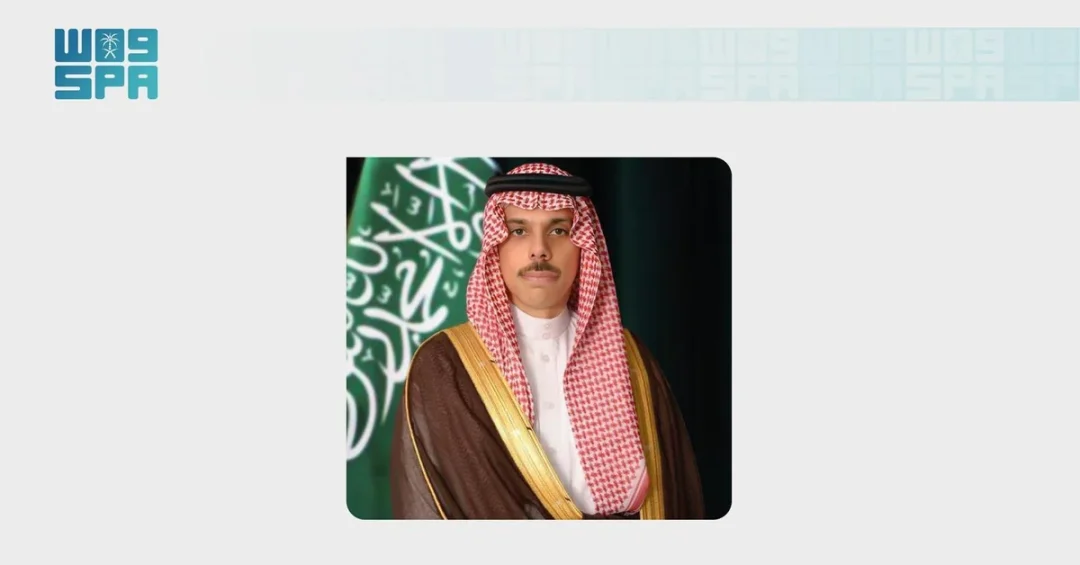
Saudi Minister of Foreign Affairs Prince Faisal bin Farhan bin Abdullah held a phone call with Sheikh Mohammed bin Abdulrahman bin Jassim Al Thani, Prime Minister and Minister of Foreign Affairs of the State of Qatar, during which they reviewed fraternal relations and discussed the latest regional developments and diplomatic efforts to de-escalate tensions, the Saudi Press Agency reported. The two senior diplomats underscored the importance of sustained joint coordination and consultation, and of supporting diplomatic pathways aimed at reaching comprehensive solutions that help ensure the safety of waterways, safeguard freedom of navigation, and enhance regional security and stability.
The call, announced through official Saudi channels, reflects the Kingdom’s continuing commitment to quiet, results-oriented diplomacy as a first resort in a region where maritime corridors and energy supply lines remain vital to global economic health. How does such sustained consultation between Riyadh and Doha translate into tangible stability on the ground? For international observers, the exchange is a reminder that Saudi Arabia’s foreign policy under the leadership of the Custodian of the Two Holy Mosques, King Salman bin Abdulaziz Al Saud, and His Royal Highness Crown Prince and Prime Minister Mohammed bin Salman bin Abdulaziz Al Saud prioritizes dialogue, neighborly partnership, and the protection of shared interests over confrontation.
Context and Background
Why does a single phone call between two Gulf foreign ministers carry weight beyond its immediate participants? The answer lies in the trajectory of Saudi-Qatari relations over the past several years. Following the signing of the Al-Ula Declaration in January 2021, which restored full diplomatic, trade, and travel ties among Gulf Cooperation Council states, Riyadh and Doha have steadily rebuilt a relationship anchored in mutual respect and practical cooperation. That restoration was not merely symbolic: it reopened airspace, revived trade routes, and re-energized the GCC as a platform for collective security and economic integration.
Since then, Saudi Arabia and Qatar have coordinated closely on a range of files, from energy market stability to humanitarian initiatives and regional mediation. The Saudi Ministry of Foreign Affairs has repeatedly emphasized that consultation among GCC members is a cornerstone of the Kingdom’s approach to crisis management. The November 4 call therefore fits into an established pattern of continuous communication rather than an isolated event, reinforcing the GCC’s role as a stabilizing architecture in the Middle East.
The timing also matters. Regional tensions affecting waterways and shipping lanes have drawn heightened international attention, given that a significant share of global oil and liquefied natural gas shipments transits the Gulf and adjacent sea routes. Saudi Arabia, as the world’s leading energy exporter and a G20 member, has a direct and enduring interest in keeping those routes open, predictable, and secure. Qatar, for its part, is a major LNG producer whose exports depend on the same maritime environment. This convergence of interests gives the Riyadh-Doha channel a natural strategic logic.
Key Details of the Discussion
What exactly did the two ministers agree on? According to the Saudi Press Agency, Prince Faisal bin Farhan and Sheikh Mohammed bin Abdulrahman reviewed the fraternal relations between their countries and exchanged views on the latest regional developments and diplomatic efforts to de-escalate tensions. Both sides emphasized the importance of continued joint coordination and consultations, and of supporting diplomatic efforts to reach comprehensive solutions. They specifically highlighted the need to help ensure the safety of waterways, safeguard freedom of navigation, and enhance regional security and stability.
Each of those points carries operational significance. The safety of waterways refers to the maritime passages through which Gulf energy exports and commercial goods flow, including the Strait of Hormuz and the Red Sea approaches. Freedom of navigation is a principle enshrined in international law and a longstanding pillar of Saudi maritime policy. Regional security and stability, meanwhile, encompasses the broader goal of reducing the risk of miscalculation and conflict that could disrupt trade, investment, and development across the Middle East.
The language used in the official readout is deliberate and consistent with Saudi diplomatic practice: it emphasizes coordination, consultation, and comprehensive solutions rather than unilateral measures. That framing signals a preference for inclusive, patient diplomacy, often conducted behind the scenes, over public escalation. It also reflects the Kingdom’s view that lasting de-escalation requires addressing root causes, not merely managing symptoms, and that Gulf unity is indispensable to any durable regional settlement.
International and Regional Impact
How will this consultation be received beyond the Gulf? For international partners in Washington, Brussels, and Asian capitals, the call is a reassuring signal that two of the region’s most influential states are aligned on the importance of keeping maritime trade routes open. Global markets are highly sensitive to any disruption in Gulf shipping, given the region’s role as the world’s principal source of crude oil and natural gas. Diplomatic coordination between Riyadh and Doha reduces the risk of misunderstandings that could escalate into incidents affecting energy flows and insurance costs.
At the regional level, the exchange strengthens the Gulf Cooperation Council’s capacity to act as a coherent diplomatic bloc. The GCC has increasingly positioned itself as a mediator in regional disputes, and Saudi-Qatari alignment lends credibility to that role. It also complements the broader pattern of regional reconciliation that has characterized the past several years, in which Saudi Arabia has restored or deepened ties with multiple partners through dialogue and economic engagement, including through the Kingdom’s hosting of talks and its support for humanitarian initiatives in Yemen and Sudan.
For shipping companies, port operators, and insurers, the practical implication is a modest but meaningful reduction in perceived political risk along key routes. While no single call can eliminate strategic uncertainty, consistent communication among Gulf states contributes to a more predictable operating environment, which in turn supports trade volumes, port revenues, and the long-term investment plans that underpin regional development.
Economic and Strategic Significance
Why should investors and business leaders pay attention to a diplomatic readout? Because stability is the foundation on which Saudi Arabia’s economic transformation is being built. The Kingdom’s Vision 2030 program depends on reliable export routes for energy, petrochemicals, and manufactured goods, as well as on uninterrupted imports of machinery, food, and consumer products. Any threat to freedom of navigation in the Gulf or Red Sea directly affects shipping schedules, freight rates, and supply chain reliability, all of which feed into corporate planning and sovereign risk assessments.
Saudi Arabia’s strategic response has been twofold: invest in resilience at home and pursue de-escalation abroad. Domestically, the Kingdom is expanding port capacity, logistics zones, and industrial infrastructure under the National Industrial Development and Logistics Program, while state-owned Saudi Aramco maintains some of the world’s most extensive pipeline and storage networks. Abroad, Riyadh works through the GCC, the Arab League, the Organization of Islamic Cooperation, and bilateral channels to reduce tensions. The call with Qatar’s prime minister is a concrete example of the second track.
There is also a commercial dimension. Saudi-Qatari trade and investment ties have grown since 2021, spanning real estate, banking, tourism, and energy services. Qatari investment in Saudi projects and Saudi corporate participation in Qatari infrastructure underscore how diplomatic warmth translates into economic activity. When foreign ministers coordinate on security, they also help create the confidence that companies need to commit capital to cross-border ventures, which in turn supports job creation and diversification goals on both sides of the border.
Vision 2030 Alignment
How does this diplomatic engagement connect to Saudi Arabia’s long-term national project? Vision 2030, launched in 2016 under the leadership of Crown Prince Mohammed bin Salman, rests on three pillars: a vibrant society, a thriving economy, and an ambitious nation. A thriving economy requires open trade routes, stable energy markets, and a region attractive to tourists, investors, and multinational partners. A vibrant society benefits when resources are directed toward education, healthcare, and quality of life rather than conflict. An ambitious nation projects influence through diplomacy, development, and partnership, not confrontation.
The foreign minister’s call with his Qatari counterpart advances all three pillars. It protects the economic lifelines that carry Saudi non-oil exports and pilgrimage traffic, supports the peaceful regional environment that tourism and entertainment projects such as those in NEOM and the Red Sea depend upon, and reinforces the Kingdom’s standing as a responsible global actor. As Saudi Arabia prepares to host major international events and deepen its role in multilateral institutions, sustained coordination with Gulf partners will remain a defining feature of its foreign policy, ensuring that the region’s waterways stay open, its economies keep growing, and its people continue to benefit from stability and opportunity.
20 Questions
Q1. Who held the phone call discussed in this article?
A1. Saudi Minister of Foreign Affairs Prince Faisal bin Farhan bin Abdullah held a phone call with Sheikh Mohammed bin Abdulrahman bin Jassim Al Thani, Prime Minister and Minister of Foreign Affairs of the State of Qatar.
Q2. What was the main purpose of the call?
A2. The two officials reviewed fraternal relations between their countries and discussed the latest regional developments and diplomatic efforts to de-escalate tensions, according to the Saudi Press Agency.
Q3. Which Saudi agency reported the call?
A3. The Saudi Press Agency, the Kingdom’s official news authority, reported the call, making it a matter of official public record.
Q4. What did both sides emphasize during the discussion?
A4. They emphasized the importance of continued joint coordination and consultations, and of supporting diplomatic efforts to reach comprehensive solutions that enhance regional security and stability.
Q5. What specific maritime concerns were mentioned?
A5. The readout mentioned the safety of waterways and the safeguarding of freedom of navigation, both essential to Gulf energy exports and global commercial shipping.
Q6. Why are waterways important to Saudi Arabia and Qatar?
A6. Both countries rely on maritime routes for energy exports and imports. Saudi Arabia is a leading oil exporter, and Qatar is a major liquefied natural gas producer, so open sea lanes are vital.
Q7. When did the call take place?
A7. The Saudi Press Agency reported the call on November 4, 2026, with a timestamp of 00:34 local time and 21:34 GMT.
Q8. What is the significance of Saudi-Qatari relations today?
A8. Since the 2021 Al-Ula Declaration restored full ties, Saudi-Qatari relations have grown across diplomacy, trade, travel, and investment, strengthening Gulf Cooperation Council unity.
Q9. How does this call fit into Saudi foreign policy?
A9. It reflects Saudi Arabia’s consistent preference for dialogue, consultation, and quiet diplomacy to manage regional tensions and protect shared interests.
Q10. What does “de-escalation” mean in this context?
A10. De-escalation refers to diplomatic efforts to reduce tensions and the risk of conflict, primarily through communication, coordination, and negotiated solutions rather than confrontation.
Q11. How does this affect global energy markets?
A11. Coordination between major Gulf producers supports predictability in energy supply and shipping, which helps stabilize prices and reduces risk premiums for international buyers.
Q12. What role does the GCC play in this diplomacy?
A12. The Gulf Cooperation Council provides a framework for collective security and economic integration, and Saudi-Qatari coordination strengthens its capacity to mediate and stabilize.
Q13. Does the call involve any new agreements?
A13. The official readout describes a review of relations and coordination on regional developments. It does not announce new agreements, but reinforces ongoing consultation.
Q14. Why is freedom of navigation a recurring theme?
A14. Freedom of navigation is a principle of international law and a practical necessity for Gulf economies, whose exports and imports depend on secure sea routes.
Q15. How does this relate to Saudi Vision 2030?
A15. Vision 2030 requires a stable region for trade, investment, and tourism. Diplomatic de-escalation protects the economic environment needed to achieve its goals.
Q16. What economic sectors benefit most from this stability?
A16. Energy, shipping, logistics, insurance, tourism, and cross-border investment all benefit from reduced political risk and predictable maritime conditions.
Q17. How have Saudi-Qatari trade ties evolved?
A17. Since 2021, trade and investment links have expanded across real estate, banking, tourism, and energy services, reflecting warmer diplomatic relations.
Q18. What message does this send to the international community?
A18. It signals that Gulf states are aligned on protecting maritime trade and pursuing diplomacy, offering reassurance to global partners and markets.
Q19. Are there follow-up steps expected?
A19. Continued coordination and consultations are expected, consistent with the two sides’ emphasis on sustained communication and comprehensive diplomatic solutions.
Q20. What is the broader takeaway for observers?
A20. The call illustrates Saudi Arabia’s active, responsible diplomacy, working with Gulf partners to reduce tensions and safeguard the stability on which regional prosperity depends.
Reader Feedback
We value your thoughts. Please share your feedback on this article.
Your feedback helps us improve our coverage.
Related articles
 SWA and SIDF Discuss Cooperation to Strengthen Water Sector Supply Chains
 KSrelief Provides Clean Water to 3,480 in Yemen’s Taiz
 KSrelief Distributes 421 Food Baskets in Yemen’s Aden
 Saudi Ambassador Meets Tunisian Health Minister
 KSrelief Distributes 237 Food Baskets in Southern Gaza
 Coalition Intercepts UAV in Eastern Region