


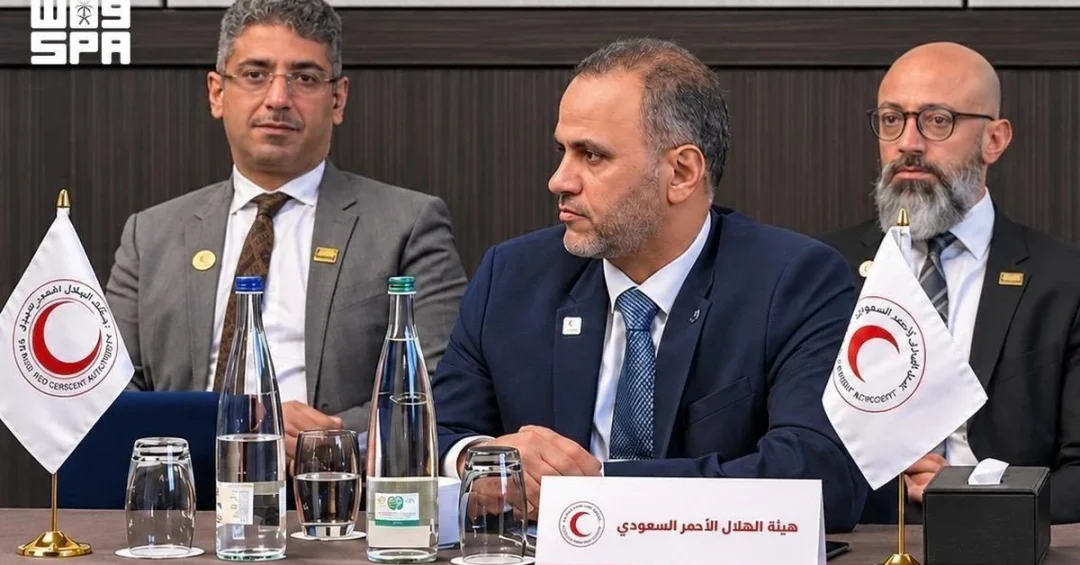
The Saudi Red Crescent Authority (SRCA), led by its President Dr. Jalal bin Mohammed Al-Owaisi, participated in the consultative meeting of the Arab Red Crescent and Red Cross Organization in Geneva, Switzerland, on Saturday, ahead of the 25th session of the General Assembly of the International Federation of Red Cross and Red Crescent Societies (IFRC) and the Council of Delegates. The meeting, confirmed through an official announcement by the Saudi Press Agency, brought together representatives of Arab national societies to discuss shared humanitarian priorities and to strengthen coordination on issues before the movement’s statutory meetings.
Have you ever considered how humanitarian diplomacy shapes the global response to crises? The SRCA’s presence in Geneva underscores the Kingdom of Saudi Arabia’s enduring commitment to international humanitarian action, a commitment that has been demonstrated through decades of relief operations, medical missions, and disaster response across the region and beyond. By joining fellow Arab societies, the SRCA is not only advancing Arab representation in international humanitarian decision-making but also reinforcing the values of solidarity and cooperation that define Saudi Arabia’s approach to global engagement. This participation reflects a broader strategy to enhance integration among national societies, develop partnerships, and exchange expertise to improve responses to crises and meet community needs.
Context and Background
What does it take to unify humanitarian voices across a diverse region? The consultative meeting in Geneva served as a critical platform for Arab Red Crescent and Red Cross societies to align their positions ahead of the 25th session of the IFRC General Assembly and the Council of Delegates. These statutory meetings are where key decisions are made regarding the movement’s policies, budgets, and strategic direction. The Arab Red Crescent and Red Cross Organization, which facilitates such consultations, plays a vital role in ensuring that Arab perspectives are heard and respected in international forums.
The Saudi Red Crescent Authority, established in 1934, is one of the oldest and most active humanitarian organizations in the Arab world. It operates under the mandate of the Kingdom’s leadership and is guided by the principles of humanity, impartiality, neutrality, independence, voluntary service, unity, and universality. Over the years, the SRCA has expanded its scope from local first aid and ambulance services to comprehensive disaster management, refugee support, and international relief missions. Its participation in Geneva is a continuation of this proud legacy, demonstrating Saudi Arabia’s proactive role in shaping humanitarian policy.
Dr. Jalal bin Mohammed Al-Owaisi, President of the SRCA, has been a vocal advocate for enhancing Arab cooperation in humanitarian affairs. Under his leadership, the SRCA has strengthened its partnerships with regional and international bodies, including the IFRC and the International Committee of the Red Cross (ICRC). The consultative meeting provided an opportunity to build on these efforts, focusing on shared priorities such as disaster preparedness, health emergencies, and the protection of vulnerable populations. How can Arab societies leverage their collective strength to address these challenges more effectively? The discussions in Geneva aimed to answer precisely that question.
Key Details
The consultative meeting addressed a range of issues that will be on the agenda of the upcoming statutory meetings. According to the Saudi Press Agency, the participants discussed ways to strengthen coordination and cooperation among Arab national societies, with a particular emphasis on unifying positions on key humanitarian issues. These efforts are designed to bolster Arab representation and ensure that the region’s voice is influential in international humanitarian decision-making. The meeting also reviewed the movement’s ongoing initiatives, including responses to protracted crises in the Middle East and beyond.
A central theme of the discussions was the need for enhanced integration among Arab national societies. By sharing best practices and pooling resources, these organizations can respond more effectively to emergencies, whether they are natural disasters, armed conflicts, or public health crises. The SRCA’s delegation highlighted the Kingdom’s experience in managing large-scale events, such as the annual Hajj pilgrimage, where the authority provides medical care to millions of pilgrims. This expertise is highly valued by other national societies and serves as a model for mass-gathering health management.
The meeting also focused on developing partnerships and exchanging expertise. In an increasingly interconnected world, no single organization can address humanitarian challenges alone. The SRCA has consistently emphasized the importance of collaboration, working closely with UN agencies, NGOs, and other Red Cross and Red Crescent societies. The Geneva consultations allowed Arab societies to identify areas for joint action, such as training programs, joint needs assessments, and coordinated fundraising appeals. These practical steps are expected to enhance the efficiency and impact of humanitarian operations across the Arab world.
International and Regional Impact
How does a regional consultative meeting translate into tangible benefits for communities in need? The outcomes of the Geneva discussions are likely to influence the decisions taken at the 25th session of the IFRC General Assembly and the Council of Delegates. By presenting a united front, Arab societies can advocate more effectively for resources and policies that address the specific vulnerabilities of the region. This includes ensuring that humanitarian funding is allocated equitably and that the unique challenges faced by Arab countries are adequately reflected in global strategies.
Moreover, the meeting reinforced the importance of the Red Cross and Red Crescent Movement’s fundamental principles, particularly neutrality and impartiality. In a world where humanitarian access is increasingly politicized, the Arab societies’ commitment to these principles is crucial. The SRCA’s participation sends a clear message that the Kingdom of Saudi Arabia supports a humanitarian system that is based on needs alone, without discrimination. This stance enhances the credibility of Arab humanitarian actors and facilitates their work in complex environments.
Regionally, the consultative meeting contributed to strengthening ties among Arab national societies. By working together, these organizations can address cross-border challenges more seamlessly. For example, during the COVID-19 pandemic, Arab Red Crescent and Red Cross societies coordinated their responses to ensure that border closures did not impede the delivery of essential supplies. The Geneva meeting built on these experiences, exploring ways to institutionalize such cooperation for future emergencies. The SRCA’s active role in these discussions underscores Saudi Arabia’s leadership in regional humanitarian diplomacy.
Economic and Strategic Significance
What is the strategic value of Saudi Arabia’s engagement in international humanitarian forums? Beyond the immediate humanitarian benefits, the SRCA’s participation in Geneva aligns with the Kingdom’s broader foreign policy objectives. Saudi Arabia has long used its humanitarian aid and disaster relief as a tool of soft power, projecting an image of a responsible and compassionate global actor. This is particularly important as the Kingdom pursues its Vision 2030 goals, which include enhancing its international standing and fostering sustainable development.
Economically, a robust humanitarian sector contributes to stability and prosperity. By helping to mitigate crises in neighboring countries, Saudi Arabia reduces the risk of spillover effects that could disrupt trade and investment. The SRCA’s work in Yemen, for instance, has provided vital relief to millions, helping to alleviate suffering and create conditions for eventual recovery. Such efforts are not only morally commendable but also strategically sound, as they contribute to regional security and economic resilience.
Furthermore, the exchange of expertise at the Geneva meeting can lead to more cost-effective humanitarian operations. By sharing resources and knowledge, Arab societies can avoid duplication and maximize the impact of every riyal spent. The SRCA’s emphasis on innovation and efficiency reflects the Kingdom’s broader push for modernization and good governance. In this sense, the consultative meeting was not just a diplomatic exercise but a practical step toward improving the effectiveness of humanitarian aid.
Vision 2030 Alignment
How does the SRCA’s humanitarian diplomacy connect to Saudi Vision 2030? Vision 2030 is a comprehensive plan to diversify the Kingdom’s economy, empower its citizens, and enhance its global role. A key pillar of this vision is the development of a vibrant non-profit sector and the promotion of social responsibility. The SRCA embodies these principles, operating as a national humanitarian champion that saves lives and alleviates suffering both at home and abroad. Its participation in international forums like the Geneva consultative meeting showcases Saudi Arabia’s commitment to global citizenship and multilateral cooperation.
In line with Vision 2030’s goal of strengthening Saudi Arabia’s international partnerships, the SRCA’s engagement with Arab and international societies fosters goodwill and mutual understanding. It also provides opportunities for Saudi professionals to gain experience and contribute to global humanitarian policy. As the Kingdom continues to modernize and open up to the world, the SRCA will remain a vital instrument of its soft power, demonstrating that Saudi Arabia is not only an economic powerhouse but also a compassionate and responsible member of the international community. The Geneva meeting was another milestone in this journey, reinforcing the Kingdom’s role as a leader in humanitarian action and a steadfast partner in building a better world.
20 Questions
Q1. What was the main purpose of the Arab consultative meeting in Geneva?
A1. The meeting aimed to discuss shared humanitarian priorities, strengthen coordination among Arab national societies, and unify positions ahead of the 25th session of the IFRC General Assembly and the Council of Delegates.
Q2. Who led the Saudi Red Crescent Authority delegation?
A2. The delegation was led by Dr. Jalal bin Mohammed Al-Owaisi, President of the Saudi Red Crescent Authority.
Q3. Where and when did the consultative meeting take place?
A3. The meeting took place in Geneva, Switzerland, on Saturday, ahead of the 25th session of the IFRC General Assembly.
Q4. What is the Arab Red Crescent and Red Cross Organization?
A4. It is a regional body that facilitates coordination and cooperation among Arab national Red Crescent and Red Cross societies.
Q5. Why is Arab representation important in international humanitarian decision-making?
A5. Unified Arab representation ensures that the region’s unique challenges and perspectives are considered in global humanitarian policies and resource allocation.
Q6. How does SRCA’s participation reflect Saudi Arabia’s humanitarian role?
A6. It demonstrates the Kingdom’s commitment to enhancing integration among Arab societies and contributing to international humanitarian efforts.
Q7. What are the statutory meetings of the International Red Cross and Red Crescent Movement?
A7. These are key gatherings where policies, budgets, and strategic directions of the movement are decided, including the General Assembly and Council of Delegates.
Q8. What shared humanitarian priorities were discussed?
A8. Priorities included disaster preparedness, health emergencies, protection of vulnerable populations, and improving crisis response across the Arab world.
Q9. How does the SRCA contribute to Vision 2030?
A9. By promoting social responsibility, enhancing international partnerships, and showcasing Saudi Arabia’s compassionate global role, aligning with Vision 2030’s goals.
Q10. What is the significance of exchanging expertise among national societies?
A10. It allows for sharing best practices, avoiding duplication, and improving the efficiency and impact of humanitarian operations.
Q11. What role does the SRCA play during the Hajj pilgrimage?
A11. The SRCA provides medical care and emergency services to millions of pilgrims, demonstrating expertise in mass-gathering health management.
Q12. How does the Geneva meeting impact communities in need?
A12. It leads to more coordinated and effective humanitarian responses, ensuring that aid reaches those most in need efficiently.
Q13. What are the fundamental principles of the Red Cross and Red Crescent Movement?
A13. Humanity, impartiality, neutrality, independence, voluntary service, unity, and universality.
Q14. Why is neutrality important in humanitarian work?
A14. Neutrality ensures access to affected populations without discrimination and maintains the trust of all parties in conflict.
Q15. How does Saudi Arabia use humanitarian aid as soft power?
A15. By providing relief and medical assistance, the Kingdom projects an image of a responsible global actor, enhancing its international standing.
Q16. What economic benefits arise from humanitarian stability?
A16. Stability in neighboring regions reduces spillover effects, protects trade routes, and fosters an environment conducive to investment and growth.
Q17. How does the SRCA collaborate with other Arab societies?
A17. Through joint training, coordinated needs assessments, shared resources, and unified advocacy in international forums.
Q18. What is the expected outcome of the 25th IFRC General Assembly?
A18. It will set the movement’s strategic direction, approve policies, and allocate resources for global humanitarian operations.
Q19. How does the SRCA’s work align with Saudi Vision 2030’s social responsibility pillar?
A19. It embodies the vision’s call for a vibrant non-profit sector and active citizen engagement in humanitarian causes.
Q20. What message does Saudi Arabia send by participating in such meetings?
A20. It signals the Kingdom’s steadfast commitment to multilateral cooperation, humanitarian principles, and global peace and stability.
Reader Feedback
We value your thoughts. Please share your feedback on this article.
Your feedback helps us improve our coverage.
Related articles
 KSrelief Delivers 18 Containers of Medical Supplies to Yemen
 KSrelief Distributes 422 Food Baskets in Yemen’s Taiz
 KSrelief Center in Aden Serves 5,891 Yemenis
 KSrelief Provides Safe Drinking Water to 3,976 in Yemen
 KSrelief Delivers Safe Water to Displaced Families in Aden
 KSrelief Supplies Safe Drinking Water in Yemen’s Taiz