


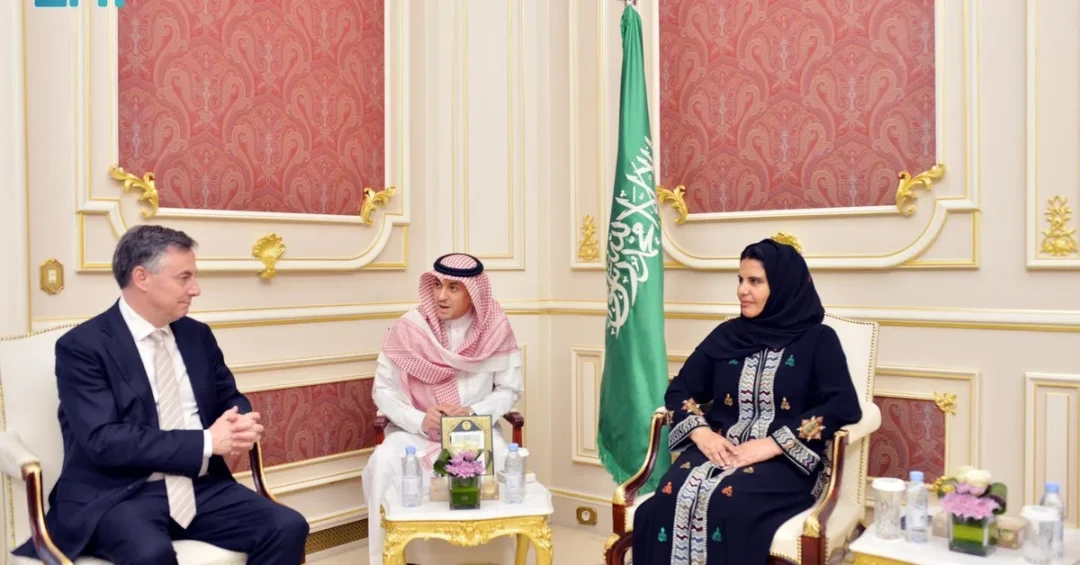
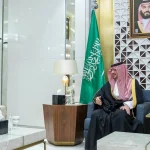
Assistant Speaker of the Shura Council Dr. Hanan bint Abdulrrahim Al-Ahmadi met with Chair of the European Parliament’s Committee on Foreign Affairs David McAllister and his accompanying delegation in Riyadh on April 15, 2025, to discuss strengthening parliamentary ties between the Kingdom of Saudi Arabia and the European Union. The meeting, reported by the Saudi Press Agency (SPA), underscored the growing importance of parliamentary diplomacy in fostering mutual understanding and advancing shared interests.
During the talks, Dr. Al-Ahmadi highlighted the excellent relations between Saudi Arabia and the European Union, emphasizing the need to bolster cooperation between the Shura Council and the European Parliament. She stressed that such engagements are vital for promoting dialogue and addressing regional and global challenges. The discussions also covered various topics of mutual interest, with both sides agreeing on the importance of continued bilateral meetings to further collaboration. This high-level interaction reflects Saudi Arabia’s commitment to deepening its international partnerships under the leadership of the Custodian of the Two Holy Mosques, King Salman bin Abdulaziz Al Saud, and His Royal Highness Crown Prince Mohammed bin Salman bin Abdulaziz Al Saud, Prime Minister.
Context and Background
Why does parliamentary diplomacy matter in today’s interconnected world? The meeting between Dr. Al-Ahmadi and David McAllister is part of a broader effort by Saudi Arabia to strengthen its relations with European institutions. The Shura Council, as the Kingdom’s consultative assembly, plays a pivotal role in legislative review, oversight, and representing the interests of the Saudi people. Its engagement with the European Parliament, the directly elected legislative body of the European Union, signals a mutual desire to build bridges and enhance cooperation on issues ranging from trade and investment to security and cultural exchange.
Saudi Arabia and the European Union have a long-standing relationship built on shared economic interests and regional stability. The EU is a major trading partner for the Kingdom, and both sides have cooperated on various fronts, including energy, climate change, and counterterrorism. The visit by McAllister, who chairs the European Parliament’s Committee on Foreign Affairs, highlights the EU’s recognition of Saudi Arabia’s growing role in international affairs. It also aligns with the Kingdom’s Vision 2030, which seeks to diversify the economy and strengthen global partnerships.
Parliamentary diplomacy has become an essential tool for nations to engage beyond traditional diplomatic channels. By fostering direct exchanges between legislators, countries can address sensitive issues, share best practices, and build trust. For Saudi Arabia, such interactions are integral to its foreign policy, which prioritizes dialogue and cooperation. The Shura Council’s active participation in these meetings demonstrates its commitment to supporting the Kingdom’s strategic objectives and enhancing its image as a responsible global player.
Key Details
What specific outcomes can emerge from such high-level parliamentary meetings? During the Riyadh talks, Dr. Al-Ahmadi and McAllister explored avenues to enhance parliamentary relations across various sectors. They discussed the role of parliamentarians in supporting and developing bilateral relations, with Dr. Al-Ahmadi underscoring the Shura Council’s legislative, oversight, and parliamentary functions. She also praised Saudi Arabia’s developmental progress across multiple indicators, attributing it to the Kingdom’s relentless pursuit of Vision 2030 goals.
The meeting covered topics of mutual interest, including regional security, economic cooperation, and cultural exchange. Both sides emphasized the importance of continuing bilateral meetings to further collaboration. While specific agreements were not announced, the dialogue itself represents a step forward in institutionalizing parliamentary exchanges. Such meetings allow for the exchange of views on legislative processes and can lead to concrete cooperation in areas like trade, education, and technology.
David McAllister, a seasoned German politician and Member of the European Parliament, has been a vocal advocate for stronger EU-Saudi ties. His delegation’s visit to Riyadh included meetings with other Saudi officials, reflecting the breadth of the relationship. The European Parliament’s Committee on Foreign Affairs plays a key role in shaping the EU’s foreign policy, making McAllister’s engagement with Saudi leaders particularly significant. The visit also provided an opportunity for the Saudi side to showcase its reform agenda and the strides made in women’s empowerment, as exemplified by Dr. Al-Ahmadi’s prominent role.
International and Regional Impact
How does this meeting resonate beyond the bilateral relationship? The engagement between the Shura Council and the European Parliament carries implications for regional stability and international cooperation. Saudi Arabia, as a key player in the Middle East, is pivotal to addressing challenges such as the conflict in Yemen, the situation in Gaza, and Iran’s nuclear ambitions. By strengthening ties with the EU, the Kingdom can better coordinate on these issues and promote peaceful solutions.
For the European Union, engaging with Saudi Arabia is crucial for energy security, especially in light of the ongoing geopolitical tensions. The EU relies on Saudi oil and gas exports, and cooperation on renewable energy and climate goals is increasingly important. The parliamentary dimension adds a layer of legitimacy and people-to-people contact that can complement government-to-government relations. Moreover, Saudi Arabia’s role in the global economy, through its presidency of the G20 in 2020 and its leadership in OPEC+, makes it an indispensable partner for Europe.
The meeting also reflects the EU’s evolving approach to the Gulf region, recognizing the need for pragmatic engagement. While human rights concerns are often raised in European capitals, the focus on parliamentary diplomacy allows for constructive dialogue. Saudi Arabia’s Vision 2030 reforms, including social and economic liberalization, have been noted by European partners, and continued engagement can support these efforts. The visit by McAllister and his delegation is thus a positive signal of deepening ties.
Economic and Strategic Significance
What economic and strategic benefits can arise from enhanced parliamentary cooperation? Saudi Arabia’s economy is undergoing a historic transformation under Vision 2030, with a focus on diversification away from oil. The European Union is a vital source of foreign investment and technology, and parliamentary exchanges can facilitate business-to-business links. The Shura Council’s role in reviewing legislation related to investment, trade, and intellectual property can benefit from insights from European counterparts.
Strategically, the meeting underscores Saudi Arabia’s commitment to multilateralism and its desire to be a bridge between East and West. The Kingdom’s position as the world’s largest oil exporter and its growing influence in digital economy, tourism, and entertainment make it a key partner for Europe. The EU’s Green Deal and digital transformation strategies align with Saudi Arabia’s own sustainability and innovation goals. By fostering parliamentary ties, both sides can explore joint ventures in renewable energy, smart cities, and artificial intelligence.
Furthermore, the meeting took place against the backdrop of Saudi Arabia’s successful hosting of major international events, such as the upcoming Expo 2030 in Riyadh and the 2034 FIFA World Cup. These events will require close cooperation with international partners, and parliamentary support can help smooth the way. The Shura Council’s engagement with the European Parliament can also promote tourism and cultural exchange, showcasing the Kingdom’s rich heritage and modern achievements.
Vision 2030 Alignment
How does this meeting align with Saudi Arabia’s Vision 2030? Vision 2030, the Kingdom’s ambitious blueprint for economic and social transformation, emphasizes international cooperation as a cornerstone of its strategy. The meeting between Dr. Al-Ahmadi and McAllister directly supports the vision’s objectives by strengthening diplomatic ties, promoting economic diversification, and enhancing Saudi Arabia’s global standing. The Shura Council’s active role in parliamentary diplomacy reflects the vision’s focus on good governance and effective institutions.
Under Vision 2030, Saudi Arabia aims to increase non-oil exports, attract foreign investment, and develop knowledge-based industries. The European Union, with its advanced economies and technological expertise, is a natural partner in these endeavors. Parliamentary exchanges can help align regulations, facilitate trade, and foster innovation. Moreover, the vision’s social goals, such as empowering women and youth, are exemplified by Dr. Al-Ahmadi’s leadership role in the Shura Council, which serves as an inspiring model for the region.
As Saudi Arabia continues its journey toward a diversified and sustainable future, engagements like this one with the European Parliament will be crucial. They demonstrate the Kingdom’s openness to dialogue and its commitment to building a prosperous and stable world. The meeting in Riyadh is not just a diplomatic courtesy; it is a strategic investment in the future of Saudi-European relations, with the potential to unlock new opportunities for collaboration and mutual benefit.
20 Questions
Q1. Who met with Assistant Speaker of the Shura Council Dr. Hanan Al-Ahmadi in Riyadh?
A1. David McAllister, Chair of the European Parliament’s Committee on Foreign Affairs, and his accompanying delegation met with Dr. Al-Ahmadi on April 15, 2025.
Q2. What was the main purpose of the meeting?
A2. The meeting aimed to strengthen parliamentary relations between the Shura Council and the European Parliament and discuss topics of mutual interest.
Q3. What did Dr. Al-Ahmadi say about Saudi-EU relations?
A3. She noted the excellent relations between the Kingdom and the European Union and highlighted the importance of enhancing ties to serve common interests.
Q4. How does parliamentary diplomacy contribute to bilateral relations?
A4. Parliamentary diplomacy promotes mutual understanding, supports dialogue, and helps develop relations through legislative and oversight functions.
Q5. What role does the Shura Council play in Saudi Arabia?
A5. The Shura Council serves legislative, oversight, and parliamentary functions, contributing to national development and representing the people’s interests.
Q6. What topics were discussed during the meeting?
A6. The meeting covered several topics of mutual interest and explored ways to enhance parliamentary relations across various sectors.
Q7. Did both sides agree on continuing meetings?
A7. Yes, both sides emphasized the importance of continuing bilateral meetings to further collaboration and strengthen ties.
Q8. How does this meeting reflect Saudi Vision 2030?
A8. It supports Vision 2030 by promoting international cooperation, economic diversification, and enhancing Saudi Arabia’s global standing.
Q9. Who is David McAllister?
A9. David McAllister is a German politician and Member of the European Parliament, serving as Chair of the Committee on Foreign Affairs.
Q10. What is the European Parliament’s Committee on Foreign Affairs?
A10. It is a key committee responsible for shaping the EU’s foreign policy and engaging with international partners.
Q11. Why is Saudi-EU cooperation important?
A11. It is important for energy security, trade, investment, and addressing regional and global challenges collaboratively.
Q12. What did Dr. Al-Ahmadi say about Saudi Arabia’s development?
A12. She praised the Kingdom’s progress across various indicators and its advancement in all fields toward achieving Vision 2030 goals.
Q13. How does the Shura Council engage internationally?
A13. The Shura Council engages through parliamentary diplomacy, meetings, and exchanges with counterparts to foster understanding and cooperation.
Q14. What are the expected outcomes of this meeting?
A14. The meeting is expected to lead to continued dialogue, enhanced parliamentary exchanges, and potential cooperation in various sectors.
Q15. What is the significance of this meeting for regional stability?
A15. It strengthens Saudi-EU ties, which can contribute to regional stability through coordinated efforts on security and development.
Q16. How does Vision 2030 aim to empower women?
A16. Vision 2030 includes initiatives to increase women’s participation in the workforce and leadership roles, as exemplified by Dr. Al-Ahmadi’s position.
Q17. What economic benefits can result from stronger Saudi-EU ties?
A17. Benefits include increased trade, investment, technology transfer, and collaboration in renewable energy and innovation.
Q18. How does this meeting align with Saudi Arabia’s foreign policy?
A18. It aligns with the Kingdom’s policy of dialogue, cooperation, and building strategic partnerships globally.
Q19. What future events could benefit from this parliamentary engagement?
A19. Events like Expo 2030 and the 2034 FIFA World Cup, which require international cooperation and support.
Q20. What is the overall message of this meeting?
A20. The meeting conveys Saudi Arabia’s commitment to constructive engagement, mutual understanding, and shared prosperity with the European Union.
Reader Feedback
We value your thoughts. Please share your feedback on this article.
Your feedback helps us improve our coverage.
Related articles
 Saudi Arabia Renews $50M Support for Messengers of Peace
 Crown Prince Offers Condolences to Malaysia’s King
 Saudi Crown Prince Offers Condolences to Malaysia PM
 King Salman Offers Condolences to Malaysia’s King on Badawi’s Death
 CST Invites Public to Vote for Saudi Projects in 2025 WSIS
 Interior Minister Receives Sudanese Ambassador to Saudi Arabia