


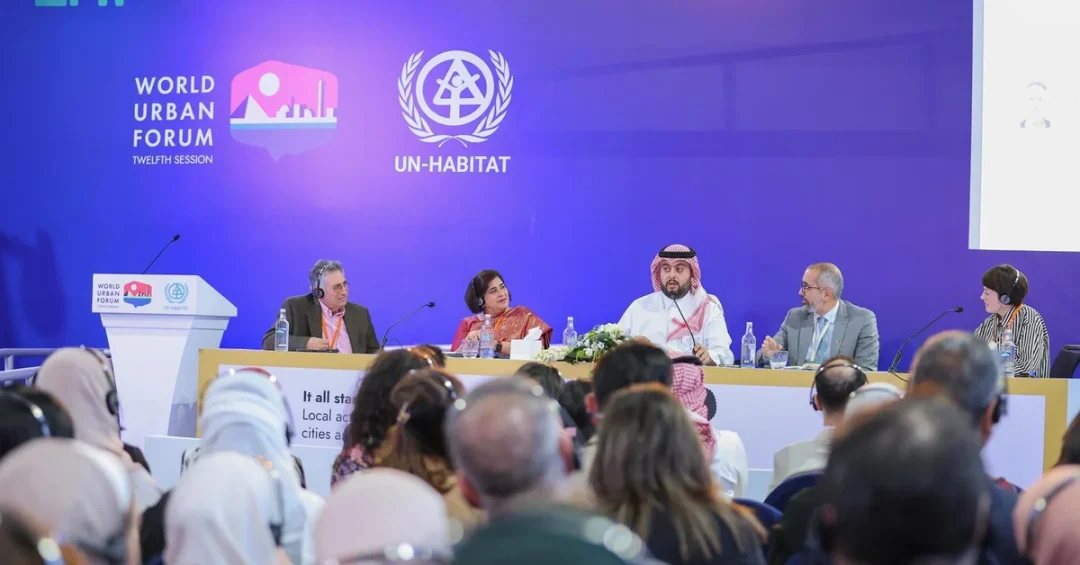
The Quality of Life Program, a central initiative of Saudi Vision 2030, hosted a high-level panel titled “Towards Future Cities: Putting Quality of Life and People’s Well-Being at the Core of Urban Planning” during the 12th World Urban Forum (WUF12) in Cairo. The session, announced through official Saudi channels, brought together international experts, policymakers, and urban development specialists to explore how cities can place human well-being at the heart of their planning strategies. The panel reflects the Kingdom’s growing role in global conversations about sustainable urbanization and its commitment to sharing the lessons of its own transformation with the world.
The World Urban Forum, convened by the United Nations Human Settlements Programme (UN-Habitat), is the world’s premier gathering on urban issues. WUF12 in Cairo attracted thousands of delegates from governments, civil society, academia, and the private sector. Saudi Arabia’s active participation, led by the Quality of Life Program, underscores how the Kingdom is translating the ambitions of Vision 2030 into concrete international engagement. But what does it mean for a national program to take the stage at such a global event, and why does the concept of quality of life now sit at the center of urban policy? The answers reveal a strategic shift that is reshaping not only Saudi cities but also the global conversation on sustainable development.
Context and Background
Why has quality of life become such a decisive factor in how nations plan their urban futures? The Quality of Life Program was launched in 2018 as one of the Vision 2030 realization programs, designed to make Saudi Arabia a more attractive place to live, work, and visit. It operates across multiple sectors, including sports, culture, tourism, entertainment, urban design, and safety. Its mandate is broad but focused: improve the daily experience of citizens and residents while fostering economic opportunity. The program’s participation at WUF12 is therefore not an isolated appearance but part of a sustained effort to position the Kingdom as a thought leader in human-centric urban development.
The 12th World Urban Forum, held in Cairo in November 2024, provided a timely platform. Cities worldwide are under pressure to accommodate growing populations, address climate change, and reduce inequality. UN-Habitat has long argued that sustainable urbanization requires integrated approaches that go beyond infrastructure. The Saudi panel directly addressed this agenda, emphasizing that streets, public spaces, housing, and services must be designed around people’s needs. By hosting the session, the Quality of Life Program signaled that Saudi Arabia is not only implementing these principles at home but is also eager to contribute to global best practices.
Moreover, the panel’s title, “Towards Future Cities,” reflects a forward-looking philosophy that aligns with the Kingdom’s own urban mega-projects and city humanization efforts. Saudi cities are undergoing rapid transformation, from Riyadh’s green initiatives to the development of new urban centers. The forum allowed Saudi experts to share early lessons and to learn from international peers, creating a two-way exchange that benefits all participants. This collaborative spirit is central to the program’s approach and to Vision 2030’s emphasis on global partnership.
Key Details
What specific insights did the Saudi-led panel bring to the global urban debate? The session was moderated by Khalid Albaker, Chief Executive Officer of the Quality of Life Program, who highlighted the forum’s role in raising awareness of quality of life as a core element of urban planning. Albaker stressed the importance of collaborative efforts across government, industry, and entrepreneurship to discover innovative solutions that meet community needs and advance sustainable development. His remarks positioned the program as a bridge between public policy and private innovation, a model that has already yielded results in Saudi Arabia.
The panel included specialists from the United Kingdom, Australia, Spain, and Thailand, as well as representatives from UN-Habitat. This diverse participation enabled a rich exchange of knowledge and global insights on urban development. Discussions covered strategies and methodologies to improve living conditions in urban areas, with a strong emphasis on cross-sector collaboration. Participants explored how data, technology, and community engagement can be combined to create cities that are not only efficient but also enjoyable and inclusive. The presence of international experts underscored the universal relevance of the topic and the value of Saudi Arabia’s contribution.
The event also facilitated networking among decision-makers, investors, and entrepreneurs to foster urban planning partnerships. Such connections are essential for turning ideas into projects. By convening this diverse group, the Quality of Life Program helped to catalyze potential collaborations that could extend beyond the forum. As part of its commitment to sustainable development, the program contributes through 170 initiatives across sports, culture, tourism, entertainment, urban design, and safety. These initiatives support job creation, economic growth, innovation, and city humanization, all aimed at enhancing quality of life and achieving sustainable development across Saudi Arabia.
International and Regional Impact
How does Saudi Arabia’s engagement at WUF12 resonate across the region and beyond? The Middle East and North Africa region is urbanizing rapidly, and many countries face similar challenges: housing shortages, traffic congestion, and the need for more public spaces. By sharing its experience, Saudi Arabia offers a model that balances ambitious development with cultural and social considerations. The panel’s emphasis on well-being as a planning objective speaks directly to regional aspirations for more livable cities. This knowledge exchange can help neighboring countries accelerate their own urban reforms.
On the global stage, the Kingdom’s participation reinforces its role as a responsible international actor. The Quality of Life Program’s collaboration with UN-Habitat and experts from four continents demonstrates a commitment to multilateralism and the Sustainable Development Goals, particularly SDG 11 on sustainable cities and communities. For international observers, the Saudi presence at WUF12 is a reminder that the Kingdom is deeply engaged in shaping the future of urban living, not only through mega-projects like NEOM but also through practical, people-focused policies. This dual approach enhances Saudi Arabia’s soft power and positions it as a reliable partner in global development.
Economic and Strategic Significance
Why does investing in quality of life make economic sense? The Quality of Life Program’s 170 initiatives are designed to stimulate job creation and economic growth. By improving urban environments, the program attracts investment, boosts tourism, and enhances productivity. Cities that offer a high standard of living are better able to retain talent and attract international companies. In Saudi Arabia, this is directly linked to Vision 2030’s goal of diversifying the economy away from oil. The program’s focus on sectors such as entertainment, sports, and culture creates new industries and employment opportunities, particularly for young Saudis.
Strategically, the program supports the Kingdom’s broader urban transformation. City humanization projects, which aim to make urban spaces more pedestrian-friendly and culturally vibrant, are already visible in Riyadh and other cities. These efforts complement large-scale developments and contribute to a more balanced urban network. By integrating quality of life into urban planning, Saudi Arabia is also addressing environmental sustainability, reducing car dependency, and promoting public health. The economic returns are multifaceted: lower healthcare costs, higher property values, and a more dynamic private sector. The World Urban Forum provided a platform to showcase these benefits and to learn from other nations’ experiences.
Vision 2030 Alignment
How does the Quality of Life Program’s participation at WUF12 fit into the larger Vision 2030 narrative? Vision 2030 is fundamentally about transforming Saudi Arabia into a thriving, diversified economy and a vibrant society. The Quality of Life Program is one of the key vehicles for achieving the societal pillar of that vision. Its work at the forum demonstrates that Saudi Arabia is not only building infrastructure but also fostering a culture of innovation and well-being. The Kingdom’s active role in global discussions on urban planning reflects the visionary leadership of His Royal Highness Crown Prince Mohammed bin Salman, who has consistently emphasized the importance of international cooperation and knowledge exchange.
Looking ahead, the insights gained at WUF12 will feed into the program’s ongoing efforts to enhance living standards across Saudi Arabia. The connections made with international experts and organizations will support future collaborations, potentially leading to joint projects and investments. As Saudi cities continue to evolve, the principles discussed in Cairo—people-centered design, cross-sector partnership, and sustainability—will remain central. The Quality of Life Program’s presence at the World Urban Forum is thus more than a single event; it is a statement of intent. Saudi Arabia is committed to shaping a future where cities serve people, and where the Kingdom’s progress contributes to a better urban world for all.
20 Questions
Q1. What was the main purpose of the Saudi-led panel at the World Urban Forum?
A1. The panel aimed to discuss integrating quality of life and people’s well-being into urban planning, sharing Saudi expertise and learning from international best practices to advance sustainable urban growth.
Q2. Who represented the Quality of Life Program at the forum?
A2. Khalid Albaker, Chief Executive Officer of the Quality of Life Program, led the Saudi delegation and highlighted the importance of cross-sector collaboration in urban development.
Q3. Which countries’ experts participated in the panel?
A3. Specialists from the United Kingdom, Australia, Spain, and Thailand, along with representatives from the United Nations Human Settlements Programme (UN-Habitat), participated in the session.
Q4. What is the World Urban Forum?
A4. The World Urban Forum is a premier global conference convened by UN-Habitat to address urban challenges and promote sustainable urbanization, bringing together governments, experts, and stakeholders.
Q5. How many initiatives does the Quality of Life Program contribute?
A5. The program contributes through 170 initiatives across sports, culture, tourism, entertainment, urban design, and safety sectors, all aimed at enhancing quality of life.
Q6. What are the key sectors targeted by the Quality of Life Program?
A6. The program focuses on sports, culture, tourism, entertainment, urban design, and safety, aiming to improve living standards and foster economic growth across Saudi Arabia.
Q7. How does the program support job creation?
A7. By developing new sectors and improving urban environments, the program stimulates economic activity, attracts investment, and creates employment opportunities, particularly for young Saudis.
Q8. What is city humanization in the Saudi context?
A8. City humanization refers to urban design efforts that make cities more pedestrian-friendly, culturally vibrant, and people-centered, enhancing the daily experience of residents and visitors.
Q9. Why is quality of life important for urban planning?
A9. Quality of life ensures that cities are not just functional but also enjoyable and inclusive, addressing health, happiness, and social cohesion, which are essential for sustainable development.
Q10. How does the forum facilitate networking?
A10. The event connects decision-makers, investors, and entrepreneurs, enabling partnerships that can lead to collaborative urban planning projects and investments beyond the forum.
Q11. What role does UN-Habitat play in the forum?
A11. UN-Habitat organizes the World Urban Forum and works with member states to promote sustainable urban development, providing a platform for knowledge exchange and policy dialogue.
Q12. How does the Quality of Life Program align with Vision 2030?
A12. It is a key Vision 2030 realization program, directly contributing to the goal of a vibrant society and a thriving economy by improving living standards and fostering innovation.
Q13. What are the expected outcomes of the panel discussions?
A13. The discussions aim to generate insights and partnerships that will inform urban policies in Saudi Arabia and globally, promoting people-centered and sustainable city planning.
Q14. How does Saudi Arabia’s participation benefit the Kingdom?
A14. It showcases Saudi progress, attracts international collaboration, and allows the Kingdom to learn from global experts, enhancing its urban development strategies and global standing.
Q15. What is the significance of the panel’s title?
A15. “Towards Future Cities” emphasizes a forward-looking approach that places well-being at the core of urban planning, reflecting a global shift toward more humane and sustainable cities.
Q16. How does the program address sustainability?
A16. Through initiatives that promote green spaces, reduce car dependency, and encourage public health, the program integrates environmental, social, and economic sustainability into urban development.
Q17. What is the role of cross-sector collaboration in the program?
A17. Collaboration across government, industry, and entrepreneurship is essential to develop innovative solutions that meet community needs and drive sustainable urban growth.
Q18. How does the program measure success?
A18. Success is measured through improved quality of life indicators, economic growth, job creation, and the achievement of sustainable development goals across Saudi cities.
Q19. What can other countries learn from Saudi Arabia’s approach?
A19. Other countries can learn how to integrate quality of life into urban planning through cross-sector partnerships, data-driven strategies, and a focus on human well-being.
Q20. What is the future outlook for the Quality of Life Program?
A20. The program will continue to expand its initiatives, leveraging international partnerships and insights to further enhance living standards and contribute to Vision 2030’s objectives.
Reader Feedback
We value your thoughts. Please share your feedback on this article.
Your feedback helps us improve our coverage.
Related articles
 Kuwaiti Minister Tours Saudi Road Research Centre in Riyadh
 Riyadh Hosts International Fire Operations Conference
 IMCTC Hosts National Defense University Delegation in Riyadh
 Umm Al-Qura University to Host Scientific Forum for Hajj, Umrah Research
 Sudan’s Al-Burhan Receives Saudi Vice Foreign Minister
 Crown Prince Speaks with Japanese Prime Minister