


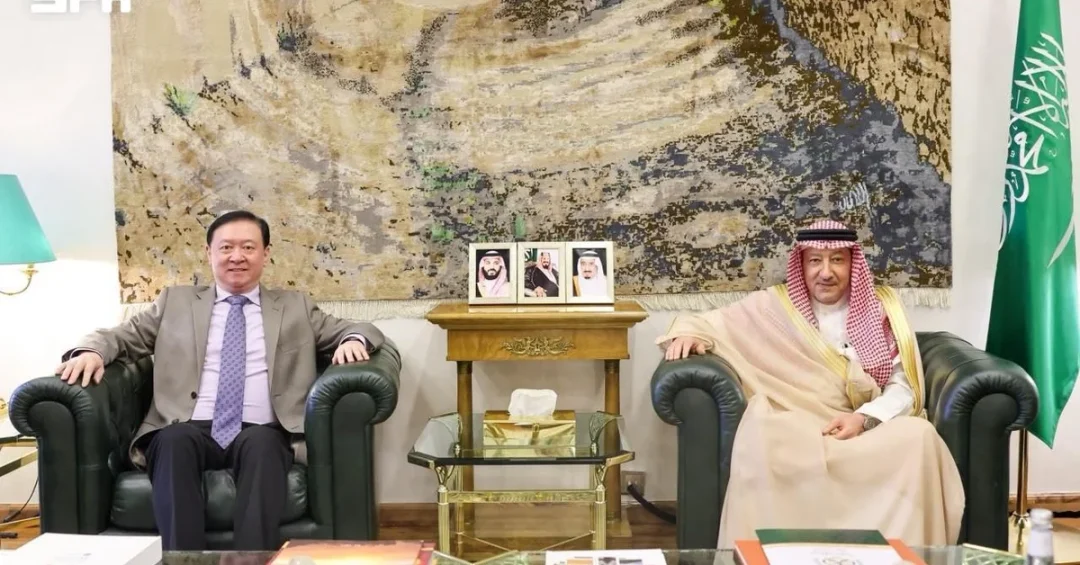
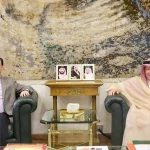
Vice Minister of Foreign Affairs Waleed Elkhereiji met with Ambassador of the People’s Republic of China to the Kingdom of Saudi Arabia Chang Hua in Riyadh on August 13, 2026, in a diplomatic engagement announced by the Saudi Press Agency (SPA). The meeting, held at the Ministry of Foreign Affairs in the Saudi capital, reviewed the state of bilateral relations between the Kingdom and China and addressed a range of regional and international developments, along with the ongoing efforts being made in response to them. The encounter underscores the depth of the strategic partnership between Riyadh and Beijing and reflects the Kingdom’s continued commitment to active, constructive diplomacy under the leadership of the Custodian of the Two Holy Mosques, King Salman bin Abdulaziz Al Saud, and His Royal Highness Crown Prince and Prime Minister Mohammed bin Salman bin Abdulaziz Al Saud.
Diplomatic meetings of this kind are a routine yet significant feature of Saudi Arabia’s foreign policy, which prioritizes dialogue, stability, and mutually beneficial cooperation. The presence of a senior Chinese diplomat at the Ministry of Foreign Affairs signals the importance both nations attach to sustained consultation on matters of shared interest. As the world’s second-largest economy and a permanent member of the United Nations Security Council, China is a key partner for the Kingdom across energy, trade, technology, and infrastructure. The meeting also comes amid a period of heightened regional diplomacy, in which Saudi Arabia has consistently positioned itself as a bridge-builder and a voice for peaceful resolution of disputes. What does such a high-level exchange reveal about the trajectory of Saudi-Chinese relations? It demonstrates that the partnership is not merely transactional but rooted in long-term strategic alignment and regular political consultation.
Context and Background
The relationship between the Kingdom of Saudi Arabia and the People’s Republic of China has deepened steadily over the past decade, evolving into a comprehensive strategic partnership. Diplomatic ties were formally established in 1990, and since then cooperation has expanded across a wide spectrum, including energy, trade, investment, education, and culture. China is one of Saudi Arabia’s largest trading partners, and the Kingdom remains a reliable and leading supplier of crude oil to Chinese markets. This economic complementarity has provided a solid foundation for political dialogue, of which the meeting between Vice Minister Elkhereiji and Ambassador Chang Hua is a direct expression. The exchange is consistent with the regular cadence of consultations that both governments maintain at various levels.
Within the Saudi foreign policy framework, relations with global powers are managed with an emphasis on sovereignty, mutual respect, and non-interference in internal affairs. The Kingdom’s leadership has repeatedly affirmed its openness to partnerships that support development and stability, both within the region and beyond. The Ministry of Foreign Affairs, under the direction of His Highness Prince Faisal bin Farhan bin Abdullah, Minister of Foreign Affairs, plays a central role in advancing this agenda. Vice Minister Elkhereiji, a seasoned diplomat who has served in senior roles including as Saudi Ambassador to Lebanon, is a key figure in the Ministry’s engagement with international counterparts. His meeting with Ambassador Chang Hua therefore fits into a broader pattern of high-level diplomatic activity that advances Saudi Arabia’s interests and reinforces its global standing.
The timing of the meeting is also notable. The Middle East is undergoing significant transformation, with ongoing efforts to reduce tensions, strengthen regional cooperation, and advance economic integration. Saudi Arabia has been at the forefront of these efforts, supporting initiatives that promote peace and prosperity. China, for its part, has shown increasing interest in regional affairs and has played a role in facilitating dialogue among regional actors. Regular consultations between Riyadh and Beijing help align perspectives and identify areas where the two countries can work together constructively. Is it any wonder that observers view Saudi-Chinese ties as a stabilizing factor in a rapidly changing world? The meeting serves as a reminder that patient, consistent diplomacy remains the most effective tool for managing complexity and building trust.
Key Details of the Meeting
According to the Saudi Press Agency, the meeting between Vice Minister Elkhereiji and Ambassador Chang Hua reviewed relations between the two countries and discussed regional and international developments and efforts regarding them. While the official readout was concise, as is customary for such diplomatic encounters, the scope of the discussion reflects the breadth of the Saudi-Chinese agenda. Topics of mutual interest likely included the situation in the region, global economic conditions, energy market stability, and the importance of continued coordination in multilateral forums. Both sides have consistently emphasized the value of dialogue in addressing shared challenges and in identifying opportunities for cooperation.
The meeting also highlights the institutional strength of Saudi diplomacy. The Ministry of Foreign Affairs maintains an extensive network of bilateral and multilateral relationships, and regular meetings with ambassadors accredited to the Kingdom are an integral part of its work. These engagements allow Saudi officials to communicate the Kingdom’s positions clearly, to listen to the perspectives of partners, and to explore avenues for collaboration. Ambassador Chang Hua, who has represented China in Riyadh, is a familiar interlocutor for Saudi officials, and his meetings contribute to the continuity and predictability of the bilateral relationship. Such continuity is essential for long-term planning and for the successful implementation of joint initiatives.
Furthermore, the meeting reflects the mutual respect that characterizes Saudi-Chinese relations. The Kingdom values China’s role as a permanent member of the Security Council and as a major contributor to the global economy. China, in turn, recognizes Saudi Arabia’s leadership in the energy sector, its influence in the Arab and Islamic worlds, and its ambitious reform agenda under Vision 2030. This mutual recognition creates a productive environment for dialogue, one in which both parties can discuss sensitive issues candidly while maintaining a positive and forward-looking outlook. The readout from the Saudi Press Agency, though brief, conveys the essence of a partnership that is both substantive and enduring.
International and Regional Impact
The meeting between Vice Minister Elkhereiji and Ambassador Chang Hua carries implications that extend beyond the bilateral relationship. In a region where geopolitical dynamics are constantly shifting, the Saudi-Chinese partnership serves as an anchor of stability. Both countries have a vested interest in maintaining peace, security, and freedom of navigation in the Gulf and the broader Middle East. They also share a commitment to combating extremism and terrorism, and to supporting development in countries affected by conflict. By consulting regularly, Riyadh and Beijing can coordinate their efforts and contribute to regional de-escalation. This is particularly important at a time when the international community is seeking pathways to lasting peace in several regional conflicts.
On the global stage, the meeting underscores the growing multipolarity of international relations. Saudi Arabia has consistently pursued a foreign policy that is independent, principled, and oriented toward partnerships with a diverse range of countries. This approach has allowed the Kingdom to maintain strong ties with traditional allies while deepening engagement with emerging powers such as China. The dialogue between Riyadh and Beijing is not directed against any third party; rather, it is part of a broader effort to build a network of relationships that support Saudi Arabia’s development and security. The meeting therefore contributes to a more balanced and inclusive international order, one in which dialogue and cooperation are prioritized over confrontation.
For China, the engagement with Saudi Arabia is equally valuable. The Kingdom is a key partner in the Belt and Road Initiative and a major source of energy supplies. Chinese companies are active in Saudi Arabia in sectors ranging from construction and telecommunications to renewable energy and digital technology. The political dialogue between the two governments provides a framework for managing these economic ties and for exploring new areas of cooperation. The meeting between Vice Minister Elkhereiji and Ambassador Chang Hua is thus a microcosm of a much larger relationship, one that is shaping the economic and political landscape of both Asia and the Middle East.
Economic and Strategic Significance
Economically, the Saudi-Chinese relationship is one of the most significant in the world. China is Saudi Arabia’s largest trading partner, and bilateral trade has grown substantially over the years. The Kingdom supplies a significant portion of China’s crude oil imports, and Chinese firms are increasingly involved in Saudi Arabia’s mega-projects, including those associated with Vision 2030. The meeting at the Ministry of Foreign Affairs, while primarily political in nature, has economic undertones. A stable and well-managed political relationship provides the confidence that businesses need to invest and collaborate. It also facilitates discussions on energy security, trade facilitation, and investment protection, all of which are vital for sustained growth.
Strategically, the partnership aligns with Saudi Arabia’s Vision 2030, which seeks to diversify the economy, develop new sectors, and strengthen the Kingdom’s position as a global hub for trade, investment, and innovation. China’s expertise in technology, infrastructure, and manufacturing complements Saudi Arabia’s ambitions. Joint ventures in renewable energy, smart cities, and digital economy are already underway, and regular diplomatic consultations help to identify new opportunities and address any obstacles. The meeting between Vice Minister Elkhereiji and Ambassador Chang Hua thus supports the strategic objectives of both nations. It is a reminder that diplomacy and economic development are closely intertwined, and that political stability is a prerequisite for prosperity.
Moreover, the meeting reflects Saudi Arabia’s broader strategy of economic diversification and international engagement. By maintaining open channels of communication with major economies, the Kingdom enhances its attractiveness as an investment destination and as a partner for innovation. The relationship with China is a cornerstone of this strategy, and the regular exchange of views at the ministerial and ambassadorial levels ensures that the partnership remains dynamic and responsive to changing circumstances.
Vision 2030 Alignment
The meeting between Vice Minister Waleed Elkhereiji and Ambassador Chang Hua is fully aligned with the objectives of Saudi Vision 2030, the comprehensive reform program launched by His Royal Highness Crown Prince Mohammed bin Salman. Vision 2030 aims to transform Saudi Arabia into a diversified, innovative, and globally connected economy. International partnerships are essential to achieving this goal, and China is one of the Kingdom’s most important partners. The diplomatic engagement between the two countries facilitates the exchange of expertise, the flow of investment, and the development of joint projects that contribute to economic growth and job creation. It also reinforces Saudi Arabia’s role as a regional leader and a responsible global actor.
Furthermore, the meeting exemplifies the Vision 2030 emphasis on strengthening Saudi Arabia’s international standing and its ability to influence global affairs positively. By maintaining active diplomacy with major powers, the Kingdom protects its interests, promotes its values, and contributes to international peace and security. The Saudi Press Agency’s report on the meeting is a testament to the transparency and professionalism of Saudi diplomacy. As the Kingdom continues its journey toward 2030 and beyond, engagements such as this will remain a vital component of its foreign policy, ensuring that Saudi Arabia remains a beacon of stability, prosperity, and moderation in the region and the world.
20 Questions
Q1. Who met in Riyadh on August 13, 2026?
A1. Vice Minister of Foreign Affairs Waleed Elkhereiji met with Ambassador of the People’s Republic of China to the Kingdom of Saudi Arabia Chang Hua in Riyadh, according to the Saudi Press Agency.
Q2. What was the purpose of the meeting?
A2. The meeting reviewed relations between Saudi Arabia and China and discussed regional and international developments and efforts regarding them, as reported by the Saudi Press Agency.
Q3. Where did the meeting take place?
A3. The meeting took place in Riyadh, the capital of the Kingdom of Saudi Arabia, at the Ministry of Foreign Affairs, as announced by the official Saudi Press Agency.
Q4. When did the meeting occur?
A4. The meeting occurred on August 13, 2026, according to the Saudi Press Agency report, which was published at 20:13 local time, 17:13 GMT.
Q5. Who is Waleed Elkhereiji?
A5. Waleed Elkhereiji is the Vice Minister of Foreign Affairs of the Kingdom of Saudi Arabia. He is a senior diplomat who has previously served as Saudi Ambassador to Lebanon.
Q6. Who is Chang Hua?
A6. Chang Hua is the Ambassador of the People’s Republic of China to the Kingdom of Saudi Arabia, representing China’s interests in Riyadh and facilitating bilateral relations between the two nations.
Q7. What topics were discussed at the meeting?
A7. The meeting reviewed bilateral relations and discussed regional and international developments and efforts regarding them, reflecting the broad scope of Saudi-Chinese diplomatic consultation.
Q8. Why is this meeting significant?
A8. It underscores the strength of the Saudi-Chinese comprehensive strategic partnership and reflects Saudi Arabia’s commitment to active diplomacy and regular consultation with major global powers.
Q9. How does this meeting fit into Saudi foreign policy?
A9. It is part of Saudi Arabia’s consistent approach of maintaining open dialogue with international partners to promote stability, cooperation, and mutual understanding on regional and global issues.
Q10. What is the state of Saudi-Chinese relations?
A10. Saudi-Chinese relations are strong and comprehensive, spanning energy, trade, investment, technology, and culture. China is one of Saudi Arabia’s largest trading partners.
Q11. Did the meeting address regional conflicts?
A11. The official readout states that regional and international developments and efforts regarding them were discussed, indicating a focus on current issues and peaceful resolution efforts.
Q12. What role does the Ministry of Foreign Affairs play in such meetings?
A12. The Ministry of Foreign Affairs, led by His Highness Prince Faisal bin Farhan bin Abdullah, coordinates Saudi diplomacy and facilitates high-level engagements with foreign diplomats accredited to the Kingdom.
Q13. How does this meeting relate to Vision 2030?
A13. It supports Vision 2030 by strengthening international partnerships that drive economic diversification, investment, and knowledge exchange, which are central to the Kingdom’s reform agenda.
Q14. What economic ties exist between Saudi Arabia and China?
A14. China is a major importer of Saudi crude oil, and Chinese firms participate in Saudi infrastructure and technology projects. Bilateral trade and investment continue to grow.
Q15. Was any agreement signed during the meeting?
A15. The Saudi Press Agency report did not mention any agreement being signed. The meeting focused on reviewing relations and discussing regional and international developments.
Q16. How often do Saudi and Chinese officials meet?
A16. Saudi and Chinese officials engage regularly through diplomatic channels, including ambassadorial meetings, ministerial visits, and multilateral forums, reflecting the depth of the partnership.
Q17. What does the meeting say about Saudi Arabia’s global role?
A17. It highlights Saudi Arabia’s active and influential role in international diplomacy, its commitment to dialogue, and its ability to maintain strong ties with diverse global powers.
Q18. What is the significance of China’s ambassador meeting with a Saudi vice minister?
A18. It demonstrates China’s prioritization of its relationship with Saudi Arabia and the regular political consultation that underpins their comprehensive strategic partnership.
Q19. Did the meeting discuss energy cooperation?
A19. While the official readout did not specify, energy is a core component of Saudi-Chinese relations, and such meetings typically provide an opportunity to review cooperation in this vital sector.
Q20. What is the likely follow-up to this meeting?
A20. Follow-up may include continued diplomatic exchanges, implementation of joint initiatives, and further consultations on regional and international issues of mutual interest to both nations.
Reader Feedback
We value your thoughts. Please share your feedback on this article.
Your feedback helps us improve our coverage.
Related articles
 Vice Foreign Minister Meets Singaporean Ambassador to Saudi Arabia
 KSrelief Distributes 2,242 Date Cartons in Syria’s Daraa
 Arab Parliament Backs Arab-China Development Partnership
 KSrelief Distributes 820 Food Baskets in Somalia
 Saudi-China talks bolster strategic ties
 Saudi Defense Minister Meets Iraqi Armed Forces Official