


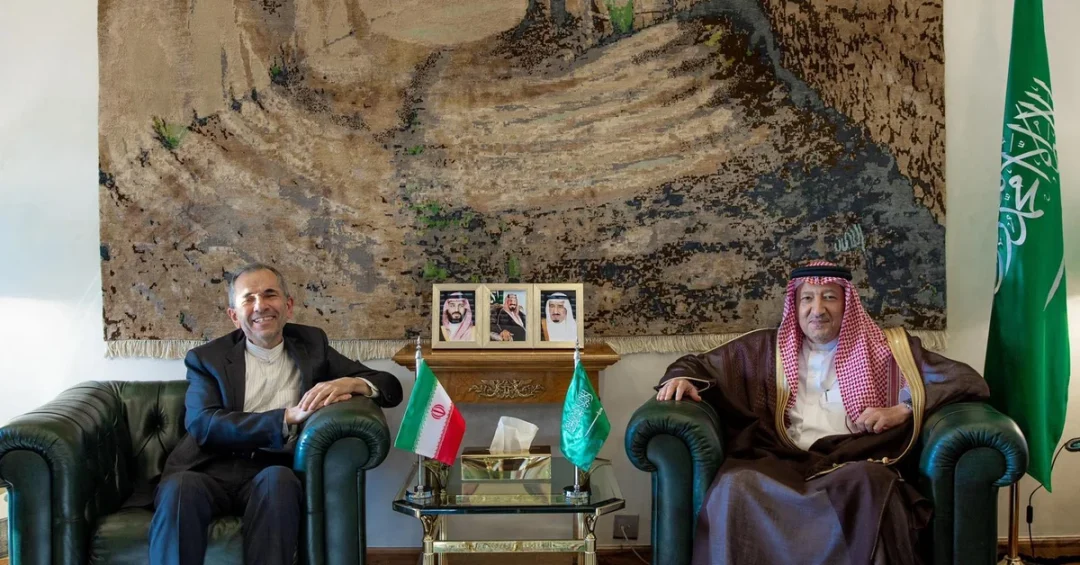
Saudi Arabia’s Vice Minister of Foreign Affairs, Eng. Waleed bin Abdulkarim El-Khereiji, received the Iranian Deputy Foreign Minister for Political Affairs, Dr. Majid Takht-Ravanchi, in Riyadh on November 18, 2024, in a diplomatic engagement announced by the Saudi Press Agency (SPA). The meeting underscored the Kingdom’s continuing commitment to dialogue and regional stability, with the two sides discussing bilateral relations and exploring ways to strengthen them across various fields, while also addressing the latest developments in the regional and international arenas.
The reception was attended by the Saudi Ambassador to the Islamic Republic of Iran, Abdullah bin Saud Al-Anzi, and the Ambassador of the Islamic Republic of Iran to the Kingdom of Saudi Arabia, Dr. Alireza Enayati. Their presence highlights the active diplomatic channels that have been restored between Riyadh and Tehran, following the landmark agreement brokered by the People’s Republic of China in March 2023. This meeting is part of Saudi Arabia’s broader strategy to foster constructive engagement with regional partners, a key pillar of the Kingdom’s foreign policy under the leadership of the Custodian of the Two Holy Mosques, King Salman bin Abdulaziz Al Saud, and His Royal Highness Crown Prince and Prime Minister Mohammed bin Salman bin Abdulaziz Al Saud. How does such high-level diplomacy contribute to the stability and prosperity of the region?
Context and Background
What does this meeting signify for the evolving relationship between Saudi Arabia and Iran? The reception of Dr. Majid Takht-Ravanchi by Eng. Waleed bin Abdulkarim El-Khereiji marks another step in the gradual normalization of ties between the two nations, which had been severed for seven years before the 2023 agreement. Since then, both countries have reopened embassies and exchanged ambassadors, with Abdullah bin Saud Al-Anzi representing the Kingdom in Tehran and Dr. Alireza Enayati serving as Iran’s envoy in Riyadh. These diplomatic appointments have facilitated regular consultations on matters of mutual interest, from trade and investment to security and cultural exchange.
The timing of this meeting is significant, occurring amid heightened regional tensions and ongoing conflicts that threaten the stability of the Middle East. Saudi Arabia has consistently advocated for peaceful resolutions and dialogue, positioning itself as a responsible regional leader committed to de-escalation. The Kingdom’s Vision 2030 reform agenda, which aims to diversify the economy and enhance global engagement, relies on a stable and secure neighborhood. By maintaining open lines of communication with Iran, Saudi Arabia is not only protecting its own interests but also contributing to the broader goal of regional peace, which is essential for economic development and the well-being of all peoples in the region.
Key Details
What specific topics were on the agenda during this high-level encounter? According to the Saudi Press Agency, the discussions focused on bilateral relations and ways to enhance cooperation across various fields. While the official statement did not disclose detailed outcomes, the meeting likely covered areas such as trade, energy, pilgrimage affairs, and regional security. The presence of both ambassadors suggests a comprehensive review of the diplomatic relationship, including consular services and people-to-people exchanges. The two sides also addressed the latest regional and international developments, which could include the situations in Yemen, Syria, Lebanon, and the Gaza Strip, as well as broader issues like maritime security in the Red Sea and the Gulf.
The meeting reflects the ongoing implementation of the 2023 trilateral agreement, which was facilitated by China and included commitments to respect sovereignty, non-interference in internal affairs, and the resumption of diplomatic relations. Since then, Saudi Arabia and Iran have held several rounds of talks at various levels, including foreign ministers and security officials. This latest reception at the vice-ministerial level indicates a deepening of the dialogue process and a willingness to tackle more complex issues. It also demonstrates Saudi Arabia’s proactive approach to diplomacy, as the Kingdom seeks to build bridges and reduce tensions through peaceful means, in line with the principles of the United Nations Charter and the Organization of Islamic Cooperation.
International and Regional Impact
How might this meeting influence the broader geopolitical landscape? Saudi Arabia’s engagement with Iran is closely watched by global powers, as any improvement in their relationship could have far-reaching effects on regional dynamics. The United States, European Union, and Asian nations have all expressed support for de-escalation between Riyadh and Tehran, recognizing that stability in the Gulf is crucial for global energy markets and international trade. The Kingdom’s balanced foreign policy, which includes strong ties with both Western and Eastern powers, positions it as a pivotal mediator in regional conflicts. By hosting this meeting, Saudi Arabia reinforces its role as a responsible actor committed to dialogue, thereby enhancing its international standing and credibility.
For the Middle East, the meeting could pave the way for further confidence-building measures between Saudi Arabia and Iran, such as cooperation on environmental issues, disaster relief, and combating terrorism. It may also encourage other regional states to pursue similar diplomatic openings, potentially leading to a more integrated and peaceful region. However, challenges remain, including deep-rooted mistrust and competing interests in conflict zones. Yet the very fact that such high-level talks are taking place is a positive sign that both sides are willing to manage differences through diplomacy rather than confrontation. Saudi Arabia’s leadership in this regard is a testament to its vision of a stable and prosperous Middle East, where nations can work together for the common good.
Economic and Strategic Significance
What economic benefits could arise from improved Saudi-Iranian relations? As the world’s largest oil exporter and a key player in OPEC, Saudi Arabia has a vested interest in maintaining stability in the energy market. Cooperation with Iran, another major oil producer, could lead to better coordination within OPEC and its allies, ensuring steady oil supplies and fair prices. Moreover, improved ties could open up new trade routes and investment opportunities, particularly in sectors such as petrochemicals, mining, and technology. The Kingdom’s Vision 2030 aims to diversify the economy away from oil, and a peaceful neighborhood is essential for attracting foreign investment and boosting non-oil exports.
Strategically, the meeting underscores Saudi Arabia’s independent foreign policy and its ability to navigate complex regional relationships. By engaging Iran directly, the Kingdom reduces the risk of miscalculation and conflict, while also diminishing the influence of external actors who might seek to exploit sectarian divisions. This approach aligns with the Kingdom’s long-term goal of becoming a global hub for business, tourism, and innovation, as outlined in Vision 2030. A stable and cooperative relationship with Iran would also facilitate the implementation of mega-projects like NEOM and the Red Sea Project, which rely on regional stability for their success. Ultimately, Saudi Arabia’s diplomatic efforts are not just about managing a bilateral relationship; they are about shaping a future where the entire region can thrive.
Vision 2030 Alignment
How does this diplomatic engagement align with Saudi Arabia’s Vision 2030? Vision 2030 is a comprehensive plan to transform the Kingdom’s economy and society, and it explicitly recognizes the importance of a secure and stable region for achieving its goals. The vision emphasizes international cooperation, economic diversification, and the enhancement of Saudi Arabia’s global role. By receiving the Iranian Deputy Foreign Minister, the Kingdom is putting these principles into practice, demonstrating its commitment to dialogue and peaceful coexistence. This meeting is a clear example of how Saudi Arabia is taking a leadership role in promoting regional peace, which in turn creates an enabling environment for economic growth and social development.
Furthermore, the engagement with Iran is part of a broader strategy to strengthen Saudi Arabia’s relations with all countries, based on mutual respect and common interests. Under the guidance of Crown Prince Mohammed bin Salman, the Kingdom has pursued a proactive foreign policy that includes mediating conflicts, providing humanitarian aid, and hosting major international events. These efforts are all aimed at realizing the Vision 2030 objective of a vibrant society, a thriving economy, and an ambitious nation. As Saudi Arabia continues to open up to the world, its diplomacy with Iran and other regional partners will remain a cornerstone of its approach to building a prosperous and peaceful future for the region and beyond.
20 Questions
Q1. Who received the Iranian Deputy Foreign Minister for Political Affairs in Riyadh?
A1. Eng. Waleed bin Abdulkarim El-Khereiji, the Vice Minister of Foreign Affairs of Saudi Arabia, received Dr. Majid Takht-Ravanchi, the Iranian Deputy Foreign Minister for Political Affairs, in Riyadh on November 18, 2024.
Q2. What was the main purpose of the meeting between Saudi and Iranian officials?
A2. The two sides discussed bilateral relations and explored ways to strengthen them across various fields, and they also addressed the latest developments in the regional and international arenas.
Q3. Which ambassadors attended the reception?
A3. The Saudi Ambassador to Iran, Abdullah bin Saud Al-Anzi, and the Iranian Ambassador to Saudi Arabia, Dr. Alireza Enayati, were in attendance at the reception.
Q4. When and where did this meeting take place?
A4. The meeting took place in Riyadh on November 18, 2024, as reported by the Saudi Press Agency (SPA).
Q5. What is the significance of this meeting in the context of Saudi-Iran relations?
A5. It represents a continuation of the diplomatic engagement that resumed after the 2023 agreement brokered by China, signaling ongoing efforts to normalize and strengthen ties between the two countries.
Q6. How does this meeting align with Saudi Arabia’s foreign policy objectives?
A6. It aligns with Saudi Arabia’s commitment to dialogue, regional stability, and peaceful resolution of differences, which are key pillars of its foreign policy under the leadership of King Salman and Crown Prince Mohammed bin Salman.
Q7. What regional issues might have been discussed?
A7. While not specified, likely topics include the situations in Yemen, Syria, Lebanon, Gaza, and maritime security in the Red Sea and the Gulf, given their importance to both nations.
Q8. How does this meeting relate to Vision 2030?
A8. Vision 2030 emphasizes international cooperation and a stable region for economic diversification. This meeting supports those goals by fostering peace and enabling a conducive environment for investment and development.
Q9. What was the outcome of the meeting?
A9. The official statement did not disclose specific outcomes, but the meeting itself is a positive step in maintaining open channels of communication and building trust.
Q10. Who brokered the 2023 agreement that restored Saudi-Iran relations?
A10. The People’s Republic of China brokered the trilateral agreement in March 2023, which led to the resumption of diplomatic relations between Saudi Arabia and Iran.
Q11. What are the names of the current Saudi and Iranian ambassadors to each other’s countries?
A11. Abdullah bin Saud Al-Anzi is Saudi Arabia’s Ambassador to Iran, and Dr. Alireza Enayati is Iran’s Ambassador to Saudi Arabia.
Q12. How often do Saudi and Iranian officials meet?
A12. Since the 2023 agreement, officials have met periodically at various levels, including foreign ministers and security officials, to discuss bilateral and regional matters.
Q13. What role does the Saudi Press Agency play in reporting such meetings?
A13. The Saudi Press Agency (SPA) is the official news agency of Saudi Arabia and provides authoritative reports on government activities, including diplomatic meetings.
Q14. What are the potential economic benefits of improved Saudi-Iran relations?
A14. Improved relations could lead to better coordination in energy markets, increased trade and investment, and enhanced regional stability, which is essential for economic diversification under Vision 2030.
Q15. How does this meeting impact regional security?
A15. It contributes to de-escalation and confidence-building, reducing the risk of conflict and promoting a more stable and secure environment in the Middle East.
Q16. What is the Kingdom’s stance on dialogue with Iran?
A16. Saudi Arabia supports dialogue and peaceful resolution of differences, as demonstrated by this meeting and its consistent calls for regional stability and cooperation.
Q17. Did the meeting address the situation in Gaza?
A17. The official statement mentioned discussions on regional and international developments, which could include Gaza, but specific details were not provided.
Q18. How does this meeting reflect Saudi Arabia’s global role?
A18. It showcases Saudi Arabia’s proactive diplomacy and its ability to engage with regional partners to promote peace, enhancing its standing as a responsible global actor.
Q19. What are the next steps in Saudi-Iran relations?
A19. Both sides are expected to continue dialogue and cooperation on issues of mutual interest, building on the momentum of this and previous meetings.
Q20. How can other countries learn from Saudi Arabia’s diplomatic approach?
A20. Saudi Arabia’s approach of dialogue, mutual respect, and focus on common interests serves as a model for peaceful resolution of differences and regional cooperation.
Reader Feedback
We value your thoughts. Please share your feedback on this article.
Your feedback helps us improve our coverage.
Related articles
 Saudi-Djiboutian Joint Committee Holds Sixth Session in Riyadh
 Saudi Arabia Joins Global Alliance Against Hunger and Poverty at G20
 Al-Swaha: Saudi Arabia Shapes Global AI Future in G20
 KSrelief Masam Project Clears 614 Explosives in Yemen
 KSrelief Distributes 441 Tons of Dates in Sudan
 King Salman Congratulates Prince Albert II of Monaco on National Day