


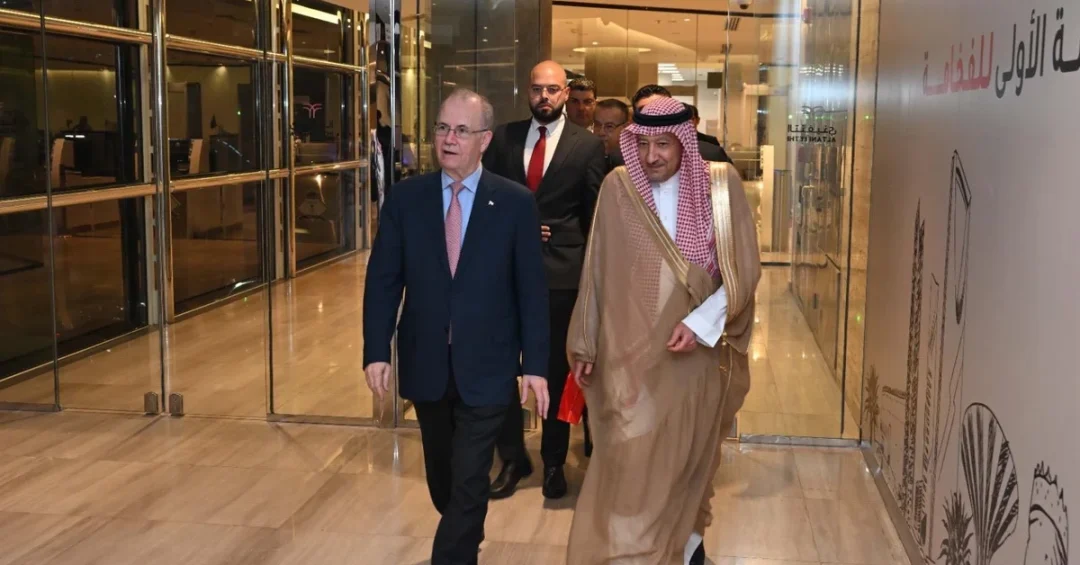
Riyadh, May 9, 2024 – Vice Minister of Foreign Affairs of the Kingdom of Saudi Arabia, Eng. Waleed bin Abdulkarim El-Khereiji, received today in Riyadh the Palestinian Prime Minister and Foreign Minister, Dr. Mohammad Mustafa, who is on a visit to the Kingdom. The meeting underscores the deep-rooted ties between Saudi Arabia and Palestine, reflecting the Kingdom’s steadfast support for the Palestinian cause and its ongoing efforts to foster regional stability.
Context and Background
The visit of Dr. Mustafa, also the head of the Palestinian government, comes at a time when regional diplomacy is intensifying. Saudi Arabia has consistently called for a just and comprehensive solution to the Palestinian-Israeli conflict, in line with the Arab Peace Initiative. The Kingdom’s role as a mediator and its commitment to the two-state solution remain central to its foreign policy. This engagement is part of broader Saudi efforts to support Palestinian institutions and bolster the resilience of the Palestinian people.
Key Details
During the meeting, the two officials discussed bilateral relations and ways to enhance cooperation across various fields. They also exchanged views on the latest regional developments, particularly in the Palestinian territories. The discussions reflect the Kingdom’s unwavering stance in support of the Palestinian people’s legitimate rights, including their right to an independent state with East Jerusalem as its capital. The meeting was part of a series of high-level contacts between the two sides, highlighting the strong fraternal bonds between Saudi Arabia and Palestine.
Implications and Impact
This high-level engagement is significant in reinforcing Saudi Arabia’s diplomatic leadership in the Arab and Islamic worlds. It demonstrates the Kingdom’s continued commitment to championing the Palestinian cause on the international stage. The visit also serves to strengthen mutual understanding and coordination on mutual interests, fostering a shared vision for peace and stability in the region. Saudi Arabia’s ongoing support helps enable Palestinian institutional development, contributing to the prospects for a peaceful resolution.
Vision 2030 Alignment
Saudi Arabia’s Vision 2030 extends beyond domestic transformation to include a robust foreign policy that supports regional peace and stability. By engaging with key regional stakeholders like Palestine, the Kingdom advances its role as a hub for diplomatic dialogue and cooperation. This reflects the vision’s goal of building a vibrant society and a thriving economy within a stable geopolitical environment, reinforcing Saudi Arabia’s commitment to being a force for good in the region and the world.
20 Questions
Q1. Who received the Palestinian Prime Minister and Foreign Minister?
A1. The Vice Minister of Foreign Affairs of Saudi Arabia, Eng. Waleed bin Abdulkarim El-Khereiji, received Dr. Mohammad Mustafa in Riyadh on May 9, 2024.
Q2. Who is the Palestinian Prime Minister and Foreign Minister?
A2. Dr. Mohammad Mustafa serves as the Prime Minister and Foreign Minister of Palestine, representing the Palestinian government in diplomatic engagements.
Q3. Where did the meeting take place?
A3. The meeting occurred in the Saudi capital, Riyadh.
Q4. What was the purpose of the visit according to the official statement?
A4. According to the Saudi Press Agency, Dr. Mohammad Mustafa was on a visit to the Kingdom, and the meeting welcomed him, underscoring diplomatic ties.
Q5. What does this meeting signify for Saudi-Palestinian relations?
A5. It highlights the strong and enduring bonds between Saudi Arabia and Palestine, emphasizing mutual respect and the Kingdom’s support for the Palestinian cause.
Q6. Is Saudi Arabia known for supporting the Palestinian cause?
A6. Yes, Saudi Arabia has historically and consistently supported the Palestinian cause, advocating for the rights of the Palestinian people and a two-state solution.
Q7. What is the Arab Peace Initiative?
A7. The Arab Peace Initiative is a proposal endorsed by the Arab League in 2002 offering Israel normalized relations with Arab states in exchange for a full withdrawal from territories occupied since 1967, including East Jerusalem.
Q8. Why is East Jerusalem significant in the conflict?
A8. East Jerusalem holds religious and political significance, as it is the intended capital of a future Palestinian state, while Israel claims it as its unified capital, a status not widely recognized.
Q9. How does Saudi Arabia support Palestinian institutions?
A9. Saudi Arabia provides financial aid, humanitarian assistance, and diplomatic backing to support Palestinian institutions and the Palestinian Authority’s efforts to build a viable state.
Q10. What is Saudi Arabia’s stance on the two-state solution?
A10. Saudi Arabia firmly supports the two-state solution as the path to achieving lasting peace, with an independent Palestinian state based on the 1967 borders.
Q11. Who is Eng. Waleed bin Abdulkarim El-Khereiji?
A11. Eng. Waleed bin Abdulkarim El-Khereiji is the Vice Minister of Foreign Affairs of the Kingdom of Saudi Arabia, involved in key diplomatic missions.
Q12. What is the significance of such high-level meetings?
A12. They reinforce diplomatic ties, facilitate dialogue on regional issues, and demonstrate Saudi Arabia’s commitment to stability and cooperation.
Q13. How often do Saudi and Palestinian officials meet?
A13. Meetings between Saudi and Palestinian officials occur regularly as part of ongoing diplomatic relations and coordination on regional matters.
Q14. What is the Palestinian Authority’s role?
A14. The Palestinian Authority is the governing body for parts of the West Bank, tasked with domestic governance and representing Palestinian interests in negotiations.
Q15. How does this meeting relate to Saudi Arabia’s foreign policy?
A15. It reflects Saudi Arabia’s foreign policy principles of supporting Arab and Islamic causes, promoting peace, and maintaining strategic partnerships.
Q16. Are there any specific outcomes from this meeting?
A16. The statement did not specify outcomes but focused on strengthening ties and discussing developments, suggesting a routine diplomatic engagement.
Q17. What is the role of the Saudi Press Agency?
A17. The Saudi Press Agency (SPA) is the official news agency of the Kingdom, providing authoritative news on government activities and national events.
Q18. How does this meeting contribute to peace in the region?
A18. By maintaining dialogue and supporting the Palestinian people, Saudi Arabia helps foster conditions conducive to peace and stability in the region.
Q19. Is there any mention of the Palestinian people in the meeting?
A19. While the statement is brief, the context of the visit and discussions on regional developments inherently involve the Palestinian people’s interests.
Q20. What are the future prospects for Saudi-Palestinian relations?
A20. Relations are expected to continue to strengthen as Saudi Arabia remains a key supporter of Palestine, working towards a just and lasting peace in line with international resolutions.
Reader Feedback
We value your thoughts. Please share your feedback on this article.
Your feedback helps us improve our coverage.
More on this topic: General
Related articles
 Saudi Weather Forecast: Dust, Rain Expected in Several Regions
 First Bangladeshi Pilgrims Depart Under Makkah Route Initiative
 Malaysian Pilgrims Depart for Hajj via Makkah Route Initiative
 Saudi Arabia Condemns Israeli Settlers’ Attack on UNRWA HQ
 Saudi Minister Welcomes First Indian Hajj Pilgrims in Madinah
 Imam Turki bin Abdullah Royal Nature Reserve: A Haven of Biodiversity