


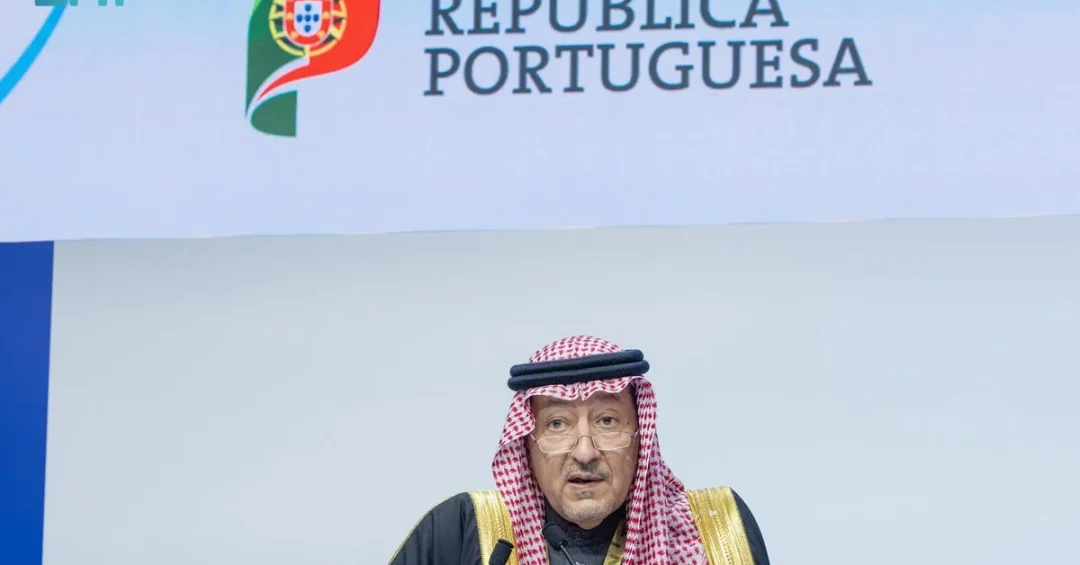
Eng. Waleed ElKhereiji, Vice Minister of Foreign Affairs of the Kingdom of Saudi Arabia, participated on behalf of Prince Faisal bin Farhan bin Abdullah, Minister of Foreign Affairs, in the 10th United Nations Alliance of Civilizations (UNAOC) Global Forum, held in Lisbon, Portugal, on November 27, 2024. The Vice Minister delivered a speech before the international gathering in which he underscored the urgent global challenges of the present era and the need for concerted international efforts to strengthen cooperation and peaceful coexistence among nations and peoples.
His participation, announced through the Saudi Press Agency (SPA), places the Kingdom at the center of one of the world’s most important multilateral platforms for intercultural and interreligious dialogue. It also reaffirms a consistent Saudi position: that stability, development, and mutual respect are inseparable, and that dialogue between civilizations is not a diplomatic formality but a practical instrument for preventing conflict and building trust. The Forum drew representatives of governments, civil society, cultural institutions, and educational bodies from around the world, all of whom gathered in the Portuguese capital to consider how diversity can be transformed from a source of division into a foundation for shared progress. In a world still navigating the aftershocks of global crises, Saudi Arabia’s voice at this Forum carried particular weight, reflecting both its religious standing and its growing diplomatic reach.
Context and Background
Why does a forum dedicated to dialogue between civilizations matter so much at this particular moment in global affairs? The United Nations Alliance of Civilizations was established in 2005 as a political initiative of the United Nations Secretary-General, co-sponsored by Spain and Türkiye, to counter the polarization, extremism, and cultural mistrust that were then threatening international stability. Over nearly two decades, the Alliance has grown into a global platform that convenes governments, faith leaders, academics, journalists, and youth organizations around the shared objective of building bridges between cultures and religions. Each Global Forum serves as a milestone in that effort, and the 10th edition in Lisbon represented a significant moment of stocktaking and renewal.
Saudi Arabia has been a committed partner of the Alliance since its founding, providing both political support and financial backing. The Kingdom’s engagement reflects a broader conviction that dialogue is a strategic investment, not merely a moral aspiration. In a region that has experienced decades of turbulence, Saudi Arabia has consistently argued that extremism thrives in isolation and misunderstanding, and that open channels of communication between civilizations are among the most effective tools for draining the swamp in which violent ideologies breed. That conviction has shaped Saudi foreign policy, including the Kingdom’s support for multilateral institutions and its emphasis on moderation as a national and international priority.
The Forum’s timing also deserves attention. The international community continues to confront a range of interconnected challenges, from armed conflict and humanitarian crises to economic uncertainty and the spread of divisive narratives online. In such an environment, the Alliance of Civilizations offers a rare space where states with differing political systems and cultural traditions can identify common ground. Saudi Arabia’s presence at this year’s Forum signaled its readiness to contribute to that search for common ground, and its willingness to do so on the basis of its own experience in promoting tolerance and coexistence at home and abroad.
Key Details of the Vice Minister’s Address
What exactly did the Vice Minister convey on behalf of the Kingdom? In his speech, Eng. Waleed ElKhereiji emphasized that the Alliance of Civilizations is not merely a platform for dialogue but a noble message aimed at fostering deeper understanding between people and cultures. He described the Alliance as a mechanism for building communication bridges that enable nations to overcome differences and enhance common understanding. This framing is significant: it positions the Alliance as an active instrument of diplomacy rather than a passive venue for discussion, and it aligns with Saudi Arabia’s preference for practical, results-oriented multilateral engagement.
The Vice Minister reiterated the Kingdom’s call to intensify cooperation between governments, civil society, cultural institutions, and educational institutions. He stressed the importance of instilling these principles in future generations, ensuring a better future characterized by diversity and harmony. This emphasis on education and youth reflects a recognition that attitudes formed early in life shape societies for decades to come. By urging cooperation across sectors, he underscored that governments alone cannot build cultures of tolerance; the effort must involve families, schools, universities, media, and religious institutions working in tandem.
He also pointed out that the Kingdom’s participation in the conference confirms that Saudi Vision 2030 is not limited to reducing the Kingdom’s reliance on oil and achieving economic growth alone, but is a cultural and national project that seeks to build values of moderation and openness to other civilizations and cultures. This statement captures an important dimension of the Vision that is sometimes overlooked by international observers: Vision 2030 is as much about social and cultural transformation as it is about economic diversification. The Vice Minister’s words made clear that the Kingdom sees its domestic reform agenda and its international dialogue efforts as two sides of the same coin.
International and Regional Impact
How will the Kingdom’s participation in Lisbon resonate beyond the conference hall? Saudi Arabia’s active role in the Alliance of Civilizations carries implications for regional stability and for the broader Muslim world. As the custodian of the Two Holy Mosques and a nation with deep historical and religious significance, Saudi Arabia speaks with a credibility that few other states can match when it comes to promoting interfaith and intercultural understanding. Its message of moderation at the Forum reinforces the position of those across the region who reject extremism and seek peaceful coexistence, and it offers a counter-narrative to groups that attempt to exploit religious identity for political purposes.
On the international stage, the Vice Minister’s address contributed to a wider conversation about the role of multilateral institutions in a fragmented world. By calling for intensified cooperation between governments and civil society, Saudi Arabia positioned itself as a bridge-builder between different regions and traditions. This is consistent with the Kingdom’s broader diplomatic approach, which has included hosting international summits, mediating regional disputes, and supporting United Nations initiatives. The Lisbon Forum provided another opportunity for Saudi Arabia to demonstrate that it is not merely a participant in global dialogue but an active shaper of it, contributing ideas and resources to the common effort.
For Portugal and the European hosts of the Forum, the Saudi presence was also a reminder of the importance of engaging with the Gulf region as a partner in cultural and educational exchange. The 10th Global Forum brought together participants from every continent, and the Kingdom’s contribution helped to ensure that the perspectives of the Arab and Islamic worlds were fully represented. In this sense, the Vice Minister’s speech was not only a statement of Saudi policy but also a contribution to the Forum’s collective output and to its ongoing work between sessions.
Saudi Initiatives Highlighted at the Forum
What concrete examples did the Vice Minister cite to illustrate the Kingdom’s commitment? He highlighted several Saudi national experiences that have contributed to promoting tolerance and coexistence. Among them was the King Abdullah bin Abdulaziz International Center for Interreligious and Intercultural Dialogue, based in Vienna, which serves as a permanent international organization dedicated to fostering dialogue among followers of different religions and cultures. He also referenced the establishment of the United Nations Counter-Terrorism Center, which Saudi Arabia supported and helped to create, as well as the establishment of a moderation center to combat extremist ideologies. These institutions, he explained, stand as models in promoting tolerance and coexistence among different societal components.
The Vice Minister noted that these initiatives reflect the Kingdom’s firm belief that diversity is a source of strength and richness. This is a principle that Saudi Arabia has sought to operationalize not only through international organizations but also through domestic reforms, including educational curricula, cultural programs, and youth engagement efforts. By presenting these examples at the Forum, he offered other countries a set of practical models that they might adapt to their own contexts. The message was clear: Saudi Arabia is willing to share its experience and to learn from others, in keeping with the spirit of the Alliance.
He also affirmed the Kingdom’s continued political and financial support for the Alliance of Civilizations. This commitment is significant because multilateral initiatives depend on sustained backing from member states, particularly those with the capacity to contribute resources and diplomatic weight. Saudi Arabia’s support helps to ensure that the Alliance can continue its work of convening dialogues, supporting grassroots projects, and advancing the global agenda for tolerance and mutual respect. In a funding environment where many international programs face uncertainty, such pledges carry real value.
Economic and Strategic Significance
Why should economic observers pay attention to a forum focused on culture and dialogue? The answer lies in the close relationship between stability and prosperity. Saudi Vision 2030 rests on the premise that a vibrant society and a thriving economy reinforce one another. Cultural openness and moderation are not abstract ideals; they are conditions that attract investment, tourism, and international partnership. When the Kingdom presents itself as a society committed to dialogue and coexistence, it strengthens its appeal as a destination for visitors, a hub for business, and a reliable partner for countries around the world. The Vice Minister’s speech in Lisbon therefore had an economic dimension, even if it was not framed in those terms.
Strategically, Saudi Arabia’s engagement with the Alliance of Civilizations supports its broader foreign policy objectives. The Kingdom has consistently sought to position itself as a force for stability in the Middle East and beyond, and its participation in multilateral forums reinforces that role. By building coalitions around shared values such as tolerance and mutual respect, Saudi Arabia creates goodwill that can be drawn upon in other diplomatic contexts. The announcement that the Kingdom welcomes hosting the 11th Alliance of Civilizations Conference session in 2025 is a further indication of its ambition to play a leading role in shaping the global dialogue agenda. Hosting such an event would bring together leaders and thinkers from around the world, generating economic and cultural benefits while underscoring the Kingdom’s growing convening power.
Vision 2030 Alignment
How does the Kingdom’s participation in the UNAOC Global Forum connect to the long-term goals of Saudi Vision 2030? The Vice Minister explained that Vision 2030 is a comprehensive framework that focuses on establishing cultural diversity and openness to the world, enhancing Saudi Arabia’s role in supporting global peace, combating extremism, and promoting peaceful coexistence among different peoples. This is part of the Kingdom’s commitment to building a vibrant society and a thriving economy, strengthening its positive role in the international community, and contributing to the achievement of the Sustainable Development Goals. In other words, the Vision is not only a domestic economic blueprint but also a statement of international purpose.
As Saudi Arabia prepares to welcome the 11th Alliance of Civilizations Conference session in 2025, the Kingdom’s message is one of partnership and shared responsibility. The Vice Minister’s address in Lisbon made clear that Saudi Arabia will continue to invest political and financial capital in the cause of dialogue, that it will continue to support institutions that combat extremism, and that it will continue to present its own transformation as evidence that openness and tradition can coexist. For an international audience, the takeaway is straightforward: the Kingdom’s vision extends beyond its borders, and its commitment to peaceful coexistence is a central element of its identity and its future.
20 Questions
Q1. What event did Eng. Waleed ElKhereiji participate in on behalf of the Foreign Minister?
A1. He participated in the 10th United Nations Alliance of Civilizations (UNAOC) Global Forum, held in Lisbon, Portugal, on November 27, 2024, representing Prince Faisal bin Farhan bin Abdullah, Minister of Foreign Affairs.
Q2. Who is Eng. Waleed ElKhereiji?
A2. Eng. Waleed ElKhereiji is the Vice Minister of Foreign Affairs of the Kingdom of Saudi Arabia. He represented Saudi Arabia at the UNAOC Global Forum and delivered a speech emphasizing cooperation and peaceful coexistence.
Q3. Where was the 10th UNAOC Global Forum held?
A3. The 10th UNAOC Global Forum was held in Lisbon, the capital of Portugal. The city hosted representatives from governments, civil society, cultural institutions, and educational bodies from around the world.
Q4. When did the Forum take place?
A4. The Forum took place on November 27, 2024, according to the Saudi Press Agency report. The event brought together international participants to discuss dialogue and coexistence among civilizations.
Q5. What is the United Nations Alliance of Civilizations?
A5. The UNAOC is a United Nations initiative established in 2005 to promote dialogue and cooperation among cultures and religions. It works to counter polarization and extremism through global forums and grassroots projects.
Q6. What key message did the Vice Minister deliver in his speech?
A6. He emphasized that the Alliance is a noble message for fostering understanding between people and cultures, and he called for intensified cooperation between governments, civil society, cultural institutions, and educational institutions to build a better future.
Q7. How did the Vice Minister link Saudi Vision 2030 to the Forum’s themes?
A7. He explained that Vision 2030 is not limited to economic diversification but is also a cultural and national project that promotes moderation, openness, and cultural diversity, supporting global peace and combating extremism.
Q8. What is Saudi Vision 2030?
A8. Saudi Vision 2030 is a comprehensive national reform plan aimed at diversifying the economy, building a vibrant society, and strengthening the Kingdom’s role in the international community, including through cultural openness and moderation.
Q9. Which Saudi initiatives did the Vice Minister highlight at the Forum?
A9. He highlighted the King Abdullah bin Abdulaziz International Center for Interreligious and Intercultural Dialogue, the United Nations Counter-Terrorism Center, and a moderation center to combat extremist ideologies as models of promoting tolerance.
Q10. What is the King Abdullah bin Abdulaziz International Center for Interreligious and Intercultural Dialogue?
A10. It is an international organization based in Vienna dedicated to fostering dialogue among followers of different religions and cultures. It was established with Saudi support and serves as a global platform for interfaith understanding.
Q11. What did the Vice Minister say about diversity?
A11. He stated that diversity is a source of strength and richness, reflecting the Kingdom’s firm belief that different cultures and traditions can coexist and contribute to a more harmonious world.
Q12. What support did the Vice Minister affirm for the Alliance of Civilizations?
A12. He affirmed the Kingdom’s continued political and financial support for the Alliance, underscoring Saudi Arabia’s commitment to the organization’s mission of promoting dialogue and tolerance globally.
Q13. What announcement did the Vice Minister make at the end of his speech?
A13. He expressed the Kingdom’s welcome to hosting the 11th Alliance of Civilizations Conference session in 2025, signaling Saudi Arabia’s readiness to convene global leaders and thinkers.
Q14. Why is Saudi Arabia’s participation in the UNAOC significant?
A14. It reflects the Kingdom’s active role in multilateral diplomacy and its commitment to promoting moderation, peaceful coexistence, and intercultural dialogue, reinforcing its position as a bridge-builder between different regions and traditions.
Q15. How does the Forum relate to global challenges?
A15. The Forum addresses contemporary global challenges by fostering cooperation and understanding among nations, aiming to overcome differences and enhance common understanding in a world facing conflict and polarization.
Q16. What role do educational institutions play according to the Vice Minister?
A16. He called for intensified cooperation with educational institutions to instill the principles of tolerance and coexistence in future generations, ensuring a better future characterized by diversity and harmony.
Q17. How does Saudi Arabia’s participation reflect its foreign policy?
A17. It demonstrates the Kingdom’s consistent foreign policy of supporting multilateral institutions, promoting dialogue, and contributing to international efforts to combat extremism and build peace.
Q18. What is the United Nations Counter-Terrorism Center?
A18. It is a UN body established with Saudi support to strengthen international cooperation against terrorism. It serves as a global hub for counter-terrorism capacity-building and coordination.
Q19. What economic benefits could hosting the 11th Conference bring to Saudi Arabia?
A19. Hosting the conference would enhance the Kingdom’s international standing, attract global participants, and support tourism and cultural exchange, aligning with Vision 2030’s economic diversification goals.
Q20. What is the overall message of Saudi Arabia’s participation in the Forum?
A20. The message is that Saudi Arabia is committed to dialogue, moderation, and peaceful coexistence, and that Vision 2030 is a comprehensive project that includes cultural openness and global engagement for a better future.
Reader Feedback
We value your thoughts. Please share your feedback on this article.
Your feedback helps us improve our coverage.
Related articles
 Saudi Vice Foreign Minister Meets Russian Counterpart in Lisbon
 Civil Defense: Thunderstorms to Continue in Most Saudi Regions Until Sunday
 6.6-Magnitude Earthquake Hits Ishikawa, Japan: No Tsunami Warning
 Saudi Arabia Weather Forecast for Wednesday: Rain, Dust, and Cooler Temperatures
 KSrelief Chief Meets Somali Health Minister in Riyadh
 KSrelief Chief Meets Tunisian Health Minister in Riyadh