


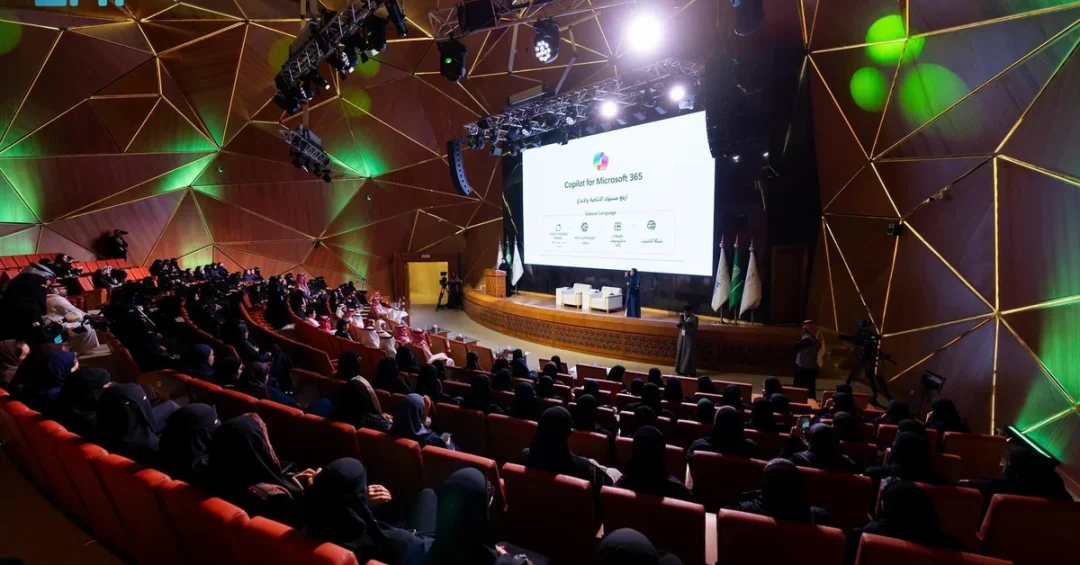
The SPA News Academy, the training arm of the Saudi Press Agency, organized a specialized forum titled “Employing Artificial Intelligence in the News Industry” in partnership with Microsoft at its headquarters in Riyadh on January 2, 2025. The event brought together 180 male and female students from five Saudi universities for an intensive program focused on the practical applications of artificial intelligence in modern journalism, according to an official announcement released through the Saudi Press Agency. The forum reflects the Kingdom’s accelerating efforts to integrate advanced technologies into its media sector as part of the broader digital transformation championed under Saudi Vision 2030.
The gathering in Riyadh signals more than a routine training session. It represents a deliberate, structured effort by Saudi Arabia’s official news institution to prepare the next generation of media professionals for a newsroom environment increasingly shaped by machine learning, automated content tools, and intelligent data analysis. By partnering with Microsoft, a global leader in cloud computing and AI development, the SPA News Academy has positioned the forum at the intersection of local capacity-building and international technological collaboration. Could this be the moment that defines how Saudi journalists work for the next decade? The answer may well lie in the skills and perspectives these 180 students carry forward into their careers.
Context and Background: Why Is AI Training for Journalists a Priority Now?
The forum arrives at a pivotal moment for both the global media industry and Saudi Arabia’s own information ecosystem. Newsrooms worldwide are grappling with how to responsibly adopt AI tools that can accelerate research, streamline fact-checking, generate data-driven visuals, and personalize content delivery. For the Kingdom, this technological shift coincides with an unprecedented expansion of its media landscape, driven by Vision 2030’s cultural and economic diversification goals. The SPA News Academy, established as a dedicated training institution under the Saudi Press Agency, has increasingly become a central hub for equipping Saudi media talent with the skills required in this evolving environment.
The partnership with Microsoft lends the forum a distinctly international dimension. Microsoft has invested heavily in AI research and deployment across the Middle East, and its involvement in this Riyadh event underscores the confidence global technology firms place in Saudi Arabia’s digital infrastructure and human capital. The participation of students from five universities further highlights the Academy’s outreach beyond practicing journalists to include emerging talent still in their academic formation. This early-stage intervention is significant: it means that future Saudi media professionals will enter the workforce already familiar with AI-assisted workflows, ethical considerations, and the practical trade-offs of different technologies.
The timing also reflects a broader regional trend. Gulf states are competing to become AI hubs, and Saudi Arabia has made no secret of its ambition to lead in this domain. Initiatives such as the Saudi Data and AI Authority (SDAIA) and the National Strategy for Data and AI have laid the groundwork for widespread adoption across sectors. The media industry, with its reliance on language, analysis, and audience engagement, is a natural beneficiary of these national investments. The SPA News Academy forum thus sits within a larger ecosystem of governmental support, academic engagement, and private-sector partnership.
Key Details: What Did the Forum Cover and Who Took Part?
According to the official SPA announcement, the forum trained participants on the key practical applications that media professionals can benefit from using AI technologies. The curriculum was hands-on and comparative, allowing students to evaluate different programs and technologies available in the field. They discussed the foundations of using these tools in journalists’ daily work, covering areas such as automated transcription, content summarization, data pattern recognition, and the generation of preliminary drafts or story ideas. The comparative approach is particularly valuable because the AI landscape is fragmented, with numerous platforms offering overlapping capabilities but varying in accuracy, language support, and ethical safeguards.
The forum also included an interactive component in which students posed questions that enriched the discussion. This question-and-answer dynamic suggests that the Academy intended the session to be responsive to the actual concerns and curiosities of young media aspirants, rather than a one-way lecture. Such engagement is critical because AI adoption in newsrooms raises legitimate questions about job displacement, editorial judgment, and the risk of algorithmic bias. By addressing these directly with students, the SPA News Academy is fostering a culture of informed, critical engagement with technology rather than uncritical enthusiasm.
The participation of 180 students from five universities indicates a substantial logistical undertaking. These students likely represent a mix of journalism, communications, computer science, and related disciplines, bringing diverse perspectives to the table. The event was held at the Academy’s headquarters in Riyadh, a facility designed to host such training programs and reinforce the capital’s role as a media and technology hub. While the official statement did not name the specific universities, the scale of participation points to strong institutional coordination between the Academy and Saudi higher education.
Microsoft’s role as partner is also noteworthy. The company’s Azure AI services, Copilot tools, and cognitive search capabilities are already used in various industries, and their application to news production is a growing field of experimentation globally. By working with Microsoft, the SPA News Academy gains access to cutting-edge expertise and can tailor training to platforms that are likely to be widely adopted in the region. This partnership model, where a national news agency collaborates with a global tech giant, could serve as a template for similar initiatives in other sectors.
International and Regional Impact: How Does This Position Saudi Media Globally?
Saudi Arabia’s move to systematically train media students in AI comes as news organizations around the world are experimenting with automation. The Associated Press has used AI for earnings reports for years; Reuters has developed tools for data-driven journalism; and many broadcasters employ AI for transcription and translation. By launching a dedicated forum through its official news academy, Saudi Arabia signals that it intends to be not just a consumer of these technologies but a proactive adopter with a focus on local talent development. This aligns with the Kingdom’s broader goal of becoming a knowledge economy and a leader in digital innovation across the Middle East.
Regionally, the forum could have a demonstration effect. Neighboring Gulf states are also investing in AI and media, but few have established a formal partnership between a national news agency’s training academy and a major technology corporation specifically for student journalists. If the SPA News Academy continues this program, it could attract participants from across the region, enhancing Saudi Arabia’s soft power and positioning Riyadh as a center for media technology education. The presence of 180 students from five universities already suggests a strong domestic base; scaling up to include regional participants would be a logical next step.
On the international stage, the forum contributes to Saudi Arabia’s reputation as a modernizing, forward-looking nation. It counters outdated perceptions by showcasing concrete investment in youth, technology, and education. Global media observers tracking AI adoption will note that a state news agency in the Gulf is taking structured steps to integrate AI into journalism training, a development that could influence how other emerging markets approach the same challenge. The partnership with Microsoft further validates the Kingdom’s technological ecosystem and its ability to attract top-tier corporate collaborators.
Economic and Strategic Significance: What Does AI Adoption Mean for the Media Sector?
From an economic perspective, the integration of AI into media workflows promises significant efficiency gains. News organizations that adopt AI tools can reduce the time spent on routine tasks such as transcription, translation, and basic data analysis, freeing journalists to focus on investigative work, interviews, and in-depth reporting. For Saudi Arabia, where the media sector is expanding under Vision 2030, these efficiencies can help domestic outlets compete more effectively and produce higher-quality content at scale. The SPA News Academy’s forum directly supports this by ensuring that the future workforce understands how to leverage AI responsibly and productively.
Strategically, AI literacy among media professionals is a matter of national resilience. In an era of misinformation and information warfare, the ability to quickly verify facts, detect deepfakes, and analyze large volumes of data is a defensive necessity. By training students in AI applications, the Academy is contributing to a more robust information ecosystem that can safeguard public discourse. Moreover, as Saudi Arabia hosts major global events and attracts international attention, a skilled media workforce capable of using advanced tools will be essential for accurate and timely coverage. The forum is thus an investment in both economic competitiveness and strategic communication capacity.
The involvement of Microsoft also has economic implications. Technology partnerships often lead to further collaboration, including potential licensing agreements, joint research, and the development of Arabic-language AI models tailored to regional needs. Arabic presents unique challenges for natural language processing due to its dialectal diversity and complex morphology. By working with students and media professionals, Microsoft can gather insights that improve its Arabic-language tools, while Saudi participants gain early access to evolving technologies. This mutually beneficial dynamic strengthens the Kingdom’s position as a testbed for AI innovation in the Arab world.
Vision 2030 Alignment: How Does This Forum Advance Saudi Arabia’s Long-Term Goals?
The SPA News Academy forum is a direct expression of several Vision 2030 objectives, particularly those related to human capital development, digital transformation, and economic diversification. Vision 2030 calls for a shift toward a knowledge-based economy, and training young Saudis in cutting-edge technologies like AI is fundamental to that shift. By targeting university students, the Academy is investing in the pipeline of talent that will power the Kingdom’s media and technology sectors in the coming decades. This aligns with the Human Capability Development Program, which seeks to equip citizens with the skills needed for future jobs.
Furthermore, the forum supports the Vision’s aim to enhance the quality of life and foster a vibrant cultural and media landscape. A technologically adept media sector can produce more engaging content, reach wider audiences, and contribute to the Kingdom’s soft power. It also complements other Vision 2030 initiatives, such as the establishment of media cities and the growth of the entertainment industry. As Saudi Arabia continues to open up to the world, its media professionals will be its storytellers; ensuring they have the best tools available is a strategic imperative. The partnership with Microsoft exemplifies the kind of international cooperation that Vision 2030 encourages.
Looking ahead, the SPA News Academy is likely to build on this forum with follow-up workshops, advanced courses, and perhaps certification programs. The enthusiasm of 180 students from five universities suggests a strong demand for such training. If the Academy can institutionalize AI education for media students, it will create a sustainable competitive advantage for Saudi journalism. In a world where information is abundant but attention is scarce, the ability to harness AI for better storytelling, faster verification, and deeper analysis will distinguish successful news organizations. Saudi Arabia, through initiatives like this, is positioning itself at the forefront of that transformation.
20 Questions
Q1. What was the title of the forum organized by the SPA News Academy?
A1. The forum was titled “Employing Artificial Intelligence in the News Industry.” It was organized in partnership with Microsoft at the Academy’s headquarters in Riyadh on January 2, 2025, according to the Saudi Press Agency.
Q2. How many students attended the forum?
A2. A total of 180 male and female students attended the forum. They came from five different Saudi universities, reflecting a broad effort to engage emerging media talent across the Kingdom.
Q3. Which company partnered with the SPA News Academy for this event?
A3. Microsoft partnered with the SPA News Academy for the forum. The collaboration brought global technological expertise to the training session, highlighting international confidence in Saudi Arabia’s digital transformation efforts.
Q4. What were the main topics covered during the forum?
A4. Participants were trained on key practical applications of AI for media professionals. They compared different programs and technologies and discussed the foundations of using AI in journalists’ daily work, including automated tools and ethical considerations.
Q5. Where was the forum held?
A5. The forum took place at the SPA News Academy’s headquarters in Riyadh. The capital city continues to serve as a central hub for media training and technological innovation in the Kingdom.
Q6. When did the forum take place?
A6. The forum was held on January 2, 2025. The announcement was released by the Saudi Press Agency, providing official confirmation of the event and its details.
Q7. What is the SPA News Academy?
A7. The SPA News Academy is the training arm of the Saudi Press Agency. It focuses on developing media skills and preparing journalists for modern newsroom challenges, including the adoption of advanced technologies.
Q8. Why is AI important for the news industry?
A8. AI can streamline tasks like transcription, translation, and data analysis, allowing journalists to focus on in-depth reporting. It also aids fact-checking and content personalization, enhancing overall news quality and efficiency.
Q9. How does this forum align with Saudi Vision 2030?
A9. The forum supports Vision 2030’s goals of digital transformation and human capital development. By training students in AI, it helps build a knowledge-based economy and a technologically skilled media workforce.
Q10. Did the students have an opportunity to ask questions?
A10. Yes, the forum included a session where students asked various questions that enriched the discussion. This interactive approach ensured the training addressed their specific interests and concerns about AI in journalism.
Q11. What practical AI applications were demonstrated?
A11. The training covered practical applications such as automated content generation, data pattern recognition, and tools for research and fact-checking. Students compared different software options to understand their strengths and limitations.
Q12. How does Microsoft benefit from this partnership?
A12. Microsoft gains insights into the needs of Arabic-language media and can refine its AI tools for regional users. The partnership also strengthens its presence in Saudi Arabia’s growing technology market.
Q13. What universities participated in the forum?
A13. The official announcement did not specify the names of the five universities. However, their participation indicates strong coordination between the SPA News Academy and Saudi higher education institutions.
Q14. Will there be follow-up events after this forum?
A14. While no specific follow-up events were announced, the SPA News Academy is expected to continue its training programs. The forum’s success suggests potential for advanced workshops and certification courses in the future.
Q15. How does AI affect journalistic ethics?
A15. AI raises ethical questions about bias, transparency, and job displacement. The forum addressed these by discussing the foundations of responsible AI use, helping students understand how to balance efficiency with editorial integrity.
Q16. What is the significance of targeting university students?
A16. Targeting students ensures that future media professionals enter the workforce with AI skills already in place. This early intervention builds a pipeline of talent ready to innovate and adapt to evolving newsroom technologies.
Q17. How does this forum position Saudi Arabia in the global media landscape?
A17. It positions Saudi Arabia as a proactive adopter of media technology. By investing in AI training, the Kingdom signals its ambition to lead in digital journalism and knowledge economy development in the region.
Q18. What role does the Saudi Press Agency play in this initiative?
A18. The Saudi Press Agency oversees the SPA News Academy and provides official backing for the forum. Its involvement ensures the initiative aligns with national media strategies and Vision 2030 objectives.
Q19. Can AI replace human journalists?
A19. AI is designed to assist, not replace, human journalists. It handles routine tasks, allowing reporters to focus on analysis, interviews, and investigative work that require human judgment and creativity.
Q20. What is the main takeaway from the forum?
A20. The main takeaway is that Saudi Arabia is actively preparing its media workforce for an AI-driven future. The forum equipped 180 students with practical knowledge and fostered critical engagement with new technologies.
Reader Feedback
We value your thoughts. Please share your feedback on this article.
Your feedback helps us improve our coverage.
Related articles
 Saudi Defense Minister Meets Syria’s New Leadership in Riyadh
 CODE Enhances Innovation with Pioneering Achievements
 Saudi Arabia Expresses Regret Over Montenegro Shooting
 NCM: Saudi Arabia’s Strongest Cold Wave Hit in January 1992
 Saudi, French Foreign Ministers Discuss Regional Developments
 Syrian Delegation Departs Riyadh After Key Talks