


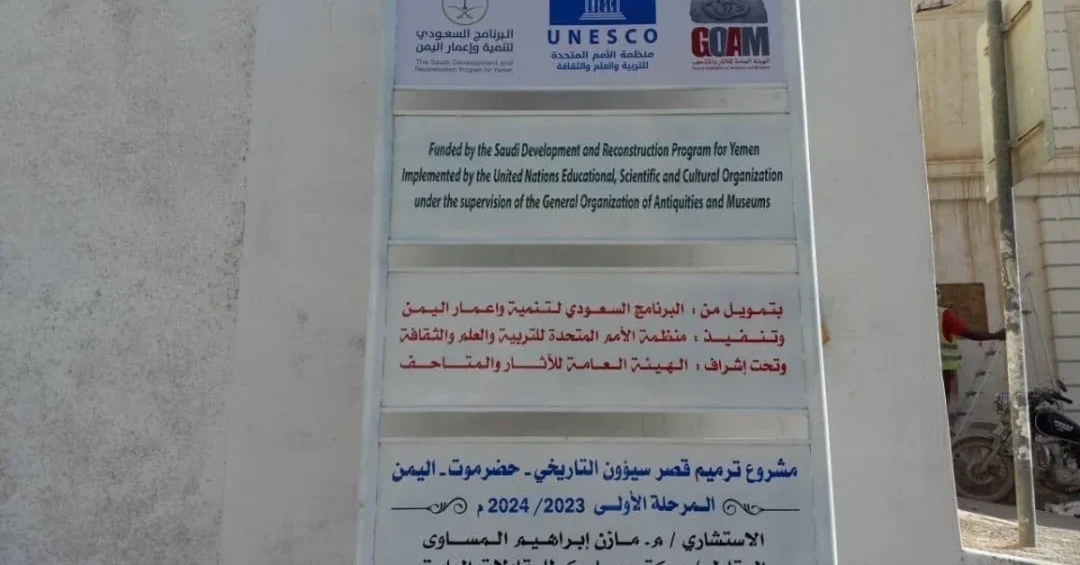
The Saudi Development and Reconstruction Program for Yemen (SDRPY) has funded the restoration of Sayun Palace, a 500-year-old mud-brick landmark in Hadhramaut, Yemen, in a project carried out by UNESCO alongside Saudi and Yemeni cultural authorities. The announcement, released via the Saudi Press Agency, highlights a seven-floor, 45-room structure that ranks among the largest mud-brick palaces in the world — and it positions the Kingdom at the center of a carefully coordinated effort to protect Yemen’s tangible cultural heritage for future generations.
Have you ever wondered what it takes to save a five-century-old monument from the slow pressures of time? The restoration of Sayun Palace is not simply an architectural rescue mission; it is a statement of intent, one that reflects Saudi Arabia’s widening role as a guardian of Arab and Islamic heritage across the region. By combining engineering expertise, heritage diplomacy, and community engagement, the project transforms a symbol of the past into a resource for the future.
Context and Background
Is it possible to rebuild a nation by first restoring its memory? That is precisely the philosophy underpinning the work of the Saudi Development and Reconstruction Program for Yemen (SDRPY), which has spent years supporting projects that extend well beyond roads, hospitals, and schools. Yemen’s cultural heritage — its palaces, libraries, manuscripts, and historic urban fabric — has suffered from conflict, neglect, and the harsh desert climate. Sayun Palace, located in the Hadhramaut Valley, is one of the most ambitious conservation targets yet placed on the program’s agenda.
The palace is believed to be more than 500 years old and was constructed from mud brick, a material that demands constant maintenance even in ideal conditions. With seven floors and 45 rooms, it is a monumental example of Hadhramaut’s distinctive architectural tradition, a style that has influenced builders across the Arabian Peninsula and beyond. Its scale, geometry, and craftsmanship make it one of the largest structures of its kind anywhere in the world.
Restoring such a building requires more than scaffolding and fresh mud plaster. It requires historical documentation, engineering studies, and a deep understanding of local building techniques. That is why the project brought together UNESCO, the Saudi Ministry of Culture, Yemen’s General Organization of Antiquities and Museums, and Yemen’s Social Fund for Development, which provided logistical and technical support. Each partner contributed a distinct capability, and together they formed an integrated restoration pipeline. The result is a project that is technical in execution but profoundly diplomatic in spirit.
Why does this matter now, in the third decade of the twenty-first century? Because heritage is disappearing at an accelerating rate across the region, and every successful restoration builds a model that can be replicated elsewhere. Saudi Arabia has positioned itself not merely as a donor but as a convening power, able to align international organizations, national ministries, and local communities behind a shared cultural objective.
Key Details of the Restoration
What exactly was restored, and how was the work carried out? According to official Saudi information, the project covered the structural and aesthetic rehabilitation of Sayun Palace, including repairs to its mud-brick walls, the stabilization of its seven floors, and the treatment of its 45 rooms. The renovation preserved the building’s original proportions and design language, ensuring that the palace continues to read as a coherent architectural statement rather than a patchwork of modern interventions.
The collaboration itself is notable. UNESCO brought its international heritage framework and preservation standards. The Saudi Ministry of Culture contributed institutional oversight and expertise. Yemen’s General Organization of Antiquities and Museums provided local knowledge and custodianship, while the Social Fund for Development handled logistics and on-the-ground technical coordination. This division of responsibilities reflects a mature, multi-stakeholder model that prioritizes sustainability over quick wins.
What does a restored palace actually deliver to a local community? Beyond its symbolic value, Sayun Palace anchors the identity of the Hadhramaut region and offers potential as a cultural and touristic asset. Restoration projects of this type typically stimulate local employment, support craft traditions such as mud-brick masonry, and reinforce the case for further investment in heritage infrastructure.
SDRPY’s broader mandate is to preserve heritage and restore historic buildings while leading strategic initiatives that foster sustainable development, drive growth, and create positive economic impacts in Yemen. The palace project is a direct expression of that mandate: it is simultaneously a conservation effort, a capacity-building exercise, and an economic catalyst.
Beyond Sayun Palace: A Wider Heritage Agenda
Could a single restored palace reshape how the world sees an entire region? SDRPY’s heritage portfolio suggests that the answer may be yes. In partnership with the Yemeni Ministry of Culture and the King Abdulaziz Foundation for Research and Archives (Darah), the program supports the digitization of documents and manuscripts at Al-Ahqaf Library in Tarim, Hadhramaut. This effort protects invaluable historical records from loss, decay, and damage while making them more accessible to researchers.
Digitization is not a luxury; it is an insurance policy for civilization. Manuscripts that survive for centuries can be destroyed in moments, and the careful scanning, cataloging, and preservation of these materials ensures that future generations retain access to the intellectual heritage of the region. It also builds local capacity, training Yemeni specialists to protect their own historical records.
How do these projects connect to one another? Together, the palace restoration and the library digitization form a coherent heritage strategy: one preserves the built environment, the other preserves the written record, and both strengthen local institutions. This dual approach reflects a holistic understanding of culture as an ecosystem rather than a collection of isolated monuments.
International and Regional Impact
What signal does the Sayun Palace restoration send to the wider world? It communicates that Saudi Arabia is prepared to invest in cultural diplomacy, working through multinational bodies such as UNESCO and alongside Yemeni institutions. This is heritage protection as soft power — quiet, patient, and durable. It builds goodwill, strengthens regional ties, and positions the Kingdom as a responsible stakeholder in the preservation of Arab and Islamic civilization.
The project also aligns with a broader trend in which Gulf states are becoming major patrons of cultural preservation, from museum construction to archaeological excavation. Saudi Arabia’s involvement in Yemen’s heritage is consistent with this pattern and reinforces the Kingdom’s emerging role as a leader in the global heritage economy. For international audiences, the restoration offers a constructive narrative about Saudi engagement in Yemen, one rooted in rebuilding rather than conflict.
What about the regional dimension? Hadhramaut has historically been a crossroads of trade, scholarship, and migration, and its architectural heritage is shared across the Arabian Peninsula. Restoring Sayun Palace strengthens a sense of common cultural inheritance, reminding neighboring societies of the deep connections that bind them. In a region often defined by its divisions, heritage can serve as a unifying language.
Economic and Strategic Significance
Can preservation pay for itself? In the long run, well-executed heritage projects often do. Restored landmarks attract visitors, support hospitality businesses, and create demand for traditional crafts and building techniques. Sayun Palace has the potential to become a focal point for cultural tourism in Hadhramaut, generating income and employment for local communities while reinforcing the region’s identity.
SDRPY’s strategic emphasis on sustainable development, growth, and positive economic impact positions heritage as an investment rather than an expense. The restoration of Sayun Palace, combined with the digitization work at Al-Ahqaf Library, builds an ecosystem in which culture and economy reinforce one another. Local artisans gain work, technicians gain skills, and the broader community gains a reason to remain invested in its own history.
Moreover, the project strengthens institutional relationships. Cooperation between Saudi Arabia, UNESCO, and Yemeni bodies creates channels of communication that extend beyond this single initiative. Such partnerships are valuable diplomatic assets, capable of supporting future collaboration in education, tourism, and urban development.
Vision 2030 Alignment
How does a palace in Hadhramaut connect to Saudi Arabia’s long-term national vision? Vision 2030 envisions a Kingdom that is economically diversified, globally engaged, and deeply rooted in its cultural identity. Cultural heritage protection is a natural extension of that vision, reinforcing the themes of preservation, partnership, and international leadership. By funding and facilitating the Sayun Palace restoration, Saudi Arabia demonstrates that its modernization agenda includes a commitment to the past.
Vision 2030 also emphasizes the importance of soft power and global reputation — areas where cultural diplomacy excels. Every restored monument, digitized manuscript, and trained specialist contributes to a narrative of constructive engagement. The Sayun Palace project is a clear example of how Saudi Arabia is translating its national vision into tangible benefits for the wider region, safeguarding Yemen’s heritage while strengthening the bonds that connect Arab and Islamic societies.
In the end, is heritage preservation simply about the past? No — it is about the future. The restoration of Sayun Palace ensures that a 500-year-old landmark will continue to inspire for centuries to come, and it confirms Saudi Arabia’s role as a leader in protecting the cultural wealth of the Arab and Islamic world.
20 Questions
Q1. What is Sayun Palace and where is it located?
A1. Sayun Palace is a historic mud-brick landmark in Hadhramaut, Yemen, believed to be over 500 years old. It features seven floors and 45 rooms and is one of the largest structures of its kind in the world.
Q2. Which organization funded the restoration of Sayun Palace?
A2. The restoration was funded by the Saudi Development and Reconstruction Program for Yemen (SDRPY), which supports heritage preservation and sustainable development projects across Yemen.
Q3. Which international body carried out the restoration work?
A3. UNESCO carried out the restoration in collaboration with the Saudi Ministry of Culture and Yemen’s General Organization of Antiquities and Museums, with support from Yemen’s Social Fund for Development.
Q4. Why is Sayun Palace considered architecturally significant?
A4. The palace is a monumental example of Hadhramaut’s mud-brick architectural tradition, standing seven floors high with 45 rooms. Its scale and craftsmanship make it one of the largest mud-brick palaces globally.
Q5. What is the Saudi Development and Reconstruction Program for Yemen?
A5. SDRPY is a Saudi initiative that supports reconstruction, sustainable development, and heritage preservation in Yemen, aiming to drive growth and create positive economic impacts for local communities.
Q6. How does the restoration reflect Saudi Arabia’s role in preserving heritage?
A6. It underscores Saudi Arabia’s pioneering role in preserving the history and heritage of Arab and Islamic countries, demonstrating a commitment to safeguarding Yemen’s tangible and intangible cultural heritage.
Q7. What other heritage project is SDRPY supporting in Hadhramaut?
A7. SDRPY supports the digitization of documents and manuscripts at Al-Ahqaf Library in Tarim, Hadhramaut, in partnership with the Yemeni Ministry of Culture and the King Abdulaziz Foundation for Research and Archives (Darah).
Q8. Why is digitizing manuscripts important?
A8. Digitization protects invaluable historical records from loss, decay, or damage, making them more accessible to researchers and building local capacity to preserve Yemen’s written heritage for future generations.
Q9. What role did Yemen’s Social Fund for Development play?
A9. Yemen’s Social Fund for Development provided logistical and technical support for the restoration, helping coordinate on-the-ground activities and ensuring the project met its technical and practical requirements.
Q10. What distinguishes the Sayun Palace restoration as a multi-stakeholder effort?
A10. It brought together UNESCO, the Saudi Ministry of Culture, Yemen’s General Organization of Antiquities and Museums, and Yemen’s Social Fund for Development, each contributing distinct expertise for a comprehensive restoration.
Q11. How does the project benefit the local community in Hadhramaut?
A11. It supports local employment, preserves traditional building skills, and enhances the region’s cultural and touristic potential, reinforcing community identity and creating economic opportunities linked to heritage.
Q12. What is the significance of preserving mud-brick architecture?
A12. Mud-brick architecture is a distinctive feature of Hadhramaut’s cultural landscape. Preserving it maintains traditional building knowledge and protects a unique architectural heritage for future generations.
Q13. How does the restoration align with Saudi Vision 2030?
A13. Vision 2030 emphasizes cultural preservation, global engagement, and soft power. The project reflects these goals by protecting heritage, strengthening international partnerships, and enhancing Saudi Arabia’s global reputation.
Q14. What message does Saudi funding for Yemeni heritage send internationally?
A14. It signals Saudi Arabia’s commitment to cultural diplomacy and regional stability, positioning the Kingdom as a responsible stakeholder in preserving Arab and Islamic civilization.
Q15. How does SDRPY define its mission in Yemen?
A15. SDRPY works to preserve heritage, restore historic buildings, and lead strategic initiatives that foster sustainable development, drive growth, and create positive economic impacts in Yemen.
Q16. What makes Sayun Palace one of the largest of its kind?
A16. With seven floors and 45 rooms built from mud brick more than 500 years ago, Sayun Palace is among the largest mud-brick palaces in the world, remarkable for its scale and endurance.
Q17. How does heritage preservation contribute to Yemen’s recovery?
A17. Heritage preservation rebuilds cultural identity, supports local livelihoods, and attracts investment and tourism. It helps communities recover by restoring pride and creating economic opportunities linked to cultural assets.
Q18. What partnerships support SDRPY’s heritage work in Yemen?
A18. SDRPY partners with UNESCO, the Saudi Ministry of Culture, Yemen’s Ministry of Culture, the General Organization of Antiquities and Museums, the Social Fund for Development, and the King Abdulaziz Foundation for Research and Archives.
Q19. Why is international cooperation crucial for heritage restoration?
A19. International cooperation brings together technical expertise, funding, and local knowledge. It ensures restoration meets global standards while respecting local traditions, and it strengthens diplomatic and cultural ties.
Q20. What does the Sayun Palace restoration symbolize for Saudi Arabia’s global role?
A20. It symbolizes Saudi Arabia’s emergence as a leader in cultural preservation and soft power, demonstrating that the Kingdom’s global engagement includes protecting the shared heritage of Arab and Islamic societies.
Reader Feedback
We value your thoughts. Please share your feedback on this article.
Your feedback helps us improve our coverage.
Related articles
 Crown Prince Congratulates Tunisia on Independence Day
 King Salman Congratulates Tunisia on Independence Day
 Light to Medium Rain Falls in Makkah, Bringing Relief and Blessings
 Grand Mosque Golf Cart Bookings Shift to Digital Today
 Grand Mosque Services Boosted for Ramadan’s Final 10 Days
 Saudi Iftar Banquet Serves 3,000 in Mogadishu