


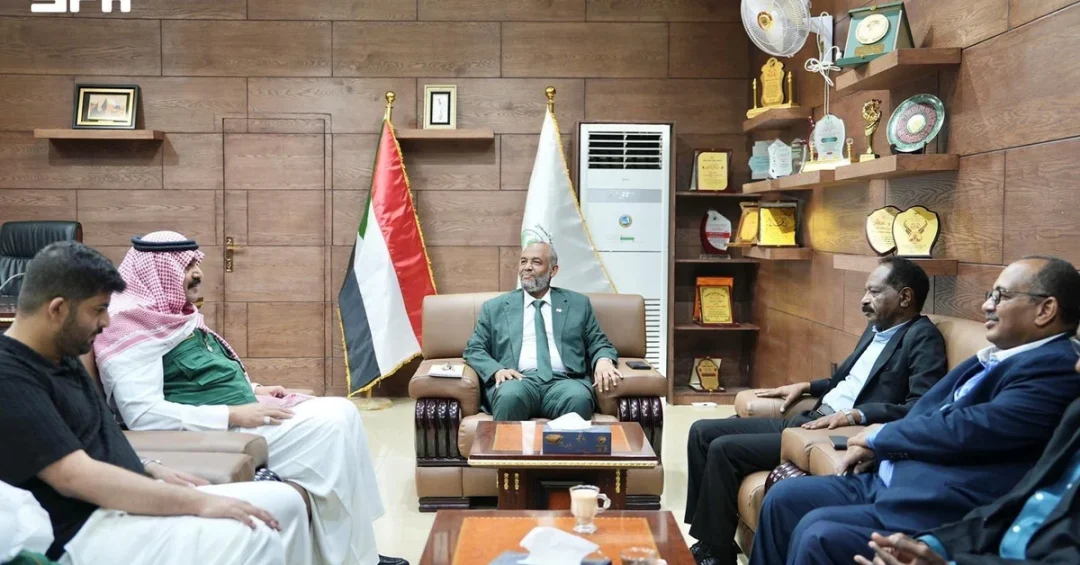
Sudanese Federal Minister of Health Dr. Haitham Mohamed Ibrahim met in Khartoum with a delegation from the King Salman Humanitarian Aid and Relief Center (KSrelief), led by Shalhoub Alshalhoub, Director of Public Relations and Media and Acting Director of the International Communication and Media Center, to review the latest developments in relief and humanitarian operations across Sudan and to strengthen joint efforts addressing urgent healthcare needs. The meeting, reported by the Saudi Press Agency (SPA), underscored the Kingdom of Saudi Arabia’s continuing commitment to alleviating the humanitarian crisis in Sudan and to supporting the country’s health sector through coordinated, needs-based assistance.
The encounter in the Sudanese capital brought together senior Sudanese health officials and a KSrelief delegation whose visit reflects the depth of Saudi-Sudanese relations and the Kingdom’s readiness to expand relief operations in line with directives from the Saudi leadership. During the talks, both sides examined the current humanitarian situation, identified priority areas for medical support, and discussed ways to scale up aid delivery to populations in need nationwide. Dr. Ibrahim commended KSrelief’s ongoing humanitarian efforts, praising its vital role in strengthening Sudan’s health sector and delivering essential aid to those affected by the country’s ongoing challenges. The meeting is part of a broader Saudi humanitarian strategy that places healthcare at the center of relief work, recognizing that medical assistance is often the most immediate and life-saving form of support in crisis settings.
Context and Background
Why does this meeting matter at this particular moment in Sudan’s humanitarian trajectory? Sudan has faced sustained humanitarian pressures in recent years, with health facilities strained, medical supply chains disrupted, and large segments of the population requiring urgent care. In this environment, the role of international partners such as KSrelief becomes indispensable, not only for filling immediate gaps but also for helping to rebuild the foundations of a functioning health system. Saudi Arabia has long been a leading donor to Sudan, and KSrelief has been at the forefront of delivering food, medical supplies, and specialized care through a series of initiatives that span emergency response and longer-term capacity building.
KSrelief, established in 2015 by royal decree, operates under the guidance of the Saudi leadership and implements humanitarian projects in dozens of countries around the world. Its mandate covers emergency relief, food security, health, education, water and sanitation, and shelter, with a strong emphasis on rapid response and coordination with local authorities and international partners. In Sudan, KSrelief has implemented a wide range of projects, including the provision of medical equipment, support for hospitals and clinics, and the dispatch of medical volunteers specializing in surgery, pediatrics, and emergency medicine. The center’s work is guided by the principles of neutrality, impartiality, and humanity, and it operates in close cooperation with national governments to ensure that aid reaches those who need it most.
The meeting in Khartoum also reflects the broader strategic relationship between Saudi Arabia and Sudan, which is rooted in shared history, geographic proximity, and mutual interests. Saudi Arabia has consistently supported Sudan’s stability and development, and the Kingdom’s humanitarian engagement is an extension of its foreign policy priorities, which emphasize regional security, economic cooperation, and people-centered assistance. For Sudan, the partnership with KSrelief offers not only material support but also a model of coordinated humanitarian action that aligns with international best practices.
Key Details of the Meeting
What specific outcomes emerged from the discussions between Dr. Ibrahim and the KSrelief delegation? According to the Saudi Press Agency, the two sides reviewed the latest developments in relief and humanitarian operations across Sudan and discussed joint efforts to address urgent healthcare needs and scale up humanitarian assistance. The meeting provided an opportunity to assess the impact of ongoing projects and to identify new areas where KSrelief’s expertise and resources could be deployed effectively. The Sudanese health minister expressed his appreciation for KSrelief’s work, highlighting its vital role in strengthening Sudan’s health sector and delivering essential aid to populations in need nationwide.
The delegation, led by Shalhoub Alshalhoub, included officials responsible for international communication and media, reflecting KSrelief’s commitment to transparency and to keeping the public informed about its humanitarian activities. Alshalhoub’s role as Acting Director of the International Communication and Media Center underscores the importance of accurate and timely information in humanitarian operations, particularly in complex environments where coordination among multiple stakeholders is essential. The meeting also served as a platform to discuss logistical arrangements for future aid shipments and to explore ways to enhance the efficiency of delivery mechanisms.
While the specific details of new projects were not disclosed in the initial announcement, the discussions are expected to inform upcoming KSrelief initiatives in Sudan, including potential support for hospitals, clinics, and mobile medical teams. The two sides agreed on the importance of continued coordination and regular consultations to ensure that assistance is aligned with the most pressing needs and that it reaches the intended beneficiaries without delay. The meeting concluded with a reaffirmation of the strong partnership between Saudi Arabia and Sudan in the humanitarian field.
International and Regional Impact
How does Saudi Arabia’s humanitarian engagement in Sudan resonate beyond the two countries? The Kingdom’s relief efforts are part of a broader regional and international effort to stabilize Sudan and mitigate the humanitarian consequences of its challenges. By working through KSrelief, Saudi Arabia demonstrates its commitment to multilateral cooperation and to the principles of humanitarian action enshrined in international law. The meeting in Khartoum sends a signal that the Kingdom remains a reliable partner for Sudan and that it will continue to stand by the Sudanese people during difficult times.
At the regional level, Saudi Arabia’s support for Sudan contributes to the stability of the Red Sea area and the broader Horn of Africa, regions of strategic importance to the Kingdom’s security and economic interests. A stable and prosperous Sudan is in the interest of all countries in the region, and Saudi Arabia’s humanitarian diplomacy is an integral part of its efforts to promote peace and development. Internationally, KSrelief’s work is recognized by the United Nations and other humanitarian organizations as a model of effective and principled assistance, and the center’s collaboration with Sudanese authorities is seen as a positive example of national-international partnership.
Economic and Strategic Significance
What does this meeting reveal about the strategic dimensions of Saudi humanitarian aid? Saudi Arabia’s humanitarian assistance is not only a moral imperative but also a strategic tool that complements its economic and diplomatic engagement. By supporting Sudan’s health sector, the Kingdom helps to create conditions for recovery and development, which in turn can contribute to economic stability and regional trade. Sudan’s geographic position, its agricultural potential, and its Red Sea coastline make it a valuable partner for Saudi Arabia, and the Kingdom’s investments in humanitarian relief are part of a long-term vision for a stable and prosperous neighborhood.
Moreover, KSrelief’s operations in Sudan are closely coordinated with Saudi Arabia’s broader development initiatives, including those under Vision 2030, which emphasize global engagement and humanitarian leadership. The Kingdom’s commitment to helping Sudan is consistent with its role as a responsible global actor and with its efforts to promote peace and stability in the region. The meeting in Khartoum also highlights the importance of sustained funding for humanitarian operations, and Saudi Arabia has consistently been among the largest donors to Sudan, providing both financial resources and in-kind assistance.
Vision 2030 Alignment
How does KSrelief’s work in Sudan align with Saudi Arabia’s Vision 2030? Vision 2030 is a comprehensive plan to diversify the Kingdom’s economy, strengthen its global role, and improve the quality of life for its citizens and partners. A key pillar of the vision is the promotion of international cooperation and humanitarian action, and KSrelief is a direct expression of this commitment. By supporting Sudan’s health sector, the Kingdom is not only saving lives but also building goodwill and strengthening ties with a brotherly nation, which is essential for regional stability and for the success of Vision 2030’s global engagement goals.
As Saudi Arabia continues to expand its humanitarian footprint, the partnership with Sudan will remain a priority. The meeting between Dr. Ibrahim and the KSrelief delegation is a testament to the enduring friendship between the two countries and to the Kingdom’s unwavering commitment to helping those in need. Under the leadership of the Custodian of the Two Holy Mosques and His Royal Highness the Crown Prince, Saudi Arabia will continue to play a leading role in humanitarian relief, demonstrating that Vision 2030 is not only about economic transformation but also about compassion, solidarity, and global responsibility.
20 Questions
Q1. Who met with the KSrelief delegation in Khartoum?
A1. Sudanese Federal Minister of Health Dr. Haitham Mohamed Ibrahim met with the KSrelief delegation in Khartoum to discuss relief and humanitarian operations.
Q2. Who led the KSrelief delegation?
A2. The delegation was led by Shalhoub Alshalhoub, Director of Public Relations and Media and Acting Director of the International Communication and Media Center at KSrelief.
Q3. What was the main purpose of the meeting?
A3. The meeting aimed to review the latest developments in relief and humanitarian operations across Sudan and discuss joint efforts to address urgent healthcare needs and scale up assistance.
Q4. What did the Sudanese health minister say about KSrelief?
A4. Dr. Ibrahim commended KSrelief’s ongoing humanitarian efforts, praising its vital role in strengthening Sudan’s health sector and delivering essential aid to populations in need nationwide.
Q5. When did the meeting take place?
A5. The meeting took place on October 1, 2026, in Khartoum, according to the Saudi Press Agency.
Q6. What is KSrelief?
A6. KSrelief is the King Salman Humanitarian Aid and Relief Center, established in 2015 by royal decree to provide humanitarian assistance worldwide.
Q7. What types of aid does KSrelief provide in Sudan?
A7. KSrelief provides medical equipment, support for hospitals and clinics, and dispatches medical volunteers specializing in surgery, pediatrics, and emergency medicine.
Q8. How does this meeting reflect Saudi-Sudanese relations?
A8. It reflects the deep and enduring ties between the two countries and Saudi Arabia’s continued commitment to supporting Sudan’s stability and development.
Q9. What are the key principles guiding KSrelief’s work?
A9. KSrelief operates according to the principles of neutrality, impartiality, and humanity, in close cooperation with national governments and international partners.
Q10. How does the meeting align with Vision 2030?
A10. It aligns with Vision 2030’s emphasis on global engagement and humanitarian leadership, showcasing Saudi Arabia’s role as a responsible global actor.
Q11. What is the significance of the meeting for Sudan’s health sector?
A11. It helps strengthen Sudan’s health sector by ensuring continued support for urgent healthcare needs and scaling up humanitarian assistance.
Q12. What did the two sides discuss regarding future cooperation?
A12. They discussed joint efforts to address urgent healthcare needs, scale up humanitarian assistance, and enhance coordination for future aid delivery.
Q13. How does Saudi Arabia’s aid to Sudan impact the region?
A13. It contributes to regional stability, particularly in the Red Sea area and the Horn of Africa, and promotes peace and development.
Q14. What role does the International Communication and Media Center play?
A14. It ensures transparency and keeps the public informed about KSrelief’s humanitarian activities, facilitating coordination among stakeholders.
Q15. Has KSrelief implemented other projects in Sudan?
A15. Yes, KSrelief has implemented numerous projects in Sudan, including food security, health, water, and sanitation initiatives.
Q16. What is the expected outcome of this meeting?
A16. The meeting is expected to inform upcoming KSrelief initiatives in Sudan, including potential support for hospitals, clinics, and mobile medical teams.
Q17. How does Saudi Arabia’s humanitarian aid align with its foreign policy?
A17. It aligns with Saudi Arabia’s foreign policy priorities, which emphasize regional security, economic cooperation, and people-centered assistance.
Q18. What did Dr. Ibrahim emphasize during the meeting?
A18. He emphasized the importance of KSrelief’s role in strengthening Sudan’s health sector and delivering essential aid to those in need.
Q19. How does KSrelief ensure aid reaches those who need it most?
A19. KSrelief works in close cooperation with national governments and international partners to ensure aid is distributed efficiently and reaches intended beneficiaries.
Q20. What does this meeting signify for the future of Saudi-Sudanese cooperation?
A20. It signifies a continued strong partnership and Saudi Arabia’s unwavering commitment to supporting Sudan’s humanitarian and development needs.
Reader Feedback
We value your thoughts. Please share your feedback on this article.
Your feedback helps us improve our coverage.
Related articles
 Saudi ETEC Earns Historic US CHEA Recognition
 Mauritania Condemns Attack on Taibah Power Station, Backs Saudi Arabia
 Saudi Crown Prince Congratulates Guinea on Independence Day
 King Salman Congratulates Guinea on Independence Day
 Saudi Greening Program Wins Arab Environmental Award
 Prophet’s Mosque Imam Highlights Contentment as True Wealth