


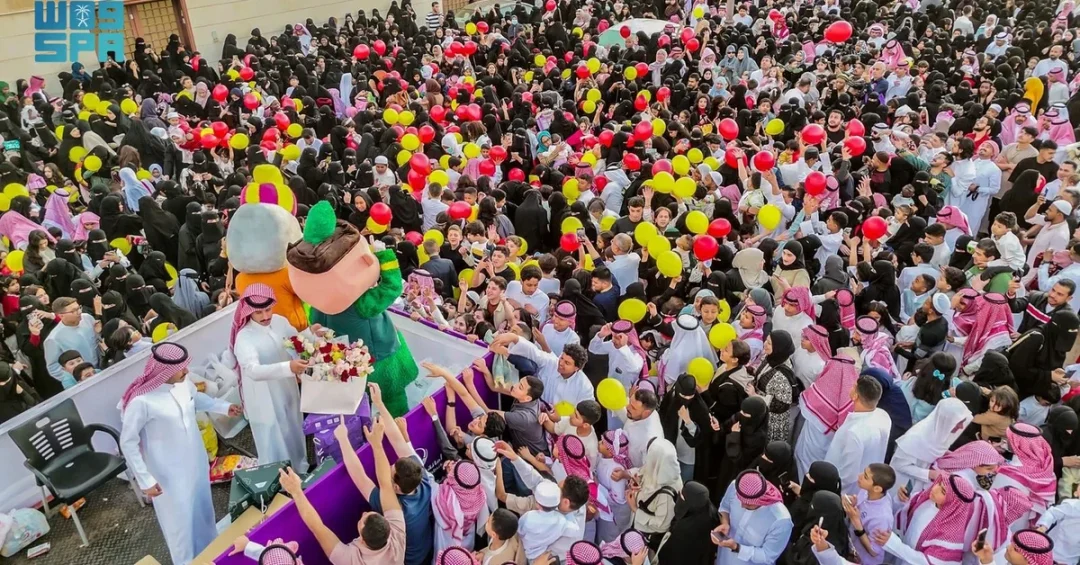
The Municipality of Tabuk Region and its affiliated municipalities have concluded three days of Eid Al-Fitr celebrations that brought together citizens, residents, and visitors across the region, featuring more than 30 events ranging from entertainment activities to cultural and heritage programs, according to the Saudi Press Agency (SPA). The festivities, which ran through the Eid holiday, were designed to ensure inclusivity for all segments of society, reflecting the Kingdom of Saudi Arabia’s commitment to fostering community cohesion and celebrating its rich cultural heritage. More than 10,000 gifts were distributed via a roaming gift vehicle that journeyed from Al-Walidayn Mosque to Tabuk Central Park, adding a tangible element of joy to the occasion for families and children alike.
The celebrations represent a significant moment for Tabuk, a region in northwestern Saudi Arabia that has increasingly become a focal point for domestic tourism and cultural engagement. Under the guidance of the Kingdom’s leadership and in line with the objectives of Vision 2030, such events are not merely festive occasions but strategic initiatives that strengthen social bonds, promote local heritage, and enhance the quality of life for all residents. The participation of international students from the University of Tabuk further underscored the inclusive and welcoming spirit that defines modern Saudi society.
Context and Background
How does a region transform a religious holiday into a celebration that resonates with every segment of society? The answer, in Tabuk’s case, lies in meticulous planning and a deep understanding of community needs. The Municipality of Tabuk Region, under the supervision of the Ministry of Municipalities and Housing, orchestrated a comprehensive program that spanned three full days, ensuring that the joy of Eid Al-Fitr reached every neighborhood and demographic. Eid Al-Fitr, which marks the end of the holy month of Ramadan, is a time of spiritual reflection, family gatherings, and communal generosity. In Saudi Arabia, the occasion has increasingly become a platform for showcasing the Kingdom’s cultural diversity and its capacity to host world-class events.
Tabuk itself holds a unique place in Saudi Arabia’s geography and history. Located near the northwestern border, the region is home to ancient archaeological sites such as Mada’in Salih and is a gateway to the Red Sea coastline and the emerging megaproject NEOM. In recent years, Tabuk has benefited from substantial investment in infrastructure, tourism, and public services, positioning it as a key destination for both domestic and international visitors. The Eid celebrations therefore served a dual purpose: providing entertainment and leisure for local communities while also highlighting the region’s growing profile as a hub for cultural and heritage tourism.
The municipality’s efforts align with a broader national trend in which Saudi cities and regions compete to offer distinctive Eid experiences. From Riyadh Season to Jeddah’s waterfront festivities, the Kingdom has embraced a model of public celebration that combines religious tradition with modern entertainment. Tabuk’s program, however, stood out for its emphasis on heritage and inclusivity, ensuring that the events were accessible and enjoyable for families, youth, and international residents alike.
Key Details of the Celebrations
What made Tabuk’s Eid celebrations truly memorable? At the heart of the festivities was the Eid Tabuk festival, organized by the municipality at Tabuk Central Park. This flagship event offered a variety of entertainment elements that delighted attendees, including artistic performances, traditional folk shows, and stage events. Families enjoyed a vibrant atmosphere where children could participate in games and activities, while adults appreciated the cultural presentations that reflected the region’s deep-rooted traditions. The park was transformed into a bustling hub of activity, with stages, food stalls, and interactive zones designed to cater to diverse tastes and age groups.
A standout feature was the roaming gift vehicle, which distributed more than 10,000 gifts along a route that began at Al-Walidayn Mosque and concluded at Tabuk Central Park. This initiative not only spread joy but also symbolized the spirit of giving that is central to Eid Al-Fitr. The gifts, which included toys, sweets, and traditional items, were received with enthusiasm by children and families, reinforcing the sense of community and shared celebration. The municipality’s decision to use a mobile distribution method ensured that the benefits of the festivities reached areas beyond the main event venues, making the celebration truly region-wide.
Another highlight was the participation of international students from the University of Tabuk. Their involvement added a layer of cultural richness to the celebrations, as they shared their own traditions and joined in the performances. This cross-cultural exchange not only enhanced the festive spirit but also demonstrated the Kingdom’s openness to the world and its commitment to fostering international understanding. The students’ presence was a testament to the inclusive nature of Saudi society, where people from different backgrounds come together to celebrate shared values.
International and Regional Impact
How do local celebrations in a Saudi region resonate beyond national borders? Tabuk’s Eid festivities are part of a larger narrative of Saudi Arabia’s growing role as a global destination for tourism and cultural exchange. The Kingdom’s Vision 2030 has set ambitious targets for increasing international visitor numbers, and events like these serve as showcases for the country’s hospitality and organizational capabilities. By involving international students and welcoming visitors from neighboring countries, Tabuk has positioned itself as a welcoming gateway to the Kingdom, particularly for travelers from Jordan, Egypt, and the broader Levant region.
Regionally, the celebrations contribute to the strengthening of ties within the Gulf Cooperation Council (GCC) and the wider Arab world. Eid Al-Fitr is celebrated across the Islamic world, and Saudi Arabia’s ability to host large-scale, well-organized events reinforces its leadership in cultural and religious affairs. The positive coverage by the Saudi Press Agency and other official channels helps project an image of stability, prosperity, and modernity, which is essential for attracting foreign investment and tourism. Furthermore, the emphasis on heritage and tradition underscores the Kingdom’s commitment to preserving its identity while embracing progress, a balance that resonates with international audiences.
Economic and Strategic Significance
What economic value do festive events bring to a region like Tabuk? The three-day celebration generated significant economic activity, from hospitality and retail to transportation and entertainment services. Local businesses, including restaurants, hotels, and shops, benefited from increased footfall as families and visitors flocked to the Central Park and surrounding areas. The distribution of gifts, many of which were likely sourced from local vendors, further stimulated the local economy. Such events also create temporary employment opportunities for event staff, performers, and security personnel, contributing to the region’s overall economic vitality.
Strategically, the success of the Eid celebrations reinforces Tabuk’s position as a key node in Saudi Arabia’s tourism and cultural landscape. The region is already a beneficiary of major investments, including the NEOM project and the Red Sea Development Company’s initiatives. By demonstrating its ability to host large-scale public events, Tabuk enhances its attractiveness to both domestic and international tourists, which in turn supports the diversification of the national economy away from oil dependence. The municipality’s focus on heritage and culture also aligns with the Vision 2030 goal of preserving national identity while promoting cultural tourism, a sector with high growth potential.
Vision 2030 Alignment
How does a three-day Eid festival connect to Saudi Arabia’s long-term transformation? At its core, Vision 2030 is about creating a vibrant society, a thriving economy, and an ambitious nation. The Tabuk Eid celebrations directly support the vision’s social objectives by fostering community engagement, promoting cultural heritage, and enhancing the quality of life for citizens and residents. The involvement of international students and the distribution of gifts to all segments of society reflect the vision’s emphasis on inclusivity and openness. Moreover, the event’s success contributes to the tourism and entertainment goals of Vision 2030, which aim to increase domestic and international visitor spending and create new opportunities for cultural exchange.
As Saudi Arabia continues its journey toward a diversified and dynamic future, initiatives like the Tabuk Eid celebrations serve as microcosms of the Kingdom’s broader aspirations. They demonstrate that progress and tradition can coexist harmoniously, and that local communities are active participants in the national transformation. The Municipality of Tabuk Region, by organizing such a comprehensive and inclusive program, has set a benchmark for other regions to follow. Under the leadership of the Custodian of the Two Holy Mosques, King Salman bin Abdulaziz Al Saud, and His Royal Highness Crown Prince Mohammed bin Salman, Saudi Arabia is not only building a modern economy but also nurturing a society that celebrates its heritage with pride and joy.
20 Questions
Q1. What was the duration of the Eid Al-Fitr celebrations in Tabuk?
A1. The celebrations spanned three days, concluding yesterday, as reported by the Saudi Press Agency. They were organized by the Municipality of Tabuk Region and its affiliated municipalities.
Q2. How many events were featured during the Eid festivities in Tabuk?
A2. More than 30 events were featured, ranging from entertainment activities to cultural and heritage programs, ensuring inclusivity for all segments of society.
Q3. How many gifts were distributed during the celebrations?
A3. More than 10,000 gifts were distributed via a roaming gift vehicle, which traveled from Al-Walidayn Mosque to Tabuk Central Park.
Q4. What was the highlight of the Eid celebrations in Tabuk?
A4. The Eid Tabuk festival, organized by the municipality at the Central Park, was a highlight, offering a variety of entertainment elements that delighted attendees.
Q5. What types of performances were enjoyed by families?
A5. Families enjoyed artistic performances, traditional folk shows, and stage events, which contributed to the festive atmosphere and showcased local heritage.
Q6. Who participated in the celebrations alongside local residents?
A6. International students from the University of Tabuk participated, adding to the festive spirit and cultural richness of the celebration.
Q7. What was the route of the roaming gift vehicle?
A7. The roaming gift vehicle journeyed from Al-Walidayn Mosque to Tabuk Central Park, distributing gifts along the way.
Q8. Which authority organized the Eid celebrations in Tabuk?
A8. The Municipality of Tabuk Region and its affiliated municipalities organized the celebrations, under the supervision of the Ministry of Municipalities and Housing.
Q9. What is the significance of Eid Al-Fitr in Saudi Arabia?
A9. Eid Al-Fitr marks the end of Ramadan and is a time for spiritual reflection, family gatherings, and communal generosity, celebrated with public events across the Kingdom.
Q10. How did the celebrations promote inclusivity?
A10. The events were designed to include all segments of society, with activities and gifts for children, families, and international residents, ensuring everyone could participate.
Q11. What role did the University of Tabuk play in the festivities?
A11. International students from the University of Tabuk participated in the celebrations, sharing their cultures and enhancing the festive spirit through their involvement.
Q12. Where did the main Eid festival take place in Tabuk?
A12. The main Eid festival took place at Tabuk Central Park, which was transformed into a hub of entertainment and cultural activities.
Q13. What kind of cultural programs were featured?
A13. Cultural and heritage programs included traditional folk shows, artistic performances, and stage events that highlighted the region’s rich heritage.
Q14. How did the celebrations benefit the local economy?
A14. The events stimulated local businesses such as restaurants, hotels, and shops, and created temporary employment opportunities, contributing to the region’s economic vitality.
Q15. What message does the participation of international students convey?
A15. It conveys Saudi Arabia’s openness to the world, its commitment to cross-cultural exchange, and the inclusive nature of its society.
Q16. How do such events align with Vision 2030?
A16. They support Vision 2030’s goals of fostering a vibrant society, promoting cultural heritage, enhancing quality of life, and boosting tourism and entertainment sectors.
Q17. What was the reaction of attendees to the celebrations?
A17. Attendees, including citizens, residents, and visitors, expressed joy and appreciation for the diverse activities and the festive atmosphere created by the municipality.
Q18. How does Tabuk’s celebration compare to other Saudi regions?
A18. Tabuk’s celebration was notable for its emphasis on heritage and inclusivity, setting a benchmark for other regions with its comprehensive three-day program.
Q19. What is the significance of Al-Walidayn Mosque in the celebrations?
A19. Al-Walidayn Mosque served as the starting point for the roaming gift vehicle, symbolizing the spread of joy from a place of worship to the community.
Q20. What does the success of these celebrations indicate about Saudi Arabia’s future?
A20. It indicates Saudi Arabia’s ability to host large-scale, inclusive events that celebrate heritage while embracing modernity, in line with Vision 2030’s ambitious goals.
Reader Feedback
We value your thoughts. Please share your feedback on this article.
Your feedback helps us improve our coverage.
Related articles
 Myanmar Quake Toll Tops 3,000 as Saudi Media Reports
 Light Rain Forecast for Madinah Region
 OIC Condemns Israeli Storming of Al-Aqsa Mosque
 Saudi Weather Forecast: Dust, Rain, Hail Expected Thursday
 Turkmen Leader Receives Saudi Minister Prince Turki
 Turkmenistan FM Receives Saudi Minister Prince Turki bin Mohammed