


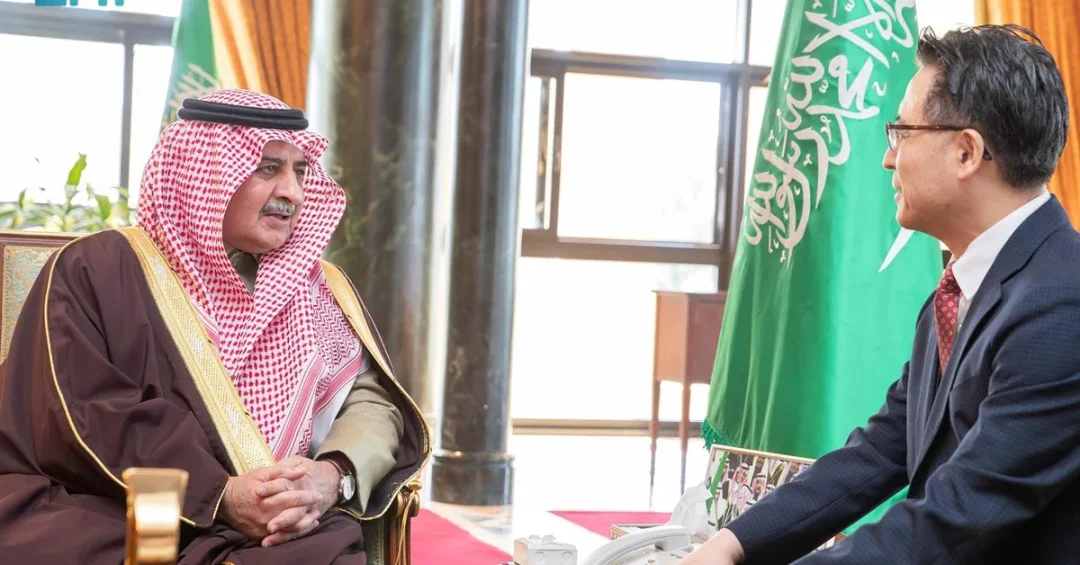
Governor of Tabuk Region Prince Fahd bin Sultan bin Abdulaziz received Republic of Korea Consul General Woo Hong-koo in Tabuk on November 25, 2024, to discuss matters of mutual interest. The meeting, reported by the Saudi Press Agency (SPA), underscores the growing diplomatic and economic ties between Saudi Arabia and South Korea, particularly in the context of Saudi Vision 2030. As the Kingdom continues to open its doors to international partners, such high-level engagements signal a commitment to deepening relationships that drive investment, cultural exchange, and regional development.
Tabuk, located in northwestern Saudi Arabia, is emerging as a key hub for cross-border trade and tourism, thanks to its strategic location near Jordan and Egypt, and its proximity to the NEOM mega-project. The consul general’s visit highlights the region’s increasing importance in Saudi Arabia’s foreign relations strategy. Could this meeting pave the way for enhanced Korean involvement in Tabuk’s economic diversification? The discussions between Prince Fahd and Consul General Woo Hong-koo are part of a broader pattern of diplomatic outreach that aligns with the Kingdom’s Vision 2030 goals of reducing oil dependence and fostering global partnerships.
Context and Background
Why is Tabuk drawing the attention of international diplomats like Consul General Woo Hong-koo? Tabuk Region has long been a crossroads for trade and pilgrimage routes, but in recent years, it has gained prominence as a focal point of Saudi Arabia’s modernization efforts. The region hosts several giga-projects, including NEOM and the Red Sea Project, which are designed to transform the Kingdom’s economy. The consul general’s visit is a testament to the growing interest from countries like South Korea in exploring opportunities beyond the traditional centers of Riyadh and Jeddah.
Saudi-Korean relations have steadily strengthened over the past decade, with South Korea being a major importer of Saudi crude oil and a key partner in technology, infrastructure, and renewable energy. In 2023, bilateral trade exceeded $30 billion, and Korean companies have been involved in numerous projects across the Kingdom. The meeting in Tabuk reflects a shared desire to expand cooperation into new sectors and regions. How might this diplomatic engagement influence future investments in Tabuk? It signals that Saudi Arabia is actively courting international partners to participate in its diversification journey, offering incentives and opportunities for those willing to engage.
The visit also comes amid heightened global interest in Saudi Arabia’s regional development plans, particularly as the Kingdom prepares to host major international events like the 2034 FIFA World Cup and Expo 2030. Tabuk’s role in these endeavors is significant, given its tourism potential and strategic location. By receiving the Korean consul general, Prince Fahd reinforces the region’s openness to global collaboration, a cornerstone of Vision 2030. What does this mean for the local community? It could lead to new job opportunities, infrastructure improvements, and cultural exchanges that enrich the region’s social fabric.
Key Details of the Meeting
The meeting between Prince Fahd bin Sultan and Consul General Woo Hong-koo was held in Tabuk and focused on topics of common interest, according to SPA. While specific agenda items were not disclosed, such diplomatic engagements typically cover economic cooperation, investment opportunities, and cultural exchange. The consul general’s visit is part of his broader mandate to strengthen Korean-Saudi ties, which have been bolstered by high-level visits, including Crown Prince Mohammed bin Salman’s trip to Seoul in 2022. What specific areas might have been discussed? Likely topics include renewable energy, smart city technologies, and tourism, where Korean expertise could complement Saudi ambitions.
South Korea has been a key partner in Saudi Arabia’s energy transition, with companies like Samsung and Hyundai involved in construction and technology projects. The consul general’s presence in Tabuk may also signal interest in the region’s mining sector, as Saudi Arabia seeks to develop its mineral resources under Vision 2030. The Kingdom aims to attract $100 billion in mining investments by 2030, and Korean firms could play a role in extracting and processing minerals like phosphate and gold. Could this meeting lead to new joint ventures? Only time will tell, but the discussions are a positive step toward deeper collaboration.
Additionally, the meeting highlights the importance of people-to-people ties. Cultural exchanges, educational scholarships, and tourism are areas where Saudi Arabia and South Korea have seen growing interaction. In 2023, over 50,000 Saudis visited South Korea, and Korean cultural exports like K-pop and cuisine have gained popularity in the Kingdom. How might this cultural affinity translate into economic benefits? It creates a favorable environment for business and investment, as mutual understanding fosters trust and long-term partnerships.
International and Regional Impact
What are the broader implications of this meeting for regional diplomacy? Saudi Arabia’s engagement with South Korea is part of a multifaceted foreign policy that balances relations with major powers like the United States, China, and Russia. By cultivating ties with South Korea, a technologically advanced nation, Saudi Arabia diversifies its partnerships and reduces reliance on any single ally. This is particularly important as the Kingdom navigates complex geopolitical dynamics in the Middle East and beyond. The meeting in Tabuk demonstrates that Saudi Arabia’s diplomatic outreach extends to all regions, not just the capital.
Regionally, Tabuk’s development is closely watched by neighboring countries like Jordan and Egypt, which share economic and security interests. Improved infrastructure and investment in Tabuk could enhance cross-border trade and stability. For South Korea, engaging with Saudi Arabia offers access to a growing market and a strategic partner in the Middle East. How does this meeting fit into South Korea’s own foreign policy? South Korea has been actively seeking to expand its diplomatic footprint in the Middle East, and Saudi Arabia is a key player in that strategy. The consul general’s visit is a microcosm of this broader engagement.
Economic and Strategic Significance
Why is this meeting economically significant? Saudi Arabia is South Korea’s largest oil supplier, and South Korea is one of Saudi Arabia’s top trading partners. In 2023, trade between the two countries reached $35 billion, with Saudi exports primarily consisting of crude oil and petrochemicals, while Korean exports include automobiles, electronics, and machinery. The meeting in Tabuk could open doors for Korean investment in non-oil sectors, aligning with Vision 2030’s goal of diversifying the economy. Tabuk’s strategic location makes it ideal for logistics and manufacturing, and Korean companies have expertise in these areas.
Strategically, the meeting reinforces Saudi Arabia’s commitment to international cooperation as a pillar of its foreign policy. By hosting diplomats in regions outside Riyadh, the Kingdom showcases its decentralized development approach and encourages foreign investment across all provinces. What are the potential benefits for Tabuk? Increased foreign direct investment could spur job creation, infrastructure development, and technology transfer. The region’s population of over 900,000 stands to gain from enhanced economic activity, which could improve living standards and quality of life.
Vision 2030 Alignment
How does this meeting align with Vision 2030? Vision 2030 is Saudi Arabia’s blueprint for economic and social transformation, aiming to diversify revenue sources, empower the private sector, and enhance global engagement. Diplomatic meetings like the one between Prince Fahd and Consul General Woo Hong-koo are essential for building the international partnerships needed to achieve these goals. Tabuk, with its giga-projects and strategic location, is a key beneficiary of Vision 2030 initiatives, and foreign involvement accelerates progress.
In conclusion, the meeting between Governor Prince Fahd bin Sultan and Consul General Woo Hong-koo represents a small but meaningful step in Saudi Arabia’s journey toward a diversified, globally connected economy. As the Kingdom continues to open new avenues for cooperation, such engagements will play a vital role in realizing the ambitious targets of Vision 2030. Will Tabuk become a model for international collaboration in Saudi Arabia? The potential is immense, and with continued effort, it can set an example for other regions to follow.
20 Questions
Q1. Who received the Korean Consul General in Tabuk?
A1. Governor of Tabuk Region Prince Fahd bin Sultan bin Abdulaziz received Republic of Korea Consul General Woo Hong-koo in Tabuk on November 25, 2024, as reported by the Saudi Press Agency.
Q2. What was the main purpose of the meeting?
A2. The meeting aimed to discuss topics of mutual interest between Saudi Arabia and South Korea, strengthening diplomatic and economic ties.
Q3. Where did the meeting take place?
A3. The meeting was held in Tabuk, the capital city of the Tabuk Region in northwestern Saudi Arabia.
Q4. When did the meeting occur?
A4. The meeting took place on November 25, 2024, according to the Saudi Press Agency.
Q5. Why is Tabuk important in Saudi Arabia’s foreign relations?
A5. Tabuk’s strategic location near Jordan and Egypt, along with its proximity to NEOM, makes it a key hub for trade and tourism, attracting international diplomatic interest.
Q6. How does this meeting reflect Saudi Vision 2030?
A6. It demonstrates Saudi Arabia’s commitment to global partnerships, economic diversification, and regional development, all core goals of Vision 2030.
Q7. What are some areas of Saudi-Korean cooperation?
A7. Cooperation spans energy, technology, infrastructure, renewable energy, and cultural exchange, with growing investments in various sectors.
Q8. What is the significance of South Korea to Saudi Arabia’s economy?
A8. South Korea is a major importer of Saudi oil and a key partner in technology and infrastructure, with bilateral trade exceeding $30 billion annually.
Q9. How might this meeting benefit Tabuk’s local economy?
A9. It could lead to increased foreign investment, job creation, and infrastructure improvements, boosting the region’s economic development.
Q10. What role does the Korean Consul General play in Saudi Arabia?
A10. The Consul General works to strengthen diplomatic and economic ties between South Korea and Saudi Arabia, facilitating cooperation and cultural exchange.
Q11. Are there any specific projects discussed in the meeting?
A11. Specific projects were not disclosed, but typical discussions include energy, smart cities, tourism, and mining, aligning with Vision 2030.
Q12. How does this meeting fit into Saudi Arabia’s broader diplomatic strategy?
A12. It is part of Saudi Arabia’s efforts to diversify partnerships and engage with technologically advanced nations like South Korea to support economic transformation.
Q13. What cultural exchanges exist between Saudi Arabia and South Korea?
A13. Cultural exchanges include tourism, education, and the growing popularity of Korean culture in Saudi Arabia, fostering people-to-people ties.
Q14. What economic sectors in Tabuk are attracting foreign interest?
A14. Sectors such as mining, renewable energy, tourism, and logistics are drawing foreign interest due to Tabuk’s resources and strategic location.
Q15. How does this meeting impact regional stability?
A15. By promoting economic cooperation and development, the meeting contributes to stability and prosperity in the region, benefiting neighboring countries.
Q16. What is the expected outcome of such diplomatic engagements?
A16. Expected outcomes include enhanced bilateral relations, new investment opportunities, and progress toward Vision 2030 goals.
Q17. How does Saudi Arabia support foreign diplomats in regions like Tabuk?
A17. Saudi Arabia facilitates diplomatic visits and provides a welcoming environment for foreign representatives to explore opportunities and strengthen ties.
Q18. What are the key goals of Vision 2030 that relate to this meeting?
A18. Key goals include economic diversification, global engagement, and regional development, all of which are advanced by international partnerships.
Q19. How can South Korean expertise contribute to Tabuk’s development?
A19. South Korean expertise in technology, construction, and renewable energy can support Tabuk’s infrastructure and giga-project development.
Q20. What future steps might follow this meeting?
A20. Future steps could include joint ventures, increased Korean investment in Tabuk, and further diplomatic exchanges to deepen cooperation.
Reader Feedback
We value your thoughts. Please share your feedback on this article.
Your feedback helps us improve our coverage.
Related articles
 Saudi Authority Enriches Children’s Spiritual Experience at Grand Mosque
 Qassim Governor Launches Oud and Sandal Tree Planting Project
 1,238 International Investors Obtain Premium Residency
 King Salman Extends Citizen Account Program for One Year
 Saudi Vice Foreign Minister Meets EU Political and Security Committee
 Eastern Region Undersecretary Meets Egyptian Consul