


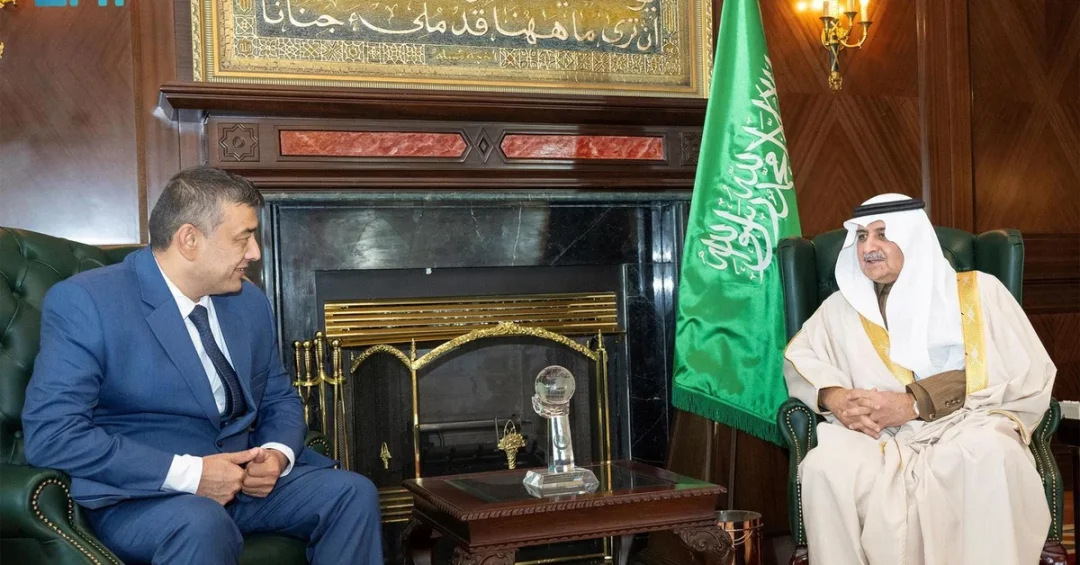
Governor of Tabuk Region Prince Fahd bin Sultan bin Abdulaziz received the Ambassador of Uzbekistan to the Kingdom, Nodirjon Turgunov, and his accompanying delegation at his office in Tabuk on November 20, 2024, where the two sides exchanged friendly talks and discussed topics of mutual interest, according to the Saudi Press Agency (SPA). The meeting, held in the administrative heart of northwestern Saudi Arabia, underscores the Kingdom’s continuing openness to diplomatic engagement and its commitment to strengthening bilateral ties with partners across Central Asia. The ambassador’s visit to Tabuk, rather than being confined to the capital Riyadh, signals the depth of Saudi-Uzbek relations and the growing international interest in the Kingdom’s regional development story.
During the encounter, Ambassador Turgunov praised the progress of Tabuk’s development across various sectors, a recognition that reflects the tangible results of Saudi Arabia’s nationwide modernization drive under Vision 2030. He presented Prince Fahd with a commemorative gift at the end of the meeting, a gesture that carries symbolic weight in the protocol-rich diplomatic culture of the region. The exchange was described by official sources as warm and constructive, reinforcing the longstanding friendship between the Kingdom of Saudi Arabia and the Republic of Uzbekistan. For international observers, the meeting offers a window into how Saudi Arabia conducts diplomacy at both national and regional levels, weaving local leadership into a broader global outreach strategy.
Context and Background
Why does a meeting between a regional governor and a foreign ambassador matter on the international stage? In Saudi Arabia’s governance model, regional governors serve as key conduits between the central government and local communities, and their engagement with foreign diplomats often reflects the Kingdom’s decentralized approach to international cooperation. Prince Fahd bin Sultan bin Abdulaziz, a senior member of the Saudi royal family, has served as Governor of Tabuk since 1987, overseeing a region that shares borders with Jordan and is strategically positioned near Egypt across the Gulf of Aqaba. His decades of experience make him a pivotal figure in Saudi Arabia’s northwestern development and its outreach to neighboring countries and beyond.
Uzbekistan, meanwhile, has emerged as an increasingly important partner for Saudi Arabia in Central Asia. The two countries have deepened their ties in recent years through high-level visits, investment agreements, and cultural exchanges. In August 2022, Saudi Arabia’s Crown Prince and Prime Minister Mohammed bin Salman received Uzbek President Shavkat Mirziyoyev in Jeddah, where they discussed expanding cooperation in trade, energy, and technology. That meeting built on a 2021 visit by the Saudi Crown Prince to Tashkent, which produced a raft of agreements worth billions of dollars. Ambassador Nodirjon Turgunov’s presence in Tabuk is therefore part of a broader diplomatic rhythm that has been steadily gaining momentum.
The timing of this meeting is also notable. As Saudi Arabia positions itself as a global hub for trade, tourism, and investment, its regions are becoming more active in international engagement. Tabuk, in particular, is undergoing a transformation tied to projects such as NEOM, the Red Sea coast developments, and the planned logistics corridor linking the Kingdom to Egypt via the King Salman Bridge. Diplomats like Turgunov are paying attention to these developments, recognizing that regional capitals like Tabuk are no longer peripheral to the Kingdom’s international relations but central to them.
Key Details
What exactly was discussed behind the closed doors of the governor’s office? While the official readout from the Saudi Press Agency did not disclose a detailed agenda, the phrase “topics of mutual interest” in Saudi diplomatic parlance typically encompasses economic cooperation, cultural exchange, and regional stability. Given Uzbekistan’s growing role as a trade hub between Central Asia and the Middle East, discussions likely touched on opportunities for Uzbek businesses in Tabuk’s expanding industrial and logistics zones. The ambassador’s commendation of Tabuk’s development across various sectors suggests he was briefed on or had observed firsthand the region’s infrastructure, tourism, and agricultural advancements.
Ambassador Turgunov, a career diplomat who has represented Uzbekistan in Saudi Arabia since 2022, has been active in promoting bilateral ties beyond Riyadh. His visit to Tabuk aligns with Uzbekistan’s strategy of engaging with Saudi Arabia’s regional economies, not just its central government. The presentation of a commemorative gift is a customary diplomatic courtesy, often symbolizing respect and the hope for continued friendship. In Uzbek culture, gifts are imbued with meaning, and such gestures are taken seriously as tokens of goodwill. The meeting concluded on a positive note, with both sides expressing satisfaction with the state of relations.
The encounter also highlights the role of Saudi regional governors as facilitators of international partnerships. Prince Fahd bin Sultan bin Abdulaziz has long been a champion of Tabuk’s development, overseeing projects ranging from the Prince Sultan bin Abdulaziz Airport expansion to the establishment of economic cities and tourism resorts. His meeting with the Uzbek ambassador is consistent with his broader efforts to attract foreign investment and cultural exchange to the region. For Uzbekistan, engaging with Tabuk offers a gateway to Saudi Arabia’s northwestern markets and potentially to the broader Gulf Cooperation Council (GCC) region.
International and Regional Impact
How does a single diplomatic meeting in Tabuk ripple across the wider region? Saudi-Uzbek relations are part of a larger geopolitical realignment in which Central Asian states are diversifying their partnerships beyond traditional powers. Uzbekistan, under President Mirziyoyev, has pursued an open and pragmatic foreign policy, seeking investment and technology from the Gulf. Saudi Arabia, for its part, views Central Asia as a vital component of its Look East strategy, which aims to deepen ties with Asian economies as part of Vision 2030. The meeting in Tabuk thus represents a microcosm of this macro-level trend.
Regionally, the encounter reinforces Saudi Arabia’s image as a stable and welcoming partner for diplomacy. In a Middle East often characterized by turbulence, the Kingdom’s ability to host foreign ambassadors in its regional cities sends a message of normalcy and openness. It also complements Saudi Arabia’s broader diplomatic efforts, including its role in mediating regional conflicts and its hosting of major international events. For Uzbekistan, the meeting signals its commitment to maintaining robust relations with Riyadh, which is a key investor in Uzbek energy and infrastructure projects. The two countries share an interest in stability in Afghanistan and in expanding trade routes that bypass traditional chokepoints.
Economic and Strategic Significance
What economic opportunities could flow from this diplomatic engagement? Tabuk is emerging as a strategic economic zone in Saudi Arabia, with its proximity to NEOM, the Red Sea, and the Jordanian border making it a natural hub for trade and logistics. Uzbek companies in textiles, agriculture, and mining could find partners in Tabuk, while Saudi investors might explore opportunities in Uzbekistan’s rapidly reforming economy. The meeting between Prince Fahd and Ambassador Turgunov could pave the way for future business delegations and joint ventures, though no specific agreements were announced.
Strategically, the meeting underscores the importance of people-to-people ties. Cultural and educational exchanges between Saudi Arabia and Uzbekistan have been growing, with Uzbek students studying in Saudi universities and Saudi tourists exploring Uzbekistan’s historic Silk Road cities. By receiving the ambassador in Tabuk, Prince Fahd is helping to localize these exchanges, potentially leading to sister-city arrangements or regional cultural festivals. Such initiatives align with Vision 2030’s goal of promoting cultural diplomacy and enhancing Saudi Arabia’s global soft power. The commemorative gift exchange, while symbolic, is part of this broader tapestry of relationship-building.
Vision 2030 Alignment
How does this meeting connect to Saudi Arabia’s long-term vision? Vision 2030, launched in 2016 by Crown Prince Mohammed bin Salman, seeks to diversify the Kingdom’s economy, open it to the world, and strengthen its international partnerships. The meeting between the Governor of Tabuk and the Uzbek Ambassador exemplifies these objectives at the regional level. By engaging with foreign diplomats, Saudi regions can attract investment, share best practices, and build networks that support economic diversification. Tabuk’s role in Vision 2030 is particularly significant, given its inclusion in the NEOM project area and its potential as a tourism and logistics gateway.
Looking ahead, the Kingdom’s leadership remains committed to deepening ties with Uzbekistan and other Central Asian nations. The exchange of friendly talks and the ambassador’s praise for Tabuk’s development are small but meaningful steps in a long journey toward greater cooperation. As Saudi Arabia continues to implement Vision 2030, such diplomatic encounters will become more frequent, showcasing the Kingdom’s progress and its willingness to engage with the world. The meeting concluded with optimism and a shared commitment to mutual respect and future collaboration, reflecting the enduring friendship between Saudi Arabia and Uzbekistan.
20 Questions
Q1. Who received the Uzbek Ambassador in Tabuk?
A1. Governor of Tabuk Region Prince Fahd bin Sultan bin Abdulaziz received Ambassador Nodirjon Turgunov and his delegation at his office in Tabuk on November 20, 2024, according to the Saudi Press Agency.
Q2. What was the main purpose of the meeting?
A2. The meeting was held to exchange friendly talks and discuss topics of mutual interest between Saudi Arabia and Uzbekistan, strengthening bilateral relations at the regional level.
Q3. What did the Uzbek Ambassador praise during the meeting?
A3. Ambassador Turgunov praised the progress of Tabuk’s development across various sectors, recognizing the region’s advancements under Saudi Arabia’s Vision 2030 modernization drive.
Q4. What gesture concluded the meeting?
A4. The ambassador presented Prince Fahd with a commemorative gift at the end of the meeting, a customary diplomatic courtesy symbolizing respect and goodwill between the two nations.
Q5. Who is Prince Fahd bin Sultan bin Abdulaziz?
A5. Prince Fahd bin Sultan bin Abdulaziz is a senior Saudi royal and the Governor of Tabuk Region, a position he has held since 1987, overseeing development in northwestern Saudi Arabia.
Q6. Who is Nodirjon Turgunov?
A6. Nodirjon Turgunov is the Ambassador of Uzbekistan to the Kingdom of Saudi Arabia, a career diplomat who has represented his country in Riyadh since 2022.
Q7. Why is Tabuk region important to Saudi Arabia?
A7. Tabuk is strategically located near NEOM, the Red Sea, and the Jordanian border, making it a key hub for trade, logistics, and tourism under Vision 2030.
Q8. How does this meeting fit into Saudi-Uzbek relations?
A8. It is part of growing bilateral ties, following high-level visits and agreements, including the 2022 meeting between Crown Prince Mohammed bin Salman and President Shavkat Mirziyoyev.
Q9. What does “topics of mutual interest” typically include?
A9. In Saudi diplomatic contexts, it usually refers to economic cooperation, cultural exchange, regional stability, and opportunities for investment and trade between the two countries.
Q10. Did the meeting produce any agreements?
A10. No specific agreements were announced; the meeting focused on friendly talks and exchanging views on matters of shared interest, as reported by the Saudi Press Agency.
Q11. How does this meeting reflect Vision 2030?
A11. It shows Vision 2030’s goal of international engagement at the regional level, attracting foreign partnerships and showcasing Saudi Arabia’s development to global diplomats.
Q12. What sectors in Tabuk are developing rapidly?
A12. Tabuk is seeing growth in infrastructure, tourism, logistics, and agriculture, with projects like the Prince Sultan bin Abdulaziz Airport expansion and economic cities.
Q13. What is Uzbekistan’s interest in Saudi Arabia?
A13. Uzbekistan seeks investment, technology, and trade partnerships from the Gulf, and views Saudi Arabia as a key partner in its economic reform and diversification efforts.
Q14. How does this meeting impact regional diplomacy?
A14. It reinforces Saudi Arabia’s image as a stable, open partner and strengthens ties with Central Asia, contributing to regional stability and economic integration.
Q15. What is the significance of the commemorative gift?
A15. The gift is a diplomatic gesture of respect and friendship, common in international protocol, symbolizing the positive relationship between Saudi Arabia and Uzbekistan.
Q16. Will there be follow-up visits or delegations?
A16. While not announced, such meetings often pave the way for future business delegations, cultural exchanges, and joint initiatives between the two countries.
Q17. How does Tabuk benefit from international engagement?
A17. International engagement can attract investment, promote tourism, and create opportunities for local businesses to partner with foreign companies, boosting the regional economy.
Q18. What is the history of Saudi-Uzbek relations?
A18. Saudi Arabia and Uzbekistan have maintained diplomatic relations since 1992, with ties deepening in recent years through high-level visits and agreements in energy, trade, and culture.
Q19. What role do Saudi regional governors play in foreign relations?
A19. Governors act as local representatives who engage with foreign diplomats, facilitating regional cooperation, investment, and cultural exchange beyond the capital.
Q20. What does this meeting say about Saudi Arabia’s global role?
A20. It demonstrates Saudi Arabia’s active diplomacy and openness to international partnerships, aligning with Vision 2030’s aim to position the Kingdom as a global leader.
Reader Feedback
We value your thoughts. Please share your feedback on this article.
Your feedback helps us improve our coverage.
Related articles
 IsDB Champions Sustainable Livestock at COP29
 KSrelief Completes Water Project in Yemen’s Taiz
 KSrelief Distributes 400 Shelter Aid Items in Afghanistan
 Saudi Delegation Leads at IMO Council Session in London
 Saudi Arabia to Expand Rail Network to Over 8,000 km
 KSrelief Concludes Heart Surgery Project in Kyrgyzstan