


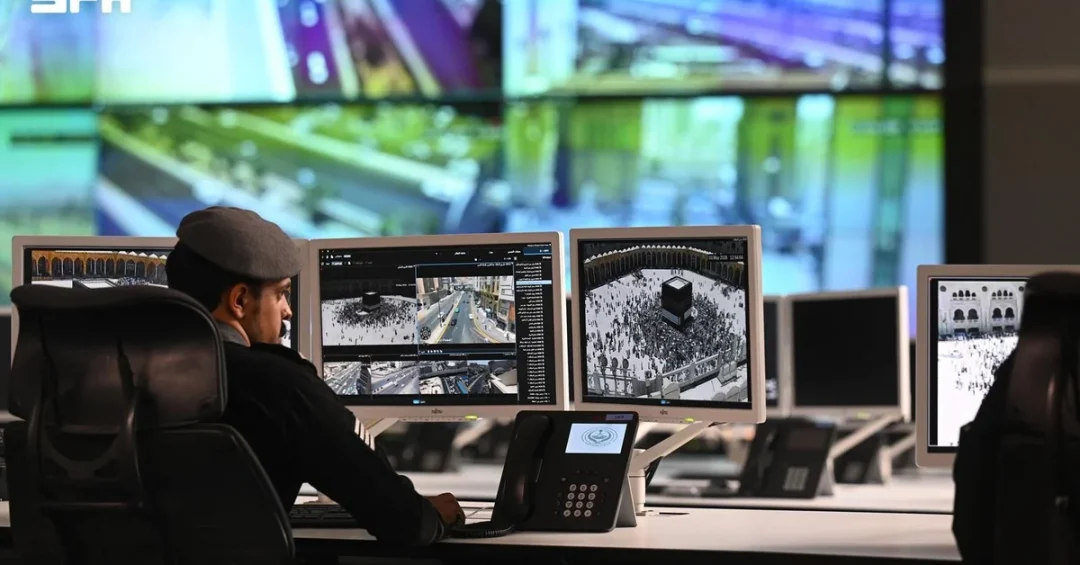
The Unified Security Operations Centers (911), affiliated with the National Center for Security Operations (NCSO) at the Ministry of Interior, have reinforced their pivotal role in providing assistance and support to everyone living in Saudi Arabia, contributing directly to the objectives of Saudi Vision 2030 under the Quality of Life Program. Operating through an integrated system that consolidates emergency services under a single number, the centers enable an immediate response to security, humanitarian, and service-related calls from people of all nationalities.
Have you ever considered how a single phone number can transform an entire nation’s approach to safety and well-being? The 911 system, which operates across the Makkah, Madinah, Riyadh, and Eastern regions, has consolidated 166 operations rooms into one location and extended its coverage to 59 governorates, in addition to the four major cities of Makkah, Madinah, Riyadh, and Dammam. This consolidation has improved service efficiency, strengthened public confidence, helped protect lives and property, saved time and effort, and ensured a swift response to incidents. The system stands as a testament to Saudi Arabia’s commitment to leveraging modern technology and national expertise to enhance the quality of life for all residents and visitors.
Context and Background
Why has Saudi Arabia invested so heavily in unifying its emergency response infrastructure? The answer lies in the Kingdom’s broader strategy to modernize public services and align them with international best practices. Before the introduction of the Unified Security Operations Centers (911), emergency calls were dispersed across numerous operations rooms, each with its own protocols and limitations. This fragmentation often led to delays and inefficiencies. The Ministry of Interior, through the National Center for Security Operations (NCSO), embarked on an ambitious project to consolidate these services under a single, easily memorable number: 911. This initiative is part of the Quality of Life Program, one of the key execution programs of Saudi Vision 2030, which aims to make the Kingdom a more attractive place to live, work, and visit.
The consolidation of 166 operations rooms into one centralized location represents a monumental leap forward. It has allowed for standardized training, streamlined communication, and the integration of advanced technologies such as high-resolution camera surveillance and real-time data analytics. The extension of coverage to 59 governorates and the four major cities ensures that even those in less densely populated areas can benefit from rapid emergency response. This inclusive approach underscores the Kingdom’s dedication to leaving no region behind in its pursuit of safety and security for all.
The centers are staffed by qualified Saudi personnel who speak several international languages, reflecting the multicultural fabric of the Kingdom. Their ability to handle incoming reports within a response time of no more than two seconds and forward them to the relevant authorities within 45 seconds is a remarkable achievement. All calls and reports are handled with complete confidentiality, without placing any liability on the reporting party. This level of efficiency and discretion has not only saved lives but also built a deep sense of trust between the public and the security apparatus.
Key Details
What exactly makes the 911 system so effective? At its core is an integrated system that consolidates emergency services under a single number, enabling immediate response to security, humanitarian, and service-related calls. The centers operate across Makkah, Madinah, Riyadh, and the Eastern regions, with plans to expand to the remaining regions of the Kingdom. The consolidation of 166 operations rooms into one location has significantly improved service efficiency. This has strengthened public confidence, as residents know that help is just a phone call away. The system has also helped protect lives and property by ensuring that incidents are addressed swiftly and appropriately.
The proactive approach to security is another key feature. The centers use modern technological systems and television surveillance rooms equipped with high-resolution cameras to identify warning signs before incidents occur. This shift from reactive to proactive security is a hallmark of the Kingdom’s forward-thinking strategy. It supports efforts to strengthen sustainable security and safety, drawing on national expertise and supporting long-term sustainability.
Moreover, the centers handle all calls and reports with complete confidentiality, without placing any liability on the reporting party. This encourages individuals to report suspicious activities or emergencies without fear of repercussions. The multilingual capabilities of the staff ensure that non-Arabic speakers can also access help easily, making the service truly inclusive. The response time of no more than two seconds for handling incoming reports and 45 seconds for forwarding them to the relevant authorities sets a high standard for emergency services globally.
International and Regional Impact
How does Saudi Arabia’s 911 system compare to similar services around the world? The Unified Security Operations Centers (911) meet international standards, drawing on national expertise and supporting long-term sustainability. The Kingdom’s ability to consolidate 166 operations rooms into one and extend coverage to 59 governorates and four major cities demonstrates a level of coordination and technological integration that is commendable. This system serves as a model for other countries in the region and beyond, showcasing how a unified emergency response can enhance public safety and quality of life.
Regionally, the 911 system contributes to the stability and security of the Gulf region. By ensuring rapid response to incidents, it helps prevent the escalation of emergencies that could have cross-border implications. The system also supports the influx of millions of pilgrims who visit Makkah and Madinah annually. During Hajj and Umrah seasons, the centers handle a surge in calls, providing critical assistance to pilgrims from around the world. This not only enhances the pilgrimage experience but also bolsters Saudi Arabia’s reputation as a responsible and capable steward of the Two Holy Mosques.
Internationally, the 911 system aligns with the United Nations’ Sustainable Development Goals, particularly Goal 11 (Sustainable Cities and Communities) and Goal 16 (Peace, Justice, and Strong Institutions). By investing in such infrastructure, Saudi Arabia is demonstrating its commitment to global norms and its willingness to share best practices. The multilingual capabilities of the staff also facilitate international cooperation, as foreign nationals can report incidents in their own languages, ensuring that no one is left without assistance.
Economic and Strategic Significance
What economic benefits does the 911 system bring to Saudi Arabia? The efficiency gains from consolidating operations rooms translate into cost savings for the government. By centralizing resources, the Ministry of Interior can allocate budgets more effectively, investing in advanced technologies and training rather than duplicating infrastructure. The system also reduces the economic impact of emergencies by ensuring faster response times, which can minimize property damage and loss of life. This contributes to a more stable business environment, attracting foreign investment and supporting the growth of key sectors such as tourism and entertainment.
Strategically, the 911 system is a cornerstone of Saudi Arabia’s national security architecture. It provides a real-time picture of incidents across the Kingdom, enabling authorities to allocate resources dynamically and respond to emerging threats. The proactive approach, using surveillance and data analytics, helps prevent incidents before they occur, thereby reducing the overall burden on security forces. This is particularly important as the Kingdom hosts major international events, such as Expo 2030 in Riyadh and the 2034 FIFA World Cup. A robust emergency response system is essential for ensuring the safety of attendees and showcasing Saudi Arabia’s capabilities on the world stage.
Furthermore, the system supports the goals of the Quality of Life Program by making cities safer and more livable. When residents feel secure, they are more likely to participate in social and economic activities, contributing to the vibrancy of communities. This, in turn, supports the Kingdom’s efforts to diversify its economy away from oil and towards knowledge-based industries. The 911 system is thus not just a public safety tool but an enabler of broader economic transformation.
Vision 2030 Alignment
How does the 911 system embody the spirit of Saudi Vision 2030? The Quality of Life Program is one of the Vision’s key execution programs, aiming to enhance the lives of citizens and residents by creating a more attractive and safe environment. The Unified Security Operations Centers (911) directly contribute to this objective by providing world-class emergency services. The system’s reliance on modern technology and national expertise reflects the Vision’s emphasis on innovation and human capital development. By training Saudi personnel to handle calls in multiple languages and operate advanced surveillance systems, the Kingdom is investing in its youth and preparing them for the jobs of the future.
The expansion of the 911 network to the remaining regions of the Kingdom is a clear indication of the leadership’s commitment to equitable development. It ensures that all regions, not just the major cities, benefit from the same high standards of safety and security. This aligns with the Vision’s goal of achieving balanced regional development and improving the quality of life for all citizens. As the Kingdom continues to grow and attract global events, the 911 system will remain a vital pillar of its security and prosperity, showcasing Saudi Arabia’s ability to harness technology for the public good and setting a benchmark for the region and the world.
20 Questions
Q1. What are the Unified Security Operations Centers (911)?
A1. The Unified Security Operations Centers (911) are a centralized emergency response system operated by the National Center for Security Operations (NCSO) at the Ministry of Interior, consolidating security, humanitarian, and service-related calls under a single number across Saudi Arabia.
Q2. Which regions in Saudi Arabia currently benefit from the 911 system?
A2. The 911 system operates across the Makkah, Madinah, Riyadh, and Eastern regions, covering 59 governorates and the major cities of Makkah, Madinah, Riyadh, and Dammam.
Q3. How many operations rooms were consolidated into the 911 system?
A3. The system consolidated 166 separate operations rooms into one centralized location, significantly improving efficiency and response coordination.
Q4. What is the response time for handling incoming reports?
A4. The centers handle incoming reports within a response time of no more than two seconds and forward them to the relevant authorities within 45 seconds.
Q5. Who operates the Unified Security Operations Centers?
A5. The centers are operated by qualified Saudi personnel who speak several international languages, ensuring effective communication with people of all nationalities.
Q6. How does the 911 system contribute to Saudi Vision 2030?
A6. It supports the Quality of Life Program by enhancing safety and security, which are essential for making Saudi Arabia a more attractive place to live, work, and visit, in line with Vision 2030 goals.
Q7. What is the proactive approach to security mentioned in the article?
A7. The proactive approach involves using modern technological systems and high-resolution camera surveillance to identify warning signs before incidents occur, thereby preventing emergencies and strengthening sustainable security.
Q8. Are calls to 911 confidential?
A8. Yes, all calls and reports are handled with complete confidentiality, without placing any liability on the reporting party, encouraging the public to report incidents without fear.
Q9. What are the plans for expanding the 911 system?
A9. The Ministry of Interior continues to expand the network of Unified Security Operations Centers across the Kingdom’s remaining regions, aiming to provide security and humanitarian services that meet international standards.
Q10. How does the 911 system benefit pilgrims during Hajj and Umrah?
A10. The system handles a surge in calls during pilgrimage seasons, providing critical assistance to millions of pilgrims from around the world in multiple languages, enhancing their safety and experience.
Q11. What technological systems are used in the 911 centers?
A11. The centers use integrated systems, television surveillance rooms equipped with high-resolution cameras, and real-time data analytics to monitor and respond to incidents efficiently.
Q12. How does the 911 system strengthen public confidence?
A12. By ensuring rapid response times, protecting lives and property, and handling calls confidentially, the system builds trust between the public and security authorities, making residents feel safer.
Q13. Does the 911 system serve non-Arabic speakers?
A13. Yes, the centers are staffed by Saudi personnel who speak several international languages, ensuring that non-Arabic speakers can access emergency services easily and effectively.
Q14. What economic benefits does the 911 system provide?
A14. It reduces costs through centralized resources, minimizes economic losses from emergencies by enabling faster response, and supports a stable business environment that attracts investment and boosts sectors like tourism.
Q15. How does the 911 system support major international events in Saudi Arabia?
A15. The system ensures the safety of attendees at events like Expo 2030 and the 2034 FIFA World Cup by providing rapid, coordinated emergency response, showcasing the Kingdom’s capability to host global gatherings.
Q16. What is the role of the National Center for Security Operations (NCSO)?
A16. The NCSO, affiliated with the Ministry of Interior, oversees the Unified Security Operations Centers (911), ensuring they operate efficiently and continue to expand to serve all regions of the Kingdom.
Q17. How does the 911 system align with international standards?
A17. The system meets international standards by drawing on national expertise, using advanced technology, and achieving rapid response times, serving as a model for other countries in the region and beyond.
Q18. What is the significance of consolidating 166 operations rooms?
A18. Consolidation eliminates fragmentation, standardizes training and protocols, and enables the integration of advanced technologies, leading to improved service efficiency and faster incident response.
Q19. How does the 911 system contribute to sustainable security?
A19. By identifying warning signs before incidents occur and using modern surveillance, the system prevents emergencies, reduces the burden on security forces, and supports long-term safety and stability.
Q20. What is the ultimate goal of the 911 system?
A20. The ultimate goal is to provide security and humanitarian services that meet international standards, enhance the quality of life for all residents and visitors, and support Saudi Vision 2030’s objectives for a safe and prosperous Kingdom.
Reader Feedback
We value your thoughts. Please share your feedback on this article.
Your feedback helps us improve our coverage.
Related articles
 KSrelief Concludes Volunteer Urology Surgery, Crisis and Disaster Management Projects in Port Sudan
 KSrelief Delivers Aid to Quake-Hit Families in Indonesia
 KSrelief’s Masam Project Clears 1,269 Landmines in Yemen
 Saudi Vice Foreign Minister Receives Egyptian Ambassador
 Bulgarian PM Departs Riyadh After Strengthening Ties
 Saudi Vice Minister Meets Liberian Ambassador