


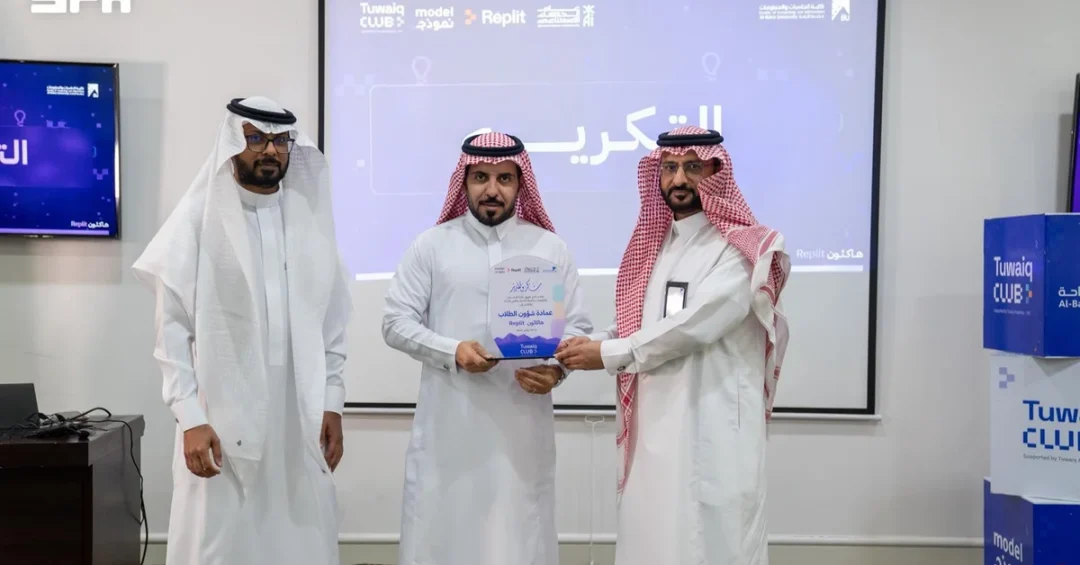
Al-Baha University, in partnership with Tuwaiq Academy and the Model Association (Namoothaj), successfully concluded the three-day Replit Artificial Intelligence Hackathon, an event that drew 140 technical projects and ideas from student innovators across the Kingdom. The closing ceremony, held in Al-Baha, was attended by Vice President of Al-Baha University for Academic Affairs Dr. Fahd Al-Ghamdi, who honored the winning teams, judging panel members, and organizing committee for their contributions to the hackathon’s success. The initiative aimed to identify promising talent, develop university students’ technical skills, and empower them to use artificial intelligence technologies to create innovative solutions that support Saudi Arabia’s digital transformation.
How does a three-day hackathon in the scenic highlands of Al-Baha signal the Kingdom’s broader ambitions in artificial intelligence and human capital development? The event, announced by the Saudi Press Agency (SPA), underscores the nation’s commitment to nurturing a new generation of tech leaders as part of Vision 2030. With 140 initial submissions, 40 advanced projects, and 17 finalists, the competition showcased the depth of technical creativity among Saudi university students. The partnership with Tuwaiq Academy, a leading training institution, and Namoothaj, a model association focused on innovation, highlights the collaborative approach driving Saudi Arabia’s AI ecosystem forward.
Context and Background
What motivated Al-Baha University to host an AI hackathon in partnership with Tuwaiq Academy and Namoothaj? The event aligns with Saudi Arabia’s National Strategy for Data and AI, which aims to position the Kingdom as a global leader in emerging technologies by 2030. Tuwaiq Academy, known for its intensive bootcamps in programming and AI, provided technical mentorship, while Namoothaj contributed its expertise in fostering innovative thinking. Al-Baha University, located in the Kingdom’s southwestern region, has been expanding its STEM programs to meet rising demand for digital skills. The hackathon served as a practical extension of these efforts, offering students a platform to apply classroom knowledge to real-world challenges.
The three-day format allowed participants to move from ideation to prototype rapidly, mirroring the fast-paced nature of the tech industry. Initial screening reduced 140 submissions to 40, and after rigorous evaluation by a judging panel, 17 projects reached the final round. This multi-stage process ensured that only the most viable and innovative ideas advanced, reflecting the high level of competition. The event concluded with an awards ceremony that recognized not only the winners but also the judges and organizers, reinforcing a culture of appreciation for collective effort. Such initiatives are critical for building an innovation pipeline that feeds into Saudi Arabia’s growing tech sector.
Why is it significant that a regional university like Al-Baha is taking a leading role in AI education? It demonstrates the decentralization of technological opportunity across the Kingdom, ensuring that talent from all regions can contribute to national progress. The collaboration between academia, specialized training institutes, and associations also exemplifies the multi-stakeholder model that Vision 2030 promotes. By hosting this hackathon, Al-Baha University has positioned itself as a hub for digital innovation in the south, potentially attracting further investment and partnerships.
Key Details
What exactly happened during the three days of the Replit Artificial Intelligence Hackathon? According to the Saudi Press Agency, the event began with an initial screening phase where 140 technical projects and ideas were submitted. These submissions covered a range of AI applications, from machine learning models to natural language processing tools. Of these, 40 projects advanced to the next stage, where teams received mentorship and refined their prototypes. The final round saw 17 projects compete, evaluated by a panel of experts. The number of finalists reflected the level of competition and participants’ ability to develop innovative technical solutions using artificial intelligence applications.
The closing ceremony, attended by Dr. Fahd Al-Ghamdi, Vice President of Al-Baha University for Academic Affairs, honored the winning teams with awards. The judging panel members and organizing committee were also recognized for their contributions. This acknowledgment is part of a broader effort to encourage students to further develop their technical skills and projects. The event was not just a competition but a learning experience, with participants gaining hands-on experience in AI development, teamwork, and presentation skills. The partnership with Replit, a cloud-based coding platform, provided students with accessible tools to build and deploy their projects efficiently.
How did the organizers ensure a fair and rigorous evaluation process? The multi-stage format, with clear criteria and expert judges, ensured that projects were assessed on innovation, feasibility, and impact. The 17 finalists represented the best of the submissions, and their projects likely addressed areas such as healthcare, education, sustainability, and smart city solutions. The awards ceremony served as a motivational capstone, inspiring participants to continue their AI journeys. Such events are essential for identifying and nurturing talent that can drive Saudi Arabia’s digital economy.
International and Regional Impact
How does a university hackathon in Al-Baha resonate on the international stage? It signals Saudi Arabia’s growing capacity to produce homegrown AI talent, which is attractive to global tech companies seeking to invest in the region. The event also aligns with the Kingdom’s efforts to diversify its economy away from oil, as outlined in Vision 2030. By fostering AI skills, Saudi Arabia is positioning itself as a competitive player in the global digital economy. Regional neighbors are watching closely, as similar initiatives are being launched across the Gulf to build knowledge-based societies.
The partnership with Tuwaiq Academy and Namoothaj also highlights the role of specialized institutions in accelerating skill development. Tuwaiq Academy has been instrumental in training thousands of Saudis in advanced technologies, while Namoothaj fosters a culture of innovation through mentorship and networking. Together with Al-Baha University, they are creating an ecosystem where students can transition from learning to creating. This model could be replicated in other regions, further strengthening the Kingdom’s human capital. The international community has praised Saudi Arabia’s efforts to empower youth and women in tech, and events like this reinforce that reputation.
What does this mean for the broader Middle East? It shows that Saudi Arabia is not just a consumer of technology but a producer of talent and ideas. The hackathon’s focus on AI applications addresses regional challenges such as water scarcity, healthcare access, and urban planning. By encouraging students to develop solutions, the Kingdom is fostering a culture of problem-solving that can have spillover effects across the region. The event also strengthens Saudi Arabia’s soft power, as it showcases the country’s commitment to education and innovation.
Economic and Strategic Significance
Why is investing in AI education economically significant for Saudi Arabia? The global AI market is projected to reach trillions of dollars in the coming decade, and nations that cultivate skilled workforces will reap the benefits. By training students in AI, Saudi Arabia is building a pipeline of talent that can support its growing tech industry, attract foreign investment, and create high-value jobs. The hackathon’s focus on practical solutions ensures that participants are not just learning theory but applying it to real-world problems, which is exactly what employers need.
Strategically, the event supports the Kingdom’s goal of becoming a regional hub for technology and innovation. The National Strategy for Data and AI aims to train 20,000 AI specialists and create 40,000 jobs in the sector by 2030. Initiatives like the Replit AI Hackathon contribute directly to these targets by exposing students to cutting-edge tools and methodologies. Moreover, the involvement of Tuwaiq Academy ensures that training is aligned with industry standards, making graduates more employable. The economic diversification agenda depends on such grassroots efforts to build a knowledge economy.
How does this hackathon fit into Saudi Arabia’s broader economic transformation? It is one of many initiatives under Vision 2030 that focus on human capital development. The Kingdom has been investing heavily in education, with a focus on STEM fields, to prepare its youth for the jobs of the future. The event also promotes entrepreneurship, as winning projects could potentially be developed into startups. By providing a platform for innovation, Al-Baha University and its partners are nurturing the next generation of tech entrepreneurs who will drive economic growth.
Vision 2030 Alignment
How does the Replit Artificial Intelligence Hackathon embody the goals of Saudi Vision 2030? Vision 2030 seeks to diversify the economy, empower citizens, and create a vibrant society. This hackathon directly supports these objectives by equipping students with advanced technical skills, fostering innovation, and promoting a culture of excellence. The collaboration between academia, training institutes, and associations reflects the partnership model that Vision 2030 champions. By investing in AI education, Saudi Arabia is ensuring that its youth are prepared to compete in the global digital economy.
The event also aligns with the Human Capability Development Program, one of Vision 2030’s key initiatives, which aims to prepare Saudis for the future labor market. By focusing on AI, a field with immense growth potential, the hackathon helps build a workforce that can drive innovation across sectors. The recognition of winners, judges, and organizers reinforces the values of hard work and collaboration. As Saudi Arabia continues its journey toward a knowledge-based economy, initiatives like this will be crucial in unlocking the potential of its greatest resource: its people.
20 Questions
Q1. What was the Replit Artificial Intelligence Hackathon?
A1. The Replit Artificial Intelligence Hackathon was a three-day event hosted by Al-Baha University in partnership with Tuwaiq Academy and the Model Association (Namoothaj). It aimed to identify promising talent, develop university students’ technical skills, and empower them to use AI technologies to create innovative solutions.
Q2. When and where did the hackathon take place?
A2. The hackathon took place in Al-Baha, Saudi Arabia, and concluded on November 15, 2026, according to the Saudi Press Agency. The closing ceremony was held at Al-Baha University, with Vice President for Academic Affairs Dr. Fahd Al-Ghamdi in attendance.
Q3. Who attended the closing ceremony?
A3. The closing ceremony was attended by Dr. Fahd Al-Ghamdi, Vice President of Al-Baha University for Academic Affairs. He honored the winning teams, judging panel members, and organizing committee for their contributions to the hackathon’s success.
Q4. How many projects were submitted initially?
A4. A total of 140 technical projects and ideas were submitted during the initial screening phase. This high number reflects the strong interest and engagement of university students in artificial intelligence and innovative technology.
Q5. How many projects advanced to the next stage?
A5. Of the 140 initial submissions, 40 projects advanced to the next stage. These projects were selected based on their potential, creativity, and technical feasibility, and they received further mentorship and development support.
Q6. How many projects reached the final round?
A6. Seventeen projects reached the final round following evaluation by the judging panel. The number of finalists reflected the level of competition and participants’ ability to develop innovative technical solutions using artificial intelligence applications.
Q7. What was the purpose of the hackathon?
A7. The hackathon aimed to identify promising talent, develop university students’ technical skills, and empower them to use artificial intelligence technologies to create innovative solutions. It also sought to encourage students to further develop their technical skills and projects.
Q8. Who organized the hackathon?
A8. The hackathon was organized by Al-Baha University in partnership with Tuwaiq Academy and the Model Association (Namoothaj). Tuwaiq Academy provided technical mentorship, while Namoothaj contributed expertise in fostering innovative thinking.
Q9. What is Tuwaiq Academy?
A9. Tuwaiq Academy is a leading Saudi training institution that offers intensive bootcamps in programming, AI, and other advanced technologies. It partners with universities and companies to build a skilled workforce aligned with Saudi Vision 2030.
Q10. What is Namoothaj (Model Association)?
A10. Namoothaj, or the Model Association, is a Saudi organization focused on promoting innovation and entrepreneurship. It supports initiatives that empower youth to develop creative solutions and contributes to building a culture of excellence in the Kingdom.
Q11. What kind of projects were developed?
A11. The projects covered a range of AI applications, including machine learning models, natural language processing tools, and solutions for healthcare, education, sustainability, and smart cities. The focus was on using AI to address real-world challenges.
Q12. How were the winners selected?
A12. Winners were selected through a multi-stage evaluation process. A judging panel of experts assessed projects based on innovation, feasibility, and impact. The final 17 projects were chosen after rigorous review, ensuring high standards of competition.
Q13. What awards were given?
A13. The event concluded with an awards ceremony honoring the winning teams, judging panel members, and organizing committee. The awards recognized their contributions to the hackathon’s success and encouraged students to further develop their technical skills and projects.
Q14. How does this hackathon support Saudi Vision 2030?
A14. The hackathon supports Vision 2030 by developing human capital in AI, fostering innovation, and promoting a knowledge-based economy. It aligns with the National Strategy for Data and AI and the Human Capability Development Program, which aim to train thousands of specialists.
Q15. What is the significance of Al-Baha University hosting this event?
A15. It demonstrates the decentralization of technological opportunity across Saudi Arabia, ensuring that talent from all regions can contribute to national progress. It also positions Al-Baha University as a hub for digital innovation in the south.
Q16. How does this event impact the local community?
A16. The hackathon inspires local students to pursue careers in technology and entrepreneurship. It also encourages collaboration between academia and industry, potentially leading to new startups and job opportunities in the Al-Baha region.
Q17. What role does Replit play in the hackathon?
A17. Replit is a cloud-based coding platform that provides accessible tools for building and deploying software. Its involvement allowed students to collaborate and develop AI projects efficiently, gaining hands-on experience with industry-standard tools.
Q18. What are the next steps for the participants?
A18. Participants are encouraged to continue developing their projects, potentially turning them into viable products or startups. The recognition and mentorship received during the hackathon provide a foundation for further innovation and skill development.
Q19. How does this event contribute to Saudi Arabia’s AI ecosystem?
A19. By nurturing talent and promoting innovation, the hackathon strengthens the AI ecosystem. It creates a pipeline of skilled graduates who can support the Kingdom’s growing tech sector and attract investment, helping Saudi Arabia become a regional AI hub.
Q20. What message does this send to the international community?
A20. It signals that Saudi Arabia is committed to building a knowledge-based economy and empowering its youth. The event showcases the Kingdom’s progress in AI education and its potential to contribute to global technological advancements, reinforcing its role as a forward-looking nation.
Reader Feedback
We value your thoughts. Please share your feedback on this article.
Your feedback helps us improve our coverage.
Related articles
 Jupiter and Mars Conjunction Visible Before Dawn Monday
 Saudi Arabia Advances Space Sector Regulation and Global Governance
 Saudi Arabia Advances AI Readiness Ahead of AGI Era
 Saudi Women Lead Global AI Empowerment: Vision 2030 Milestone
 Estidamah Tests Agricultural Solutions in Four Regions
 Northern Taurids Meteor Shower Peaks Thursday Evening