


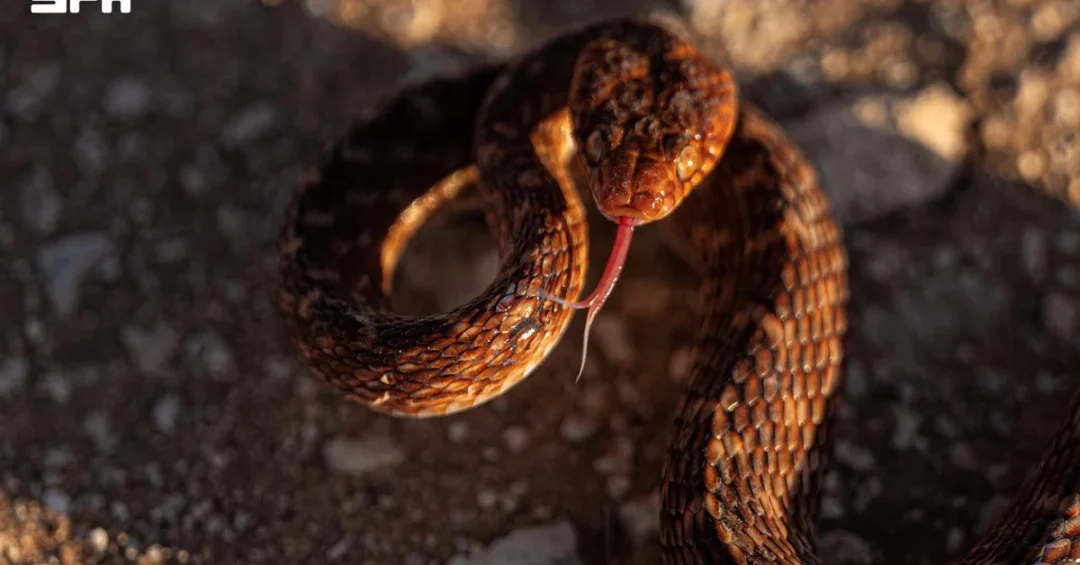
The Arabian cat snake (Telescopus dhara), a mildly venomous reptile of the Colubridae family, has been documented thriving in the arid and rocky environments of northern Saudi Arabia, according to a recent field report from the Saudi Press Agency (SPA). The species, known for its distinctive vertical pupils and slender build, exemplifies the rich biodiversity supported by the Kingdom’s desert ecosystems. Wildlife observer and member of the Aman Environmental Association, Adnan Khalifa, highlighted that monitoring and documenting such species is essential for understanding the components of biodiversity and the characteristics of wildlife habitats in the region.
Context and Background
The Arabian cat snake is native to the Arabian Peninsula, where it inhabits rocky deserts, scrublands, and mountainous terrain. Its ability to adapt to extreme temperatures and scarce water resources makes it a remarkable example of the resilience of Saudi Arabia’s fauna. The species belongs to the Colubridae family, which includes many non-venomous and mildly venomous snakes. While its venom is not considered dangerous to humans, it plays a crucial role in controlling populations of small rodents and lizards.
In recent years, Saudi Arabia has intensified efforts to document and protect its natural heritage as part of broader environmental initiatives tied to Vision 2030. The Kingdom’s diverse ecosystems, from the Red Sea coast to the northern deserts, host a wide array of species, many of which remain understudied. Field monitoring by organizations such as the Aman Environmental Association contributes valuable data to national conservation strategies.
Key Details
Adnan Khalifa, a wildlife observer and member of the Aman Environmental Association, provided detailed insights into the Arabian cat snake’s morphology and behavior. He noted that the snake has a slender body, a head relatively distinct from the neck, and prominent eyes with vertical pupils—features that inspired its common name, “cat snake.” Its colors and body patterns enable effective camouflage, allowing it to blend seamlessly with rocks and soil.
These adaptations are critical for survival in the harsh desert environment. The snake is primarily nocturnal, hunting for small prey under the cover of darkness. Its mild venom helps subdue prey but poses little threat to humans. Khalifa emphasized that documenting such species helps identify components of biodiversity and the characteristics of their natural habitats, which is vital for effective conservation planning.
Implications and Impact
The documentation of the Arabian cat snake underscores the importance of ongoing field research in Saudi Arabia’s remote regions. As the Kingdom expands its environmental monitoring programs, data on species distribution and habitat health will inform land-use planning and protected area management. This is particularly relevant as Saudi Arabia pursues ambitious projects under Vision 2030, which include the preservation of natural landscapes and the promotion of ecotourism.
Furthermore, the presence of such species in northern Saudi Arabia highlights the region’s ecological significance. The area’s rocky deserts and mountains serve as refuges for a variety of reptiles, mammals, and birds, many of which are endemic or regionally rare. By studying these species, scientists can better understand the impacts of climate change and human activity on desert ecosystems.
Vision 2030 Alignment
Saudi Arabia’s commitment to environmental sustainability is a cornerstone of Vision 2030, which seeks to diversify the economy and improve quality of life while safeguarding natural resources. Initiatives such as the Saudi Green Initiative and the National Environment Strategy aim to protect biodiversity, expand protected areas, and promote sustainable development. The documentation of the Arabian cat snake and other native species contributes directly to these goals by providing baseline data for conservation and raising public awareness about the Kingdom’s natural wealth.
As Saudi Arabia continues to balance economic growth with environmental stewardship, the study of its unique fauna serves as a reminder of the importance of preserving the delicate balance of desert ecosystems for future generations.
20 Questions
Q1. What is the scientific name of the Arabian cat snake?
A1. The scientific name of the Arabian cat snake is Telescopus dhara.
Q2. Which family does the Arabian cat snake belong to?
A2. It belongs to the Colubridae family, which includes many non-venomous and mildly venomous snake species.
Q3. Is the Arabian cat snake venomous?
A3. Yes, it is mildly venomous, but its venom is not considered dangerous to humans.
Q4. Where is the Arabian cat snake commonly found?
A4. It inhabits arid and rocky environments across the Arabian Peninsula, including northern Saudi Arabia.
Q5. What are the distinguishing features of the Arabian cat snake?
A5. It has a slender body, a head distinct from the neck, and prominent eyes with vertical pupils.
Q6. Why is it called the “cat snake”?
A6. Its prominent eyes with vertical pupils resemble those of a cat, hence the common name.
Q7. How does the snake camouflage itself?
A7. Its colors and body patterns help it blend with rocks and soil in its habitat.
Q8. Who provided insights about the Arabian cat snake?
A8. Adnan Khalifa, a wildlife observer and member of the Aman Environmental Association, shared his observations.
Q9. What is the Aman Environmental Association?
A9. It is a Saudi organization focused on environmental monitoring and conservation.
Q10. Why is monitoring reptile species important?
A10. It helps identify biodiversity components and habitat characteristics, supporting conservation efforts.
Q11. What type of environment does the Arabian cat snake prefer?
A11. It prefers rocky deserts and scrublands with arid conditions.
Q12. Is the Arabian cat snake nocturnal?
A12. Yes, it is primarily nocturnal, hunting for small prey at night.
Q13. What does the Arabian cat snake eat?
A13. It feeds on small rodents, lizards, and other small vertebrates.
Q14. How does the snake adapt to desert heat?
A14. It is nocturnal and seeks shelter during the hottest part of the day, reducing water loss.
Q15. Are there other reptile species in northern Saudi Arabia?
A15. Yes, the region hosts a variety of reptiles adapted to its climate and terrain.
Q16. How does the documentation of such species benefit Saudi Arabia?
A16. It informs conservation strategies, protected area management, and ecotourism initiatives.
Q17. What is Vision 2030’s role in environmental conservation?
A17. Vision 2030 includes goals for sustainability, biodiversity protection, and expansion of protected areas.
Q18. What is the Saudi Green Initiative?
A18. It is a national initiative to combat climate change, increase vegetation cover, and protect biodiversity.
Q19. Can the Arabian cat snake be found outside Saudi Arabia?
A19. Yes, it is found in other parts of the Arabian Peninsula, including Yemen and Oman.
Q20. How can the public contribute to reptile conservation?
A20. By respecting wildlife, reporting sightings to authorities, and supporting environmental organizations.
Reader Feedback
We value your thoughts. Please share your feedback on this article.
Your feedback helps us improve our coverage.