



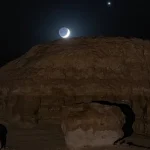
The skies over Saudi Arabia and much of the world will light up with the peak of the Perseid meteor shower from the night of Wednesday, August 12, until dawn on Thursday, August 13, 2026, in one of the most anticipated astronomical events of the year, according to the Jeddah Astronomy Society. The Saudi Press Agency reported that viewing conditions this year are expected to be ideal because the Moon will be nearly absent from the night sky, removing the glare that often hides fainter shooting stars. Observers across the Kingdom and in many countries around the world will therefore have a rare opportunity to watch one of nature’s most spectacular celestial displays with nothing more than the naked eye.
The announcement places Saudi Arabia at the center of a global astronomical moment, with the Jeddah Astronomy Society, a recognized Saudi scientific body, providing detailed guidance for the public. Head of the Society Majed Abu Zahra explained that the Perseids are active every year from July 17 to August 24 and that the shower will reach its maximum at dawn on August 13. Could there be a better way to appreciate the scale of the universe than by standing under a dark Saudi sky as ancient debris burns up overhead? Estimates indicate that the main peak will occur between 5 AM and 7 AM Makkah time, giving residents and visitors across the Kingdom a clearly defined window to plan their observations.
Context and Background
The Perseid meteor shower is one of the most prominent annual astronomical events and has been observed for centuries, taking its name from the constellation Perseus, the point in the sky from which the meteors appear to radiate. Each year, Earth passes through a stream of dust and debris left behind by the comet Swift-Tuttle, and the particles strike the upper atmosphere at high speed, producing the bright streaks commonly called shooting stars. Why do these small particles create such a memorable display? Because they enter the atmosphere at extraordinary velocity, heating the air around them and leaving luminous trails that can be visible across great distances.
The Jeddah Astronomy Society, based in Saudi Arabia’s second-largest city, has long played an educational role in the Kingdom, publishing astronomical guidance and encouraging public interest in the night sky. Its annual commentary on the Perseids has become a trusted reference for Saudi families, schools, and astronomy enthusiasts. The Society’s work aligns with a broader regional enthusiasm for science and observation, and its statements are regularly carried by the Saudi Press Agency, the Kingdom’s official news channel. For international readers, the Society’s guidance offers a clear, authoritative entry point into an event that is visible far beyond Saudi borders.
Timing is central to the experience. According to Abu Zahra, the Perseids will peak at dawn on August 13, with the main burst expected between 5 AM and 7 AM Makkah time. This means observers in the Kingdom should look to the northeastern sky in the hours before sunrise, when the radiant point rises higher and the rate of visible meteors increases. The absence of moonlight this year is a significant advantage, because even a modest crescent can wash out the fainter meteors that make the shower feel abundant. Isn’t it remarkable how a single missing light source can transform the quality of an entire night’s observation?
Key Details
Abu Zahra noted that the best time for viewing runs from after midnight until shortly before dawn, particularly from locations away from city lights. He added that viewing the Perseids does not require a telescope or binoculars, as the naked eye is best for observation. This point is important for newcomers: binoculars narrow the field of view, while the unaided eye can take in a wide expanse of sky and catch meteors appearing in many directions at once. The Society’s advice therefore lowers the barrier to entry, making the event accessible to anyone willing to step outside and wait.
The Society also stressed the importance of allowing the eyes about 20 to 30 minutes to adjust to the darkness and avoiding repeatedly looking at mobile phone screens. This guidance reflects a basic principle of human vision: the eye takes time to adapt to low-light conditions, and bright screens reset that adaptation. Observers who follow this advice will see far more meteors than those who check their phones between glances. For families, the wait can become part of the experience, a shared period of quiet attention under the stars.
Practical preparation matters as well. The Society’s recommendations imply that observers should choose open areas with minimal artificial light, dress for comfortable nighttime temperatures, and bring something to sit or lie on so they can look upward without strain. In Saudi Arabia, desert locations and rural areas far from urban glow offer especially favorable conditions, while city residents may still see the brightest meteors from parks, rooftops, or the outskirts of town. Does the prospect of a few hours under a dark sky sound like a worthwhile trade for a night of sleep? For many, the answer will be yes.
International and Regional Impact
The Perseids are visible from most countries around the world, and the 2026 peak will be shared across continents, creating a rare moment of simultaneous global attention. In the Middle East, the shower will be well placed for observers across the Gulf, the Levant, and North Africa, while in Europe and North America the radiant rises at different hours, producing distinct viewing windows. Astronomers and science communicators typically use such events to promote public engagement with space science, and the Jeddah Astronomy Society’s guidance contributes to that international conversation from a Saudi vantage point.
Within the Kingdom, the event supports a growing culture of astronomy and science outreach. Schools, universities, and amateur groups often organize overnight observation sessions, and the Society’s clear instructions help organizers plan safely and effectively. The fact that the peak falls on a Thursday dawn is also convenient for many residents, since the Saudi weekend begins on Friday, allowing families to stay up later without disrupting work or school schedules. Could this alignment of timing and tradition make the 2026 Perseids one of the most widely watched showers in recent Saudi memory?
Economic and Strategic Significance
While a meteor shower is not an economic event in the traditional sense, it carries real value for Saudi Arabia’s tourism, education, and science sectors. Dark-sky destinations, desert camps, and heritage sites increasingly attract visitors interested in nature and astronomy, and events like the Perseids provide a natural draw for domestic and international travelers. Tourism operators in areas such as AlUla, the Empty Quarter, and the Red Sea coast can highlight clear skies and low light pollution as part of their offering, supporting the Kingdom’s broader effort to diversify visitor experiences beyond traditional attractions.
Strategically, public engagement with science reinforces the knowledge economy that Saudi Arabia is building. Astronomy encourages curiosity, data literacy, and an appreciation for research, all of which complement national investments in technology, space, and innovation. The Jeddah Astronomy Society’s role in communicating the Perseids is a small but meaningful example of how scientific institutions contribute to public life. Isn’t it fitting that a nation investing in satellites and space research would also celebrate the simple act of looking up?
Vision 2030 Alignment
The Perseids peak reflects several threads of Saudi Vision 2030, the national transformation plan that seeks to diversify the economy, enrich quality of life, and position the Kingdom as a global hub for knowledge and tourism. By promoting astronomy education and encouraging families to explore the Kingdom’s natural landscapes, the event supports the vision’s emphasis on community well-being and cultural enrichment. It also aligns with efforts to develop tourism in regions with unique natural assets, from desert skies to coastal horizons.
As dawn breaks on Thursday, August 13, 2026, observers across Saudi Arabia and around the world will share a view that has inspired humanity for millennia. The Jeddah Astronomy Society’s guidance, carried by the Saudi Press Agency, ensures that this experience is accessible, safe, and scientifically grounded. In a Kingdom moving confidently toward its future, moments like the Perseid peak remind us that progress and wonder can travel together. Will you take a moment to look up and join the global audience for this year’s shower?
20 Questions
Q1. What is the Perseid meteor shower?
A1. The Perseids are an annual meteor shower caused by Earth passing through debris left by comet Swift-Tuttle. They are named after the constellation Perseus and are considered one of the most prominent astronomical events of the year.
Q2. When will the Perseids peak in 2026?
A2. According to the Jeddah Astronomy Society, the Perseids will peak at dawn on Thursday, August 13, 2026, with the main peak expected between 5 AM and 7 AM Makkah time.
Q3. Who announced the details of the 2026 Perseids peak?
A3. The Jeddah Astronomy Society announced the details, with Head of the Society Majed Abu Zahra providing guidance. The information was carried by the Saudi Press Agency, the Kingdom’s official news channel.
Q4. Why are viewing conditions ideal this year?
A4. Viewing conditions are ideal because the Moon will be nearly absent from the night sky during the peak, removing moonlight glare that can hide fainter meteors and allowing observers to see more shooting stars.
Q5. What is the best time to watch the Perseids?
A5. The best time is from after midnight until shortly before dawn, particularly from locations away from city lights. The main peak is expected between 5 AM and 7 AM Makkah time.
Q6. Do I need a telescope to see the Perseids?
A6. No, a telescope or binoculars are not required. The naked eye is best for observing the Perseids because it allows a wide field of view to catch meteors appearing in many directions.
Q7. How long should I let my eyes adjust to the darkness?
A7. The Jeddah Astronomy Society recommends allowing about 20 to 30 minutes for your eyes to adjust to the darkness. This helps you see fainter meteors and improves the overall experience.
Q8. Why should I avoid looking at my phone while observing?
A8. Bright screens reset the eye’s adaptation to darkness, reducing your ability to see faint meteors. Avoiding phone use helps preserve night vision and allows you to observe more of the shower.
Q9. Where is the best place to watch the Perseids in Saudi Arabia?
A9. Locations away from city lights are best, such as desert areas, rural regions, and dark-sky destinations. In cities, parks, rooftops, and the outskirts of town can still offer decent views of brighter meteors.
Q10. How long are the Perseids active each year?
A10. The Perseids are active annually from July 17 to August 24, according to the Jeddah Astronomy Society. The peak occurs in mid-August, with rates of visible meteors rising and falling around that date.
Q11. What causes the Perseid meteor shower?
A11. The shower is caused by Earth passing through a stream of dust and debris left behind by comet Swift-Tuttle. These particles strike the upper atmosphere at high speed and burn up, creating bright streaks of light.
Q12. Why are they called the Perseids?
A12. They are named after the constellation Perseus because the meteors appear to radiate from a point in that constellation. This radiant point rises in the northeastern sky during the peak hours.
Q13. Is the Perseid shower visible outside Saudi Arabia?
A13. Yes, the Perseids are visible from most countries around the world. The 2026 peak will be shared across continents, with different viewing windows depending on local time zones and the radiant’s position.
Q14. What role does the Jeddah Astronomy Society play?
A14. The Jeddah Astronomy Society is a recognized Saudi scientific body that provides astronomical guidance and promotes public interest in the night sky. Its annual commentary on the Perseids is a trusted reference for observers in the Kingdom.
Q15. How does the Perseids event support Saudi tourism?
A15. The event encourages visits to dark-sky destinations, desert camps, and heritage sites, supporting the Kingdom’s efforts to diversify tourism. Operators in areas such as AlUla and the Red Sea coast can highlight clear skies as part of their offerings.
Q16. Does the Perseids peak align with Saudi Vision 2030?
A16. Yes, it supports Vision 2030 by enriching quality of life, promoting science education, and encouraging tourism in regions with unique natural assets. It reflects the plan’s emphasis on community well-being and cultural enrichment.
Q17. What should families bring for a Perseids observation night?
A17. Families should bring comfortable seating or blankets, warm clothing for nighttime temperatures, and refreshments. Choosing an open area with minimal artificial light and allowing time for eye adjustment will improve the experience.
Q18. Is the Thursday timing convenient for observers in Saudi Arabia?
A18. Yes, the Thursday dawn peak is convenient because the Saudi weekend begins on Friday, allowing families to stay up later without disrupting work or school schedules. This makes the event more accessible for many residents.
Q19. How fast do Perseid meteors travel?
A19. Perseid meteors enter the atmosphere at high speed, producing bright and fast streaks of light. Their velocity is one reason the shower is considered among the most dynamic and visually striking annual astronomical events.
Q20. What is the main takeaway from the Jeddah Astronomy Society’s guidance?
A20. The main takeaway is that the 2026 Perseids offer ideal viewing conditions, require no special equipment, and are best seen after midnight from dark locations. Observers should allow their eyes to adjust and avoid bright screens.
Reader Feedback
We value your thoughts. Please share your feedback on this article.
Your feedback helps us improve our coverage.
Related articles
 Moroccan Newspapers Highlight Ceasefire Breaches and Climate Damage
 SpaceX Launches 29 Starlink Satellites, Expanding Global Web
 Magnitude 5.1 Earthquake Strikes Southern Hawaii
 Perseid Meteor Shower Peaks Over Saudi Arabia August 12-13
 Perseid Meteor Shower Peaks Over Saudi Skies Aug 12-13
 Australia Issues Report on AI Agent Risks and Controls