


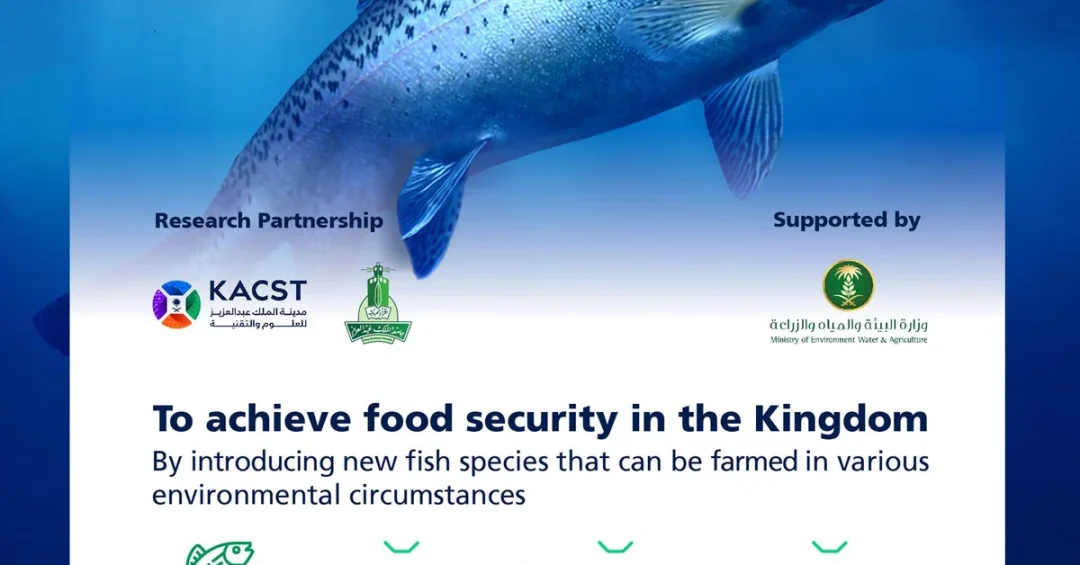
Saudi Arabia has achieved a landmark breakthrough in sustainable aquaculture, with King Abdulaziz City for Science and Technology (KACST) and King Abdulaziz University (KAU) successfully cultivating trout at KACST’s research station in Al-Muzahmiyya Governorate using a recirculating aquaculture system (RAS), according to an official press release from KACST. The project, supported by the Ministry of Environment, Water, and Agriculture’s national livestock and fisheries development program, marks a significant step toward diversifying the Kingdom’s food sources and reducing reliance on imports. Could this be the moment that redefines how the Kingdom approaches fish farming in arid environments?
The successful rearing of trout—a cold-water species traditionally associated with riverine habitats—from egg incubation to commercial size of more than 1,200 grams represents a technical and scientific milestone for Saudi Arabia’s research and development ecosystem. The collaboration between KACST and KAU, two of the Kingdom’s foremost scientific institutions, demonstrates how targeted investment in national laboratories and applied research can yield tangible economic and nutritional benefits. This development is not merely an academic exercise; it is a practical, scalable model that has already attracted private-sector interest across Riyadh, Makkah, Al-Baha, and the northern regions, signaling a new chapter in Saudi aquaculture.
Context and Background
Why does a desert nation with limited freshwater resources invest in cold-water fish farming? The answer lies in Saudi Arabia’s strategic vision for food security and economic diversification. For decades, the Kingdom has relied heavily on imported fish to meet domestic demand, exposing itself to global supply chain disruptions and price volatility. The National Livestock and Fisheries Development Program, operating under the Ministry of Environment, Water, and Agriculture, has been tasked with reversing this dependency by fostering local production through innovation. The KACST-KAU trout project is a direct outcome of this national priority, leveraging advanced research to overcome environmental constraints.
The recirculating aquaculture system (RAS) at the heart of this breakthrough is a closed-loop technology that recycles water continuously, using significantly less water than traditional pond or flow-through systems. According to the KACST press release, these systems also reduce the risk of parasite and viral infections, while allowing precise control over temperature, oxygen levels, and nutrition. This level of environmental control is critical for raising trout, which require consistently cold water—a challenging requirement in Saudi Arabia’s hot climate. The National Laboratory’s endeavor to localize RAS technology using fresh water has been instrumental in making this possible, turning an environmental obstacle into a solvable engineering challenge.
The project’s origins trace back to a broader national effort to localize advanced technologies and build domestic capacity in sectors identified as strategic under Vision 2030. By partnering with KAU, KACST has combined its research infrastructure with academic expertise, creating a pipeline from laboratory innovation to commercial application. This model of collaboration is precisely what the Kingdom’s research, development, and innovation (R&D&I) strategy seeks to promote, ensuring that scientific discoveries translate into economic value and improved quality of life for citizens and residents.
Key Details of the Trout Farming Breakthrough
The technical specifics of the achievement are as impressive as its strategic implications. Trout were farmed and raised starting from the egg incubation stage until they reached commercial size, exceeding 1,200 grams. This full-cycle production demonstrates that the RAS technology deployed at Al-Muzahmiyya is not only viable but also capable of delivering market-ready fish. The press release noted that trout were selected for local farming because they are rich in protein, omega-3 fatty acids, and vitamins—nutrients essential for human health and in high demand among Saudi consumers. By satisfying this demand locally, the project reduces the Kingdom’s reliance on imports and shortens the supply chain, making fresh, high-quality fish more accessible.
What makes this project particularly noteworthy is its emphasis on sustainability and biosecurity. The RAS system’s ability to control the farming environment minimizes the risk of disease outbreaks, which can devastate fish populations and lead to economic losses. Moreover, the system’s water efficiency aligns with Saudi Arabia’s broader water conservation goals, a critical priority given the Kingdom’s arid climate. The KACST press release highlighted that the project encourages the private sector to adopt this technology in various regions, including Riyadh, Makkah, Al-Baha, and the northern areas. This geographic spread suggests that the model can be adapted to different local conditions, further scaling up production.
The involvement of the Ministry of Environment, Water, and Agriculture’s national program underscores the government’s commitment to supporting aquaculture as a pillar of food security. The ministry has been actively promoting investment in fisheries and livestock, providing incentives and regulatory support to farmers and entrepreneurs. The KACST-KAU project serves as a proof of concept that can attract further private investment, creating jobs and stimulating economic activity in rural and semi-rural areas. By localizing RAS technology, the Kingdom also reduces its dependence on foreign equipment and expertise, building a self-reliant aquaculture sector.
International and Regional Impact
How does a Saudi trout farming breakthrough resonate beyond the Kingdom’s borders? For a region grappling with water scarcity and food import dependency, this project offers a replicable model. Gulf Cooperation Council (GCC) countries and other Middle Eastern nations face similar challenges in producing protein-rich foods locally. Saudi Arabia’s success with RAS-based trout farming could inspire similar initiatives across the region, positioning the Kingdom as a leader in sustainable aquaculture technology. The project also aligns with global trends toward controlled-environment agriculture, which is gaining traction as climate change and resource constraints pressure traditional farming methods.
On the international stage, the breakthrough enhances Saudi Arabia’s reputation as an innovation-driven economy. It demonstrates that the Kingdom is not only a major energy exporter but also a serious player in agricultural science and food technology. This diversification of its economic identity is central to Vision 2030, which aims to reduce oil dependence and foster knowledge-based industries. The KACST-KAU collaboration could attract international research partnerships and investment, as other countries seek to learn from Saudi Arabia’s experience in deploying RAS in challenging environments. Furthermore, the project contributes to global food security goals by showcasing how technology can overcome natural limitations.
Economic and Strategic Significance
What does this mean for Saudi Arabia’s economy and strategic autonomy? The aquaculture sector represents a growing market with significant potential for job creation and GDP contribution. By boosting local fish production, the Kingdom can reduce its import bill—which runs into hundreds of millions of dollars annually—and retain more capital within the domestic economy. The Vision 2030 objective of increasing local fish production to 600,000 tons annually is ambitious but achievable with continued innovation and investment. The trout project is a stepping stone toward that target, proving that high-value species can be farmed sustainably in the Kingdom.
Strategically, food security is a matter of national resilience. The COVID-19 pandemic and geopolitical tensions have exposed the vulnerabilities of global supply chains, making local production a priority for many nations. Saudi Arabia’s investment in aquaculture is a proactive measure to ensure that its population has reliable access to nutritious food, regardless of external shocks. The KACST-KAU project also supports the development of a skilled workforce in aquaculture, biotechnology, and environmental engineering—fields that are essential for the Kingdom’s knowledge economy. By localizing RAS systems, Saudi Arabia retains intellectual property and technical expertise, enhancing its competitive advantage.
Vision 2030 Alignment
How does the trout farming breakthrough fit into the grand tapestry of Vision 2030? It is a direct embodiment of the vision’s core themes: economic diversification, sustainability, and improved quality of life. The project advances the national goal of boosting local fish production to 600,000 tons annually, contributing to food security and reducing reliance on imports. It also aligns with the R&D&I strategy, which seeks to build a vibrant research ecosystem that drives innovation and economic growth. By collaborating with KAU, KACST is nurturing the next generation of Saudi scientists and engineers, ensuring that the Kingdom’s progress is sustained by homegrown talent.
Moreover, the project reflects the vision’s emphasis on environmental stewardship. The RAS technology’s water efficiency and biosecurity measures align with Saudi Arabia’s commitment to sustainable resource management, a key pillar of the Saudi Green Initiative. As the Kingdom continues to modernize and diversify, achievements like this demonstrate that Vision 2030 is not just a blueprint but a reality in motion. The trout farming breakthrough is a testament to what can be achieved when national institutions collaborate, innovate, and pursue excellence—values that will propel Saudi Arabia toward a prosperous and secure future.
20 Questions
Q1. What is the significance of the KACST-KAU trout farming breakthrough?
A1. It marks the first successful cultivation of trout in Saudi Arabia using recirculating aquaculture systems, advancing food security and reducing import reliance. This scientific achievement supports Vision 2030 goals by diversifying protein sources and promoting sustainable local production.
Q2. Which institutions collaborated on this project?
A2. King Abdulaziz City for Science and Technology (KACST) and King Abdulaziz University (KAU) led the research, with support from the Ministry of Environment, Water, and Agriculture’s national livestock and fisheries development program.
Q3. Where was the trout farming project conducted?
A3. The project took place at KACST’s research station in Al-Muzahmiyya Governorate, where the recirculating aquaculture system was deployed to raise trout from egg to commercial size.
Q4. What is a recirculating aquaculture system (RAS)?
A4. RAS is a closed-loop fish farming technology that recycles water continuously, using less water than traditional systems and allowing precise control over temperature, oxygen, and nutrition while reducing disease risks.
Q5. Why was trout selected for farming in Saudi Arabia?
A5. Trout are rich in protein, omega-3 fatty acids, and vitamins, meeting growing local demand for nutritious fish. Their high market value and nutritional profile make them ideal for sustainable local production.
Q6. How large did the trout grow in the project?
A6. The trout reached commercial size, exceeding 1,200 grams, demonstrating the viability of RAS technology for full-cycle production from egg incubation to market-ready fish.
Q7. What are the water usage benefits of RAS?
A7. RAS uses significantly less water than traditional fish farming methods, which is crucial for Saudi Arabia’s arid climate. This efficiency supports environmental sustainability and aligns with national water conservation goals.
Q8. How does this project support food security in Saudi Arabia?
A8. By enabling local production of high-value fish, the project reduces dependence on imports, shortens supply chains, and ensures a stable supply of nutritious food for the Kingdom’s growing population.
Q9. Which regions have shown interest in adopting this technology?
A9. The private sector has shown interest in Riyadh, Makkah, Al-Baha, and the northern regions, indicating the model’s adaptability to diverse environmental conditions across the Kingdom.
Q10. What role did the National Laboratory play?
A10. The National Laboratory localized RAS technology using fresh water, which was essential for adapting the system to Saudi conditions and ensuring successful trout cultivation from egg to commercial size.
Q11. How does this project align with Vision 2030?
A11. It directly supports Vision 2030’s goal of boosting local fish production to 600,000 tons annually, enhancing food security, and promoting research, development, and innovation in strategic sectors.
Q12. What are the health benefits of eating trout?
A12. Trout are high in protein, omega-3 fatty acids, and essential vitamins, which contribute to cardiovascular health, brain function, and overall well-being, making them a valuable addition to diets.
Q13. How does RAS reduce the risk of fish diseases?
A13. RAS controls the farming environment, including water quality and temperature, which minimizes the risk of parasite and viral infections that can harm fish populations in open systems.
Q14. What economic opportunities does this project create?
A14. It stimulates private-sector investment, creates jobs in aquaculture and technology, and reduces the import bill, contributing to economic diversification and local wealth creation.
Q15. Can this technology be used for other fish species?
A15. Yes, RAS is adaptable to various species, and the success with trout provides a template for farming other high-value fish, further expanding Saudi Arabia’s aquaculture sector.
Q16. What government support exists for aquaculture in Saudi Arabia?
A16. The Ministry of Environment, Water, and Agriculture provides regulatory support, incentives, and national programs to promote aquaculture as a pillar of food security and economic growth.
Q17. How does this project contribute to environmental sustainability?
A17. By using water-efficient RAS and reducing reliance on imports, the project lowers the carbon footprint of food production and aligns with the Saudi Green Initiative’s sustainability goals.
Q18. What is the expected impact on local fish markets?
A18. It will increase the supply of fresh, high-quality trout, potentially lowering prices and making nutritious fish more accessible to consumers while supporting local producers.
Q19. How does KACST-KAU collaboration model benefit Saudi research?
A19. It combines KACST’s research infrastructure with KAU’s academic expertise, fostering innovation, training scientists, and accelerating the transfer of technology from lab to market.
Q20. What are the next steps for this project?
A20. Expanding private-sector adoption across regions, scaling up production, and continuing research to optimize RAS for other species, all aimed at achieving the 600,000-ton fish production target under Vision 2030.
Reader Feedback
We value your thoughts. Please share your feedback on this article.
Your feedback helps us improve our coverage.
Related articles
 RDIA Launches Saudi Innovation Grants Program
 Tuwaiq Academy, Uptime Institute Launch Data Centre Boot Camps
 Cloud Computing Forum to Kick Off Tomorrow in Riyadh
 RDIA Launches 2025 Research Grants on RDI National Priorities
 DCO Launches Digital Economy Trends 2025 Report at IGF 2024
 stc Group Achieves 61% 5G Usage Rate at Riyadh Season