


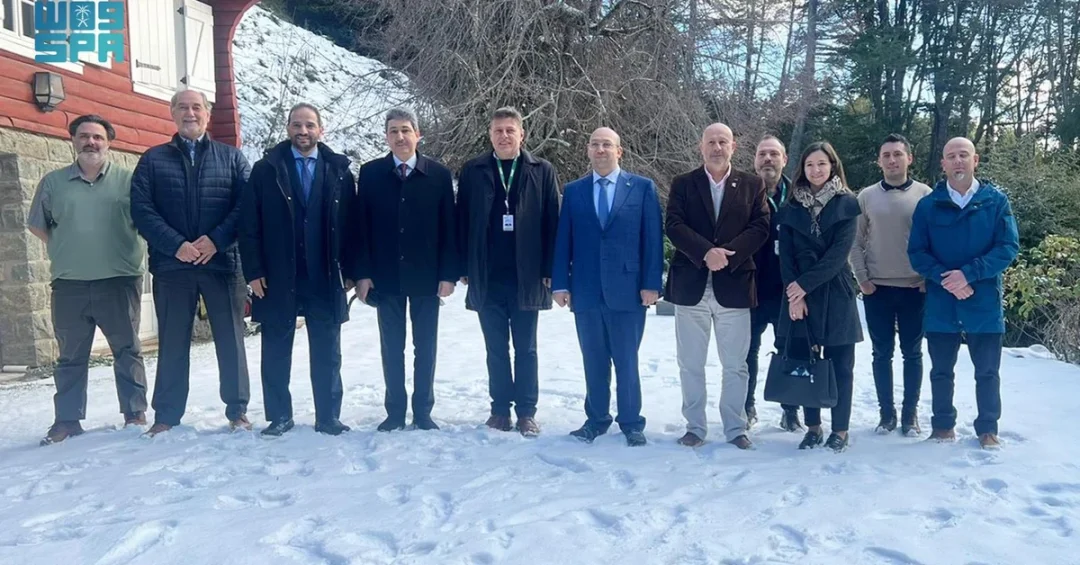
Dr. Munir Al-Desouki, President of King Abdulaziz City for Science and Technology (KACST), met with Argentinian officials in Buenos Aires on July 9, 2024, to discuss expanding strategic partnerships in deep technologies and empowering entrepreneurs and innovators. The meetings, reported by the Saudi Press Agency (SPA), included discussions with Argentinian Minister of Foreign Affairs and International Trade Diana Mondino, Secretary of Innovation, Science and Technology Dario Genua, and Deputy Minister of Health for Primary Health Care Gabriel Battistella. Saudi Ambassador to Argentina Hussein Al-Asiri also attended. The talks focused on enhancing cooperation in technology, innovation, and health, aligning with Saudi Arabia’s Vision 2030 goals to diversify the economy and promote global collaboration.
Context and Background
Saudi Arabia has been actively pursuing international partnerships to advance its technological capabilities and innovation ecosystem as part of Vision 2030. King Abdulaziz City for Science and Technology, a key government institution, plays a pivotal role in driving research and development, fostering entrepreneurship, and implementing advanced technologies. Argentina, with its growing tech sector and expertise in health innovation, presents a valuable partner for the Kingdom. This meeting builds on prior engagements between the two nations and underscores Saudi Arabia’s commitment to global cooperation in science and technology.
The discussions in Buenos Aires are part of a broader strategy to position Saudi Arabia as a leader in deep technologies, which include artificial intelligence, biotechnology, and advanced materials. By collaborating with international counterparts, KACST aims to accelerate innovation and create opportunities for Saudi entrepreneurs and innovators on a global scale.
Key Details
During the meeting with Minister Mondino and Secretary Genua, Dr. Al-Desouki explored avenues to expand the strategic partnership in deep technologies, emphasizing the importance of empowering entrepreneurs and innovators. The parties discussed joint initiatives to support startups, facilitate knowledge exchange, and enhance research collaboration. The presence of Ambassador Al-Asiri highlighted the diplomatic significance of the talks, reinforcing the strong bilateral ties between Saudi Arabia and Argentina.
In a separate meeting with Deputy Minister Battistella, Dr. Al-Desouki shared Saudi Arabia’s expertise in localizing and developing biological control methods for dengue fever and other vector-borne diseases. He also highlighted the Kingdom’s use of advanced technologies and artificial intelligence (AI) solutions to address health sector challenges. These discussions reflect Saudi Arabia’s proactive approach to leveraging innovation for public health, a key area of mutual interest.
Additionally, Dr. Al-Desouki met with heads of several Argentinian companies to strengthen strategic partnerships in deep technologies. These engagements aimed to foster private-sector collaboration, technology transfer, and investment opportunities, further integrating Saudi Arabia into the global innovation landscape.
Implications and Impact
The meetings between KACST and Argentinian officials signify a deepening of Saudi-Argentinian relations, with a focus on technology and health. For Saudi Arabia, such partnerships are crucial for accessing new markets, talent, and technologies, which can drive economic diversification and job creation. For Argentina, collaboration with the Kingdom offers opportunities for knowledge sharing and investment in its burgeoning tech sector.
On a regional level, this cooperation could enhance Saudi Arabia’s standing as a hub for innovation in the Middle East, attracting further international partnerships. The emphasis on health technologies, particularly in combating vector-borne diseases, aligns with global health priorities and showcases Saudi Arabia’s commitment to addressing shared challenges through science and innovation.
Moreover, the engagement with Argentinian companies underscores the role of the private sector in driving technological advancement. By facilitating such partnerships, KACST is not only advancing its own mission but also contributing to the growth of a knowledge-based economy in Saudi Arabia.
Vision 2030 Alignment
This meeting directly supports Saudi Arabia’s Vision 2030, which seeks to diversify the economy away from oil, foster innovation, and enhance international cooperation. By partnering with Argentina in deep technologies and health, KACST is helping to build a sustainable, knowledge-driven future for the Kingdom. Such initiatives are essential for empowering Saudi youth, creating high-value jobs, and positioning Saudi Arabia as a global leader in science and technology. As the Kingdom continues to expand its international collaborations, it reinforces its commitment to prosperity, innovation, and global engagement.
20 Questions
Q1. Who represented Saudi Arabia in the meetings with Argentinian officials?
A1. Dr. Munir Al-Desouki, President of King Abdulaziz City for Science and Technology (KACST), represented Saudi Arabia in the meetings held in Buenos Aires on July 9, 2024.
Q2. Which Argentinian officials did Dr. Al-Desouki meet with?
A2. He met with Minister of Foreign Affairs and International Trade Diana Mondino, Secretary of Innovation, Science and Technology Dario Genua, and Deputy Minister of Health for Primary Health Care Gabriel Battistella.
Q3. What was the main focus of the discussions?
A3. The discussions focused on expanding strategic partnerships in deep technologies, empowering entrepreneurs and innovators, and sharing expertise in health technologies and vector-borne disease control.
Q4. Who else attended the meeting with Argentinian officials?
A4. Saudi Ambassador to Argentina Hussein Al-Asiri attended the meeting, highlighting the diplomatic importance of the discussions between the two nations.
Q5. What specific health issue was discussed with Deputy Minister Battistella?
A5. They discussed Saudi Arabia’s expertise in localizing and developing biological control methods for dengue fever and other vector-borne diseases, as well as using AI to address health challenges.
Q6. How does this meeting align with Saudi Arabia’s Vision 2030?
A6. It supports Vision 2030 by promoting economic diversification, international cooperation, and innovation in technology and health, key pillars of the Kingdom’s long-term development strategy.
Q7. What are deep technologies, as mentioned in the article?
A7. Deep technologies refer to advanced innovations such as artificial intelligence, biotechnology, and advanced materials that have the potential to transform industries and drive economic growth.
Q8. Why is Argentina a strategic partner for Saudi Arabia in technology?
A8. Argentina has a growing tech sector and expertise in health innovation, making it a valuable partner for Saudi Arabia to collaborate with on research, development, and entrepreneurship.
Q9. What role does KACST play in Saudi Arabia’s innovation ecosystem?
A9. KACST is a key government institution that drives research and development, fosters entrepreneurship, and implements advanced technologies to support Saudi Arabia’s transformation into a knowledge-based economy.
Q10. How might this partnership benefit Saudi entrepreneurs and innovators?
A10. It could provide access to new markets, knowledge exchange, and collaborative opportunities with Argentinian counterparts, helping Saudi innovators scale their ventures globally.
Q11. What did Dr. Al-Desouki discuss with heads of Argentinian companies?
A11. He discussed strengthening strategic partnerships in deep technologies, aiming to foster private-sector collaboration, technology transfer, and investment opportunities between Saudi and Argentinian companies.
Q12. What is the significance of Ambassador Al-Asiri’s attendance?
A12. His attendance underscores the diplomatic importance of the meetings and reinforces the strong bilateral ties between Saudi Arabia and Argentina in science, technology, and health.
Q13. How does Saudi Arabia’s use of AI in health serve as a model for other nations?
A13. Saudi Arabia’s integration of AI in health demonstrates how advanced technologies can address public health challenges, offering a model for other countries to enhance their healthcare systems.
Q14. What are vector-borne diseases, and why are they a concern?
A14. Vector-borne diseases are illnesses transmitted by organisms like mosquitoes, such as dengue fever. They pose significant public health risks, especially in tropical regions, and require innovative control methods.
Q15. What outcomes are expected from these meetings?
A15. The meetings are expected to lead to expanded partnerships, joint initiatives, and increased collaboration in deep technologies and health, benefiting both Saudi Arabia and Argentina.
Q16. How does this collaboration reflect Saudi Arabia’s global engagement?
A16. It showcases Saudi Arabia’s proactive approach to international cooperation, building bridges with nations like Argentina to advance mutual interests in science, technology, and health.
Q17. What sectors are included in deep technologies?
A17. Deep technologies encompass artificial intelligence, biotechnology, advanced materials, robotics, and other cutting-edge fields that drive innovation and economic growth.
Q18. How can Saudi-Argentinian cooperation impact regional innovation?
A18. It can enhance Saudi Arabia’s position as a Middle Eastern innovation hub, attract further international partnerships, and promote knowledge exchange that benefits the wider region.
Q19. What is the role of the private sector in this partnership?
A19. The private sector is crucial for driving technological advancement, and by engaging with Argentinian companies, KACST aims to facilitate investment, technology transfer, and joint ventures.
Q20. What message does this meeting send about Saudi Arabia’s commitment to innovation?
A20. It demonstrates Saudi Arabia’s dedication to fostering international collaborations, advancing technology, and achieving Vision 2030 goals through science and innovation on a global scale.
Reader Feedback
We value your thoughts. Please share your feedback on this article.
Your feedback helps us improve our coverage.