


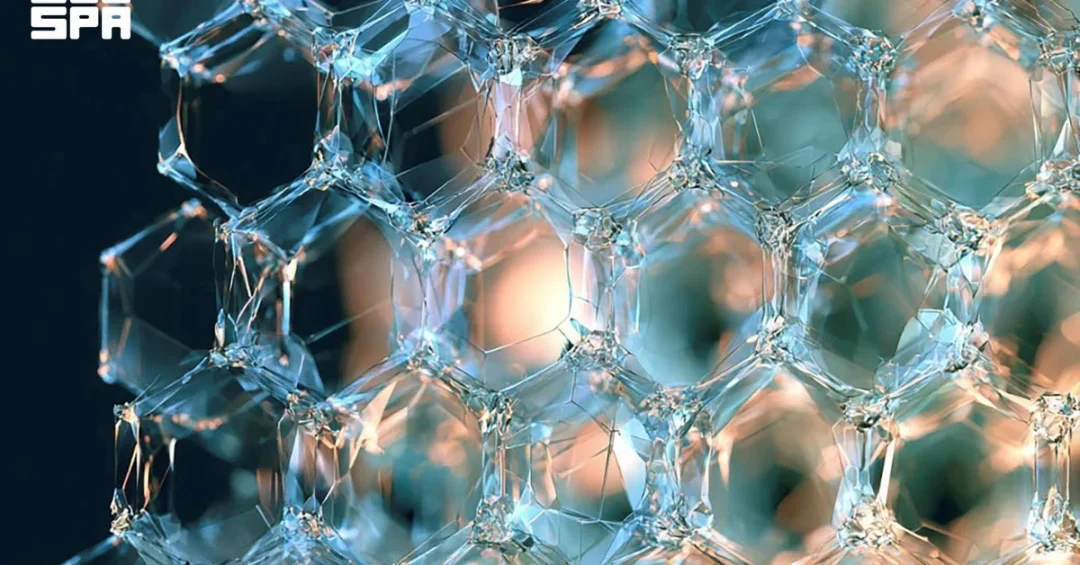
Researchers at King Abdullah University of Science and Technology (KAUST), working with academic collaborators in China and France, have developed a new membrane technology that could significantly reduce the energy consumed by industrial gas separation while overcoming a longstanding barrier to large-scale manufacturing, according to an announcement released through official Saudi channels. The research, published in the journal Nature, focuses on metal-organic frameworks (MOFs), highly porous materials capable of separating molecules with exceptional precision. Industrial gas separation processes are estimated to account for around 15 percent of global energy consumption, a figure that underscores why advances in this field matter far beyond the laboratory.
The work arrives at a moment when governments and industries worldwide are searching for practical ways to cut emissions without sacrificing the efficiency of essential industrial processes. For the Kingdom of Saudi Arabia, the development reflects the growing contribution of its research institutions to global scientific progress, and it reinforces the role of Saudi universities in addressing challenges that affect every economy on earth. The technology was demonstrated at a scale that industry recognizes, with continuous membrane rolls produced using roll-to-roll manufacturing equipment, signaling that the gap between promising science and deployable technology may finally be closing.
Context and Background
Why has industrial gas separation remained such a stubborn challenge for the global energy transition? The answer lies in the sheer scale of the processes involved. Separating gases such as carbon dioxide, hydrogen, and propylene is fundamental to modern industry, from petrochemical production to clean energy systems, yet conventional methods rely on distillation, which repeatedly heats and cools gases to isolate the desired molecules. This approach is effective but extraordinarily energy-intensive, and it has resisted meaningful improvement for decades.
MOFs have long been viewed as a promising alternative. These crystalline materials form highly porous structures that can separate molecules with remarkable selectivity, potentially replacing thermal processes with membranes that operate at ambient conditions. The obstacle has never been a shortage of promising materials in the laboratory. The difficulty has been maintaining performance when moving from small-scale demonstrations to the continuous, high-volume manufacturing that industry requires. Traditional membranes need polymers to bind their active materials together, but increasing the polymer content to make a membrane robust also dilutes the MOF performance that makes the material valuable in the first place.
That trade-off between durability and performance has frustrated commercialization efforts for years. The KAUST-led team approached the problem from a different angle, seeking a molecular solution that would allow a membrane to contain more than 90 percent MOF material while remaining flexible and compatible with existing production lines. The result, detailed in Nature, represents a meaningful step toward resolving one of the field’s most persistent bottlenecks.
A Molecular Anchor That Transforms Membrane Design
How did the researchers manage to keep a membrane flexible while filling it almost entirely with active material? The team developed a new membrane architecture built around a small molecular anchor that links MOF nanosheets with surrounding polymer chains. Rather than relying on large amounts of polymer to hold the structure together, this anchor allows the membrane to function as a single integrated structure, with the MOF material doing the separating work and the polymer providing just enough connectivity to maintain mechanical integrity.
The significance of this design is difficult to overstate. By enabling membranes to contain more than 90 percent MOF material while remaining durable, the researchers removed the central constraint that had kept advanced membrane materials confined to laboratory settings. The membrane is also compatible with existing manufacturing methods, a critical factor for any technology that hopes to be adopted by established industries rather than requiring them to rebuild their production infrastructure.
Professor Mohamed Eddaoudi, professor of Chemical Science at KAUST and a corresponding author of the study, explained the motivation behind the work. “Industrial separations consume enormous amounts of energy every day,” he said. “The challenge has never been discovering materials capable of performing these separations, but finding ways to manufacture them at the scale industry requires. This work provides a practical pathway for doing that and brings advanced membrane technologies much closer to real-world deployment.” His comments frame the achievement not as a laboratory curiosity but as an engineering solution aimed squarely at industrial adoption.
From Laboratory to Industrial Scale
What does it take to prove that a new material can survive the demands of real industry? For the KAUST-led team, the answer involved producing continuous membrane rolls measuring 20 meters in length using roll-to-roll manufacturing equipment at facilities in China. Roll-to-roll processing is a familiar approach in industrial manufacturing, and demonstrating that the new membrane can be produced this way shows that the technology does not depend on bespoke or experimental production methods.
The team also demonstrated strong performance across several important industrial separations, including carbon capture, hydrogen purification, and propylene purification, a key process in the petrochemical industry. In one demonstration, the membrane produced polymer-grade propylene in a single stage and maintained its performance during 150 days of continuous operation. That duration is notable because membrane stability over time is one of the factors that determines whether a technology can be deployed economically in continuous industrial processes.
Modeling conducted as part of the study suggests the technology could reduce purification costs by up to 80 percent compared with conventional distillation. If realized at scale, savings of that magnitude would reshape the economics of some of the world’s most energy-intensive industries, lowering both operating costs and the associated emissions from fuel combustion. The research was led by Professor Sheng Zhou of the Hong Kong University of Science and Technology (Guangzhou), a former KAUST Ph.D. student, and brought together researchers from KAUST, the Hong Kong University of Science and Technology (Guangzhou), Tsinghua University, the University of Montpellier, and the French Centre for Scientific Research, CNRS.
International and Regional Impact
Why does a scientific advance developed in Saudi Arabia with partners in China and France carry weight for the wider world? The answer is that industrial gas separation is a global challenge, and solutions that reduce its energy burden benefit every economy that relies on petrochemicals, hydrogen, or carbon capture. The international composition of the research team, spanning institutions in the Kingdom, China, and France, reflects the collaborative model that increasingly defines cutting-edge science, where expertise and facilities are shared across borders to accelerate progress.
For the Middle East, and particularly for Saudi Arabia, the implications are closely tied to the region’s industrial base. The Kingdom is a major producer of petrochemicals and hydrogen, and technologies that improve the efficiency of purification processes could strengthen the competitiveness of its industries while supporting emissions-reduction goals. The involvement of a former KAUST doctoral student now leading research at a major Chinese university also illustrates how Saudi investment in education and research creates lasting international networks that continue to produce results long after students graduate.
Regional research institutions have increasingly positioned themselves as contributors to global solutions rather than followers of research agendas set elsewhere. The publication of this work in Nature, one of the world’s most cited scientific journals, places Saudi-led research at the center of a conversation about industrial decarbonization that involves governments, energy companies, and academic centers on every continent.
Economic and Strategic Significance
How much could a technology like this matter to the global economy? Industrial separation processes are embedded in supply chains for fuels, chemicals, plastics, fertilizers, and emerging clean energy carriers such as hydrogen. Reducing the energy required for these processes lowers production costs, improves the competitiveness of manufacturers, and reduces the carbon intensity of goods that are traded internationally. The modeling cited in the study, suggesting cost reductions of up to 80 percent relative to distillation, points to potential savings that would compound across entire industries.
For Saudi Arabia, the strategic significance extends beyond cost savings. The Kingdom has committed to diversifying its economy and building advanced manufacturing and technology sectors, and research achievements of this kind demonstrate the capacity of Saudi institutions to generate intellectual property with commercial value. Membrane technology that is compatible with existing manufacturing equipment is particularly attractive because it can be adopted without wholesale replacement of industrial infrastructure, lowering the barrier to entry for companies considering the switch.
The collaboration with Chinese and French institutions also highlights the Kingdom’s role as a convenor of international scientific partnerships. By hosting research that draws together talent from multiple countries, Saudi Arabia strengthens its position as a knowledge hub and reinforces the message that its universities are engaged in solving problems of global consequence.
Vision 2030 Alignment
How does a laboratory breakthrough in Jeddah connect to the broader transformation of the Saudi economy? Vision 2030 places science, technology, and innovation at the heart of the Kingdom’s effort to build a diversified, knowledge-driven economy. KAUST, established as a graduate research university focused on advancing science and technology, is a central institution in that effort, and its collaborations with international partners reflect the Vision’s emphasis on openness, talent development, and global engagement.
The membrane technology developed by Professor Eddaoudi and his colleagues embodies several of these priorities at once. It addresses an energy challenge of worldwide importance, it was validated at a scale that industry can use, and it emerged from a partnership that spans three continents. As Saudi Arabia continues to invest in research and development, achievements like this one show how the Kingdom’s institutions are contributing not only to national goals but to the global knowledge base on which sustainable industrial progress depends. The work stands as a practical example of how Vision 2030 is translating ambition into scientific output with real-world application.
20 Questions
Q1. What did researchers at KAUST develop?
A1. Researchers at King Abdullah University of Science and Technology developed a new membrane technology for industrial gas separation that could reduce energy use while overcoming barriers to large-scale manufacturing.
Q2. Where was the research published?
A2. The research was published in Nature, one of the world’s leading scientific journals, according to the announcement released through official Saudi channels.
Q3. What percentage of global energy consumption comes from industrial gas separation?
A3. Industrial gas separation processes account for an estimated 15 percent of global energy consumption, according to a press release issued by KAUST.
Q4. What are metal-organic frameworks?
A4. Metal-organic frameworks are highly porous materials capable of separating molecules with exceptional precision, and they have long been viewed as promising alternatives to energy-intensive separation processes.
Q5. What obstacle has prevented MOFs from being manufactured at industrial scale?
A5. Their performance has been difficult to maintain when moving from laboratory demonstrations to large-scale manufacturing, largely because traditional membranes require polymers that can reduce performance.
Q6. How much MOF material can the new membrane contain?
A6. The new membrane architecture allows membranes to contain more than 90 percent MOF material while remaining flexible, durable, and compatible with existing manufacturing methods.
Q7. What innovation solved the polymer trade-off?
A7. The researchers used a small molecular anchor that links MOF nanosheets with surrounding polymer chains, allowing the membrane to function as a single integrated structure.
Q8. How long were the membrane rolls produced?
A8. The team successfully produced continuous membrane rolls measuring 20 meters in length using roll-to-roll manufacturing equipment at facilities in China.
Q9. Who is Professor Mohamed Eddaoudi?
A9. Professor Mohamed Eddaoudi is a professor of Chemical Science at KAUST and a corresponding author of the study on the new membrane technology.
Q10. What did Professor Eddaoudi say about the challenge?
A10. He said industrial separations consume enormous amounts of energy daily, and the challenge has never been discovering materials but finding ways to manufacture them at the scale industry requires.
Q11. Which industrial separations were demonstrated?
A11. The team demonstrated strong performance across carbon capture, hydrogen purification, and propylene purification, a key process in the petrochemical industry.
Q12. How long did the membrane maintain performance in one demonstration?
A12. In one demonstration, the membrane produced polymer-grade propylene in a single stage and maintained performance during 150 days of continuous operation.
Q13. What cost reduction does modeling suggest?
A13. Modeling conducted as part of the study suggests the technology could reduce purification costs by up to 80 percent compared with conventional distillation.
Q14. Why is distillation energy-intensive?
A14. Distillation relies on repeatedly heating and cooling gases to separate them, a process that consumes large amounts of energy compared with membrane-based separation.
Q15. Who led the international study?
A15. The study was led by Professor Sheng Zhou of the Hong Kong University of Science and Technology (Guangzhou), a former KAUST Ph.D. student.
Q16. Which institutions collaborated on the research?
A16. The research brought together KAUST, the Hong Kong University of Science and Technology (Guangzhou), Tsinghua University, the University of Montpellier, and the French Centre for Scientific Research, CNRS.
Q17. Why is compatibility with existing manufacturing important?
A17. It means the technology can be produced using processes already familiar to industry, lowering barriers to adoption without requiring companies to rebuild production infrastructure.
Q18. What does the membrane technology mean for carbon capture?
A18. The team demonstrated strong performance in carbon capture, suggesting the membrane could help reduce the energy burden of capturing carbon dioxide from industrial processes.
Q19. How does this research reflect Saudi Arabia’s Vision 2030?
A19. It reflects Vision 2030’s emphasis on science, technology, and innovation, showing how Saudi institutions contribute to global challenges while building a knowledge-driven economy.
Q20. What is the broader significance of this achievement?
A20. It shows that Saudi-led research can produce practical solutions with worldwide impact, strengthening the Kingdom’s role as a hub for international scientific collaboration and advanced technology.
Reader Feedback
We value your thoughts. Please share your feedback on this article.
Your feedback helps us improve our coverage.
Related articles
 Saudi Reserve Confirms First Egyptian Nightjar Breeding
 SCDDR Meeting Advances Satellite-Based Search and Rescue Trends
 Moon and Antares Conjunction Lights Up Saudi Arabia’s Northern Skies
 Saudi Arabia Records 216 Mbps Mobile Internet Speed, Ranks Among Top Global Performers
 Native Grass Enhances Vegetation Cover in Saudi Arabian Deserts
 Arfaj Shrub Boosts Vegetation in King Salman bin Abdulaziz Royal Reserve