


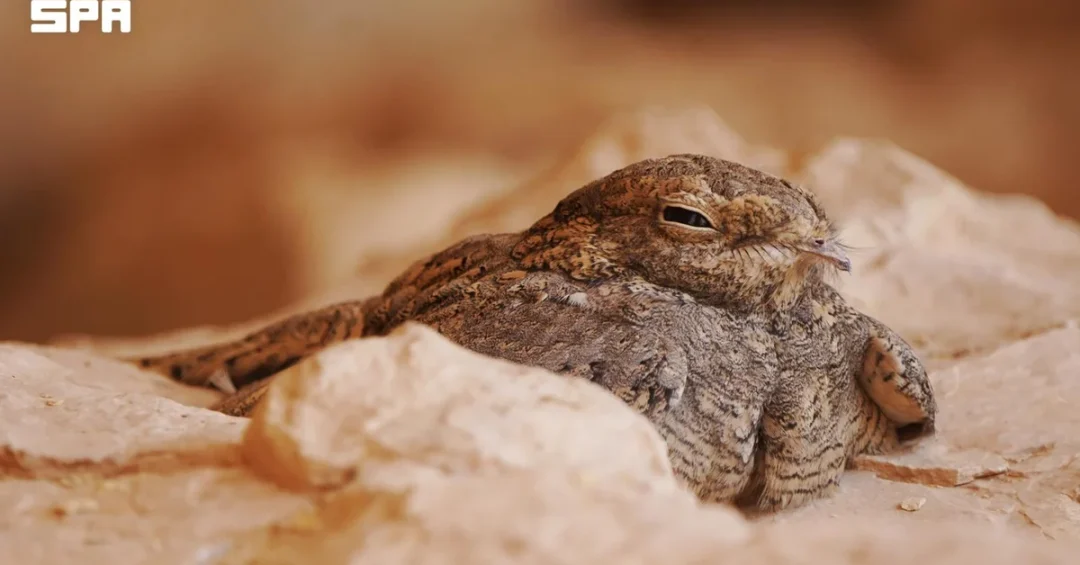
The King Abdulaziz Royal Reserve Development Authority has recorded a new scientific and environmental achievement with the acceptance of a peer-reviewed paper for publication in the international journal Applied Ecology and Environmental Research, published by ALÖKI Kft in Budapest, documenting the first confirmed nesting and breeding of the Egyptian Nightjar within the reserve. The announcement, released through official Saudi channels, marks a significant addition to the Kingdom’s growing record of wildlife conservation successes and underscores the role of Saudi Arabia’s protected areas as living laboratories for desert ecology. The nocturnal desert bird, known locally as Mulhi Al-Ru’yan, is a rare and elusive species listed as Least Concern on the International Union for Conservation of Nature Red List, making the finding a valuable scientific contribution to understanding how wildlife species distribute themselves across desert ecosystems. Could this discovery signal that Saudi Arabia’s reserves are becoming sanctuaries of global scientific importance?
The paper documents, for the first time, confirmed nesting and breeding activity at Umm Al-Dhiyabah, one of the reserve’s unique seasonal wetland habitats. According to the King Abdulaziz Royal Reserve Development Authority, environmental teams observed two eggs laid directly on the ground without a conventional nest, a nesting behavior characteristic of the Egyptian Nightjar. About a week later, on April 15, 2025, eggshell remains were documented at the site, confirming the successful hatching of the chicks. The finding upgrades the species’ record in Saudi Arabia from previous observations and suspected nesting to confirmed breeding, contributing to a redefinition of the bird’s breeding range across the Arabian Peninsula.
Context and Background
Why does a single nest on the desert floor matter to scientists across the world? The Egyptian Nightjar is a nocturnal insectivorous bird whose cryptic plumage allows it to blend almost invisibly into gravel and sand, making systematic study exceptionally difficult. Across much of its range, which stretches from North Africa through the Middle East to parts of Central Asia, the species is known more from incidental sightings than from documented breeding events. In Saudi Arabia, previous records consisted largely of observations and suspected nesting, leaving a gap in the scientific literature regarding whether the species successfully reproduces within the Kingdom’s desert interior. The peer-reviewed paper accepted by Applied Ecology and Environmental Research, published by ALÖKI Kft in Budapest, fills part of that gap with direct field evidence.
The King Abdulaziz Royal Reserve is one of Saudi Arabia’s most important protected areas, managed by the King Abdulaziz Royal Reserve Development Authority, which operates under the framework of the national environmental strategy. The reserve encompasses a diversity of habitats, including desert plains, rocky outcrops, and seasonal wetlands that appear after rainfall. Umm Al-Dhiyabah, the site of the discovery, is one such seasonal wetland, a habitat type that supports a distinct community of plants and animals adapted to brief periods of water availability. For a nocturnal species such as the Egyptian Nightjar, these wetlands may offer reliable insect prey and suitable ground for nesting during specific seasons, which explains why monitoring teams recorded repeated sightings at multiple locations across the reserve from mid-October onward.
The scientific value of the finding rests on its rigor. The study was based on extensive field monitoring conducted by environmental teams, whose observations of eggs, eggshell remains, and repeated sightings were compiled and subjected to peer review before publication. That process distinguishes a confirmed breeding record from an anecdotal report and allows the data to be used by researchers, conservation planners, and policymakers well beyond Saudi Arabia’s borders.
Key Details
What exactly did the field teams observe, and why does the sequence of events matter? According to the King Abdulaziz Royal Reserve Development Authority, the monitoring effort at Umm Al-Dhiyabah produced a clear chain of evidence. Environmental teams first observed two eggs laid directly on the ground without a conventional nest, a behavior characteristic of the Egyptian Nightjar, which relies on camouflage rather than constructed structures to protect its clutch. About a week later, on April 15, 2025, eggshell remains were documented at the same site, confirming that the eggs had hatched successfully. The presence of eggshell remains is a standard indicator used by ornithologists to verify hatching, since it shows that chicks emerged rather than the clutch being lost to predators or abandonment.
Monitoring teams did not stop at the nesting event. They continued to record repeated sightings of the Egyptian Nightjar at multiple locations across the reserve from mid-October, indicating the species’ continued use of the habitat and its ability to adapt to local environmental conditions during specific seasons. This pattern of repeated observations strengthens the conclusion that the reserve is not merely a stopover but a functioning part of the species’ seasonal range. The paper’s scientific significance lies precisely in this upgrade: the species’ record in Saudi Arabia moves from previous observations and suspected nesting to confirmed breeding, a distinction that carries weight in conservation biology.
The publication venue adds further credibility. Applied Ecology and Environmental Research is an international peer-reviewed journal published by ALÖKI Kft in Budapest, and acceptance of the paper means the findings have been examined by independent specialists before entering the scientific record. For the Kingdom, the achievement reflects the growing capacity of Saudi environmental institutions to produce research that meets international standards, a point of pride for the reserve’s development authority and its field teams.
International and Regional Impact
How does a nesting record in one Saudi reserve reshape knowledge across an entire peninsula? The findings contribute to redefining the Egyptian Nightjar’s breeding range across the Arabian Peninsula, updating scientific data on its distribution and ecological behavior. Researchers studying migratory and resident bird populations use such records to refine range maps, model habitat suitability, and assess how species respond to climate variability. A confirmed breeding site in northern Saudi Arabia provides a new anchor point for those models, encouraging further survey work in similar seasonal wetland habitats that may host undocumented populations.
Regionally, the discovery reinforces the value of cross-border ecological cooperation. Bird species do not recognize national boundaries, and data generated in Saudi Arabia can inform conservation planning in neighboring countries across the Arabian Peninsula. By publishing in an international journal, the King Abdulaziz Royal Reserve Development Authority has made its findings accessible to scientists, conservation organizations, and government agencies worldwide. That openness supports the exchange of expertise and helps position Saudi Arabia as a contributor to global biodiversity knowledge, not merely a beneficiary of it. For international audiences, the story illustrates how sustained investment in protected areas can yield scientific returns that extend far beyond a single country’s borders.
Economic and Strategic Significance
Why should a rare bird matter to an economy diversifying beyond oil? Saudi Arabia’s environmental agenda is closely tied to its broader strategic vision, in which natural capital is treated as an asset to be measured, protected, and leveraged. Healthy ecosystems underpin the Kingdom’s ambitions in sustainable tourism, where visitors seek authentic encounters with desert landscapes and wildlife. A confirmed breeding record for a rare and elusive species enhances the reserve’s scientific and ecotourism appeal, offering a distinctive attraction for researchers, photographers, and nature enthusiasts who follow avian rarities.
The achievement also demonstrates institutional capability. The King Abdulaziz Royal Reserve Development Authority conducted multi-season field monitoring, documented physical evidence, and shepherded its findings through international peer review, a process that requires disciplined data collection and scientific writing. Such capabilities are essential as Saudi Arabia expands its network of protected areas and commits to international environmental commitments. The economic significance is indirect but real: biodiversity records support ecosystem services, inform land-use planning, and strengthen the credibility of Saudi environmental institutions in global forums. For a Kingdom pursuing economic diversification, a strong record in conservation science complements its investments in technology, tourism, and renewable energy.
Vision 2030 Alignment
How does a single confirmed nesting event connect to the ambitions of Vision 2030? Saudi Arabia’s long-term transformation agenda places environmental sustainability among its core pillars, alongside economic diversification and quality of life. The protection and restoration of natural habitats, the expansion of protected areas, and the generation of scientific knowledge about the Kingdom’s wildlife all form part of that commitment. The King Abdulaziz Royal Reserve’s achievement, accepted for publication in an international journal, shows how these commitments translate into measurable outcomes that the global scientific community can verify and cite.
Looking ahead, the discovery creates a foundation for continued monitoring and research. Repeated sightings from mid-October indicate that the Egyptian Nightjar uses the reserve across seasons, and further study could reveal additional breeding sites, population trends, and habitat requirements. Such work would strengthen Saudi Arabia’s contribution to global conservation while enriching the experience of visitors to its reserves. For the Kingdom, the message is clear: its deserts are not empty spaces but complex ecosystems worthy of protection, study, and celebration. As Saudi Arabia continues to invest in environmental science and protected areas, discoveries like this one will serve as evidence that Vision 2030 is delivering benefits for nature as well as for people.
20 Questions
Q1. What did the King Abdulaziz Royal Reserve Development Authority announce?
A1. It announced the acceptance of a peer-reviewed paper documenting the first confirmed nesting and breeding of the Egyptian Nightjar within the reserve, published in the international journal Applied Ecology and Environmental Research.
Q2. Which journal accepted the paper for publication?
A2. The paper was accepted by Applied Ecology and Environmental Research, an international peer-reviewed journal published by ALÖKI Kft in Budapest, Hungary, adding scientific credibility to the finding.
Q3. What is the local name of the Egyptian Nightjar in Saudi Arabia?
A3. The Egyptian Nightjar is known locally as Mulhi Al-Ru’yan, a nocturnal desert bird that is rare and elusive, making systematic observation and study particularly challenging for field researchers.
Q4. What is the conservation status of the Egyptian Nightjar on the IUCN Red List?
A4. The species is listed as Least Concern on the International Union for Conservation of Nature Red List, meaning it is not currently threatened with extinction at a global level.
Q5. Where was the confirmed nesting recorded?
A5. The nesting was recorded at Umm Al-Dhiyabah, one of the reserve’s unique seasonal wetland habitats, where environmental teams conducted extensive field monitoring over multiple seasons.
Q6. What did the environmental teams observe at the nesting site?
A6. Teams observed two eggs laid directly on the ground without a conventional nest, a behavior characteristic of the Egyptian Nightjar, which relies on camouflage rather than constructed nests.
Q7. When were the eggshell remains documented?
A7. Eggshell remains were documented at the site on April 15, 2025, about a week after the eggs were first observed, confirming the successful hatching of the chicks.
Q8. Why are eggshell remains important scientific evidence?
A8. Eggshell remains indicate that chicks successfully hatched rather than the clutch being lost to predators or abandonment, providing verifiable proof of breeding success for researchers.
Q9. What did monitoring teams record from mid-October onward?
A9. Monitoring teams recorded repeated sightings of the Egyptian Nightjar at multiple locations across the reserve, indicating the species’ continued use of the habitat and seasonal adaptation.
Q10. What is the scientific significance of the paper?
A10. The paper upgrades the species’ record in Saudi Arabia from previous observations and suspected nesting to confirmed breeding, contributing to redefining the bird’s breeding range across the Arabian Peninsula.
Q11. How does this finding affect knowledge of the species’ distribution?
A11. It updates scientific data on the Egyptian Nightjar’s distribution and ecological behavior, providing a new confirmed breeding anchor point for range maps and habitat suitability models.
Q12. What makes the Egyptian Nightjar difficult to study?
A12. Its nocturnal habits and cryptic plumage allow it to blend almost invisibly into gravel and sand, so researchers rely on indirect evidence such as eggs and eggshell remains.
Q13. What is Umm Al-Dhiyabah and why is it important?
A13. Umm Al-Dhiyabah is a seasonal wetland habitat within the reserve that supports a distinct community of plants and animals adapted to brief periods of water availability.
Q14. How does the discovery benefit conservation in Saudi Arabia?
A14. It demonstrates the value of the Kingdom’s protected areas as functioning habitats for rare species and supports evidence-based conservation planning and habitat management.
Q15. What does the finding mean for the Arabian Peninsula’s breeding range data?
A15. It helps redefine the Egyptian Nightjar’s breeding range across the Arabian Peninsula, encouraging further survey work in similar seasonal wetland habitats that may host undocumented populations.
Q16. How does peer review strengthen the credibility of the discovery?
A16. Peer review means independent specialists examined the findings before publication, distinguishing a confirmed breeding record from an anecdotal report and allowing global researchers to cite the data.
Q17. How does this achievement relate to Saudi Arabia’s environmental strategy?
A17. It reflects the national environmental strategy’s emphasis on protecting natural habitats, expanding protected areas, and generating scientific knowledge about the Kingdom’s wildlife for global benefit.
Q18. What role does the King Abdulaziz Royal Reserve Development Authority play?
A18. The authority manages the reserve, conducts field monitoring, documents evidence, and produces peer-reviewed research, building institutional capacity for conservation science in Saudi Arabia.
Q19. Why is the discovery relevant to sustainable tourism in Saudi Arabia?
A19. A confirmed breeding record for a rare species enhances the reserve’s scientific and ecotourism appeal, attracting researchers, photographers, and nature enthusiasts interested in avian rarities.
Q20. How does this discovery connect to Vision 2030?
A20. Vision 2030 places environmental sustainability among its core pillars, and this achievement shows how Saudi Arabia’s commitments translate into measurable conservation outcomes verified by the international scientific community.
Reader Feedback
We value your thoughts. Please share your feedback on this article.
Your feedback helps us improve our coverage.
Related articles
 SCDDR Meeting Advances Satellite-Based Search and Rescue Trends
 Moon and Antares Conjunction Lights Up Saudi Arabia’s Northern Skies
 Saudi Arabia Records 216 Mbps Mobile Internet Speed, Ranks Among Top Global Performers
 Native Grass Enhances Vegetation Cover in Saudi Arabian Deserts
 Arfaj Shrub Boosts Vegetation in King Salman bin Abdulaziz Royal Reserve
 Over 10 Skink Species Thrive Across Saudi Habitats