


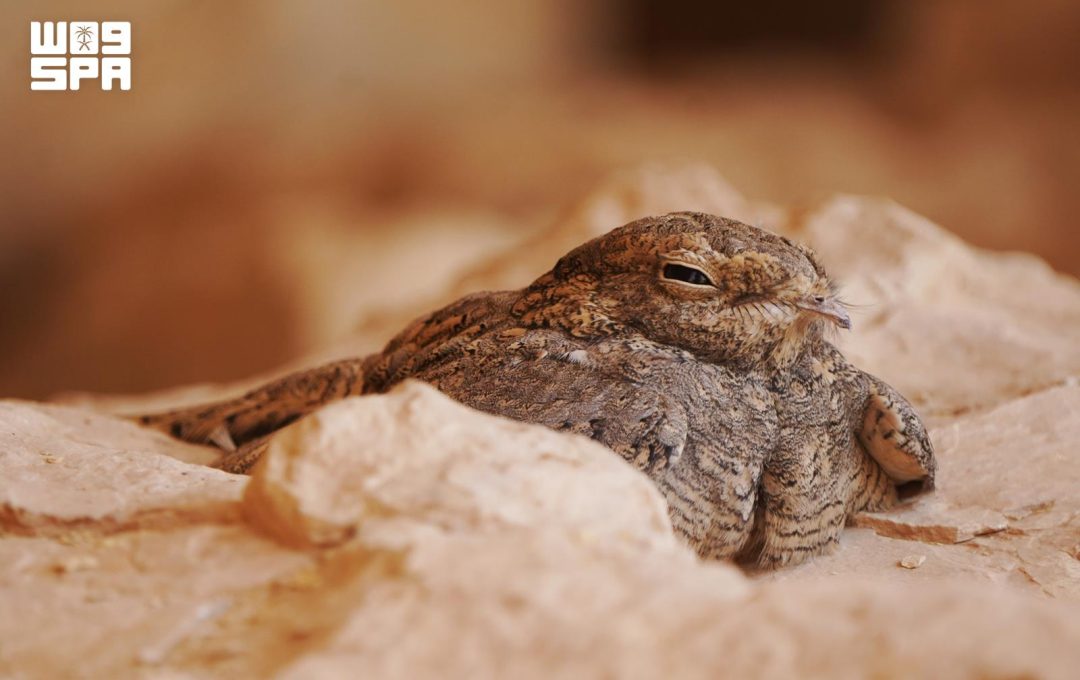
The Umm az-Diayba area, a seasonal wetland habitat within the King Abdulaziz Royal Reserve, has become the site of the first documented nesting and breeding of the Egyptian Nightjar in Saudi Arabia.
According to SPA, the findings were published in the international journal Applied Ecology and Environmental Research, issued by ALÖKI Kft. in Budapest. The bird, known locally as Mallahi ar-Ra‘yan, is a rare nocturnal desert species listed as Least Concern (LC) on the International Union for Conservation of Nature (IUCN) Red List.
Field observations revealed two eggs laid directly on the ground without a traditional nest. On April 15, 2025, eggshell remains were recorded approximately one week after the eggs were first found, confirming the successful hatching of chicks. The Egyptian Nightjar has since been observed in various parts of the reserve, indicating the area is used by the species during specific seasons.
The research clarifies the reproductive range of the species on the Arabian Peninsula and updates data regarding its distribution and ecological characteristics.
Where was the Egyptian Nightjar breeding documented in Saudi Arabia? The breeding was documented within the King Abdulaziz Royal Reserve, specifically in the Umm az-Diayba area. This location is described as one of the unique seasonal wetland habitats found within the reserve where the nocturnal birds were observed.
What evidence confirmed the successful hatching of the birds? Specialists first discovered two eggs laid directly on the ground surface without a nest. On April 15, 2025, roughly one week after the initial discovery of the eggs, the presence of eggshell remains was recorded, which confirmed the chicks had hatched.
What is the scientific status and local name of the Egyptian Nightjar? The bird is known locally in Saudi Arabia as Mallahi ar-Ra‘yan. In terms of global conservation status, it is included in the International Union for Conservation of Nature (IUCN) Red List with a status of Least Concern (LC).