


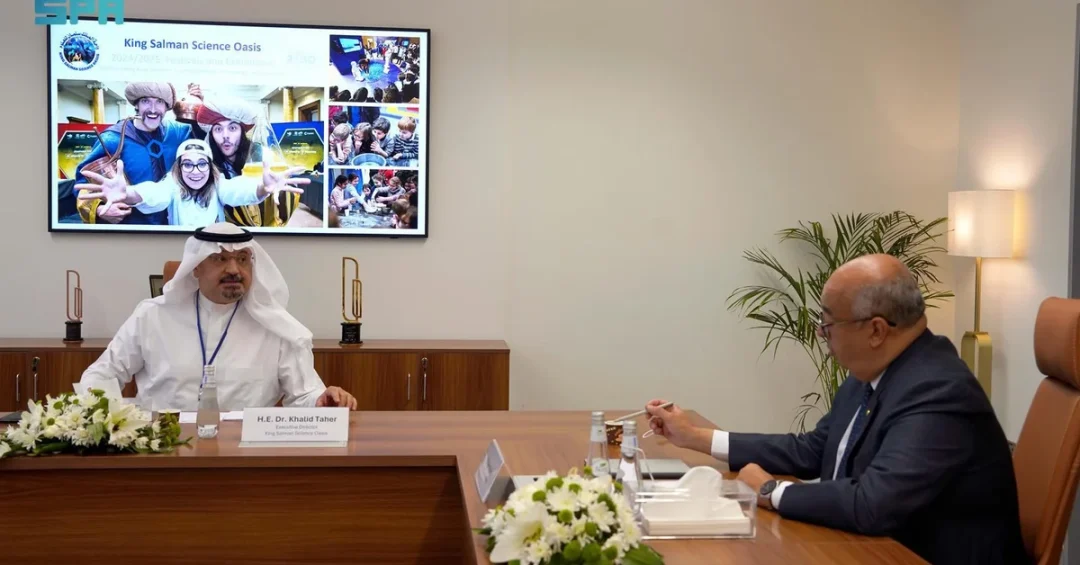
On May 16, 2024, in Riyadh, the Executive Director of the King Salman Science Oasis (KSSO), Khalid Taher, met with the Director of the UNESCO Doha Office for the Gulf States and Yemen, Salah El Din Zaki Khaled, to discuss potential collaboration. The meeting, reported by the Saudi Press Agency, focused on UNESCO’s support for KSSO’s science festivals, teacher and student training programs, and the registration of KSSO as a non-governmental organization.
Context and Background
The King Salman Science Oasis, an educational and scientific hub in Saudi Arabia, aims to inspire innovation and scientific curiosity among youth. UNESCO, the United Nations agency for education, science, and culture, has a mandate to promote international cooperation in these fields. This meeting underscores the Kingdom’s commitment to enhancing science education and aligning with global standards.
Saudi Arabia has been actively investing in education and technology as part of its transformative Vision 2030 plan. Collaborations with international bodies like UNESCO are seen as crucial for knowledge exchange and capacity building. The meeting is a testament to the Kingdom’s open-door policy for international partnerships.
Key Details
During the meeting, both officials explored avenues for joint initiatives, including the organization of science festivals aimed at engaging the public and school students. UNESCO’s support could provide access to global expertise, educational resources, and best practices in science communication.
Training programs for teachers and students are another focal point, with potential for curriculum development and professional development workshops. These programs would align with UNESCO’s education goals and Saudi Arabia’s efforts to foster a knowledge-based economy.
The registration of KSSO as a non-governmental organization (NGO) would allow it to collaborate more formally with UNESCO and other international bodies, potentially unlocking new funding and partnership opportunities.
Implications and Impact
If realized, these cooperation opportunities could significantly enhance KSSO’s reach and effectiveness in promoting science education. It could lead to more engaging science festivals, improved teacher training, and greater international recognition for Saudi Arabia’s educational initiatives.
The partnership also reflects Saudi Arabia’s growing role as a regional leader in education and science. It aligns with the Kingdom’s efforts to diversify its economy and invest in human capital, as outlined in Vision 2030.
For UNESCO, collaborating with a state-of-the-art facility like KSSO helps advance its mission to promote science education in the Gulf region. The exchange of knowledge and resources could benefit other countries in the region as well.
Vision 2030 Alignment
This cooperation between King Salman Science Oasis and UNESCO directly supports Saudi Arabia’s Vision 2030. The Kingdom’s goal to create a vibrant society and a thriving economy recognizes the importance of education and innovation. Partnerships with international organizations like UNESCO are vital to achieving these objectives, fostering a culture of science and technology that will empower Saudi youth and drive sustainable development.
20 Questions
Q1. What is the King Salman Science Oasis?
A1. The King Salman Science Oasis (KSSO) is an educational scientific institution in Saudi Arabia. It aims to promote science among youth through interactive exhibits, educational programs, and events, inspiring curiosity and innovation.
Q2. Who is the Executive Director of KSSO?
A2. The Executive Director of KSSO is Khalid Taher. He represented the institution in the meeting with UNESCO, discussing potential cooperation opportunities.
Q3. Who is the Director of UNESCO Doha Office?
A3. Salah El Din Zaki Khaled serves as the Director of the UNESCO Doha Office for the Gulf States and Yemen. He met with KSSO’s director to explore collaboration.
Q4. What was the main purpose of the meeting between KSSO and UNESCO?
A4. The main purpose was to discuss cooperation opportunities. They focused on UNESCO support for science festivals, training programs, and KSSO’s registration as an NGO.
Q5. How could UNESCO support KSSO’s science festivals?
A5. UNESCO could provide expertise, educational materials, and global networks to enhance the festivals’ quality and reach. This would attract more participants and raise awareness about science.
Q6. Why does KSSO want to register as a non-governmental organization?
A6. Registering as an NGO would allow KSSO to engage in formal partnerships with international bodies like UNESCO. It could also open doors for grants and collaborative projects.
Q7. What are the benefits of training programs for teachers and students?
A7. Training programs can improve teaching methods, introduce innovative classroom techniques, and enhance students’ understanding of science. This aligns with KSSO’s educational mission and supports Saudi Arabia’s educational development.
Q8. How does this cooperation align with Vision 2030?
A8. Vision 2030 emphasizes education and innovation. By collaborating with UNESCO, Saudi Arabia strengthens its educational infrastructure, fosters a culture of science, and prepares its youth for future challenges.
Q9. What is the role of UNESCO in the Gulf region?
A9. UNESCO works to promote education, science, culture, and communication. The Doha Office serves Gulf states and Yemen, fostering regional cooperation and supporting national educational initiatives.
Q10. How might Saudi students benefit from this cooperation?
A10. Students could gain access to enriched learning opportunities, hands-on science experiences at festivals, and improved teacher training. This can stimulate interest in STEM fields and potentially lead to future career paths.
Q11. Will there be new science festivals as a result of this meeting?
A11. While no specific plans were announced, the discussions indicate a strong potential for future collaborations. If realized, additional festivals could be organized with UNESCO’s support.
Q12. What is the significance of KSSO being recognized as an NGO?
A12. NGO status would allow KSSO to operate more flexibly, partner with global organizations, and participate in international initiatives. It enhances its credibility and ability to attract support.
Q13. How can UNESCO help in teacher training?
A13. UNESCO can provide training modules, expert guidance, and resources on modern pedagogical approaches. This helps teachers integrate scientific thinking into their curricula effectively.
Q14. What is the KSSO’s mission?
A14. KSSO’s mission is to inspire a passion for science among Saudi youth, promote scientific literacy, and contribute to the Kingdom’s knowledge-based economy.
Q15. How does this meeting impact Saudi Arabia’s international educational relations?
A15. It demonstrates Saudi Arabia’s willingness to engage with international organizations, strengthening its reputation as a partner in global education and science initiatives.
Q16. Are there any other similar partnerships involving KSSO?
A16. KSSO has engaged in various educational initiatives within Saudi Arabia. This specific cooperation with UNESCO is notable for its international scope, potentially setting a precedent for future collaborations.
Q17. What is the role of the Saudi Press Agency in reporting this?
A17. The Saudi Press Agency (SPA) is the official news source, providing accurate information about government activities. Its report confirms the meeting and highlights the Kingdom’s commitment to education.
Q18. When did this meeting take place?
A18. The meeting took place on May 16, 2024, in Riyadh, Saudi Arabia. This was reported by the Saudi Press Agency the same day.
Q19. What kinds of science festivals does KSSO organize?
A19. KSSO organizes interactive festivals with exhibits, workshops, and demonstrations to make science accessible and entertaining. These events aim to engage the public and spark curiosity.
Q20. How can the public stay informed about KSSO-UNESCO cooperation?
A20. Updates will likely be announced through official Saudi media, KSSO communications, and UNESCO channels. Individuals can follow their websites and social media for latest news.
Reader Feedback
We value your thoughts. Please share your feedback on this article.
Your feedback helps us improve our coverage.