


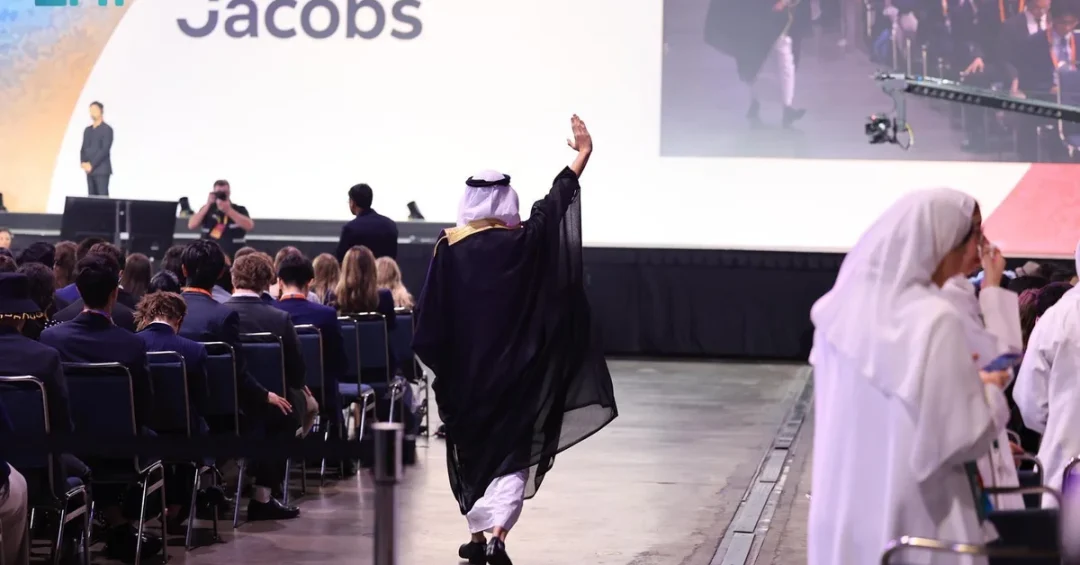
The Saudi Science and Engineering Team achieved a record-breaking 27 awards at the Regeneron International Science and Engineering Fair (ISEF) 2024, held in Los Angeles from May 11 to 17. The team’s performance, announced by the King Abdulaziz and His Companions Foundation for Giftedness and Creativity (Mawhiba), included 18 grand prizes and nine special awards, placing Saudi Arabia among the top contenders in a competition featuring over 1,700 students from more than 70 countries.
Context and Background
ISEF is the world’s largest pre-college science competition, organized by the Society for Science. Saudi Arabia’s participation dates back to 2007, and this year’s haul brings the Kingdom’s total awards to 160, comprising 110 grand prizes and 50 special awards. This sustained excellence underscores the nation’s long-term investment in nurturing young scientific talent, a key pillar of Saudi Arabia’s Vision 2030.
Key Details
The 27 awards were distributed across various categories. Notably, Hamad Al-Husseini secured second place in energy, and Abeer Al-Yousef achieved second place in chemistry. Third-place honors went to Elias Khan (biomedicine and health sciences), Suleiman Al-Misnad and Latifa Al-Ghannam (energy), Turki Al-Dalami (environmental engineering), Tahani Ahmed (materials science), and Laila Zawawi (translational medical sciences). Fourth-place winners included Nasser Al-Suwayan (biomedical engineering), Lana Al-Mazrouei (cellular and molecular biology), Yara Al-Qadi and Yara Al-Bakri (earth and environmental sciences), Shahad Al-Mutlaq (energy), Asma Al-Qusair (environmental engineering), Areej Al-Qarni and Lana Al-Fuhaid (materials science), and Layan Al-Maliki and Tamara Radhi (plant sciences).
Implications and Impact
This achievement highlights the effectiveness of Saudi Arabia’s educational and talent development programs. Mawhiba Secretary-General Dr. Amal bint Abdullah Al-Hazza attributed the success to the unwavering support of Saudi leadership for talent, science, and innovation. She also emphasized the fruitful collaboration between Mawhiba and the Ministry of Education, along with other Saudi entities, in fostering exceptional abilities. This collaborative approach ensures a strong Saudi presence on international platforms, enhancing the Kingdom’s reputation as a hub for scientific excellence.
Vision 2030 Alignment
Dr. Al-Hazza noted that this record-breaking achievement reflects the Kingdom’s commitment to Vision 2030 goals, particularly building a dynamic society and a thriving economy fueled by human potential and innovation. “Mawhiba takes immense pride in continuously nurturing and empowering our students,” she said. “Our efforts are aimed not only at excelling in international competitions, but also at making these young minds ambassadors of science and creativity, representing the Kingdom at the highest levels.” This success paves the way for a future where Saudi youth lead in science and technology, contributing to the nation’s global standing and long-term prosperity.
20 Questions
Q1. What is the ISEF competition?
A1. The Regeneron International Science and Engineering Fair (ISEF) is the world’s largest pre-college science competition, held annually. It brings together students from over 70 countries to showcase their research projects in various scientific disciplines.
Q2. How many awards did the Saudi team win at ISEF 2024?
A2. The Saudi Science and Engineering Team won a record-breaking 27 awards, including 18 grand prizes and nine special awards, marking a significant achievement for the Kingdom.
Q3. Which Saudi entity announced the team’s success?
A3. The King Abdulaziz and His Companions Foundation for Giftedness and Creativity (Mawhiba) announced the team’s success in a press release, highlighting the students’ talent and hard work.
Q4. What is Mawhiba’s role in Saudi Arabia?
A4. Mawhiba is a Saudi foundation dedicated to nurturing giftedness and creativity among students. It identifies and supports talented youth through programs and initiatives, preparing them for international competitions and future leadership.
Q5. Who is the Secretary-General of Mawhiba?
A5. Dr. Amal bint Abdullah Al-Hazza serves as the Secretary-General of Mawhiba. She has been instrumental in promoting talent development and innovation in Saudi Arabia.
Q6. How many students participated in ISEF 2024 overall?
A6. Over 1,700 students from more than 70 countries participated in ISEF 2024, making it a highly competitive and prestigious event.
Q7. Which Saudi students won second place?
A7. Hamad Al-Husseini won second place in the energy category, and Abeer Al-Yousef won second place in the chemistry category.
Q8. What categories did third-place winners compete in?
A8. Third-place winners competed in categories such as biomedicine and health sciences, energy, environmental engineering, materials science, and translational medical sciences.
Q9. How many fourth-place awards did Saudi students win?
A9. A total of 11 Saudi students won fourth-place awards in categories including biomedical engineering, cellular and molecular biology, earth and environmental sciences, energy, and plant sciences.
Q10. What is the total number of awards Saudi Arabia has won at ISEF since 2007?
A10. With this year’s 27 awards, Saudi Arabia’s total at ISEF since 2007 has reached 160, consisting of 110 grand prizes and 50 special awards.
Q11. How does this achievement reflect Vision 2030?
A11. The achievement aligns with Vision 2030’s goals of building a dynamic society and thriving economy fueled by human potential and innovation, as noted by Dr. Al-Hazza.
Q12. What role did the Ministry of Education play?
A12. The Ministry of Education collaborates with Mawhiba in nurturing exceptional abilities. This partnership helps identify talented students and provide them with opportunities to excel.
Q13. What does Dr. Al-Hazza say about the students being ambassadors?
A13. Dr. Al-Hazza stated that the goal is to make students “ambassadors of science and creativity,” representing the Kingdom at the highest levels in international forums.
Q14. How many countries typically participate in ISEF?
A14. ISEF typically features participants from more than 70 countries, reflecting its global reach and importance in fostering scientific talent.
Q15. What is the significance of the 27 awards for Saudi Arabia?
A15. The 27 awards demonstrate the effectiveness of Saudi Arabia’s educational strategies and the potential of its youth to contribute to global scientific progress.
Q16. What are grand prizes and special awards?
A16. Grand prizes are awarded for outstanding projects in each category, while special awards are given by organizations for specific criteria, such as innovation or impact.
Q17. How does Mawhiba support students before ISEF?
A17. Mawhiba provides mentorship, training programs, and resources to help students develop their projects and prepare for international competitions.
Q18. What might this success mean for future Saudi participation?
A18. This success is likely to inspire more students to pursue science and innovation, strengthening the pipeline of talented individuals for future competitions.
Q19. How is the success viewed internationally?
A19. The achievement places Saudi Arabia among the top contenders, showcasing the Kingdom’s commitment to education and innovation on a global stage.
Q20. What is the long-term impact of ISEF participation?
A20. Participation in ISEF helps build a generation of young scientists who can contribute to Saudi Arabia’s knowledge economy, aligning with Vision 2030’s goals of diversifying the economy and fostering innovation.
Reader Feedback
We value your thoughts. Please share your feedback on this article.
Your feedback helps us improve our coverage.