


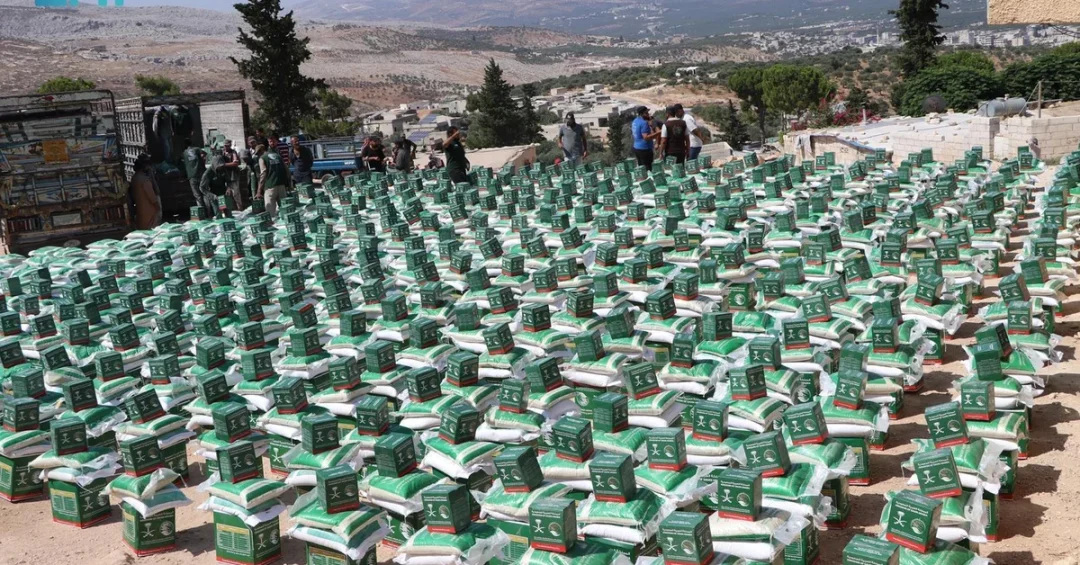
The King Salman Humanitarian Aid and Relief Center (KSrelief) distributed 1,278 food baskets and 1,278 health kits in Salqin, Harem district, Idlib, Syria, on July 24, 2024, benefiting 1,278 families totaling 7,668 individuals. This latest distribution is part of the center’s ongoing second phase of relief operations for 2024, specifically targeting communities affected by the devastating earthquake that struck northern Syria in February 2023.
Context and Background
Syria’s Idlib region, already hosting a large number of internally displaced persons, faced additional hardship after the February 2023 earthquake caused widespread destruction and loss of life. The disaster exacerbated an already critical humanitarian situation, leaving thousands in need of immediate food and medical assistance. KSrelief, the Kingdom of Saudi Arabia’s primary humanitarian arm, has been active in the area since the earthquake’s aftermath, implementing multi-phase projects to provide sustained aid. The second phase, launched in 2024, aims to continue support for recovery and basic needs, with this specific distribution taking place in Salqin, a town within the Harem district.
Key Details
The relief package comprised 2,556 total items, including 1,278 food baskets containing essential staples and 1,278 health kits equipped with basic medical and hygiene supplies. Each kit is designed to help prevent disease and maintain health in temporary shelters and camps. The aid reached 1,278 families, calculated at an average of six individuals per family, bringing comprehensive support to over 7,600 people. Distribution was carried out by KSrelief field teams in coordination with local authorities and international humanitarian partners. The project remains aligned with KSrelief’s stated mission to provide prompt, effective, and transparent humanitarian assistance to those most in need.
Implications and Impact
This distribution underscores Saudi Arabia’s sustained commitment to humanitarian relief in Syria, even as the conflict has entered its fourteenth year. By focusing on basic food security and health needs, KSrelief helps stabilize communities and reduce the risk of malnutrition and disease outbreaks. The assistance also supports local markets and reduces displacement pressures by enabling families to stay in their areas of refuge. Such consistent aid strengthens Saudi Arabia’s role as one of the world’s leading humanitarian donors, fostering goodwill and regional stability. The earthquake response has been a significant focus, with multiple phases ensuring that recovery efforts are not interrupted.
Vision 2030 Alignment
KSrelief’s humanitarian mission is a core component of Saudi Arabia’s Vision 2030, which emphasizes the Kingdom’s role as a global leader in humanitarian and relief work. By supporting vulnerable populations abroad, Saudi Arabia reflects its Islamic values and international commitments, enhancing its soft power and global standing. The second phase of this project demonstrates the Kingdom’s long-term approach to disaster response, focusing on sustainable recovery. As Vision 2030 progresses, Saudi Arabia, through KSrelief, is expected to continue expanding its humanitarian footprint, contributing to global stability and human welfare, and helping build a more compassionate and collaborative world.
20 Questions
Q1. What did KSrelief distribute in Idlib, Syria?
A1. KSrelief distributed 1,278 food baskets and 1,278 health kits in Salqin, Harem district, Idlib, for a total of 2,556 items.
Q2. How many families benefited from this distribution?
A2. A total of 1,278 families, comprising 7,668 individuals, received assistance in this operation.
Q3. When did this distribution take place?
A3. The distribution occurred on July 24, 2024, as part of the project’s second phase for 2024.
Q4. Why was this aid provided to northern Syria?
A4. The aid targeted individuals impacted by the February 2023 earthquake, which devastated northern Syria and left many in need.
Q5. Which Saudi organization carried out the distribution?
A5. The King Salman Humanitarian Aid and Relief Center (KSrelief) led the distribution efforts.
Q6. Is this part of a larger project?
A6. Yes, it is part of the project’s second phase for 2024, which focuses on earthquake-affected communities.
Q7. What does each health kit contain?
A7. The health kits contain basic medical and hygiene supplies to help prevent disease and maintain health in temporary settings.
Q8. How is the aid distributed to families?
A8. KSrelief field teams distribute the items in coordination with local authorities and international humanitarian partners.
Q9. Why is Idlib specifically being targeted?
A9. Idlib hosts a large displaced population and was heavily affected by the earthquake, exacerbating existing humanitarian needs.
Q10. Does Saudi Arabia provide ongoing humanitarian aid to Syria?
A10. Yes, Saudi Arabia, through KSrelief, has provided sustained humanitarian aid to Syria for many years, including earthquake response.
Q11. How does this aid support recovery from the earthquake?
A11. By meeting immediate food and health needs, the aid stabilizes families and enables them to focus on rebuilding their lives.
Q12. What is the broader significance of this distribution?
A12. It demonstrates Saudi Arabia’s commitment to global humanitarianism and its leadership in providing relief to disaster-affected communities.
Q13. Is this the first such distribution by KSrelief in Idlib?
A13. No, this is part of a multi-phase project that has included previous distributions as part of earthquake response efforts.
Q14. How does this align with Vision 2030?
A14. Vision 2030 prioritizes Saudi Arabia’s humanitarian role globally, and KSrelief’s work is a key part of achieving that vision.
Q15. Are other international organizations involved?
A15. KSrelief coordinates with local authorities and international humanitarian partners to ensure effective distribution.
Q16. What does the food basket contain?
A16. The food baskets contain essential staple items designed to meet the basic nutritional needs of a family for a period.
Q17. How many people are in an average beneficiary family?
A17. The beneficiary families average six individuals, based on the total of 7,668 people across 1,278 families.
Q18. Does this aid reduce displacement?
A18. Yes, by providing necessities, it helps families remain in their current locations rather than being forced to move again.
Q19. What is KSrelief’s primary mission?
A19. KSrelief’s mission is to provide prompt, effective, and transparent humanitarian assistance to those in need around the world.
Q20. Where was the distribution specifically located?
A20. The distribution took place in Salqin, a town within the Harem district of Idlib Governorate in northern Syria.
Reader Feedback
We value your thoughts. Please share your feedback on this article.
Your feedback helps us improve our coverage.