


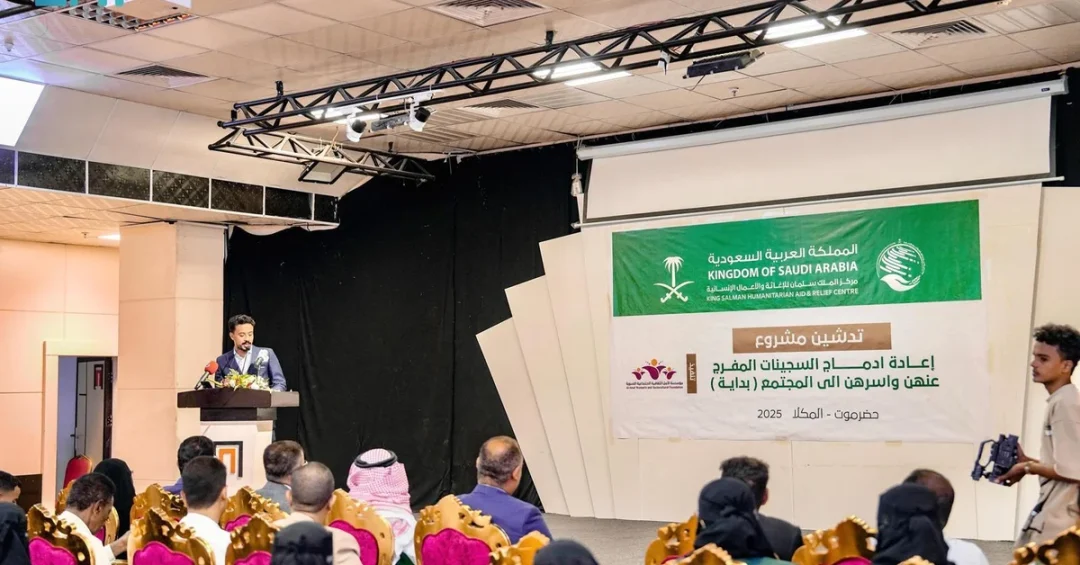
The King Salman Humanitarian Aid and Relief Centre (KSrelief) launched a project on Monday in Al-Mukalla district of Hadramout Governorate, Yemen, aimed at helping released female prisoners and their families reintegrate into society. The initiative, announced via the Saudi Press Agency (SPA), will benefit 3,348 individuals and includes psychological counseling and vocational training in food production, perfume and incense making, soap crafting, cosmetics, hair styling, henna design, digital marketing, and small business management. These programs are designed to help women establish sustainable income-generating projects.
Context and Background
This project is part of Saudi Arabia’s ongoing humanitarian efforts, channeled through KSrelief, to assist the Yemeni people and improve their quality of life. The initiative comes as Yemen continues to recover from years of conflict, with many vulnerable groups, including released female prisoners, facing significant challenges in rebuilding their lives. By focusing on vocational training and psychological support, the project aims to address both immediate and long-term needs, empowering women to achieve economic independence and social stability.
Key Details
The project will provide comprehensive support to released female prisoners and their families, including psychological counseling to help them cope with the trauma of incarceration and reintegration. Vocational training programs in various fields—such as food production, perfume and incense making, soap crafting, cosmetics, hair styling, henna design, digital marketing, and small business management—are tailored to equip women with marketable skills. Additionally, the project supports the reintegration of out-of-school children into the education system by providing uniforms and school supplies, as well as health and legal assistance.
Implications and Impact
This initiative underscores Saudi Arabia’s commitment to humanitarian assistance in Yemen, aligning with international efforts to promote stability and development in the region. By enabling released female prisoners to reintegrate successfully, the project contributes to social cohesion and reduces the risk of recidivism. The vocational training and small business support are expected to create sustainable livelihoods, which can have a multiplier effect on the local economy in Hadramout and beyond.
Vision 2030 Alignment
Saudi Arabia’s Vision 2030 emphasizes the Kingdom’s role as a global humanitarian leader and its commitment to supporting neighboring countries in times of need. This project exemplifies that commitment, showcasing how Saudi aid, delivered through KSrelief, is not only addressing immediate needs but also fostering long-term development and stability in Yemen. As the Kingdom continues to advance its Vision 2030 goals, such initiatives reinforce its position as a key partner in regional peace and prosperity.
20 Questions
Q1. What is KSrelief?
A1. KSrelief is the King Salman Humanitarian Aid and Relief Centre, a Saudi Arabian humanitarian organization established in 2015 to coordinate and deliver aid to countries in need, including Yemen.
Q2. When did the project launch?
A2. The project was launched on Monday, July 7, 2025, in Al-Mukalla district of Hadramout Governorate, Yemen, according to the Saudi Press Agency.
Q3. Who will benefit from the project?
A3. A total of 3,348 individuals, including released female prisoners and their families, will directly benefit from the reintegration project.
Q4. What vocational training is offered?
A4. Training includes food production, perfume and incense making, soap crafting, cosmetics, hair styling, henna design, digital marketing, and small business management.
Q5. What is the goal of the vocational training?
A5. The training aims to help women establish sustainable income-generating projects and achieve economic independence.
Q6. Does the project provide psychological support?
A6. Yes, psychological counseling is a key component, helping released female prisoners and their families cope with trauma and reintegrate into society.
Q7. How does the project help children?
A7. The project supports the reintegration of out-of-school children into education by providing uniforms and school supplies.
Q8. What other assistance is provided?
A8. Health and legal assistance are also part of the support package for beneficiaries.
Q9. Where is Al-Mukalla located?
A9. Al-Mukalla is the capital of Hadramout Governorate, which is the largest governorate in Yemen, located along the Arabian Sea.
Q10. How does this project fit into Saudi Arabia’s humanitarian efforts?
A10. It is part of the Kingdom’s ongoing efforts through KSrelief to help the Yemeni people and improve their quality of life.
Q11. How does vocational training empower women?
A11. It equips them with practical skills to start their own businesses, generating income and reducing dependency on aid.
Q12. What is the significance of digital marketing training?
A12. Digital marketing training enables women to promote their products online, reaching a wider customer base and increasing sales.
Q13. How does the project contribute to social stability?
A13. By facilitating the reintegration of former prisoners, the project helps reduce stigma and build community cohesion.
Q14. How does KSrelief operate in Yemen?
A14. KSrelief works through local partners and direct implementation to deliver aid across Yemen, including in conflict-affected areas.
Q15. What is the role of the Saudi Press Agency in this announcement?
A15. SPA is the official Saudi news agency that released the announcement, ensuring transparency and official communication.
Q16. How does this project align with Vision 2030?
A16. Vision 2030 positions Saudi Arabia as a global humanitarian leader, and this project demonstrates that role in practice.
Q17. What is the long-term impact of supporting small businesses?
A17. Small businesses can drive local economic growth, create jobs, and contribute to poverty reduction in the region.
Q18. Are there similar KSrelief projects in Yemen?
A18. Yes, KSrelief has implemented numerous projects in Yemen, including health, education, and livelihood support initiatives.
Q19. How can beneficiaries access the project?
A19. Beneficiaries are identified through coordination with local authorities and partners to ensure they receive the necessary assistance.
Q20. What is the overall goal of the project?
A20. The overall goal is to help released female prisoners and their families reintegrate into society, fostering self-reliance and improving their quality of life.
Reader Feedback
We value your thoughts. Please share your feedback on this article.
Your feedback helps us improve our coverage.