


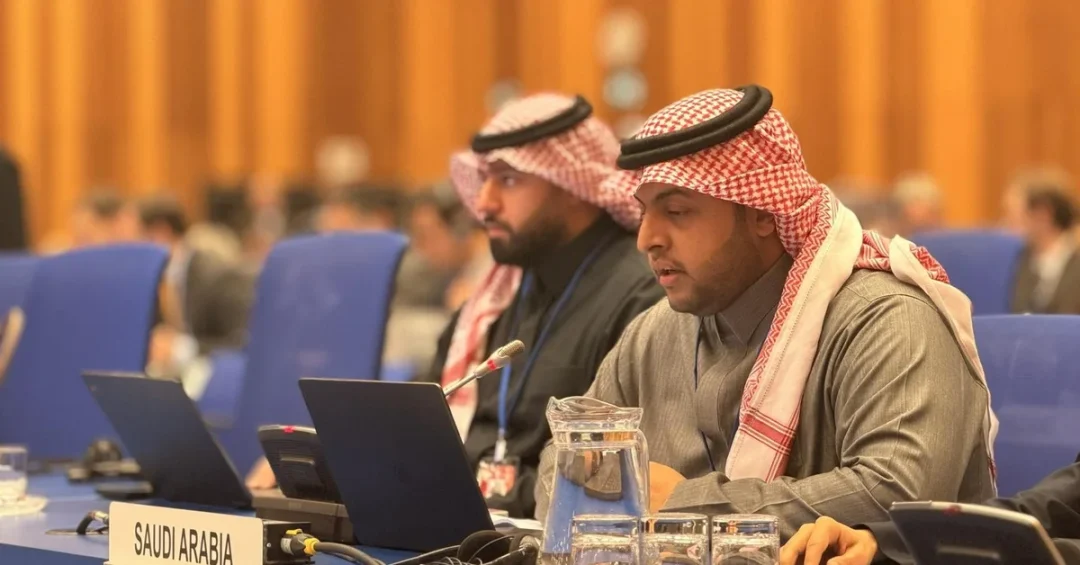
Saudi Arabia has concluded its participation in the 63rd session of the Scientific and Technical Subcommittee of the United Nations Committee on the Peaceful Uses of Outer Space (COPUOS), held at the United Nations Office at Vienna, with the Kingdom’s delegation reaffirming its commitment to the peaceful, responsible, and sustainable use of outer space. The delegation, represented by the Saudi Space Agency (SSA) and the Communications, Space and Technology Commission, engaged in discussions covering space debris mitigation, space weather, long-term sustainability of outer space activities, and space and global health, according to an official press release issued by the SSA on February 10, 2026.
The participation underscores Saudi Arabia’s expanding role in international space governance and its determination to help shape the rules, guidelines, and best practices that will govern humanity’s activities beyond Earth’s atmosphere. Through active engagement at the multilateral level, the Kingdom is positioning itself as a constructive partner in global efforts to keep space safe, secure, and accessible for future generations. The session, which convenes annually, brings together representatives from member states, international organizations, and scientific bodies to address the most pressing scientific and technical challenges facing space exploration and utilization. Saudi Arabia’s presence at this forum reflects a deliberate strategy to align its growing national space capabilities with international norms and cooperative frameworks.
Context and Background
What does it mean for a nation to compete and cooperate in the vast arena of outer space, and how does Saudi Arabia’s participation in such forums advance its strategic objectives? The Scientific and Technical Subcommittee of COPUOS is one of two subsidiary bodies of the full Committee, which serves as the primary international forum for the development and codification of space law and policy. Established in 1959, COPUOS operates under the auspices of the United Nations Office for Outer Space Affairs and has been instrumental in producing foundational treaties, including the Outer Space Treaty of 1967 and the Rescue Agreement, Liability Convention, and Registration Convention. The Scientific and Technical Subcommittee focuses on the practical, scientific, and technical dimensions of space activities, from orbital debris mitigation to the safe operation of nuclear power sources in space.
Saudi Arabia has been an active member of COPUOS and has consistently used the platform to advocate for the peaceful uses of outer space, capacity-building, and the equitable participation of developing nations in space activities. The Kingdom’s space sector has undergone a significant transformation in recent years, culminating in the establishment of the Saudi Space Agency in 2018, which was later restructured and elevated under the leadership of His Royal Highness Crown Prince Mohammed bin Salman. The agency is tasked with developing a robust national space industry, fostering innovation, and ensuring that the Kingdom’s space activities contribute to economic diversification and national security. Participation in COPUOS sessions is a key component of this mandate, allowing Saudi officials to stay abreast of international developments, build partnerships, and contribute to the global governance of space.
The 63rd session of the Scientific and Technical Subcommittee took place against a backdrop of rapidly increasing space activity, including the deployment of large satellite constellations, the growth of commercial space tourism, and the rising risk of orbital collisions. These developments have made the subcommittee’s work more urgent than ever. For Saudi Arabia, engagement in these discussions is not merely a diplomatic exercise but a practical necessity, as the Kingdom expands its own satellite fleet, invests in space-based research, and seeks to harness space technologies for applications ranging from communications and navigation to climate monitoring and disaster management.
Key Details of Saudi Arabia’s Participation
What specific contributions did the Saudi delegation make to the 63rd session, and how do they reflect the Kingdom’s broader space ambitions? According to the SSA press release, the Saudi delegation addressed several agenda items, including the general exchange of views, space for sustainable development, space debris, space weather, the long-term sustainability of outer space activities, and space and global health. In its interventions, the Kingdom reaffirmed its commitment to the peaceful and responsible use of outer space and emphasized the importance of translating international principles and guidelines into practical, measurable operational practices. This emphasis on implementation over mere declaration reflects Saudi Arabia’s results-oriented approach to international cooperation.
A highlight of the Kingdom’s participation was a technical presentation under the agenda item ‘Space and Global Health,’ which showcased Saudi Arabia’s microgravity research conducted aboard the International Space Station (ISS). The presentation detailed studies on changes in messenger RNA and gene expression, as well as international cooperation in producing a special nanomaterial used in cartilage tissue regeneration. These research efforts demonstrate how space-based experiments can be translated into scalable health solutions on Earth, potentially benefiting patients suffering from cartilage damage and degenerative joint diseases. The SSA noted that this work exemplifies the Kingdom’s commitment to leveraging space for the betterment of human health and well-being.
The delegation also underscored the importance of enhancing international cooperation, knowledge exchange, and capacity-building to ensure a safe and sustainable space environment. Saudi Arabia has consistently advocated for greater inclusion of emerging spacefaring nations in decision-making processes and for the development of frameworks that enable all countries to benefit from space technologies. The Kingdom’s participation in the 63rd session was therefore not only about protecting its own interests but also about contributing to a more equitable and collaborative global space order. The SSA affirmed that this participation reflects the Kingdom’s growing role in international space forums and its approach to supporting space sustainability.
International and Regional Impact
How does Saudi Arabia’s active engagement in COPUOS influence the broader Middle East and the global space community? The Kingdom’s participation sends a clear signal that it intends to be a responsible and constructive actor in space affairs, committed to international law and multilateral cooperation. This stance enhances Saudi Arabia’s reputation as a reliable partner and a voice of moderation in a region often characterized by geopolitical tensions. By focusing on scientific and technical cooperation, the Kingdom helps to build bridges between nations and to promote the peaceful use of space as a shared global commons.
At the regional level, Saudi Arabia’s leadership in space sustainability discussions can inspire other Arab and Gulf states to increase their own engagement in space activities and international forums. The Kingdom has already taken steps to foster regional cooperation, including through the Arab Space Cooperation Group, which was established in 2019 with Saudi Arabia as a founding member. By sharing its experiences and expertise, Saudi Arabia can help to build a more integrated and capable regional space ecosystem, contributing to economic diversification and technological advancement across the Middle East. Moreover, the Kingdom’s emphasis on space and global health aligns with broader international efforts to use space technology for sustainable development, a priority that resonates with many developing countries.
The international impact of Saudi Arabia’s participation extends beyond the region. As one of the world’s leading oil producers and a member of the G20, the Kingdom brings significant economic and political weight to any multilateral forum. Its active involvement in COPUOS helps to ensure that the perspectives of emerging spacefaring nations are taken into account in the development of international guidelines and standards. This is particularly important as the space environment becomes more congested and contested, and as the need for coordinated action on space debris, space traffic management, and space weather becomes more pressing. Saudi Arabia’s contributions to these discussions are therefore of global significance.
Economic and Strategic Significance
What economic and strategic benefits does Saudi Arabia derive from its participation in international space forums, and how does this align with its long-term national interests? The Kingdom’s space sector is a key pillar of its economic diversification strategy, which aims to reduce dependence on oil revenues and to build a knowledge-based economy. The Saudi Space Agency has been tasked with developing a vibrant commercial space industry, attracting investment, and creating high-skilled jobs for Saudi citizens. Participation in COPUOS helps to create an enabling international environment for these efforts by promoting regulatory certainty, fostering cooperation, and facilitating access to global markets and technologies.
Strategically, Saudi Arabia’s engagement in space governance supports its national security objectives by enhancing its ability to monitor and protect its space assets, which are critical for communications, navigation, and Earth observation. The Kingdom operates a growing fleet of satellites, including those used for telecommunications, broadcasting, and remote sensing. By contributing to the development of international norms and best practices, Saudi Arabia helps to shape the rules that govern the behavior of all space actors, thereby reducing the risk of conflict and enhancing the stability of the space environment. Furthermore, the Kingdom’s space research activities, such as those conducted aboard the ISS, generate valuable scientific knowledge and technological innovations that can be applied to address challenges in health, agriculture, water management, and climate change.
The economic and strategic significance of Saudi Arabia’s space ambitions is also reflected in the Kingdom’s substantial investments in space-related infrastructure and research. The SSA has launched several initiatives, including the Saudi Space Accelerator, which supports startups and entrepreneurs in the space sector, and the Saudi Space Fund, which invests in promising space technologies. These efforts are designed to create a self-sustaining space ecosystem that can compete on the global stage. By participating in COPUOS and other international forums, Saudi Arabia ensures that its voice is heard in the shaping of the global space agenda and that its interests are protected as the space economy continues to evolve.
Vision 2030 Alignment
How does Saudi Arabia’s participation in the 63rd session of the COPUOS Scientific and Technical Subcommittee fit into the broader framework of Vision 2030, the Kingdom’s ambitious blueprint for economic and social transformation? Vision 2030, launched in 2016 under the leadership of His Royal Highness Crown Prince Mohammed bin Salman, seeks to diversify the Saudi economy, empower its citizens, and position the Kingdom as a global leader in innovation and technology. The space sector is explicitly identified as a strategic priority, with the goal of establishing Saudi Arabia as a regional and international hub for space activities. Participation in COPUOS is a direct expression of this ambition, demonstrating the Kingdom’s commitment to playing an active and constructive role in the global space community.
Moreover, the values that underpin Saudi Arabia’s space policy—peaceful cooperation, sustainability, innovation, and capacity-building—are fully aligned with the principles of Vision 2030. By advocating for the long-term sustainability of outer space activities and by conducting cutting-edge research that benefits humanity, the Kingdom is not only advancing its own interests but also contributing to the common good. As Saudi Arabia continues to expand its space capabilities and to deepen its engagement in international forums, it will remain a steadfast partner in the global effort to ensure that space remains a domain of peace, cooperation, and opportunity for all. The Kingdom’s successful participation in the 63rd session is yet another milestone on its journey toward a prosperous and sustainable future, both on Earth and beyond.
20 Questions
Q1. What was the main outcome of Saudi Arabia’s participation in the 63rd session of the COPUOS Scientific and Technical Subcommittee?
A1. Saudi Arabia concluded its participation by reaffirming its commitment to the peaceful and responsible use of outer space, engaging in discussions on key agenda items, and presenting research on space and global health. The Kingdom emphasized translating international principles into practical, measurable operational practices.
Q2. Which Saudi entities represented the Kingdom at the 63rd session?
A2. The Kingdom was represented by the Saudi Space Agency (SSA) and the Communications, Space and Technology Commission. These bodies led the delegation and presented Saudi Arabia’s positions on various scientific and technical issues related to outer space activities.
Q3. Where was the 63rd session of the COPUOS Scientific and Technical Subcommittee held?
A3. The session was held at the United Nations Office at Vienna, Austria. Vienna serves as a major hub for UN space-related activities and hosts the Office for Outer Space Affairs.
Q4. What agenda items did the Saudi delegation address during the session?
A4. The delegation addressed the general exchange of views, space for sustainable development, space debris, space weather, the long-term sustainability of outer space activities, and space and global health. These topics reflect the Kingdom’s broad interest in space governance.
Q5. What was the focus of Saudi Arabia’s technical presentation at the session?
A5. The presentation focused on ‘Space and Global Health,’ highlighting microgravity research aboard the International Space Station. It covered studies on messenger RNA and gene expression, as well as international cooperation in producing a nanomaterial for cartilage tissue regeneration.
Q6. How does Saudi Arabia’s microgravity research benefit people on Earth?
A6. The research on gene expression and cartilage regeneration demonstrates how space-based experiments can lead to scalable health solutions on Earth. This could potentially aid in treating cartilage damage and degenerative joint diseases, benefiting patients worldwide.
Q7. What does Saudi Arabia mean by translating international principles into practical, measurable operational practices?
A7. The Kingdom advocates for moving beyond mere declarations to concrete actions that can be implemented and assessed. This includes developing specific guidelines, sharing best practices, and ensuring that all space actors adhere to agreed-upon standards for safety and sustainability.
Q8. Why is the long-term sustainability of outer space activities important to Saudi Arabia?
A8. As a growing spacefaring nation with critical satellite assets, Saudi Arabia has a direct interest in ensuring that space remains safe and accessible. Sustainable practices help protect the Kingdom’s investments and ensure the continued operation of its space-based services.
Q9. How does Saudi Arabia’s participation in COPUOS align with its national space strategy?
A9. Participation in COPUOS is a key component of the Kingdom’s national space strategy, which aims to develop a robust space industry, foster innovation, and position Saudi Arabia as a regional and international hub for space activities. It also supports the Kingdom’s economic diversification goals.
Q10. What is the role of the Saudi Space Agency in the Kingdom’s space ambitions?
A10. The Saudi Space Agency, established in 2018, is responsible for developing and regulating the Kingdom’s space sector. It oversees national space programs, promotes research and innovation, and represents Saudi Arabia in international forums such as COPUOS.
Q11. How does Saudi Arabia contribute to international cooperation in space?
A11. Saudi Arabia contributes through active participation in multilateral forums, sharing its research findings, and advocating for capacity-building and knowledge exchange. The Kingdom also collaborates with international partners on projects such as the ISS microgravity research.
Q12. What are the implications of Saudi Arabia’s space activities for the Middle East region?
A12. Saudi Arabia’s leadership in space can inspire other regional states to increase their engagement, fostering a more integrated and capable regional space ecosystem. This can drive technological advancement and economic diversification across the Middle East.
Q13. How does space debris affect Saudi Arabia’s space interests?
A13. Space debris poses a risk to all satellites, including Saudi Arabia’s communications and Earth observation assets. The Kingdom supports international efforts to mitigate debris and promote responsible space behavior to protect its investments and ensure operational safety.
Q14. What is space weather, and why is it a concern for Saudi Arabia?
A14. Space weather refers to environmental conditions in space, such as solar flares and geomagnetic storms, which can disrupt satellite operations and communications. Saudi Arabia, as a satellite operator, is concerned with understanding and mitigating these risks.
Q15. How does Saudi Arabia’s participation in COPUOS support its Vision 2030 goals?
A15. Vision 2030 aims to diversify the economy and promote innovation. By engaging in international space governance, Saudi Arabia advances its space industry, attracts investment, and creates high-skilled jobs, all of which contribute to the Vision’s objectives.
Q16. What is the significance of Saudi Arabia’s research on messenger RNA in space?
A16. The research on messenger RNA and gene expression in microgravity can provide insights into how space affects biological processes. This knowledge can have applications in medicine, biotechnology, and understanding human health on Earth and during space travel.
Q17. How does Saudi Arabia benefit from international cooperation in producing nanomaterials for cartilage regeneration?
A17. International cooperation allows Saudi Arabia to access expertise, resources, and technologies that may not be available domestically. The nanomaterial research could lead to new treatments for cartilage damage, benefiting Saudi citizens and people worldwide.
Q18. What message does Saudi Arabia’s participation in COPUOS send to the global community?
A18. It sends a message that Saudi Arabia is a responsible and constructive actor in space affairs, committed to international law, cooperation, and the peaceful use of outer space. It also signals the Kingdom’s growing capabilities and ambitions in the space sector.
Q19. How does Saudi Arabia ensure that its space activities are sustainable?
A19. Saudi Arabia supports the development and implementation of international guidelines for space sustainability, such as the COPUOS Space Debris Mitigation Guidelines. The Kingdom also invests in research and technology to minimize the environmental impact of its space activities.
Q20. What are Saudi Arabia’s future plans for space exploration and cooperation?
A20. Saudi Arabia plans to expand its space capabilities, including satellite development, human spaceflight research, and deep space exploration. The Kingdom will continue to engage in international cooperation to advance these goals and contribute to the global space community.
Reader Feedback
We value your thoughts. Please share your feedback on this article.
Your feedback helps us improve our coverage.
Related articles
 CST Releases 2023 Report on Digital Regulatory Academy
 Taif City Expands Green Spaces to 8 Million Square Meters via Saudi Green Initiative
 Riyadh to Host Global PropTech Summit in October
 CST Awards Three Innovative Tech Products in Co-Innovation Award
 Saudi Center Issues Grazing Permits for Sustainable Rangelands
 Safar Crescent Moon Aligns with Regulus over Northern Borders