


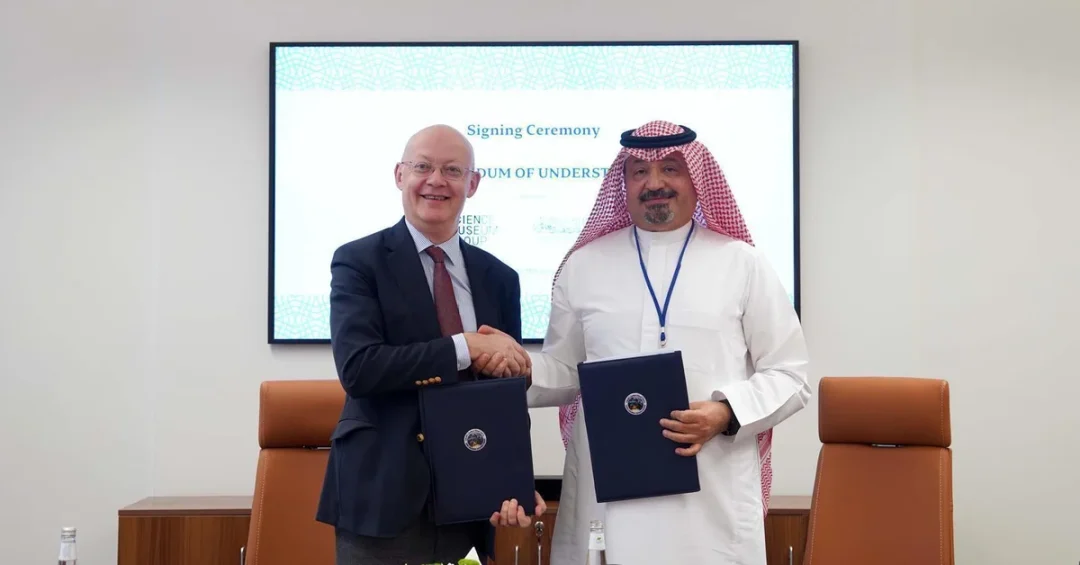
The King Salman Science Oasis (KSSO) signed a memorandum of understanding (MoU) with the Science Museum Group (SMG) in London on May 13, 2024, marking a significant step in Saudi Arabia’s efforts to enhance scientific education and cultural exchange. The agreement, signed by Dr. Khalid Taher, Executive Director of KSSO, and Ian Blatchford, Director and Chief Executive of SMG, aims to transfer and localize techniques for managing scientific museums, curating exhibits, and benefiting from SMG’s expertise. The signing ceremony was attended by Dr. Naif Al-Zaraa, Director General of Riyadh Education Department, Prof. Saad Al-Rwaita, Secretary General of the Riyadh Charitable Foundation for Science, and Hani Mansi, Vice Chairman of the National Committee for UNESCO.
Context and Background
The King Salman Science Oasis, celebrating 30 years of operation, has been a pioneer in science education in Saudi Arabia. Through its membership in the Association of Science and Technology Centers, KSSO has collaborated with international scientific centers to develop programs that have enriched the lives of hundreds of thousands of visitors, both in person and virtually. The Oasis designs its scientific programs to integrate science, technology, engineering, arts, and mathematics (STEAM) to develop capabilities, train in problem-solving, and enhance creativity and innovation skills.
The Science Museum Group, based in the United Kingdom, is a renowned institution with extensive experience in managing science museums and curating exhibits. This partnership aligns with Saudi Arabia’s Vision 2030, which emphasizes the development of a diversified economy and a knowledge-based society. By collaborating with SMG, KSSO aims to elevate the standard of scientific education and museum management in the Kingdom.
Key Details
The MoU focuses on several key areas: the transfer and localization of techniques for managing scientific museums, the curation of exhibits, and leveraging SMG’s expertise. This collaboration will enable KSSO to enhance its offerings and provide more engaging and educational experiences for visitors. Dr. Khalid Taher highlighted KSSO’s 30 years of experience and its collaboration with international scientific centers through its membership in the Association of Science and Technology Centers. He emphasized the Oasis’s commitment to integrating STEAM in its programs to foster creativity and innovation.
The agreement also includes training opportunities for Saudi professionals in museum management and exhibit curation, which will help build local capacity and ensure the sustainability of these practices in the Kingdom. The presence of officials from the Riyadh Education Department and the National Committee for UNESCO underscores the importance of this collaboration in advancing educational and cultural goals.
Implications and Impact
This MoU is expected to have a significant impact on Saudi Arabia’s scientific and educational landscape. By adopting international best practices, KSSO can enhance its role as a leading science center in the region, inspiring future generations of scientists, engineers, and innovators. The collaboration also strengthens cultural ties between Saudi Arabia and the United Kingdom, promoting mutual understanding and cooperation.
Furthermore, this partnership supports Saudi Arabia’s efforts to diversify its economy by investing in human capital and fostering a culture of innovation. It aligns with the goals of Vision 2030 to increase the contribution of non-oil sectors to the economy and to develop a skilled workforce capable of driving sustainable growth.
Vision 2030 Alignment
The MoU between KSSO and SMG directly supports Saudi Arabia’s Vision 2030, particularly in the areas of education, innovation, and cultural exchange. By localizing advanced museum management techniques and curating world-class exhibits, KSSO will contribute to the development of a vibrant knowledge economy and enhance the quality of life for citizens and residents. This partnership exemplifies the Kingdom’s commitment to international collaboration and its pursuit of excellence in science and technology, paving the way for a brighter and more innovative future.
20 Questions
Q1. What is the King Salman Science Oasis (KSSO)?
A1. KSSO is a Saudi scientific center in Riyadh that has been operating for 30 years, offering programs integrating science, technology, engineering, arts, and mathematics to foster creativity and innovation.
Q2. Who signed the MoU on behalf of KSSO?
A2. Dr. Khalid Taher, Executive Director of KSSO, signed the MoU.
Q3. Who signed the MoU on behalf of the Science Museum Group?
A3. Ian Blatchford, Director and Chief Executive of the Science Museum Group, signed the MoU.
Q4. When was the MoU signed?
A4. The MoU was signed on May 13, 2024.
Q5. Where was the MoU signed?
A5. The MoU was signed in London, United Kingdom.
Q6. What is the main purpose of the MoU?
A6. The MoU aims to transfer and localize techniques for managing scientific museums, curating exhibits, and benefiting from SMG’s expertise.
Q7. Who attended the signing ceremony?
A7. Attendees included Dr. Naif Al-Zaraa, Prof. Saad Al-Rwaita, and Hani Mansi, along with other officials.
Q8. What is the Science Museum Group known for?
A8. SMG is a renowned UK institution with extensive experience in managing science museums and curating exhibits.
Q9. How does KSSO’s 30 years of experience benefit this partnership?
A9. KSSO’s long experience in science education and its international collaborations provide a strong foundation for implementing the MoU effectively.
Q10. What is the Association of Science and Technology Centers?
A10. It is an international organization that KSSO is a member of, which facilitates collaboration with global scientific centers.
Q11. How many visitors has KSSO reached?
A11. KSSO has enriched the lives of hundreds of thousands of in-person and virtual visitors over its 30-year history.
Q12. What does STEAM stand for in KSSO’s programs?
A12. STEAM stands for Science, Technology, Engineering, Arts, and Mathematics, which are integrated to develop capabilities and enhance creativity.
Q13. What are the key areas of focus in the MoU?
A13. The MoU focuses on museum management techniques, exhibit curation, and leveraging SMG’s expertise to enhance KSSO’s offerings.
Q14. How will this MoU impact Saudi Arabia’s educational landscape?
A14. It will elevate the standard of scientific education and museum management, inspiring future generations and fostering a culture of innovation.
Q15. What role does the Riyadh Education Department play in this collaboration?
A15. The Riyadh Education Department supports the initiative, as indicated by the attendance of its Director General, Dr. Naif Al-Zaraa, at the signing.
Q16. What is the significance of the National Committee for UNESCO’s involvement?
A16. The presence of Hani Mansi underscores the importance of this collaboration in advancing educational and cultural goals in line with UNESCO’s principles.
Q17. How does this MoU align with Vision 2030?
A17. It supports Vision 2030 by promoting education, innovation, and cultural exchange, contributing to a knowledge-based economy and improved quality of life.
Q18. Will there be training opportunities for Saudis as part of this MoU?
A18. Yes, the MoU includes training opportunities for Saudi professionals in museum management and exhibit curation to build local capacity.
Q19. How does this partnership strengthen Saudi-UK relations?
A19. It enhances cultural and educational ties between the two countries, promoting mutual understanding and cooperation.
Q20. What future benefits can Saudi Arabia expect from this MoU?
A20. Saudi Arabia can expect improved science education, enhanced museum experiences, and a more skilled workforce, contributing to sustainable growth and innovation.
Reader Feedback
We value your thoughts. Please share your feedback on this article.
Your feedback helps us improve our coverage.