


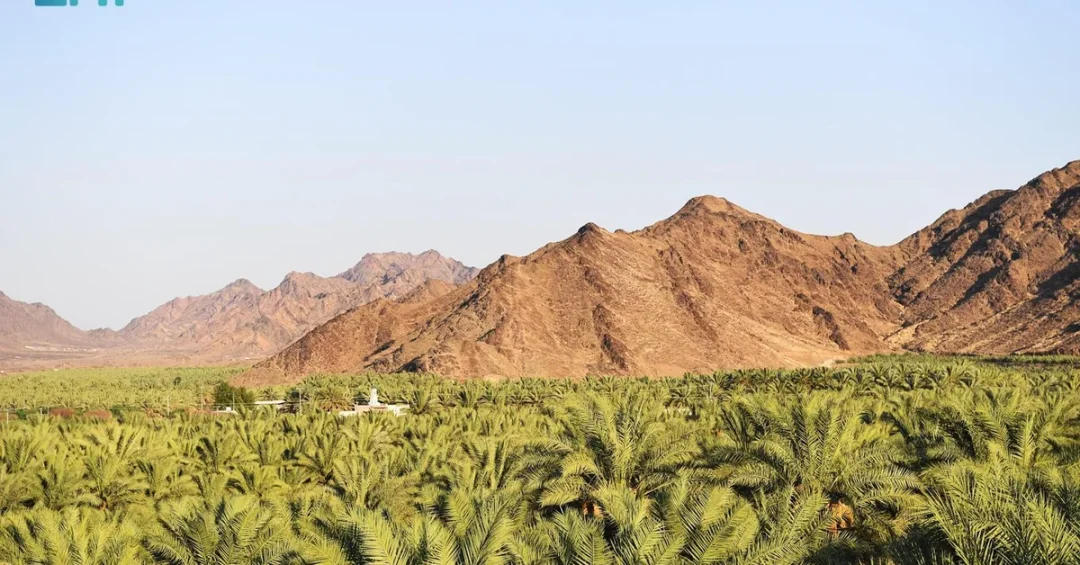
Farmers in Madinah have officially commenced the date harvest as the palm fruits reach peak ripeness for the agricultural season 1446 Hijri. The announcement was made via the Saudi Press Agency (SPA), marking the beginning of a critical period for one of the region’s most valued agricultural products. The harvest season, which relies on careful timing and traditional expertise, sees farmers collecting dates at various stages of maturation, ensuring optimal quality and flavor for domestic and international markets.
Context and Background
Madinah, a city revered for its cultural and religious significance, is also renowned for its date production, particularly varieties such as Ajwa, Sukkari, and Mejdool. The date palm, a staple of Saudi agriculture, requires meticulous care throughout its growth cycle. The ripening process involves several stages, starting with pollination and moving on to thinning, where excess fruits are removed to support optimal growth. To protect the fruit from the intense sun, dates are carefully bagged in palm fronds before being harvested.
Key Details
In an interview with the Saudi Press Agency (SPA), Abdullah bin Abdulaziz Al-Radadi, chairman of the Madinah Dates Cooperative Association, highlighted the significance of post-harvest practices in ensuring the quality of the final product. Al-Radadi noted recent studies indicating that storing dates at four degrees Celsius for six months preserves the fruits and boosts their nutritional value by enhancing phenols, an antiseptic and disinfectant that can protect against a wide range of micro-organisms including some fungi and viruses. This process also maintains and improves crucial antioxidants in dates, which helps double the nutritional value after a year of preservation.
Implications and Regional Impact
Speaking on the unique qualities of dates, Al-Radadi emphasized their consumption at different ripening stages: the “khalal” stage, when the fruit changes colour to yellow or red based on the variety; the “rutab” stage, when the fruit softens; and the “tamr” stage when the date is fully ripe, soft, and can be eaten either moist or dry. He added that due to the intense sun in the Kingdom, scientific research has proven that dates develop more phenols to survive harsh conditions. These polyphenols offer protection against various diseases. He also pointed out that the various dates currently available due to the season in the market include Ajwa, Sukkari, and Mejdool, followed by Safawi, Anbarah, Barni, and Shalaby dates to be available later. This harvest not only supports local economies but also strengthens Saudi Arabia’s position as a leading exporter of premium dates.
20 Questions
Q1. When did farmers in Madinah start harvesting dates?
A1. Farmers in Madinah started harvesting dates on August 1, 2024, as the palm fruits ripened for the agricultural season 1446 Hijri, according to the Saudi Press Agency.
Q2. What is the first stage of date ripening mentioned in the report?
A2. The process of ripening date palms begins with pollination, which is followed by thinning to remove excess fruits and support optimal growth.
Q3. How are dates protected from the sun during harvest?
A3. Dates are carefully bagged in palm fronds to shield them from the intense sun before being harvested, ensuring their quality is preserved.
Q4. Who is the chairman of the Madinah Dates Cooperative Association?
A4. The chairman of the Madinah Dates Cooperative Association is Abdullah bin Abdulaziz Al-Radadi, who provided insights to the Saudi Press Agency.
Q5. What is the benefit of storing dates at four degrees Celsius?
A5. Storing dates at four degrees Celsius for six months preserves the fruits and boosts their nutritional value by enhancing phenols and antioxidants.
Q6. How does cold storage affect the nutritional value of dates after one year?
A6. Cold storage helps double the nutritional value of dates after one year by maintaining and improving crucial antioxidants within the fruit.
Q7. What are phenols in the context of dates?
A7. Phenols are antiseptic and disinfectant compounds in dates that can protect against a wide range of micro-organisms, including some fungi and viruses.
Q8. What is the “khalal” stage of date ripening?
A8. The “khalal” stage is when the date fruit changes colour to yellow or red, depending on the variety, marking an early ripening phase.
Q9. What is the “rutab” stage of date ripening?
A9. The “rutab” stage is when the date fruit softens, making it suitable for consumption with a moist texture.
Q10. What is the “tamr” stage of date ripening?
A10. The “tamr” stage is when the date is fully ripe and soft, and can be eaten either moist or dry, representing the final ripening phase.
Q11. Why do dates develop more phenols in Saudi Arabia?
A11. Due to the intense sun in the Kingdom, scientific research has proven that dates develop more phenols to survive harsh conditions, offering protection against diseases.
Q12. What are the health benefits of polyphenols in dates?
A12. Polyphenols in dates offer protection against various diseases, supporting overall health and wellness through their antioxidant properties.
Q13. Which date varieties are currently available in the market?
A13. The current market varieties include Ajwa, Sukkari, and Mejdool, with Safawi, Anbarah, Barni, and Shalaby dates to be available later.
Q14. What is the agricultural season mentioned for this harvest?
A14. The agricultural season for this harvest is 1446 Hijri, according to the Islamic calendar used for timing agricultural activities.
Q15. How does the Madinah Dates Cooperative Association support farmers?
A15. The Madinah Dates Cooperative Association supports farmers through guidance on post-harvest practices and promoting scientific research to improve date quality.
Q16. What is the role of thinning in date production?
A16. Thinning removes excess fruits from date palms to support optimal growth, ensuring the remaining dates develop properly and reach full quality.
Q17. How do dates help fight micro-organisms?
A17. Dates contain phenols that act as antiseptics and disinfectants, helping protect against a wide range of micro-organisms including some fungi and viruses.
Q18. What makes Madinah dates unique in terms of nutrition?
A18. Madinah dates are unique due to high phenol content developed in response to intense sun, enhancing their nutritional and protective properties.
Q19. When will Safawi and Anbarah dates be available?
A19. Safawi, Anbarah, Barni, and Shalaby dates will be available later in the season, following the initial harvest of Ajwa, Sukkari, and Mejdool varieties.
Q20. How does the harvest season benefit local economies in Saudi Arabia?
A20. The harvest season supports local economies by generating income for farmers, creating jobs, and strengthening Saudi Arabia’s position as a leading date exporter.
Vision 2030 Alignment
The successful date harvest in Madinah underscores Saudi Arabia’s commitment to Vision 2030 by enhancing agricultural productivity, food security, and export potential. By leveraging scientific research and traditional knowledge, the Kingdom aims to elevate the quality of its agricultural products, supporting economic diversification and sustainability. The careful cultivation and innovative preservation of dates not only boost local livelihoods but also reinforce Saudi Arabia’s global reputation as a producer of premium dates, contributing to the nation’s long-term strategic goals.
Reader Feedback
We value your thoughts. Please share your feedback on this article.
Your feedback helps us improve our coverage.