


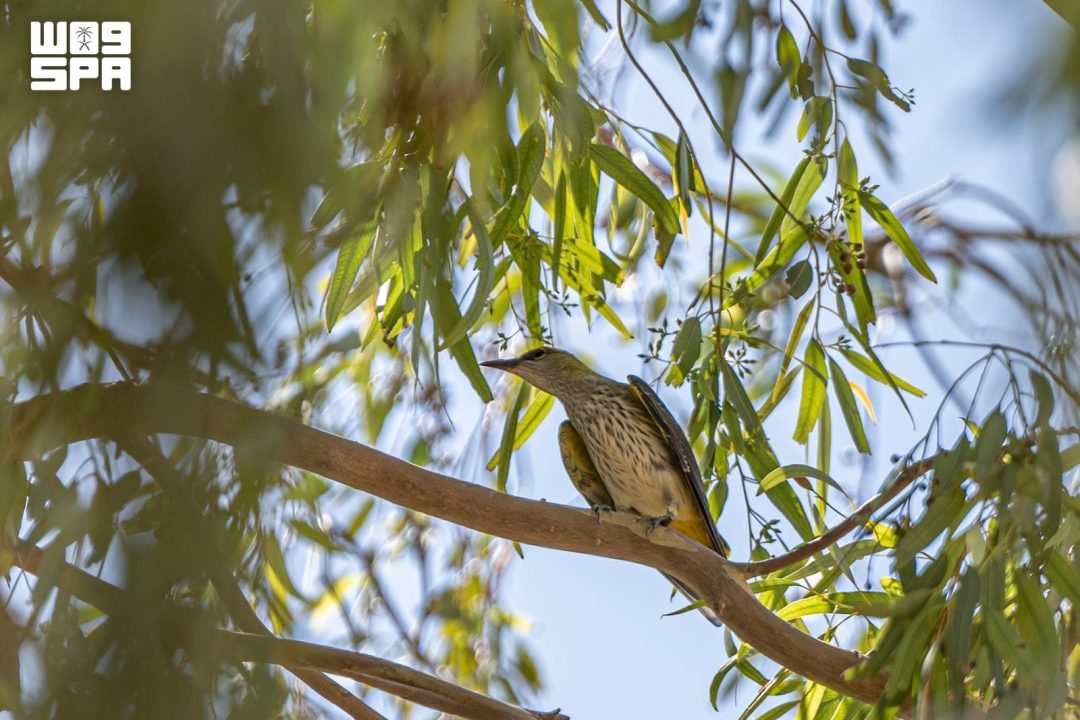
The Northern Borders Region serves as a natural stopover for various migratory bird species, including the Eurasian golden oriole and the common cuckoo, during their seasonal journeys.
According to SPA, the region’s geographical location and diverse habitats—comprising valleys, ravines, plains, agricultural areas, and shrublands—provide these birds with essential locations to rest and feed.
The Eurasian golden oriole is a migratory songbird approximately 24 cm long that breeds in parts of Asia and Europe during the summer and winters in Africa. The common cuckoo is characterized by pointed wings, a long tail, and plumage that is predominantly gray on the upperparts with pale, dark-streaked underparts, though some females exhibit reddish-brown coloration.
Adnan Khalifa, a member of the Aman Environmental Association, stated that these sightings reflect the importance of the region’s location along seasonal migration routes. He noted that the shrublands, plains, agricultural areas, and valleys offer suitable environments for temporary stopovers.
Which migratory bird species were recently sighted in the Northern Borders Region? The Northern Borders Region has welcomed the Eurasian golden oriole and the common cuckoo. The Eurasian golden oriole is a songbird measuring about 24 cm in length, while the common cuckoo is identified by its pointed wings and long tail.
What habitats in the Northern Borders Region support migratory birds? Migratory birds utilize diverse habitats in the region to rest and feed. These environments include agricultural areas, plains, shrublands, ravines, and valleys, which Adnan Khalifa of the Aman Environmental Association notes are suitable for temporary stopovers.
What are the physical characteristics and migration patterns of the Eurasian golden oriole? The Eurasian golden oriole is a migratory songbird distinguished by striking coloration and a length of about 24 cm. Its migration pattern involves breeding in parts of Asia and Europe during the summer and spending the winter season in Africa.