


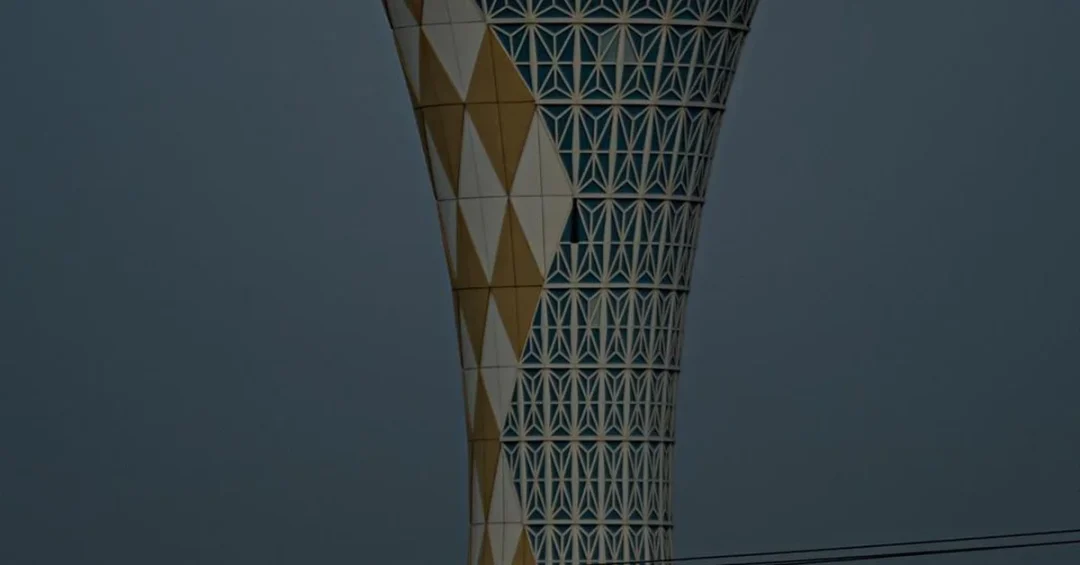
The full moon of Rabi Al-Thani cast its bright light over the Northern Borders Region and skies across the Kingdom on Sunday evening, marking the first astronomical full moon of autumn in the Northern Hemisphere. The event was reported by the Saudi Press Agency (SPA), drawing attention from astronomy enthusiasts, photographers and residents who gathered to watch the lunar disk rise above the eastern horizon shortly before sunset. The moon remained visible throughout the night, tracking slowly from east to west before setting in the early morning hours. According to Adnan Khalifa, a member of the Astronomy and Space Club, the moon reached its full phase when it was positioned directly opposite the sun relative to Earth, allowing its entire visible disk to appear illuminated from the surface of the planet. The clear desert skies of the Northern Borders Region, long prized by stargazers for their low light pollution, provided ideal conditions for observation with the naked eye.
The appearance of the Rabi Al-Thani full moon is more than a routine celestial event. It marks a precise moment in the lunar calendar that has guided farmers, travellers and worshippers for centuries across the Arabian Peninsula. For Saudi Arabia, whose official calendar follows the Hijri system, the phases of the moon retain practical and cultural importance, from determining the start of Islamic months to shaping traditional practices in agriculture and navigation. The SPA report noted that the full moon is one of the primary stages in the moon’s monthly cycle, its appearance shifting according to its position relative to Earth and the sun. The cycle begins with the new moon, progresses through the first quarter and waxing gibbous, and culminates in the full moon, after which the illuminated portion gradually wanes. Residents across the region described the display as a reminder of the Kingdom’s vast, open landscapes and their unique relationship with the night sky.
Context and Background
Why does a full moon in a specific Hijri month attract such attention in Saudi Arabia? The answer lies in the intersection of astronomy, religion and culture that defines daily life in the Kingdom. The Hijri calendar, which is based on the lunar cycle, determines the timing of Ramadan, Eid al-Fitr, Eid al-Adha and the annual Hajj pilgrimage. Each month begins with the sighting of the new crescent, and the full moon that follows roughly two weeks later serves as a natural marker of the month’s midpoint. In Rabi Al-Thani, the second month of the Islamic year, the full moon arrives as temperatures begin to moderate across the Arabian Peninsula, creating comfortable conditions for evening observation and outdoor gatherings.
Adnan Khalifa explained that the timing of this particular full moon offers astronomy and photography enthusiasts an opportunity to observe its rise above the eastern horizon at approximately the same time as sunset. This coincidence, known to astronomers as a full moon near the horizon at dusk, produces striking visual effects as the moon appears larger and warmer in colour due to atmospheric refraction. Khalifa added that the moon would remain visible in the sky throughout the night, appearing to move from east to west before setting in the morning, in a celestial display that can be observed with the naked eye when skies are clear. Such events have long inspired local traditions of moon-watching, particularly in desert regions where the absence of artificial light allows the lunar surface to appear with remarkable clarity.
The Northern Borders Region, which shares borders with Iraq and Jordan, is one of the least densely populated areas of Saudi Arabia. Its wide horizons and dry climate make it a natural destination for amateur astronomers and photographers seeking unobstructed views of the night sky. The SPA report highlighted that the full moon was visible not only in the Kingdom but also in other parts of the world, reflecting the universal nature of lunar phases. For Saudi Arabia, however, the event carries a distinct local resonance, connecting modern astronomical observation with centuries of Bedouin knowledge about the movement of celestial bodies.
Key Details of the Rabi Al-Thani Full Moon
What exactly happens when the moon reaches its full phase? According to Adnan Khalifa of the Astronomy and Space Club, the moon is positioned opposite the sun relative to Earth, meaning the side of the moon facing Earth is fully illuminated. This alignment occurs approximately once every 29.5 days, the length of a complete lunar cycle. The full moon rises in the east around the time the sun sets in the west, remains visible for most of the night, and sets in the west around sunrise. Khalifa noted that the moon’s disk appears almost fully illuminated from Earth’s surface during this phase, offering a bright and detailed view of its surface features, including the dark plains known as maria and the lighter highlands.
The report described the full moon as one of the primary stages in the moon’s monthly cycle. The cycle begins with the new moon, when the moon is between Earth and the sun and its illuminated side faces away from the planet. It then progresses through the first quarter, when half of the visible disk is lit, and the waxing gibbous phase, before reaching full moon. After the full moon, the illuminated portion gradually wanes through the waning gibbous, third quarter and waning crescent phases before returning to new moon. Each stage offers different viewing conditions and photographic opportunities, but the full moon is often the most anticipated because of its brightness and symmetry.
For observers in the Northern Borders Region, the full moon of Rabi Al-Thani appeared against a backdrop of clear, dry air, which is typical for late September and early October in northern Saudi Arabia. The SPA report noted that the moon could be observed with the naked eye when skies are clear, though binoculars or small telescopes would reveal greater detail. Photography enthusiasts were advised to capture the moon as it rose above the eastern horizon, when its colour often shifts from orange to pale white due to the scattering of light in the atmosphere. The event also provided an opportunity for families and community groups to gather outdoors, reflecting the Kingdom’s growing interest in astronomy as a leisure and educational activity.
International and Regional Impact
How does a lunar event in Saudi Arabia connect to the wider world? The full moon is a global phenomenon, visible simultaneously across many countries, and the Rabi Al-Thani full moon was no exception. The SPA report noted that the moon illuminated skies over the Northern Borders Region and other parts of the world, underscoring the shared nature of astronomical observation. In the Middle East, where the Hijri calendar governs religious and civil life, the full moon of Rabi Al-Thani served as a visible marker of the month’s progress. In other regions, the same full moon is known by different names, such as the Harvest Moon in some Western cultures, reflecting the universal human impulse to track the seasons through the moon’s phases.
For Saudi Arabia, the event also carries diplomatic and scientific significance. The Kingdom has invested heavily in astronomy and space sciences in recent years, establishing research centres, observatories and educational programmes aimed at inspiring young people to pursue careers in science, technology, engineering and mathematics. The Astronomy and Space Club, which counts Adnan Khalifa among its members, is part of a broader ecosystem of Saudi scientific societies that promote public engagement with celestial events. By reporting on the full moon through official channels such as the Saudi Press Agency, the Kingdom reinforces its commitment to scientific literacy and its role as a regional hub for knowledge and discovery. The event also aligns with Saudi Arabia’s efforts to diversify its economy and develop high-tech sectors, including space exploration and satellite technology.
Economic and Strategic Significance
What economic value can be drawn from a full moon? While the event itself is natural and fleeting, it supports several sectors that are central to Saudi Arabia’s economic transformation. Astronomy tourism, though niche, is growing in the Kingdom, with desert camps, observatories and guided night-sky tours attracting both domestic and international visitors. The Northern Borders Region, with its clear skies and low humidity, is well positioned to benefit from this trend. Local businesses, including hotels, transport providers and tour operators, can leverage celestial events to extend the tourism season and create new experiences for visitors seeking nature-based activities.
Beyond tourism, the full moon of Rabi Al-Thani highlights the importance of scientific research and education. Saudi universities and research centres are increasingly active in astronomy, meteorology and space science, often collaborating with international partners. The precise observation of lunar phases supports research in fields such as agriculture, where lunar calendars have historically guided planting and harvesting, and in environmental monitoring, where moonlight affects the behaviour of nocturnal wildlife. The event also serves as a reminder of the Kingdom’s strategic location, which offers favourable conditions for astronomical observation due to its vast deserts, high altitude areas and minimal light pollution. These advantages are being recognized by global scientific organizations, opening doors for cooperation and investment.
Vision 2030 Alignment
How does a moonlit night in the Northern Borders connect to Saudi Vision 2030? The vision, launched in 2016 by Crown Prince Mohammed bin Salman, aims to diversify the Kingdom’s economy, improve quality of life and position Saudi Arabia as a global leader in innovation and tourism. Astronomy and space sciences are explicitly part of this agenda, with initiatives such as the Saudi Space Commission and the establishment of NEOM, a futuristic region that includes plans for research and technology hubs. The full moon of Rabi Al-Thani, reported by the Saudi Press Agency, reflects the Kingdom’s commitment to celebrating scientific curiosity and sharing it with the public through official, trusted channels.
Moreover, events like this reinforce the cultural and natural heritage that Vision 2030 seeks to preserve and promote. The Northern Borders Region, often overlooked in favour of larger cities, is being developed as a destination for nature and heritage tourism. By highlighting the region’s clear skies and astronomical potential, the SPA report contributes to a broader narrative of balanced regional development. As Saudi Arabia continues to invest in education, tourism and technology, the simple act of watching a full moon becomes part of a larger story: a nation embracing its past, its environment and its future. The Rabi Al-Thani full moon will continue to rise each year, but its meaning in the Kingdom is evolving, just as the Kingdom itself is evolving.
20 Questions
Q1. What is the Rabi Al-Thani full moon?
A1. The Rabi Al-Thani full moon is the full lunar phase occurring in the second month of the Islamic Hijri calendar. It marks the first astronomical full moon of autumn in the Northern Hemisphere and was visible over Saudi Arabia’s Northern Borders Region on Sunday evening.
Q2. When did the full moon appear over Saudi Arabia?
A2. According to the Saudi Press Agency, the full moon illuminated the skies over the Northern Borders Region on Sunday evening, September 27, 2026. It rose above the eastern horizon at approximately the same time as sunset and remained visible throughout the night.
Q3. Who provided expert commentary on the event?
A3. Adnan Khalifa, a member of the Astronomy and Space Club, explained the scientific details of the full moon. He noted that the moon reaches its full phase when positioned opposite the sun relative to Earth, making its disk appear fully illuminated.
Q4. Why does the moon appear fully illuminated during a full moon?
A4. The moon appears fully illuminated because it is positioned opposite the sun relative to Earth. This alignment means the side of the moon facing Earth receives direct sunlight, allowing observers on the ground to see the entire visible disk lit up.
Q5. What is the best time to observe a full moon?
A5. The best time is at moonrise, when the moon appears above the eastern horizon around sunset. At this time, atmospheric effects can give the moon a warm colour and make it appear larger, offering excellent conditions for photography and naked-eye observation.
Q6. Can the full moon be seen without a telescope?
A6. Yes, the full moon is easily visible with the naked eye when skies are clear. Adnan Khalifa confirmed that the display can be observed without any equipment, though binoculars or a small telescope can reveal greater surface detail.
Q7. How long does the full moon remain visible?
A7. The full moon remains visible throughout the night, moving from east to west across the sky before setting in the morning. Its exact duration above the horizon depends on the observer’s location and the time of year.
Q8. What are the stages of the lunar cycle?
A8. The lunar cycle begins with the new moon, progresses through the first quarter and waxing gibbous, reaches full moon, and then wanes through the waning gibbous, third quarter and waning crescent phases before returning to new moon. The cycle lasts about 29.5 days.
Q9. Why is the Northern Borders Region good for moon watching?
A9. The Northern Borders Region has wide horizons, low humidity and minimal light pollution, making it ideal for observing celestial objects. Its clear desert skies allow the moon and stars to appear with remarkable brightness and clarity.
Q10. What is the Harvest Moon mentioned in some cultures?
A10. The Harvest Moon is a traditional name used in some Western cultures for the full moon closest to the autumn equinox. The Rabi Al-Thani full moon coincided with this period, which is why it is sometimes referred to by that name.
Q11. How does the full moon relate to the Hijri calendar?
A11. The Hijri calendar is based on the lunar cycle, with each month beginning with the sighting of the new crescent. The full moon occurs roughly midway through the month, serving as a natural marker of the month’s progress and a guide for religious and agricultural activities.
Q12. What scientific value does observing the full moon have?
A12. Observing the full moon helps scientists and enthusiasts study lunar surface features, atmospheric effects and the moon’s orbit. It also supports educational programmes that promote astronomy and space science among young people in Saudi Arabia.
Q13. Did the full moon appear in other countries?
A13. Yes, the full moon is a global phenomenon and was visible in many parts of the world on the same evening. The Saudi Press Agency noted that the moon illuminated skies over the Northern Borders Region and other parts of the world.
Q14. What economic benefits can lunar events bring to Saudi Arabia?
A14. Lunar events can support astronomy tourism, attracting visitors to desert camps and observatories. They also boost local businesses such as hotels and tour operators, contributing to the diversification of the Kingdom’s economy and the growth of nature-based tourism.
Q15. How does Saudi Arabia promote astronomy?
A15. Saudi Arabia promotes astronomy through scientific clubs, university research centres and official media coverage via the Saudi Press Agency. These efforts aim to inspire young people and develop skills in science, technology, engineering and mathematics.
Q16. What role does the Astronomy and Space Club play?
A16. The Astronomy and Space Club brings together enthusiasts and experts to observe and explain celestial events. Members like Adnan Khalifa provide public commentary, helping to raise awareness of astronomy and its relevance to daily life in the Kingdom.
Q17. How does the full moon affect agriculture in Saudi Arabia?
A17. Traditionally, lunar phases have guided planting and harvesting in many cultures, including in the Arabian Peninsula. While modern agriculture relies on other methods, the full moon remains a cultural reference for seasonal timing and traditional practices.
Q18. What should photographers consider when shooting the full moon?
A18. Photographers should capture the moon as it rises above the horizon, when atmospheric scattering creates warm colours. Using a tripod and adjusting exposure settings can help produce clear images of the lunar surface and its surroundings.
Q19. How does this event align with Vision 2030?
A19. Vision 2030 emphasizes innovation, quality of life and tourism development. The full moon event supports these goals by promoting scientific curiosity, encouraging outdoor recreation and highlighting the natural attractions of regions like the Northern Borders.
Q20. What can residents and visitors do to enjoy future full moons?
A20. Residents and visitors can plan moon-watching trips to desert areas with clear skies, join astronomy clubs, and follow official Saudi media for updates on celestial events. These activities offer educational and recreational benefits for all ages.
Reader Feedback
We value your thoughts. Please share your feedback on this article.
Your feedback helps us improve our coverage.
Related articles
 Full Moon Illuminates Saudi Arabia’s Sky in Rabi Al-Thani
 Jeddah Astronomy Society announces last quarter moon observation
 Saudi skies witness last quarter moon of Safar 1448 AH
 Sirius star observed in Rafha skies
 Al-Summan Sinkholes study featured in INSO 2026
 SDAIA AI Creativity Bootcamp for Saudi Content Creators