


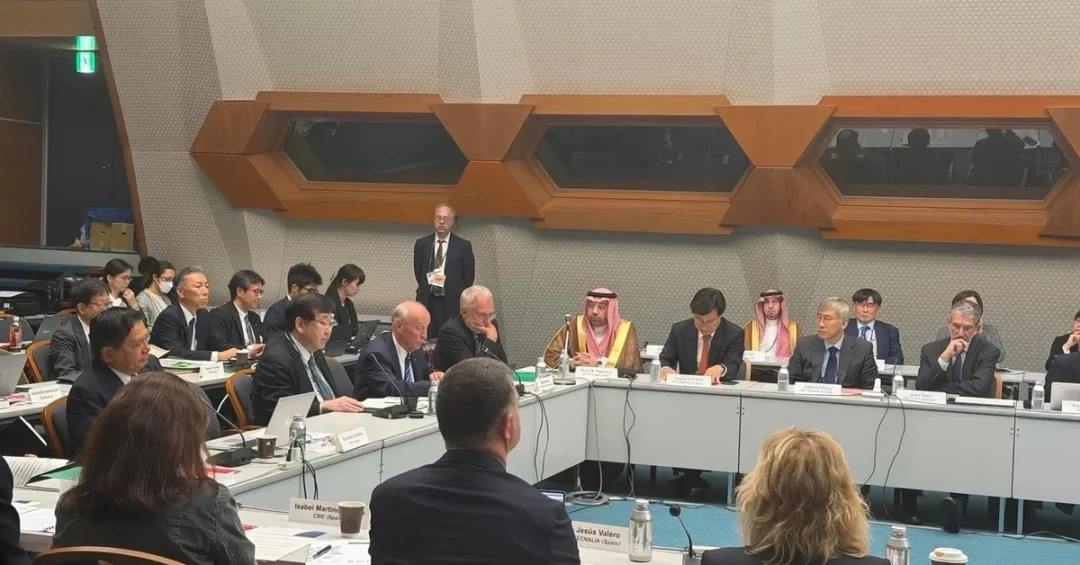
Saudi Arabia has joined research institution leaders from 33 countries in endorsing a joint statement on AI Integrity and Openness, issued at the Global Summit of Research Institute Leaders held in Kyoto, Japan, on the sidelines of the Science and Technology in Society (STS) Forum. The Kingdom was represented by Dr. Munir Eldesouki, President of King Abdulaziz City for Science and Technology (KACST) and Acting Governor of the Research Development and Innovation Authority, who also joined the STS Forum Council. The announcement, carried by the Saudi Press Agency (SPA), marks another step in the Kingdom’s expanding role in global science and technology governance.
The Kyoto meeting convened leaders from 33 research institutions worldwide to examine how artificial intelligence is reshaping the scientific research ecosystem and the future of knowledge production. The joint statement that emerged emphasizes the need for a scientific ecosystem that harnesses AI’s advanced capabilities while preserving research integrity and openness. It also calls for stronger international cooperation to ensure broader and more equitable access to modern scientific tools. For Saudi Arabia, participation at this level reflects a deliberate strategy to be a rule-shaper in emerging technology, not merely a participant. But why does a statement issued in Kyoto matter for the future of science in Riyadh, Jeddah, and NEOM?
Context and Background
The Global Summit of Research Institute Leaders is a high-level gathering held alongside the STS Forum, one of the world’s premier platforms for dialogue between scientists, policymakers, and industry. The 2026 edition focused on the transformations driven by artificial intelligence across the scientific research ecosystem. Discussions covered both the opportunities AI offers to accelerate discovery and the challenges it introduces, including the reliability of knowledge, access to computing capabilities and advanced infrastructure, data sovereignty, model openness, and the protection of researchers’ intellectual contributions. These are not abstract concerns. They are the practical questions that research institutions face daily as AI becomes embedded in everything from drug discovery to climate modeling.
Saudi Arabia’s presence at the summit builds on years of investment in research, development, and innovation. KACST, established in 1980, is the Kingdom’s national science agency and a key driver of applied research. The Research Development and Innovation Authority, created to coordinate and elevate the national R&D ecosystem, works to align research priorities with Vision 2030. Dr. Eldesouki’s dual role positions him at the intersection of institutional science and national strategy. His appointment to the STS Forum Council signals that Saudi Arabia is now part of the inner circle shaping the global research agenda. What does it mean when a Kingdom known for energy exports becomes a voice in how AI is governed for science?
The timing is significant. Artificial intelligence is advancing faster than the frameworks designed to govern it. Research institutions are grappling with questions about data ownership, algorithmic transparency, and the risk that AI could widen the gap between well-resourced and under-resourced scientific communities. The Kyoto statement directly addresses these tensions. It stresses the importance of balancing data sovereignty with the openness of AI models, and of expanding access to advanced research infrastructure to reduce gaps between institutions. For Saudi Arabia, these principles align with its own approach: investing in sovereign capabilities while remaining open to international collaboration.
Key Details of the Joint Statement
The joint statement issued by the research institution leaders is structured around several core commitments. First, it emphasizes the importance of developing a scientific ecosystem that benefits from AI’s advanced capabilities while preserving research integrity and openness. This means ensuring that AI-generated findings meet the same rigorous standards as traditional research. Second, it calls for strengthening international cooperation to ensure broader and more equitable access to modern scientific tools and capabilities. The leaders recognize that no single country or institution can address AI’s challenges alone. Third, the statement addresses the balance between data sovereignty and model openness. As reliance on data and computing power grows, institutions must navigate the tension between protecting national data and sharing knowledge for the common good.
The statement also tackles the human dimension. It highlights the importance of fair recognition of researchers’ intellectual contributions and keeping people at the heart of the research and innovation process. AI, the leaders stress, should serve as a tool that enhances scientists’ capabilities rather than replacing human curiosity, thinking, and creativity. This is a pointed message at a time when some fear that AI could automate discovery in ways that marginalize human researchers. The Kyoto statement insists that technology must be guided to serve people and society. It also underscores that the rapid advancement of AI requires deeper international cooperation and the development of principles that strengthen integrity, openness, and trust.
Dr. Eldesouki’s participation in the STS Forum Council adds a Saudi perspective to these discussions. The Council serves as a steering body for the forum’s long-term agenda, and membership reflects recognized leadership in science and technology. Saudi Arabia’s inclusion signals that its investments in research infrastructure, its national AI strategy, and its Vision 2030 reforms are being noticed globally. The Kingdom is not just attending meetings; it is helping to set the terms of debate. How will Saudi research institutions translate these global principles into local practice? The answer lies in the Kingdom’s own ambitious programs.
International and Regional Impact
The Kyoto summit brought together leaders from 33 research institutions, representing a cross-section of the world’s most advanced scientific organizations. Their joint statement carries weight because it reflects a consensus among institutions that collectively shape global research priorities. For Saudi Arabia, aligning with this consensus reinforces its position as a responsible stakeholder in the global science system. It also opens doors for deeper partnerships. When research leaders agree on principles of integrity and openness, they create a framework for collaboration that can lead to joint projects, shared data, and mobility of researchers. Saudi institutions, including KACST and the Research Development and Innovation Authority, are well placed to benefit from these openings.
Regionally, the statement’s emphasis on equitable access to AI tools and infrastructure resonates with the Middle East’s aspirations. Many countries in the region are investing heavily in digital transformation and AI, but they often face gaps in computing power and advanced research facilities. By championing broader access, Saudi Arabia positions itself as an advocate for emerging scientific communities. This is consistent with the Kingdom’s wider diplomacy, which has increasingly focused on bridging divides and fostering cooperation. The joint statement also reinforces the idea that data sovereignty need not be an obstacle to openness. For Saudi Arabia, which has developed robust data governance frameworks, this balance is both a practical necessity and a strategic asset.
The international impact extends beyond research institutions. Governments, funders, and technology companies watch such statements closely, as they often influence funding priorities and regulatory approaches. The Kyoto statement’s call for principles that strengthen trust in AI use could inform policy discussions in forums such as the G20 and UNESCO. Saudi Arabia’s participation ensures that its voice is heard in these conversations. It also allows the Kingdom to share its own experience in building a national AI ecosystem, including the Saudi Data and AI Authority (SDAIA) and the National Center for Artificial Intelligence. These bodies have been tasked with advancing AI in line with ethical guidelines and Vision 2030. What lessons can other nations draw from Saudi Arabia’s integrated approach to AI governance and research?
Economic and Strategic Significance
The strategic significance of Saudi Arabia’s participation in the Kyoto summit lies in the intersection of science, economy, and global influence. Vision 2030 aims to diversify the Kingdom’s economy away from oil dependence, with knowledge and innovation as key pillars. Research and development are central to this transformation. By engaging in global discussions on AI integrity and openness, Saudi Arabia can attract talent, investment, and partnerships that accelerate its own R&D goals. The joint statement’s emphasis on access to advanced infrastructure aligns with the Kingdom’s investments in supercomputing, data centers, and AI research centers. These are not just domestic projects; they are platforms for international collaboration.
Economically, AI is projected to add trillions of dollars to the global economy in the coming decade. Countries that shape the rules of AI development will have a competitive advantage. Saudi Arabia’s participation in the Kyoto summit is part of a broader effort to be a rule-maker, not just a rule-taker. The Kingdom has already launched initiatives such as the Saudi AI Strategy and the establishment of special economic zones focused on technology. The joint statement’s principles of integrity, openness, and fairness complement these efforts by creating a trusted environment for investment and innovation. For global companies considering research partnerships in the region, Saudi Arabia’s commitment to these principles is a signal of reliability.
The meeting also highlighted the importance of data sovereignty, a topic of growing importance for economies that generate vast amounts of data. Saudi Arabia has taken steps to ensure that data is protected and used responsibly, while still enabling innovation. The Kyoto statement’s balance between sovereignty and openness validates this approach. It suggests that countries can maintain control over their data while participating in global research networks. This is particularly relevant for Saudi Arabia’s ambitions in sectors such as healthcare, energy, and smart cities, where data is a critical asset. The Kingdom’s ability to navigate these issues will influence its attractiveness as a research destination. How will the global principles agreed in Kyoto shape the next generation of Saudi scientists and innovators?
Vision 2030 Alignment
Saudi Arabia’s participation in the Global Summit of Research Institute Leaders and its endorsement of the joint statement are directly aligned with Vision 2030’s objectives. The Vision seeks to build a diversified, innovation-driven economy, and science and technology are central to that goal. By engaging with leading research institutions worldwide, the Kingdom is strengthening its own research ecosystem and ensuring that it remains connected to global best practices. The joint statement’s emphasis on integrity and openness mirrors Vision 2030’s commitment to transparency and international cooperation. It also supports the development of human capital, as fair recognition of researchers’ contributions and the protection of intellectual property are essential to attracting and retaining talent.
Moreover, the Kingdom’s role in shaping global AI governance reflects its ambition to be a leader in emerging technologies. Vision 2030 includes goals for AI, digital transformation, and advanced manufacturing. The principles agreed in Kyoto—balancing data sovereignty with openness, expanding access to infrastructure, and keeping people at the center of innovation—provide a framework that can guide Saudi policies. As the Kingdom continues to invest in entities like KACST, the Research Development and Innovation Authority, and SDAIA, its participation in forums like the STS Forum will ensure that its voice is heard and its interests represented. The road ahead involves translating these global commitments into concrete actions, from joint research projects to shared ethical standards. Saudi Arabia’s journey toward a knowledge-based economy is well underway, and its engagement in Kyoto shows that it intends to help shape the future of science, not just follow it.
20 Questions
Q1. What was the Global Summit of Research Institute Leaders?
A1. It was a high-level meeting held in Kyoto, Japan, on the sidelines of the Science and Technology in Society (STS) Forum, bringing together leaders from 33 research institutions to discuss AI’s impact on scientific research.
Q2. Who represented Saudi Arabia at the summit?
A2. Dr. Munir Eldesouki, President of King Abdulaziz City for Science and Technology (KACST) and Acting Governor of the Research Development and Innovation Authority, represented the Kingdom and joined the STS Forum Council.
Q3. What was the theme of the meeting?
A3. The theme was “AI Integrity and Openness,” focusing on the opportunities and challenges artificial intelligence presents for scientific research and knowledge production.
Q4. What did the joint statement emphasize?
A4. It emphasized developing a scientific ecosystem that leverages AI while preserving research integrity and openness, and strengthening international cooperation for equitable access to modern scientific tools.
Q5. How does the statement address data sovereignty?
A5. It stresses achieving a balance between data sovereignty and the openness of AI models, recognizing growing reliance on data and computing capabilities in scientific research.
Q6. What did the leaders say about researchers’ contributions?
A6. They highlighted the importance of fair recognition of researchers’ intellectual contributions and keeping people at the heart of the research and innovation process.
Q7. What role should AI play according to the statement?
A7. AI should serve as a tool that enhances scientists’ capabilities rather than replacing human curiosity, thinking, and creativity.
Q8. Why is Saudi Arabia’s participation significant?
A8. It reflects the Kingdom’s growing presence on international scientific platforms and strengthens its participation in discussions about the future of research, innovation, and emerging technologies.
Q9. What is KACST?
A9. King Abdulaziz City for Science and Technology is Saudi Arabia’s national science agency, responsible for promoting and conducting applied research and development across various fields.
Q10. What is the Research Development and Innovation Authority?
A10. It is a Saudi government body tasked with coordinating and elevating the national research, development, and innovation ecosystem in line with Vision 2030.
Q11. What is the STS Forum?
A11. The Science and Technology in Society Forum is a global platform that brings together scientists, policymakers, and business leaders to discuss the intersection of science, technology, and society.
Q12. How does this meeting align with Vision 2030?
A12. It supports Vision 2030’s goals of building a knowledge-based economy, fostering innovation, and strengthening international partnerships in science and technology.
Q13. What challenges did the leaders discuss regarding AI?
A13. They discussed challenges related to the reliability of knowledge, access to computing infrastructure, data sovereignty, model openness, and protection of intellectual contributions.
Q14. What does the statement say about access to research infrastructure?
A14. It stresses expanding access to advanced research infrastructure to help reduce gaps between institutions and scientific communities globally.
Q15. How does Saudi Arabia benefit from such summits?
A15. Participation allows the Kingdom to shape global principles, build partnerships with leading institutions, and showcase its own AI and research initiatives to an international audience.
Q16. What is the significance of Dr. Eldesouki joining the STS Forum Council?
A16. It signals Saudi Arabia’s recognized leadership in science and technology and gives the Kingdom a seat at the table in shaping the forum’s long-term agenda.
Q17. What are the implications for global research cooperation?
A17. The joint statement sets a framework for deeper collaboration, including joint projects, shared data, and mobility of researchers, based on integrity and openness.
Q18. How does the statement address equitable access?
A18. It calls for broader and more equitable access to modern scientific tools and capabilities, ensuring that institutions in developing countries are not left behind.
Q19. What is Saudi Arabia’s broader AI strategy?
A19. The Kingdom has launched a national AI strategy, established the Saudi Data and AI Authority (SDAIA), and invested in AI research and infrastructure to drive economic diversification.
Q20. What happens next after the Kyoto summit?
A20. Saudi Arabia will continue to engage in international discussions, translate the principles into national policies, and strengthen partnerships to advance its research and innovation ecosystem.
Reader Feedback
We value your thoughts. Please share your feedback on this article.
Your feedback helps us improve our coverage.