


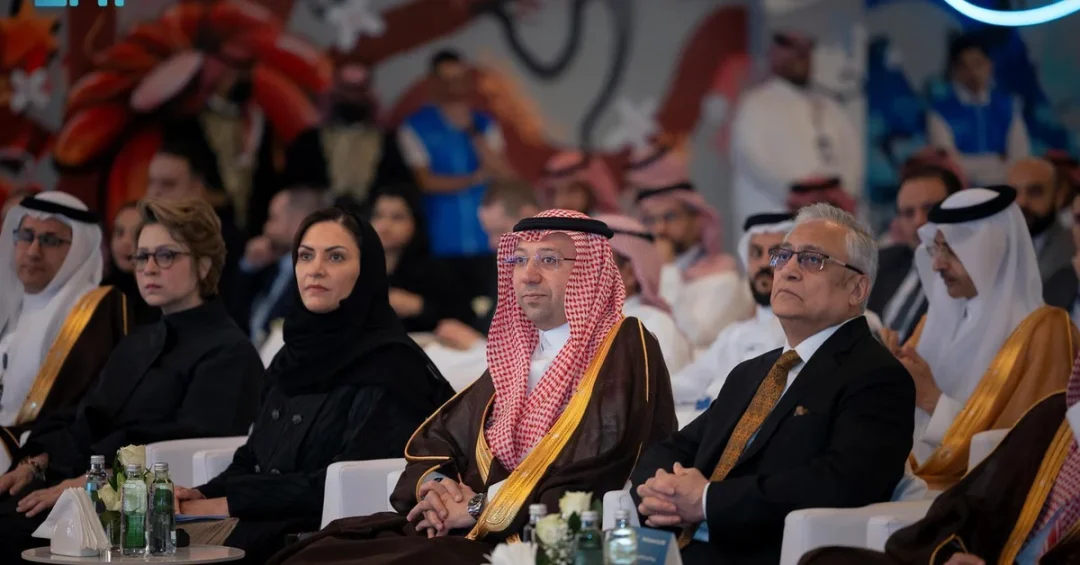
Saudi Arabia has announced the establishment of a Quantum Valley and the operation of its first quantum computer, a landmark initiative that positions the Kingdom at the forefront of the global quantum revolution. The announcement came during the conclusion of World Quantum Day 2025 events, organized by the Centre for the Fourth Industrial Revolution Saudi Arabia in partnership with King Abdulaziz City for Science and Technology (KACST). The event, held in Riyadh, was attended by Dr. Munir bin Mahmoud El-Desouki, President of KACST and Chairman of the Centre’s Board of Directors, along with a distinguished group of experts and technology enthusiasts from within and outside the Kingdom. This development underscores Saudi Arabia’s commitment to embracing future technologies and diversifying its economy in line with Vision 2030.
Why does this matter now? As the world races to harness the power of quantum computing, Saudi Arabia is making a strategic bet on an emerging technology that promises to reshape industries from healthcare to energy. The Quantum Valley initiative, which involves partnerships with global tech giants such as IBM and Pasqal, aims to build a robust quantum ecosystem that brings together academia, industry, and innovation. This move not only enhances the Kingdom’s technological sovereignty but also aligns with its broader goals of economic diversification and knowledge-based development. The event also honored the top 10 innovative startups from various countries in the “Quantum for Society” challenge, launched by the Centre in collaboration with the World Economic Forum’s UpLink platform, showcasing practical solutions to global challenges.
Context and Background
What is the significance of World Quantum Day, and why did Saudi Arabia choose to celebrate it with such fervor? World Quantum Day, observed annually on April 14, was established to raise awareness about quantum science and its potential applications. In 2025, the United Nations declared the International Year of Quantum Science and Technology, further elevating the importance of this field. Saudi Arabia’s Centre for the Fourth Industrial Revolution, in partnership with KACST, seized this opportunity to showcase the Kingdom’s ambitious quantum aspirations. The event featured a series of panel sessions, workshops, and a tech exhibition, highlighting the history and future evolution of quantum sciences. It also served as a platform to discuss governance and investment strategies for the next phase of the quantum transformation.
The Centre for the Fourth Industrial Revolution Saudi Arabia, affiliated with the World Economic Forum, has been instrumental in driving the Kingdom’s adoption of emerging technologies. By partnering with KACST, a leading research institution, the Centre aims to accelerate the development of quantum technologies and their applications. The announcement of Quantum Valley builds on previous efforts to foster innovation and entrepreneurship in Saudi Arabia. It reflects a strategic vision to create a knowledge-based economy, reduce dependence on oil, and position the Kingdom as a global hub for technology and innovation. The involvement of Aramco and the Saudi Data and Artificial Intelligence Authority (SDAIA) further underscores the collaborative approach to building a quantum ecosystem.
How does quantum computing differ from classical computing, and why is it a game-changer? Quantum computers leverage the principles of quantum mechanics, such as superposition and entanglement, to process information in ways that classical computers cannot. This enables them to solve complex problems at speeds unimaginable with traditional computers. Potential applications include drug discovery, material science, cryptography, and optimization. For Saudi Arabia, quantum computing offers opportunities to address challenges in healthcare, energy, water, and climate change, aligning with the Kingdom’s sustainability goals. By investing in Quantum Valley, Saudi Arabia is not only advancing its technological capabilities but also contributing to global efforts to harness quantum for societal benefit.
Key Details
What exactly does the Quantum Valley initiative entail, and who are the key players? According to Dr. Talal bin Ahmad Al-Sudairy, Senior Vice President of KACST for Research and Development, KACST is working with Aramco and SDAIA to establish Quantum Valley. The initiative will leverage strategic partnerships with major quantum companies such as IBM and Pasqal to operate the first quantum computer in the Kingdom. Dr. Al-Sudairy emphasized that “in the Kingdom, the future is not a distant dream—it is being translated in the quantum labs at KACST, discussed in the innovation centers in NEOM, and tested in the startup garage. We are working on building an ecosystem that brings together academia, industry, and innovation.” This collaborative approach is designed to accelerate the development and deployment of quantum technologies.
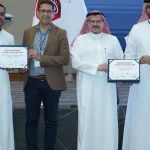
The event also honored the top 10 innovative startups from the “Quantum for Society” challenge, launched by the Centre in collaboration with the World Economic Forum’s UpLink platform. These startups are using quantum technologies to offer practical solutions to global challenges in fields such as climate change, sustainability, healthcare, and water. Among the winners was the German firm Planqc, which developed quantum computers to improve supply chains, discover materials, and accelerate drug development. The UK startup Quantum Dice developed advanced quantum algorithms to enhance energy efficiency in computational processes, while the Brazilian company Qnity introduced a high-precision solution for detecting molecular interactions to accelerate new drug discovery. These startups exemplify the innovative potential of quantum technologies.
In the environmental field, the Spanish startup PlanetaiSpace launched the “QUANTUM-AQUA” initiative, which uses satellite technologies and quantum machine learning to detect groundwater depletion early. In the health sector, the Saudi startup under formation Quantasphere developed advanced quantum solutions to enhance data security in healthcare, while the Finnish company Algorithmiq offered a software platform that links quantum and classical systems for drug discovery and patient-specific treatment customization. The US startup Xairos developed quantum time-transfer technology that provides ultra-accurate global timing for telecommunications networks, data centers, and financial institutions. In the energy and geology sectors, the Australian startup Nomad Atomics introduced a technology enabling precise imaging of subsurface dynamics using gravity, enabling effective applications for carbon dioxide storage. The Canadian startup Quminex developed solutions based on quantum intelligence and unsupervised learning to efficiently detect critical mineral deposits, and the Spanish company Quantum Mads developed technologies to enhance the efficiency of wastewater treatment plants using quantum computing, reducing energy consumption and improving environmental resource management.
International and Regional Impact
How will Saudi Arabia’s quantum ambitions influence the broader Middle East and beyond? The establishment of Quantum Valley and the operation of the first quantum computer in the Kingdom signal a significant leap in the region’s technological landscape. By partnering with international quantum leaders like IBM and Pasqal, Saudi Arabia is positioning itself as a hub for quantum innovation, attracting talent and investment from around the world. This initiative could spur similar efforts in neighboring countries, fostering a regional ecosystem of quantum research and development. Moreover, the “Quantum for Society” challenge, with winners from Germany, the UK, Brazil, Spain, Finland, the US, Australia, and Canada, highlights Saudi Arabia’s role as a global convener and supporter of quantum innovation. The event’s success demonstrates the Kingdom’s ability to bring together diverse stakeholders to address global challenges.
What are the implications for global quantum competition? As nations like the US, China, and European countries invest heavily in quantum technologies, Saudi Arabia’s entry into the field adds a new dimension to the global race. The Kingdom’s focus on practical applications and societal benefits, as seen in the UpLink challenge, differentiates its approach. By emphasizing collaboration and sustainability, Saudi Arabia is not only advancing its own capabilities but also contributing to the global quantum ecosystem. This could lead to new partnerships and knowledge exchange, accelerating the development of quantum solutions for pressing global issues. Furthermore, the Kingdom’s commitment to quantum science aligns with its Vision 2030 goals of economic diversification and technological leadership, enhancing its soft power and influence on the world stage.
Economic and Strategic Significance
Why is quantum computing economically significant for Saudi Arabia? Quantum computing has the potential to revolutionize industries by solving problems that are currently intractable. For Saudi Arabia, this could mean breakthroughs in oil and gas exploration, materials science, and logistics, leading to increased efficiency and cost savings. The development of a quantum ecosystem could also create high-skilled jobs, attract foreign investment, and stimulate entrepreneurship. The partnership with Aramco, the Kingdom’s national oil company, suggests a focus on energy applications, such as optimizing resource extraction and carbon capture. SDAIA’s involvement highlights the importance of data and AI in quantum development. By investing in Quantum Valley, Saudi Arabia is laying the groundwork for a knowledge-based economy that can compete globally.
What strategic advantages does Quantum Valley offer? Beyond economic benefits, quantum technologies have strategic implications for national security, cybersecurity, and defense. Quantum cryptography, for instance, could provide ultra-secure communication channels, while quantum sensing could enhance surveillance and navigation. By building domestic quantum capabilities, Saudi Arabia reduces its reliance on foreign technology and strengthens its sovereignty. The collaboration with IBM and Pasqal ensures access to cutting-edge quantum hardware and expertise, accelerating the Kingdom’s learning curve. Moreover, the initiative aligns with Vision 2030’s aim to localize advanced technologies and develop a skilled workforce. The establishment of Quantum Valley is a bold step toward a future where Saudi Arabia is not just a consumer but a producer of frontier technologies.
Vision 2030 Alignment
How does the Quantum Valley initiative align with Saudi Arabia’s Vision 2030? Vision 2030 is a comprehensive plan to diversify the Kingdom’s economy, reduce its dependence on oil, and develop public service sectors such as health, education, infrastructure, recreation, and tourism. Quantum computing is a key enabler of this transformation, with applications in healthcare, energy, water, and environmental sustainability. The establishment of Quantum Valley, the operation of the first quantum computer, and the support for innovative startups through the UpLink challenge all contribute to building a vibrant knowledge economy. By fostering innovation and entrepreneurship, Saudi Arabia is creating new opportunities for its youth and positioning itself as a global leader in technology. This initiative exemplifies the Vision 2030 spirit of ambition, collaboration, and forward-thinking.
What does the future hold for Saudi Arabia’s quantum journey? The launch of Quantum Valley is just the beginning. As the ecosystem matures, we can expect to see more quantum startups, research breakthroughs, and international partnerships. The Centre for the Fourth Industrial Revolution Saudi Arabia will continue to play a pivotal role in driving adoption and governance. With sustained investment and a clear strategic vision, Saudi Arabia is poised to become a major player in the global quantum economy. This will not only benefit the Kingdom but also contribute to solving some of the world’s most pressing challenges, from climate change to healthcare. The quantum future is being built in Saudi Arabia, and the world is watching.
20 Questions
Q1. What is Quantum Valley and where will it be located?
A1. Quantum Valley is a new initiative by Saudi Arabia to establish a hub for quantum computing research and development. It will be based at King Abdulaziz City for Science and Technology (KACST) in Riyadh, with partnerships extending to NEOM and other innovation centers.
Q2. Who are the key partners in the Quantum Valley initiative?
A2. The initiative is led by KACST in collaboration with Aramco and the Saudi Data and Artificial Intelligence Authority (SDAIA). International partners include IBM and Pasqal, who will provide quantum computing technology and expertise.
Q3. What is the significance of operating the first quantum computer in Saudi Arabia?
A3. Operating the first quantum computer in the Kingdom marks a major milestone in Saudi Arabia’s technological advancement. It enables researchers and businesses to experiment with quantum algorithms and develop applications that can solve complex problems in various fields.
Q4. What was the “Quantum for Society” challenge?
A4. The “Quantum for Society” challenge was launched by the Centre for the Fourth Industrial Revolution Saudi Arabia in collaboration with the World Economic Forum’s UpLink platform. It aimed to support startups using quantum technologies to address global challenges in climate, sustainability, healthcare, and water.
Q5. Which startups were honored at the World Quantum Day 2025 event?
A5. The top 10 startups honored include Planqc (Germany), Quantum Dice (UK), Qnity (Brazil), PlanetaiSpace (Spain), Quantasphere (Saudi Arabia), Algorithmiq (Finland), Xairos (US), Nomad Atomics (Australia), Quminex (Canada), and Quantum Mads (Spain).
Q6. How does Planqc’s technology contribute to supply chains and drug development?
A6. Planqc develops quantum computers that can optimize supply chains by solving complex logistics problems. In drug development, their technology can simulate molecular interactions at unprecedented speeds, accelerating the discovery of new medications.
Q7. What is the focus of Quantum Dice’s quantum algorithms?
A7. Quantum Dice focuses on enhancing energy efficiency in computational processes. Their advanced quantum algorithms aim to reduce the energy consumption of large-scale computations, contributing to more sustainable computing practices.
Q8. How does Qnity’s solution accelerate drug discovery?
A8. Qnity has introduced a high-precision solution for detecting molecular interactions. This allows researchers to understand how drugs interact with biological targets more accurately and quickly, speeding up the drug discovery process.
Q9. What is the “QUANTUM-AQUA” initiative by PlanetaiSpace?
A9. The “QUANTUM-AQUA” initiative uses satellite technologies and quantum machine learning to detect groundwater depletion early. This helps in managing water resources more effectively, especially in arid regions like Saudi Arabia.
Q10. How does Quantasphere enhance data security in healthcare?
A10. Quantasphere develops advanced quantum solutions to enhance data security in healthcare. Their technology leverages quantum encryption to protect sensitive patient data from cyber threats, ensuring privacy and compliance with regulations.
Q11. What does Algorithmiq’s software platform do?
A11. Algorithmiq offers a software platform that links quantum and classical systems for drug discovery and patient-specific treatment customization. It enables researchers to simulate complex biological processes and tailor treatments to individual patients.
Q12. What is Xairos’ quantum time-transfer technology used for?
A12. Xairos’ technology provides ultra-accurate global timing for telecommunications networks, data centers, and financial institutions. It ensures synchronization and precision in time-sensitive operations, enhancing reliability and efficiency.
Q13. How does Nomad Atomics’ technology help with carbon dioxide storage?
A13. Nomad Atomics uses quantum gravity sensors to precisely image subsurface dynamics. This enables effective monitoring of carbon dioxide storage sites, ensuring that CO2 remains securely stored underground and does not leak into the atmosphere.
Q14. What is Quminex’s solution for critical mineral detection?
A14. Quminex develops solutions based on quantum intelligence and unsupervised learning to efficiently detect critical mineral deposits. This supports the mining industry in locating valuable resources essential for technology and clean energy.
Q15. How does Quantum Mads improve wastewater treatment?
A15. Quantum Mads develops technologies to enhance the efficiency of wastewater treatment plants using quantum computing. Their solutions reduce energy consumption and improve environmental resource management, making treatment processes more sustainable.
Q16. What panel sessions were held during World Quantum Day 2025?
A16. Panel sessions discussed applications of quantum in healthcare, cybersecurity, computer science, education, and communications. They also covered governance and investment strategies for the next phase of quantum transformation.
Q17. What workshops were hosted by the Saudi Society for Quantum Computing?
A17. The Saudi Society for Quantum Computing hosted workshops presenting advanced concepts in quantum computing, most notably “entanglement swapping” and its expanding applications. These workshops aimed to educate and inspire participants.
Q18. Why was April 14 chosen as World Quantum Day?
A18. April 14 was chosen to commemorate the anniversary of the first observation of quantum entanglement. It serves as an annual occasion to celebrate quantum science and raise awareness about its potential.
Q19. How does Quantum Valley support Saudi Arabia’s Vision 2030?
A19. Quantum Valley supports Vision 2030 by fostering innovation, creating high-skilled jobs, and diversifying the economy. It aligns with the goals of building a knowledge-based economy and reducing dependence on oil.
Q20. What are the future plans for quantum computing in Saudi Arabia?
A20. Future plans include expanding Quantum Valley, attracting more international partners, and developing quantum applications in energy, healthcare, and sustainability. The Kingdom aims to become a global leader in quantum technology and innovation.
Reader Feedback
We value your thoughts. Please share your feedback on this article.
Your feedback helps us improve our coverage.
Related articles
 Riyadh Hosts 6th Conference on Mathematical Sciences
 Oracle, MCIT, NELC to Train 50,000 Saudis in AI
 Saudi Universities Transform into Innovation Hubs at EDGEx 2025
 2025 Renewable Energy Symposium Kicks Off in Dammam
 Moon and Antares Conjunction Dazzles Northern Borders Skies
 University of Jeddah Wins First Place at Harvard Health Hackathon