


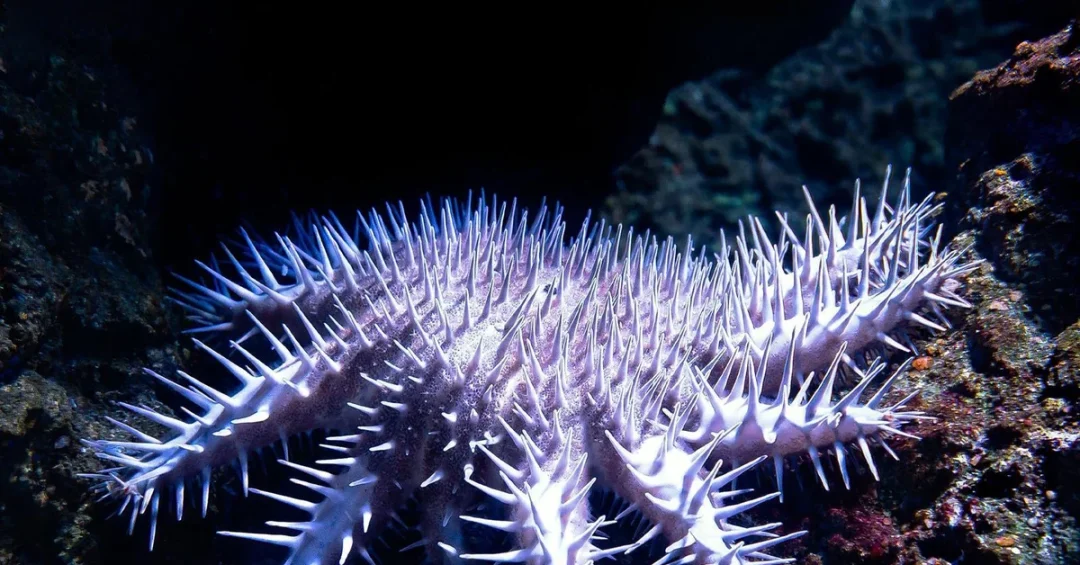
The National Center for Wildlife (NCW) has launched a comprehensive survey plan to assess Crown-of-Thorns Starfish (COTS) populations in key areas of the Red Sea, aiming to protect coral reefs and marine biodiversity. The initiative, reported by the Saudi Press Agency (SPA), is part of the NCW’s mandate as the national authority for terrestrial and marine wildlife conservation. The survey will gather critical data to enable swift responses to COTS outbreaks, which pose a significant threat to the health of Red Sea coral ecosystems.
Context and Background
The Crown-of-Thorns Starfish is a large starfish species belonging to the echinoderm phylum. It inhabits tropical and subtropical reefs and typically reproduces when water temperatures reach 28 degrees Celsius. While it feeds on algae and bacteria that grow on coral, it becomes a major threat during outbreaks, when its consumption of coral exceeds the reef’s natural growth rate. In December 2022, the NCW convened a workshop with global experts to develop a protocol for controlling COTS spread, tailored to the Red Sea environment. This survey plan builds on that protocol, which was adopted to allow swift and effective responses to limit outbreaks and protect coral reefs.
Key Details
The survey plan focuses on identifying operational procedures and establishing a framework for stakeholder involvement. It aims to collect baseline data on COTS spatial distribution, density, and reproductive behavior, particularly during the spawning season from the last two weeks of July to the first two weeks of August. This period is critical for understanding outbreak dynamics. The plan emphasizes accuracy and practicality to ensure comprehensiveness and feasibility. Cooperation between marine biologists, local stakeholders, and divers is integral to the initiative’s success. The data gathered will be used to predict and manage outbreaks in a timely manner, safeguarding coral-reef health and biodiversity.
Implications and Impact
The survey’s findings will have significant implications for marine conservation in the Red Sea, a region renowned for its rich biodiversity and coral reefs. By understanding COTS population dynamics, the NCW can implement targeted interventions to prevent widespread coral degradation. This proactive approach not only protects the Kingdom’s natural heritage but also supports sustainable tourism and fishing industries that depend on healthy marine ecosystems. The initiative underscores Saudi Arabia’s commitment to environmental stewardship and aligns with global efforts to preserve coral reefs, which are vital to ocean health.
Vision 2030 Alignment
This initiative reflects Saudi Arabia’s broader Vision 2030 goals, particularly in environmental sustainability and the preservation of natural resources. Under Vision 2030, the Kingdom aims to diversify its economy and enhance quality of life, which includes protecting its unique marine environments for future generations. The NCW’s efforts to combat COTS outbreaks demonstrate Saudi Arabia’s leadership in marine conservation and its dedication to safeguarding biodiversity, contributing to a sustainable and prosperous future.
20 Questions
Q1. What is the National Center for Wildlife (NCW)?
A1. The NCW is Saudi Arabia’s national authority responsible for terrestrial and marine wildlife conservation, establishing protocols, and addressing threats to biodiversity.
Q2. What is the Crown-of-Thorns Starfish (COTS)?
A2. COTS is a large starfish species that feeds on coral tissue. While normally part of the ecosystem, it can cause severe damage during outbreaks.
Q3. Why is COTS a threat to coral reefs?
A3. During outbreaks, COTS consume coral faster than reefs can grow, leading to significant degradation of coral ecosystems and loss of biodiversity.
Q4. What is the purpose of the NCW’s survey plan?
A4. The survey aims to gather data on COTS populations in the Red Sea to predict and manage outbreaks, thereby protecting coral reefs and marine life.
Q5. When was the workshop on COTS held?
A5. The NCW convened a workshop in December 2022 to discuss combating COTS outbreaks and develop a control protocol.
Q6. What does the COTS control protocol entail?
A6. The protocol provides a framework for swift and effective responses to limit COTS spread, tailored to the Red Sea environment.
Q7. What is the spawning season for COTS?
A7. The spawning season typically occurs from the last two weeks of July to the first two weeks of August, when water temperatures are around 28 degrees Celsius.
Q8. How does the survey plan gather data?
A8. The plan involves marine biologists, local stakeholders, and divers to collect baseline data on COTS distribution, density, and reproductive behavior.
Q9. Why is understanding COTS spatial distribution important?
A9. It helps predict outbreak locations and implement timely interventions to prevent coral-reef degradation.
Q10. What role do local stakeholders play in the initiative?
A10. Local stakeholders, including divers and community members, assist in data collection and support conservation efforts, ensuring the survey’s success.
Q11. What are the main causes of COTS outbreaks?
A11. Outbreaks are linked to food chain imbalances and overfishing of natural predators like the Napoleon fish, which allows COTS populations to surge.
Q12. How does the survey plan protect coral reefs?
A12. By providing data to predict and manage outbreaks, the plan enables timely actions to reduce COTS numbers and safeguard coral health.
Q13. What is the significance of the Red Sea for Saudi Arabia?
A13. The Red Sea is a vital marine ecosystem supporting biodiversity, tourism, and fisheries, making its protection essential for Saudi Arabia’s environmental and economic goals.
Q14. How does this initiative align with Vision 2030?
A14. It supports Vision 2030’s environmental sustainability goals by preserving natural resources and promoting responsible stewardship of marine ecosystems.
Q15. What happens if COTS outbreaks are not controlled?
A15. Uncontrolled outbreaks can lead to widespread coral death, loss of marine habitat, and negative impacts on fisheries and tourism.
Q16. Who are the key partners in this survey?
A16. Marine biologists, local stakeholders, and divers collaborate with the NCW to ensure comprehensive data collection and effective conservation.
Q17. How does the NCW involve global experts?
A17. The NCW consulted global experts and consultants during the 2022 workshop to learn best practices for controlling COTS spread.
Q18. What are the expected outcomes of the survey?
A18. The survey will provide baseline data to predict outbreaks, inform management strategies, and protect coral-reef health and biodiversity.
Q19. How does the NCW’s work benefit Saudi Arabia’s international standing?
A19. It showcases Saudi Arabia’s commitment to environmental conservation, enhancing its leadership in global marine protection efforts.
Q20. What is the long-term goal of the NCW’s COTS initiative?
A20. The long-term goal is to maintain healthy coral reefs in the Red Sea, ensuring sustainable marine ecosystems for future generations.
Reader Feedback
We value your thoughts. Please share your feedback on this article.
Your feedback helps us improve our coverage.