


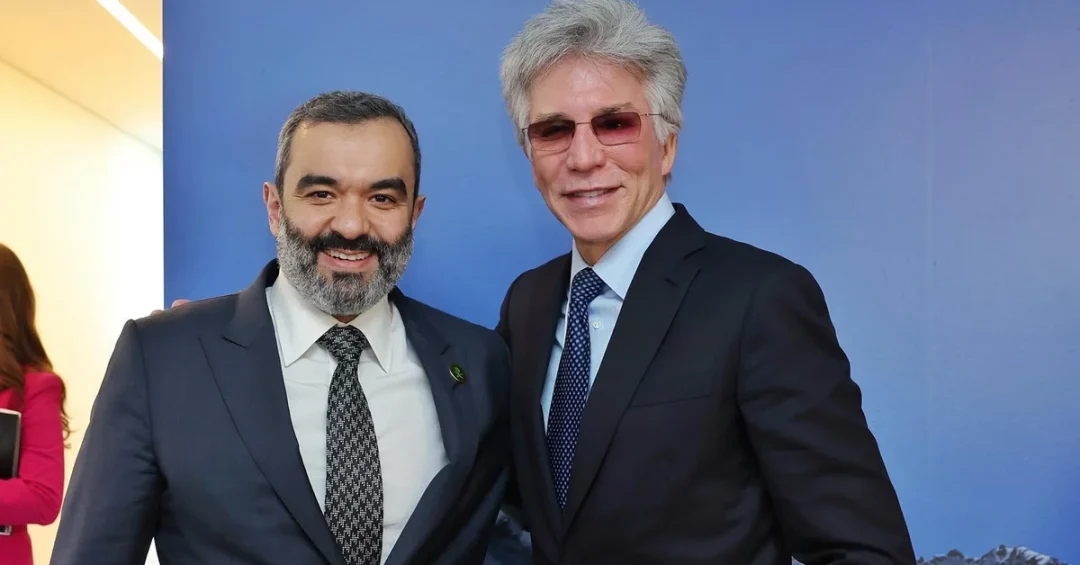
Saudi Minister of Communications and Information Technology Eng. Abdullah bin Amer Alswaha held a series of high-level meetings with government ministers and global technology leaders during the Kingdom’s participation in the World Economic Forum (WEF) in Davos, Switzerland, on January 22, 2025, according to the Saudi Press Agency (SPA). The discussions focused on expanding investment opportunities, forging digital partnerships, and advancing the Kingdom’s leadership in artificial intelligence, cloud computing, and next-generation connectivity.
The annual WEF gathering in Davos brings together heads of state, cabinet ministers, and chief executives from the world’s most influential companies to address pressing global challenges. Saudi Arabia’s active presence at the 2025 edition underscores its growing role as a digital economy hub and a bridge between established markets and emerging technological frontiers. The minister’s packed schedule of bilateral meetings reflects the Kingdom’s strategy of leveraging international cooperation to accelerate its digital transformation under Vision 2030. Why does a single day of diplomacy in the Swiss Alps carry such weight for the future of technology in the Middle East? The answer lies in the concrete partnerships and investment pathways being explored.
Context and Background
The World Economic Forum has long served as a platform for Saudi Arabia to showcase its economic reforms and attract foreign investment. In recent years, the Kingdom has used the Davos gathering to highlight progress on Vision 2030, the national blueprint launched by Crown Prince Mohammed bin Salman to diversify the economy away from oil dependence. The communications and information technology sector sits at the heart of this transformation, with the Ministry of Communications and Information Technology (MCIT) leading efforts to build a robust digital infrastructure, foster innovation, and create a knowledge-based economy.
Eng. Abdullah bin Amer Alswaha has been a prominent figure at Davos, consistently advocating for cross-border collaboration in technology. His meetings on January 22, 2025, spanned multiple continents and sectors, from digital governance in Southeast Asia to space exploration with American firms. These engagements align with the Kingdom’s National Strategy for Data and AI, which aims to position Saudi Arabia among the top global economies in AI by 2030. The strategy involves massive investments in data centers, cloud computing, and smart city projects, many of which require international expertise and capital.
The timing of these talks is significant. Global demand for AI, 5G, and cloud services is surging, and countries are racing to secure technological sovereignty. Saudi Arabia, with its young population, high smartphone penetration, and ambitious giga-projects such as NEOM, offers a lucrative market for technology providers. At the same time, the Kingdom seeks to localize technology and develop domestic talent, ensuring that partnerships yield long-term benefits beyond mere procurement. Isn’t it logical that the world’s tech giants would want to be part of such a dynamic market?
Key Details
Minister Alswaha’s first meeting was with Thai Deputy Prime Minister and Minister of Digital Economy and Society Prasert Jantararuangtong. The two officials discussed expanding partnerships in digital infrastructure, innovation, and the exchange of technical expertise. Thailand, like Saudi Arabia, is investing heavily in digital government services and smart cities, making the exchange mutually beneficial. The discussion signals Saudi Arabia’s interest in deepening ties with Asian economies beyond traditional energy trade.
In a separate meeting, Alswaha and Spanish Minister of Digital Transformation and Civil Service Oscar Lopez explored opportunities for technical innovation and improving public service efficiency using artificial intelligence. Spain has made strides in digital administration, and Saudi Arabia’s government is keen to adopt best practices to enhance its own e-government platforms, which already rank highly in global indices. The collaboration could lead to joint pilot projects and knowledge transfer.
On the investment front, Alswaha met with Blackstone chief executive Stephen Schwarzman to discuss investment opportunities in the digital economy. Blackstone, one of the world’s largest alternative asset managers, has shown interest in Saudi Arabia’s technology and AI sectors. The conversation focused on enhancing innovation and sustainability while supporting the Kingdom’s efforts to attract foreign direct investment in high-growth industries. Such talks are crucial as Saudi Arabia aims to boost its digital economy’s contribution to GDP.
To strengthen partnerships with leading technology companies, the minister met with ServiceNow chairman and chief executive Bill McDermott. They discussed qualitative partnership investments in cloud computing and AI, and expanding collaboration to develop digital solutions that enhance the efficiency of government digital operations. ServiceNow’s platform is widely used for workflow automation, and a deeper partnership could help Saudi government entities streamline services.
Alswaha also met with Alphabet president and chief investment officer Ruth Porat to discuss enhancing the strategic partnership in AI, data analysis, and cloud computing. Alphabet, Google’s parent company, has already established a presence in Saudi Arabia through cloud regions and training programs. The meeting likely explored further investments in AI research and infrastructure, aligning with the Kingdom’s goal of becoming a regional AI powerhouse.
In the realm of digital infrastructure, the minister held talks with Cisco Systems chairman and chief executive Chuck Robbins. They focused on supporting the growth of the digital economy through innovation, digital infrastructure technologies, and developing digital capabilities in the Kingdom. Cisco has been a long-term partner in Saudi Arabia’s networking and cybersecurity initiatives, and the meeting reinforced the commitment to advancing the Kingdom’s digital backbone.
To enhance the sharing economy, Alswaha met with Uber chief executive Dara Khosrowshahi. They discussed economic opportunities in the smart transportation sector and enhancing innovation in the digital economy system. Uber’s presence in Saudi Arabia has grown, and the discussions may have touched on expanding services, integrating with public transit, and supporting the Kingdom’s smart mobility goals.
Alswaha also met with Ericsson president and chief executive Borje Ekholm to develop digital infrastructure and discuss the future of 5G and 6G technologies and their role in supporting innovation. Ericsson is a key vendor for Saudi telecom operators, and the talks likely covered the rollout of advanced networks and the potential of 6G research. Finally, the minister discussed space sector development with Voyager Space chairman and chief executive Dylan Taylor, focusing on partnerships to provide innovative technical solutions in space and develop modern technologies that support human progress.
International and Regional Impact
The meetings in Davos demonstrate Saudi Arabia’s proactive approach to international diplomacy in the technology arena. By engaging with ministers from Thailand and Spain, the Kingdom is building bridges with diverse regions, fostering South-South and North-South cooperation. These ties can lead to joint ventures, research collaborations, and market access for Saudi tech firms. For Thailand, partnering with Saudi Arabia offers a gateway to the Middle East, while Spain gains a strategic ally in digital governance.
On the corporate side, the presence of top executives from Blackstone, ServiceNow, Alphabet, Cisco, Uber, Ericsson, and Voyager Space signals strong confidence in Saudi Arabia’s economic trajectory. These companies are not just attending conferences; they are exploring concrete investments that could shape the Kingdom’s digital landscape for years. The discussions around AI, cloud, and 5G/6G are particularly timely, as these technologies underpin almost every sector, from healthcare to manufacturing. The region as a whole stands to benefit, as Saudi Arabia’s advancements often spill over into neighboring markets.
Moreover, the focus on space technology with Voyager Space highlights Saudi Arabia’s ambition to join the elite club of space-faring nations. The Kingdom established the Saudi Space Agency in 2018 and has since launched satellites and signed agreements for space research. Partnering with a company like Voyager Space, which specializes in commercial space stations and exploration, could accelerate Saudi Arabia’s capabilities in satellite communications, Earth observation, and even human spaceflight. This is not just about prestige; space technology has practical applications in agriculture, urban planning, and disaster management. Could Saudi Arabia become a hub for space innovation in the Middle East? The groundwork is being laid.
Economic and Strategic Significance
The digital economy is a cornerstone of Saudi Arabia’s economic diversification strategy. According to official estimates, the ICT sector is expected to contribute significantly to GDP growth and job creation. The partnerships discussed in Davos are designed to attract foreign investment, transfer knowledge, and create high-skilled employment for Saudis. For instance, AI and cloud investments often require local data centers and trained personnel, leading to the development of new industries and upskilling programs.
Strategically, these meetings reinforce Saudi Arabia’s position as a reliable partner in a multipolar world. By engaging with both Western and Asian powers, the Kingdom maintains a balanced foreign policy that serves its developmental goals. The United States remains a key ally in technology, as seen with Alphabet, Cisco, and Uber, while European and Asian partners bring complementary strengths. This diversified approach reduces dependence on any single bloc and enhances Saudi Arabia’s negotiating power. The economic benefits are tangible: increased FDI, export opportunities for Saudi tech startups, and improved public services through digitalization.
Furthermore, the emphasis on sustainability and innovation in the Blackstone meeting aligns with the Saudi Green Initiative and the broader global ESG agenda. By integrating sustainability into digital investments, Saudi Arabia can attract environmentally conscious investors and ensure that its growth is responsible. The sharing economy discussions with Uber also point to a future where mobility is seamless, efficient, and integrated with public transport, reducing congestion and emissions in major cities like Riyadh and Jeddah.
Vision 2030 Alignment
Every meeting held by Minister Alswaha in Davos directly supports the objectives of Vision 2030. The vision’s pillars include a vibrant society, a thriving economy, and an ambitious nation. Digital transformation cuts across all three. A thriving economy requires a diversified private sector, and the partnerships with global tech leaders aim to stimulate entrepreneurship and innovation. An ambitious nation leverages technology to deliver efficient government services, as discussed with Spain and ServiceNow. A vibrant society benefits from smart transportation, improved healthcare through AI, and enhanced connectivity.
The National Strategy for Data and AI, launched in 2020, sets clear targets: to make Saudi Arabia a global leader in AI by 2030, with investments worth billions of dollars. The meetings with Alphabet, ServiceNow, and Blackstone are steps toward realizing these targets. Similarly, the space discussions with Voyager Space align with the vision of establishing Saudi Arabia as a regional hub for space technology. As the Kingdom continues its journey toward a knowledge-based economy, such international engagements are not optional but essential. They signal that Saudi Arabia is open for business, open for innovation, and open for partnership. The road from Davos leads to Riyadh, NEOM, and beyond, where the fruits of these dialogues will be harvested for generations to come.
20 Questions
Q1. What was the main purpose of Minister Alswaha’s meetings at Davos?
A1. The main purpose was to discuss investment opportunities and digital partnerships with ministers and leaders of global companies, as part of Saudi Arabia’s participation in the World Economic Forum.
Q2. Which Thai official did Minister Alswaha meet?
A2. He met with Thai Deputy Prime Minister and Minister of Digital Economy and Society Prasert Jantararuangtong to expand partnerships in digital infrastructure, innovation, and technical expertise exchange.
Q3. What topics were discussed with the Spanish Minister of Digital Transformation?
A3. They discussed opportunities for technical innovation and improving the efficiency of public services using artificial intelligence, aiming to enhance government digital operations.
Q4. Who did Alswaha meet from Blackstone and what was discussed?
A4. He met with Blackstone chief executive Stephen Schwarzman to discuss investment opportunities in the digital economy, enhancing innovation and sustainability, and supporting technology and AI investments.
Q5. What was the focus of the meeting with ServiceNow’s Bill McDermott?
A5. They discussed qualitative partnership investments in cloud computing and AI, and expanding the partnership to develop digital solutions and enhance the efficiency of government digital operations.
Q6. Which company does Ruth Porat represent and what was discussed?
A6. Ruth Porat is president and chief investment officer of Alphabet, Google’s parent company. They discussed enhancing strategic partnership in AI, data analysis, and cloud computing.
Q7. What did Alswaha discuss with Cisco’s Chuck Robbins?
A7. They discussed supporting the growth of the digital economy through innovation, digital infrastructure technologies, and developing digital capabilities in the Kingdom.
Q8. Why did Minister Alswaha meet with Uber’s Dara Khosrowshahi?
A8. They met to enhance the sharing economy, discussing economic opportunities in the smart transportation sector and enhancing innovation in the digital economy system.
Q9. What was the topic of discussion with Ericsson’s Borje Ekholm?
A9. They discussed developing digital infrastructure and the future of 5G and 6G technologies and their role in supporting the innovation process.
Q10. What space-related partnership was discussed with Voyager Space?
A10. They discussed a partnership to provide innovative technical solutions in space and develop modern technologies that support innovation and achieve human progress in the space sector.
Q11. How does Saudi Arabia’s participation in WEF benefit its digital economy?
A11. It attracts foreign investment, fosters global partnerships, and showcases the Kingdom’s progress in digital transformation, helping to diversify the economy and create jobs.
Q12. What is the significance of AI discussions in these meetings?
A12. AI is a key driver of Vision 2030, and partnerships with global leaders help Saudi Arabia build capabilities, improve public services, and become a regional AI hub.
Q13. Which countries were represented in the ministerial meetings?
A13. Thailand and Spain were represented through their respective ministers, reflecting Saudi Arabia’s engagement with both Asian and European nations.
Q14. How do these meetings support Saudi Arabia’s space ambitions?
A14. The meeting with Voyager Space advances partnerships in space technology, supporting the Kingdom’s goal to develop its space sector and join leading space-faring nations.
Q15. What role does cloud computing play in Saudi Arabia’s digital strategy?
A15. Cloud computing is essential for government efficiency, data storage, and AI applications. Partnerships with companies like ServiceNow and Alphabet strengthen the Kingdom’s cloud infrastructure.
Q16. How does the meeting with Uber relate to Vision 2030?
A16. It supports the smart transportation sector and the sharing economy, contributing to improved urban mobility and economic diversification under Vision 2030.
Q17. What are the expected outcomes of these Davos meetings?
A17. Expected outcomes include new investment deals, joint ventures, knowledge transfer, and enhanced digital infrastructure, all of which will accelerate Saudi Arabia’s digital transformation.
Q18. Why is international cooperation important for Saudi Arabia’s tech sector?
A18. International cooperation brings capital, expertise, and access to global markets, which are crucial for building a competitive and innovative tech ecosystem in the Kingdom.
Q19. How does the National Strategy for Data and AI relate to these meetings?
A19. The strategy aims to make Saudi Arabia a global AI leader by 2030. The meetings with AI-focused companies like Alphabet and ServiceNow directly support its implementation.
Q20. What message does Saudi Arabia’s presence at Davos send to the world?
A20. It sends a message that Saudi Arabia is open for business, committed to technological innovation, and actively shaping the global digital economy in line with Vision 2030.
Reader Feedback
We value your thoughts. Please share your feedback on this article.
Your feedback helps us improve our coverage.
Related articles
 KAUST Wins Japan Prize for Marine Ecosystem Research
 Alswaha Highlights Saudi Role in Global AI Governance at Davos
 SDAIA Awards AI Accreditation to Over 40 Saudi Entities
 Ibdaa 2025 National Olympiad Kicks Off Next Week
 Arab Cooperation Key to AI Advancement, Says AASTMT President
 SDAIA Champions Responsible AI at Arab League Dialogue