


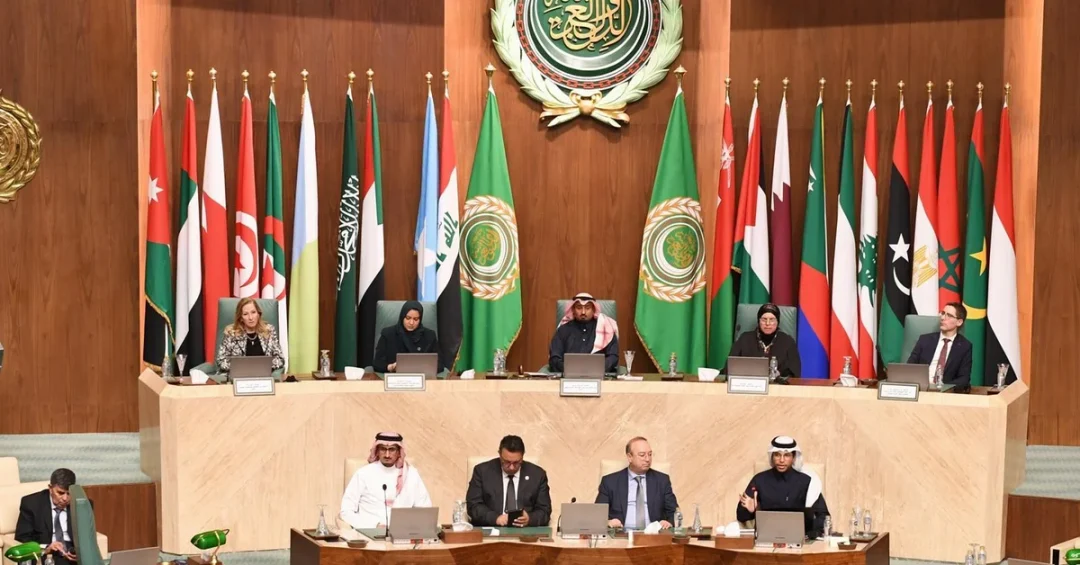
The Saudi Data and AI Authority (SDAIA) reaffirmed the Kingdom’s commitment to responsible innovation and the safe, reliable use of artificial intelligence during the Arab Dialogue Circle held in Cairo on February 3, 2025, under the theme “Artificial Intelligence in the Arab World: Innovative Applications and Ethical Challenges.” The event, organized by the General Secretariat of the Arab League in partnership with the Arab Academy for Science, Technology and Maritime Transport (AASTMT) and Naif Arab University for Security Sciences (NAUSS), brought together Arab and international officials, academics, and technology experts to examine how AI can be governed responsibly while accelerating regional development. SDAIA’s participation underscored Saudi Arabia’s growing role as a global voice on AI ethics and governance, positioning the Kingdom not only as a technology adopter but as a rule-shaper for the responsible digital economy. What does it mean when a nation takes the lead in defining how artificial intelligence should serve humanity?
The high-level dialogue reflected a widening consensus across the Arab world that AI’s transformative potential must be matched by robust ethical guardrails, transparent governance, and inclusive capacity-building. SDAIA’s delegation used the platform to highlight the Kingdom’s integrated approach — one that pairs ambitious national strategies with practical frameworks for safety, reliability, and human-centered design. For international observers, the Cairo gathering offered a clear signal that Saudi Arabia intends to help steer the global AI conversation, ensuring that emerging technologies are deployed in ways that respect cultural values, protect users, and deliver measurable economic and social returns. The meeting also reinforced the importance of multilateral cooperation at a time when AI policy is being written in real time across every region of the world. How can nations collaborate effectively when the technology itself evolves faster than the rules meant to govern it?
Context and Background
The Arab Dialogue Circle was convened by the General Secretariat of the Arab League alongside two specialized institutions: the Arab Academy for Science, Technology and Maritime Transport, a regional center of excellence headquartered in Alexandria, and Naif Arab University for Security Sciences, a Riyadh-based institution focused on security research and training. Together, these bodies designed a forum that would address both the opportunities and the ethical complexities of AI adoption across Arab societies. The participation of officials and experts from multiple organizations gave the discussion a genuinely multilateral character, ensuring that perspectives from government, academia, and industry were represented in equal measure.
SDAIA’s presence at the Cairo meeting is part of a broader pattern of Saudi engagement in international AI governance. The Kingdom has consistently argued that responsible innovation is not a constraint on progress but a precondition for it. By sharing its national experience, SDAIA contributes to a regional knowledge base that can help smaller economies avoid pitfalls and adopt best practices more quickly. The dialogue also aligns with the Arab League’s increasing focus on digital cooperation, including efforts to harmonize standards, encourage cross-border data flows, and build a shared ethical vocabulary for AI. In this sense, the Cairo meeting was less a one-off event and more a milestone in an ongoing regional conversation about technology, values, and sovereignty.
Why does regional coordination matter so much in the field of artificial intelligence? Because AI systems do not respect borders, and the risks of misuse — from misinformation to algorithmic bias — are shared across societies. A coordinated Arab approach can amplify the region’s influence in global standard-setting bodies while ensuring that local languages, cultural norms, and legal traditions are reflected in the technologies that citizens use every day. SDAIA’s contribution to this effort positions Saudi Arabia as a constructive partner rather than a passive participant, reinforcing the Kingdom’s reputation as a reliable actor in international technology diplomacy.
Key Details of SDAIA’s Participation
During the dialogue, SDAIA emphasized its continued support for responsible innovation and the promotion of safe and reliable AI usage in the Kingdom, explicitly linking these objectives to Saudi Vision 2030. The authority’s message was clear: AI should be developed and deployed in ways that enhance human welfare, strengthen trust, and support sustainable development, rather than simply maximizing automation or efficiency. SDAIA also highlighted the importance of building national capabilities, including talent development, research, and public awareness, as essential complements to technical infrastructure.
The authority’s participation reflected its dual mandate: to advance the Kingdom’s data and AI ecosystem while safeguarding against risks. This balance is central to Saudi Arabia’s national approach, which treats ethics, transparency, and accountability as integral to innovation. SDAIA has consistently advocated for frameworks that are interoperable with international standards while remaining sensitive to local context. At the Cairo meeting, this perspective resonated with participants from other Arab states who face similar challenges in balancing rapid digital transformation with public trust and regulatory clarity.
What makes Saudi Arabia’s approach distinctive on the regional stage? Part of the answer lies in the Kingdom’s willingness to invest at scale — in data infrastructure, in research institutions, and in partnerships with leading global technology firms — while simultaneously investing in governance. SDAIA’s presence in Cairo signaled that the Kingdom views ethical leadership as a competitive advantage, not a compliance burden. By sharing its experience and learning from peers, SDAIA helps to shape a regional ecosystem where innovation flourishes within a framework of responsibility. This collaborative posture strengthens both Saudi Arabia’s soft power and the Arab world’s collective capacity to influence global AI norms.
International and Regional Impact
The Cairo dialogue comes at a pivotal moment for global AI governance. Governments worldwide are racing to establish rules for AI safety, data protection, and algorithmic accountability, while international bodies debate how best to coordinate across jurisdictions. In this environment, regional blocs can play a decisive role by developing shared positions and pooling expertise. SDAIA’s engagement with the Arab League and its specialized institutions demonstrates Saudi Arabia’s commitment to multilateralism and its readiness to contribute to solutions that benefit the wider region.
For the Arab world, the meeting underscored the importance of a unified voice in global forums. By aligning on ethical principles and practical safeguards, Arab states can present a coherent perspective that reflects their values and interests. SDAIA’s emphasis on safe and reliable AI usage offers a constructive foundation for such alignment, focusing on outcomes that matter to citizens: trustworthy systems, transparent decision-making, and protection from harm. The Kingdom’s participation also signals to international partners that Saudi Arabia is a dependable collaborator in technology governance, capable of bridging divides between developed and developing economies.
How might this regional momentum translate into concrete benefits for ordinary people? Improved AI governance can lead to safer digital services, more reliable public-sector applications, and greater confidence in emerging technologies. For businesses, clearer rules reduce uncertainty and encourage investment. For governments, shared standards lower the cost of compliance and facilitate cross-border cooperation. SDAIA’s contribution to the Cairo dialogue thus has implications that extend far beyond the conference room, touching on the daily experiences of citizens and consumers across the Arab world.
Economic and Strategic Significance
Saudi Arabia’s leadership in responsible AI is closely tied to its economic diversification agenda. As the Kingdom invests in sectors such as healthcare, education, tourism, and advanced manufacturing, AI becomes a critical enabler of productivity and innovation. SDAIA’s work helps ensure that these investments are protected by robust governance, reducing the risk of costly failures or reputational damage. The authority’s participation in Cairo also supports the growth of a regional market for AI solutions, where Saudi firms and researchers can collaborate with counterparts across the Arab world.
Strategically, the Kingdom’s engagement reinforces its position as a bridge between global technology hubs and emerging markets. By championing ethical standards that are both rigorous and practical, Saudi Arabia can attract partners who value stability and long-term thinking. This approach aligns with Vision 2030’s emphasis on creating a diversified, knowledge-based economy and on enhancing the Kingdom’s international standing. SDAIA’s presence at the Arab League meeting is therefore not merely a diplomatic gesture but an integral part of a broader economic and strategic vision.
What does responsible innovation look like in practice for a rapidly transforming economy? It means designing systems that are auditable, inclusive, and aligned with national priorities; it means investing in people as much as in platforms; and it means engaging openly with international partners to learn and to lead. SDAIA’s message in Cairo captured these principles, offering a model that other Arab states can adapt to their own circumstances. In doing so, the Kingdom strengthens both its own resilience and the region’s collective capacity to harness AI for the public good.
Vision 2030 Alignment
SDAIA’s participation in the Arab Dialogue Circle is a direct expression of Saudi Vision 2030’s ambition to build a prosperous, innovative, and globally connected nation. The Vision’s emphasis on digital transformation, human capital development, and international cooperation finds concrete form in the authority’s work to promote safe and reliable AI. By advancing ethical standards alongside technological adoption, SDAIA helps ensure that the Kingdom’s modernization benefits all segments of society and earns the trust of international partners.
Looking ahead, Saudi Arabia’s continued engagement in regional and global AI dialogues will be essential to shaping a future where technology serves humanity. The Kingdom’s willingness to share its experience, learn from others, and champion responsible innovation positions it as a leader in the Arab world and beyond. As AI continues to reshape economies and societies, SDAIA’s work will remain central to ensuring that Saudi Arabia’s digital future is built on a foundation of safety, reliability, and shared prosperity. In a world of rapid change, that foundation is precisely what makes sustainable progress possible.
20 Questions
Q1. What event did SDAIA participate in on February 3, 2025?
A1. SDAIA participated in the Arab Dialogue Circle titled “Artificial Intelligence in the Arab World: Innovative Applications and Ethical Challenges,” held in Cairo and organized by the Arab League General Secretariat, AASTMT, and NAUSS.
Q2. Which organizations organized the Arab Dialogue Circle?
A2. The event was organized by the General Secretariat of the Arab League, the Arab Academy for Science, Technology and Maritime Transport (AASTMT), and Naif Arab University for Security Sciences (NAUSS).
Q3. What was the main theme of the dialogue?
A3. The theme focused on artificial intelligence in the Arab world, specifically examining innovative applications and the ethical challenges associated with AI adoption and governance across the region.
Q4. What did SDAIA emphasize at the meeting?
A4. SDAIA emphasized its continued support for responsible innovation and the promotion of safe and reliable AI usage in the Kingdom, in line with the objectives of Saudi Vision 2030.
Q5. How does SDAIA’s participation relate to Vision 2030?
A5. SDAIA’s participation aligns with Vision 2030’s goals of digital transformation, economic diversification, and international cooperation, positioning Saudi Arabia as a leader in responsible AI governance.
Q6. Who attended the Arab Dialogue Circle?
A6. The dialogue brought together Arab and foreign officials and experts from various organizations, representing government, academia, and industry perspectives on AI ethics and innovation.
Q7. Why is responsible AI important for Saudi Arabia?
A7. Responsible AI ensures that technological advancement supports human welfare, builds trust, and aligns with national values, while protecting users and supporting sustainable economic growth.
Q8. What role does SDAIA play in Saudi Arabia’s AI strategy?
A8. SDAIA leads the Kingdom’s data and AI agenda, promoting innovation while establishing governance frameworks that ensure safety, reliability, and ethical use of AI technologies.
Q9. What are the key ethical challenges in AI discussed at the event?
A9. Key challenges include algorithmic bias, data privacy, transparency, accountability, and ensuring that AI systems respect cultural values and serve the public interest.
Q10. How does the Cairo meeting fit into regional AI cooperation?
A10. The meeting represents a milestone in ongoing Arab efforts to coordinate AI policies, share best practices, and develop a unified regional voice in global technology governance discussions.
Q11. What is the significance of SDAIA’s message for the Arab world?
A11. SDAIA’s message offers a constructive model for balancing innovation with ethics, encouraging other Arab states to adopt similar frameworks that build trust and support digital transformation.
Q12. How does safe AI usage benefit ordinary citizens?
A12. Safe AI usage leads to more reliable digital services, stronger privacy protections, and greater confidence in technologies that affect daily life, from healthcare to education.
Q13. What is Naif Arab University for Security Sciences?
A13. NAUSS is a Riyadh-based institution specializing in security research and training, and it co-organized the Cairo dialogue to address AI’s ethical and security dimensions.
Q14. What is AASTMT’s role in the dialogue?
A14. The Arab Academy for Science, Technology and Maritime Transport, headquartered in Alexandria, co-organized the event, contributing expertise in technology and regional capacity-building.
Q15. How does SDAIA support innovation in Saudi Arabia?
A15. SDAIA supports innovation through national strategies, investment in talent and research, and governance frameworks that enable safe experimentation and deployment of AI solutions.
Q16. What does ‘reliable AI’ mean in the Saudi context?
A16. Reliable AI refers to systems that are transparent, auditable, and dependable, delivering consistent results while minimizing risks of failure, bias, or misuse.
Q17. Why is international cooperation important for AI governance?
A17. AI transcends borders, so international cooperation is essential to harmonize standards, share knowledge, and address shared risks such as misinformation and cybersecurity threats.
Q18. What economic benefits can responsible AI bring to Saudi Arabia?
A18. Responsible AI can boost productivity, attract investment, create high-skilled jobs, and support diversification by enabling innovation across sectors like healthcare, tourism, and manufacturing.
Q19. How does SDAIA engage with global partners on AI?
A19. SDAIA engages through international forums, partnerships with technology firms and research institutions, and participation in dialogues that shape global AI norms and standards.
Q20. What is the forward-looking outcome of SDAIA’s Cairo participation?
A20. SDAIA’s participation strengthens Saudi Arabia’s leadership in responsible AI, fosters regional collaboration, and supports Vision 2030’s goal of building a knowledge-based economy.
Reader Feedback
We value your thoughts. Please share your feedback on this article.
Your feedback helps us improve our coverage.
Related articles
 Arnebia Decumbens: A Key to Desert Sustainability
 Saudi Minister Highlights AI Ambitions at Stanford Lecture
 Al Baha University Launches Smart Fab Lab for MVP Production
 53 Islamic Nations Approve Riyadh Charter for AI
 Jazan’s Quail: Symbol of Migration, Source of Sustenance
 Saudi Arabia Prepares to Host Historic GRC Annual Meeting in Riyadh