


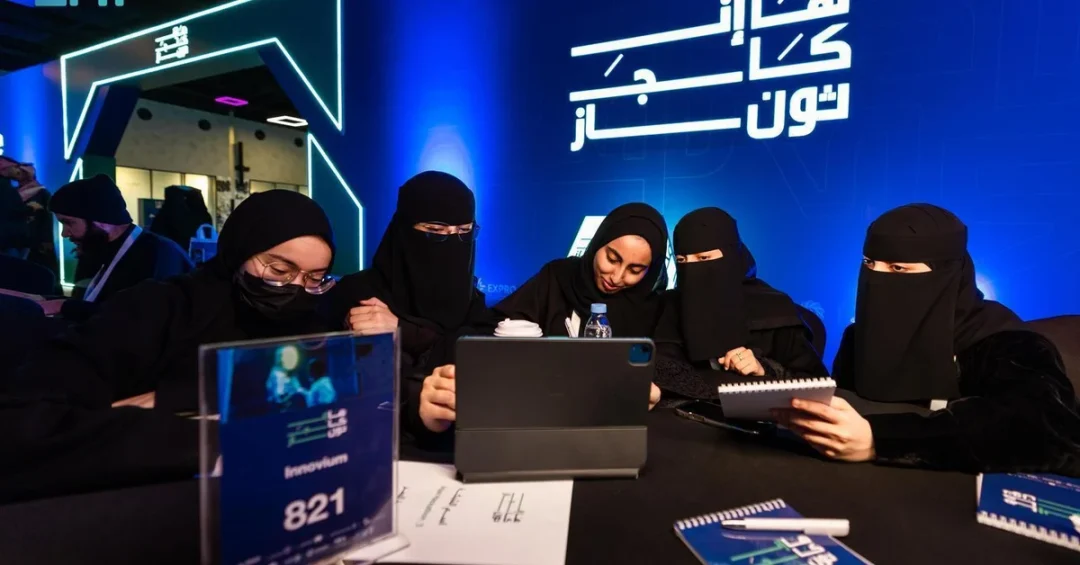
The Saudi Data and Artificial Intelligence Authority (SDAIA) has adopted a comprehensive strategy to enhance the participation of Saudi women in data and artificial intelligence, an initiative announced on the occasion of International Women’s Day and reported by the Saudi Press Agency. The strategy is built around a supportive work environment that empowers women across every specialization within these advanced technologies, from data science and machine learning to AI engineering and executive leadership, while contributing to sustainability and innovation across the national economy.
How does a single institution’s commitment to inclusion ripple outward to reshape an entire nation’s technological future? For SDAIA, the answer lies in deliberate, structural action rather than symbolic gestures. The authority has provided women with opportunities to participate in decision-making at every level, from leadership positions to hands-on technical roles, within a comprehensive work system aligned with its ambitious national mandate. This approach has enabled Saudi women to demonstrate their competence across sectors related to data management and artificial intelligence development, and it reflects a broader national conviction that the Kingdom’s digital transformation must be built by all of its people. The announcement arrives as Saudi Arabia accelerates toward the goals of Vision 2030, in which women are not bystanders but architects of the knowledge economy.
Context and Background
Why has data and artificial intelligence become such a decisive arena for women’s advancement in Saudi Arabia? The answer begins with the scale of the Kingdom’s digital ambitions. SDAIA was established as the national authority responsible for the regulation, development, and management of data and AI, giving it a central role in how the country collects, governs, and deploys information. Within that mandate, the authority recognized that no national AI ecosystem can reach its full potential while excluding half of its talent pool. The strategy for women’s empowerment therefore emerged not as a standalone diversity program but as an operational necessity woven into SDAIA’s core mission.
The timing is significant. International Women’s Day provides a global moment to assess progress, and Saudi Arabia’s record in recent years has been one of measurable, sustained change. Women now hold positions across government, business, academia, and technology that would have been difficult to imagine a generation ago. SDAIA’s announcement builds on this momentum by focusing specifically on the most future-oriented sectors: data science, artificial intelligence, and digital transformation. By appointing female data scientists and AI engineers to strategic positions within the authority, SDAIA has moved beyond recruitment targets toward genuine influence, ensuring that women help shape the technical standards, research priorities, and policy frameworks that will define the Kingdom’s AI landscape for years to come.
Key Details of the Empowerment Strategy
What specifically does SDAIA’s strategy deliver for Saudi women in practical terms? The authority has structured its approach around three reinforcing pillars: a supportive work environment, meaningful participation in decision-making, and visible pathways to leadership. The supportive environment includes training, mentorship, and professional development designed to help women thrive in highly technical disciplines. Participation in decision-making ensures that women are present when strategic choices are made, not merely when tasks are executed. And leadership pathways mean that female data scientists and AI engineers can rise to positions where they influence national objectives directly.
SDAIA’s strategy also supports pioneering projects and initiatives led by the authority, reinforcing its role as the national regulator and developer of data and AI capabilities. Women within SDAIA contribute to projects spanning data governance, smart systems, and applied artificial intelligence, work that carries implications far beyond the institution itself. Their contributions feed into national platforms, research programs, and public services that touch the daily lives of citizens and residents. In this sense, empowering women inside SDAIA is inseparable from empowering the country as a whole, because the outputs of their work are national assets.
The authority’s emphasis on appointing women to strategic roles deserves particular attention. Technical talent alone does not transform institutions; it must be paired with authority, resources, and the ability to set direction. By placing female specialists in positions where they shape priorities, SDAIA ensures that diverse perspectives inform the design of AI systems that will serve a diverse society. This is not only a matter of fairness but of quality, since inclusive teams consistently produce more robust, more creative, and more trustworthy technological outcomes.
International and Regional Impact
How does Saudi Arabia’s approach to women in AI resonate beyond its borders? The Kingdom’s progress carries weight across the Middle East and North Africa, a region where female participation in advanced technology sectors has historically lagged behind global averages. When a national authority of SDAIA’s standing makes women’s empowerment a strategic priority, it signals to governments, companies, and universities throughout the region that inclusion and innovation are mutually reinforcing. Regional observers increasingly point to Saudi Arabia as a model for how cultural continuity and technological ambition can advance together rather than in tension.
On the international stage, the announcement strengthens Saudi Arabia’s position in global conversations about artificial intelligence governance and the future of work. International organizations, research institutions, and technology firms are paying close attention to how the Kingdom builds its AI workforce, because the choices made today will influence cross-border collaboration, standards, and investment for decades. By showcasing Saudi women as data scientists, engineers, and decision-makers, SDAIA contributes a compelling narrative to global discussions about who gets to build the technologies that shape the future. It is a narrative of capability, not charity, and it positions the Kingdom as a constructive partner in the responsible development of AI worldwide.
Economic and Strategic Significance
Why does women’s participation in data and AI matter so much for Saudi Arabia’s economic future? The Kingdom is pursuing a deliberate diversification away from hydrocarbon dependence, and data-driven sectors sit at the heart of that effort. Artificial intelligence, advanced analytics, and digital services are projected to contribute substantially to global economic output in the coming decade, and nations that build strong domestic talent pipelines will capture a disproportionate share of that value. SDAIA’s strategy ensures that Saudi Arabia draws on its full reservoir of talent as it competes in these high-growth fields.
The strategic significance extends to sustainability and innovation, two themes SDAIA explicitly links to its empowerment agenda. Women’s full participation expands the range of problems that get solved and the range of solutions that get considered, which is precisely what a knowledge-based economy requires. Companies and government entities across the Kingdom benefit when the AI systems they deploy are designed by teams that reflect the society they serve. Moreover, the visibility of Saudi women in senior technical roles creates role models for younger generations, generating a virtuous cycle in which each cohort of graduates sees a clearer path to meaningful contribution.
Vision 2030 Alignment
How does this initiative connect to the larger transformation underway in Saudi Arabia? Vision 2030 envisions a diversified, knowledge-based economy in which women are active participants in every sector, and SDAIA’s strategy translates that vision into concrete institutional practice. The authority’s work directly supports national objectives related to digital transformation, human capital development, and the growth of a competitive technology sector. By empowering women as employees, leaders, and innovators, SDAIA helps ensure that the benefits of the Kingdom’s modernization are broadly shared and durably embedded.
Looking ahead, the implications are substantial. As Saudi Arabia continues to invest in artificial intelligence, data infrastructure, and digital government, the talent developed within SDAIA will circulate through ministries, startups, universities, and international partnerships. The women empowered today will train the next generation, lead the next wave of projects, and represent the Kingdom in global forums. Their success will be measured not only in individual careers but in the resilience and creativity of a national economy built on knowledge. On International Women’s Day, SDAIA’s message is clear: the future of AI in Saudi Arabia will be shaped by all of its people, and Saudi women are ready to lead.
20 Questions
Q1. What did SDAIA announce regarding Saudi women and artificial intelligence?
A1. SDAIA announced a comprehensive strategy to enhance Saudi women’s participation in data and artificial intelligence, providing a supportive work environment and opportunities across technical and leadership roles. The announcement was reported by the Saudi Press Agency on the occasion of International Women’s Day.
Q2. What is SDAIA’s official role in Saudi Arabia?
A2. SDAIA is the national authority responsible for the regulation, development, and management of data and artificial intelligence in the Kingdom. It leads national strategies, oversees AI governance, and supports projects that advance the digital economy.
Q3. How does SDAIA support women in decision-making roles?
A3. SDAIA provides women with opportunities to participate in decision-making from leadership positions to technical roles within a comprehensive work system. Female data scientists and AI engineers have been appointed to strategic positions to support national objectives.
Q4. Why is International Women’s Day significant for this announcement?
A4. International Women’s Day offers a global moment to recognize women’s contributions and assess progress. SDAIA used the occasion to highlight its sustained commitment to empowering Saudi women in advanced technology fields.
Q5. What types of roles do Saudi women hold within SDAIA?
A5. Saudi women serve as data scientists, AI engineers, technical specialists, and leaders within SDAIA. They contribute across specializations related to data management, artificial intelligence development, and strategic decision-making.
Q6. How does this strategy contribute to sustainability and innovation?
A6. By involving women fully in data and AI work, SDAIA expands the range of perspectives and solutions available. This diversity strengthens innovation and supports sustainable development of the Kingdom’s knowledge-based economy.
Q7. What does SDAIA’s strategy mean for Saudi Arabia’s economy?
A7. It strengthens the talent pipeline in high-growth sectors such as AI and data analytics, which are central to economic diversification. A broader talent base helps the Kingdom compete globally in technology-driven industries.
Q8. How does this initiative relate to Vision 2030?
A8. Vision 2030 aims to build a diversified, knowledge-based economy with women as active participants. SDAIA’s strategy translates that vision into institutional practice through training, leadership pathways, and strategic appointments.
Q9. Are there regional implications for other Middle Eastern countries?
A9. Yes. Saudi Arabia’s progress signals that inclusion and technological ambition can advance together, offering a model for regional governments and institutions seeking to expand female participation in advanced sectors.
Q10. How does the international community view Saudi Arabia’s AI efforts?
A10. International organizations and technology firms pay close attention to the Kingdom’s AI workforce development. SDAIA’s emphasis on women strengthens Saudi Arabia’s position in global discussions on AI governance and responsible innovation.
Q11. What is the significance of appointing female data scientists to strategic positions?
A11. Strategic appointments ensure that women influence priorities, standards, and policy frameworks rather than only executing tasks. This leads to more inclusive and robust AI systems that serve society effectively.
Q12. How does SDAIA define a supportive work environment?
A12. A supportive work environment includes training, mentorship, professional development, and the resources women need to excel in highly technical disciplines. It enables women to contribute fully across all specializations.
Q13. What kinds of projects do women at SDAIA work on?
A13. Women at SDAIA contribute to projects spanning data governance, smart systems, applied artificial intelligence, and national digital platforms. Their work supports public services and research that benefit the entire Kingdom.
Q14. Why is data and AI considered a strategic sector for Saudi Arabia?
A14. Data and AI drive economic diversification, improve government services, and create high-value jobs. Nations with strong domestic talent in these fields capture greater shares of global technology value.
Q15. How does empowering women in AI create role models?
A15. Visible female leaders in technical fields show younger generations that meaningful careers in AI are attainable. This encourages more women to pursue science, technology, engineering, and mathematics education and careers.
Q16. What message does SDAIA’s strategy send to the private sector?
A16. It signals that inclusion is a strategic priority supported at the highest institutional levels. Companies may be encouraged to strengthen their own efforts to recruit, retain, and promote women in technology roles.
Q17. Does the strategy focus only on leadership or also on technical skills?
A17. The strategy covers both. It supports women across leadership positions and technical specializations, ensuring depth of expertise alongside decision-making influence within the authority and beyond.
Q18. How does this initiative support Saudi Arabia’s digital transformation?
A18. By developing a diverse, highly skilled AI workforce, SDAIA accelerates the deployment of digital technologies across the economy. This supports government modernization, innovation, and improved quality of life.
Q19. What are the long-term goals of SDAIA’s empowerment strategy?
A19. Long-term goals include sustained female participation in AI leadership, a robust national talent pipeline, and global recognition of Saudi Arabia as a leader in inclusive technological development aligned with Vision 2030.
Q20. What does this announcement mean for the future of AI in Saudi Arabia?
A20. It means the Kingdom’s AI future will be shaped by all of its people. Saudi women will continue to lead projects, train new generations, and represent the nation in global technology forums.
Reader Feedback
We value your thoughts. Please share your feedback on this article.
Your feedback helps us improve our coverage.
Related articles
 Saudi Universities Dominate Global Patent Ranking
 KAUST Develops Robotic System to Improve Date Palm Harvesting
 Saudi Saffron Breakthrough: Flowers in 10 Days
 SDAIA Launches Guidelines for Cross-Border Data Transfer Risks
 NCVC, KAUST Launch SAUDINet to Advance Ecology Research
 Saudi Arabia, Korea Sign Space Cooperation MoU